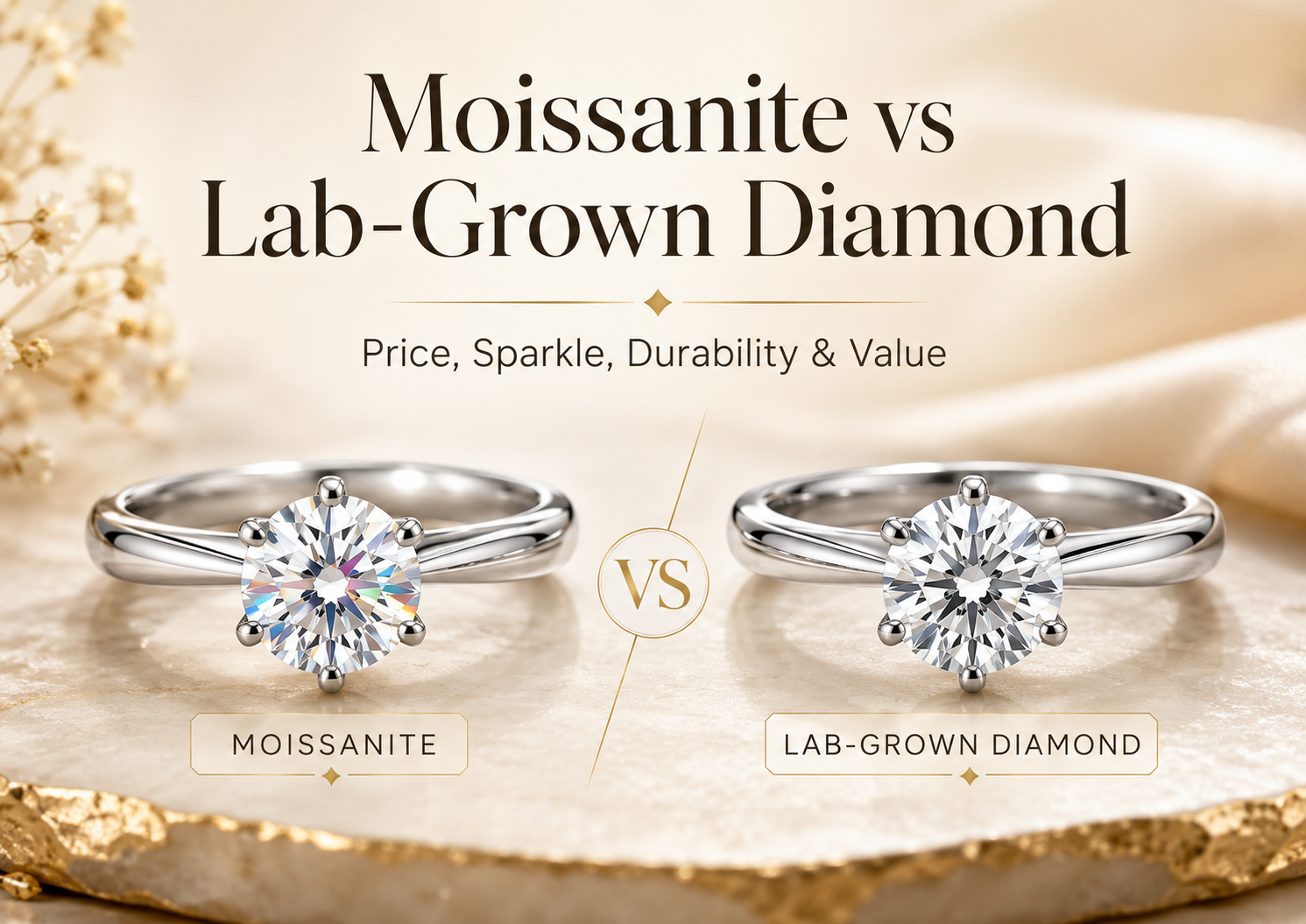
Moissanite vs Lab-Grown Diamond:
Price, Sparkle, Durability & Value
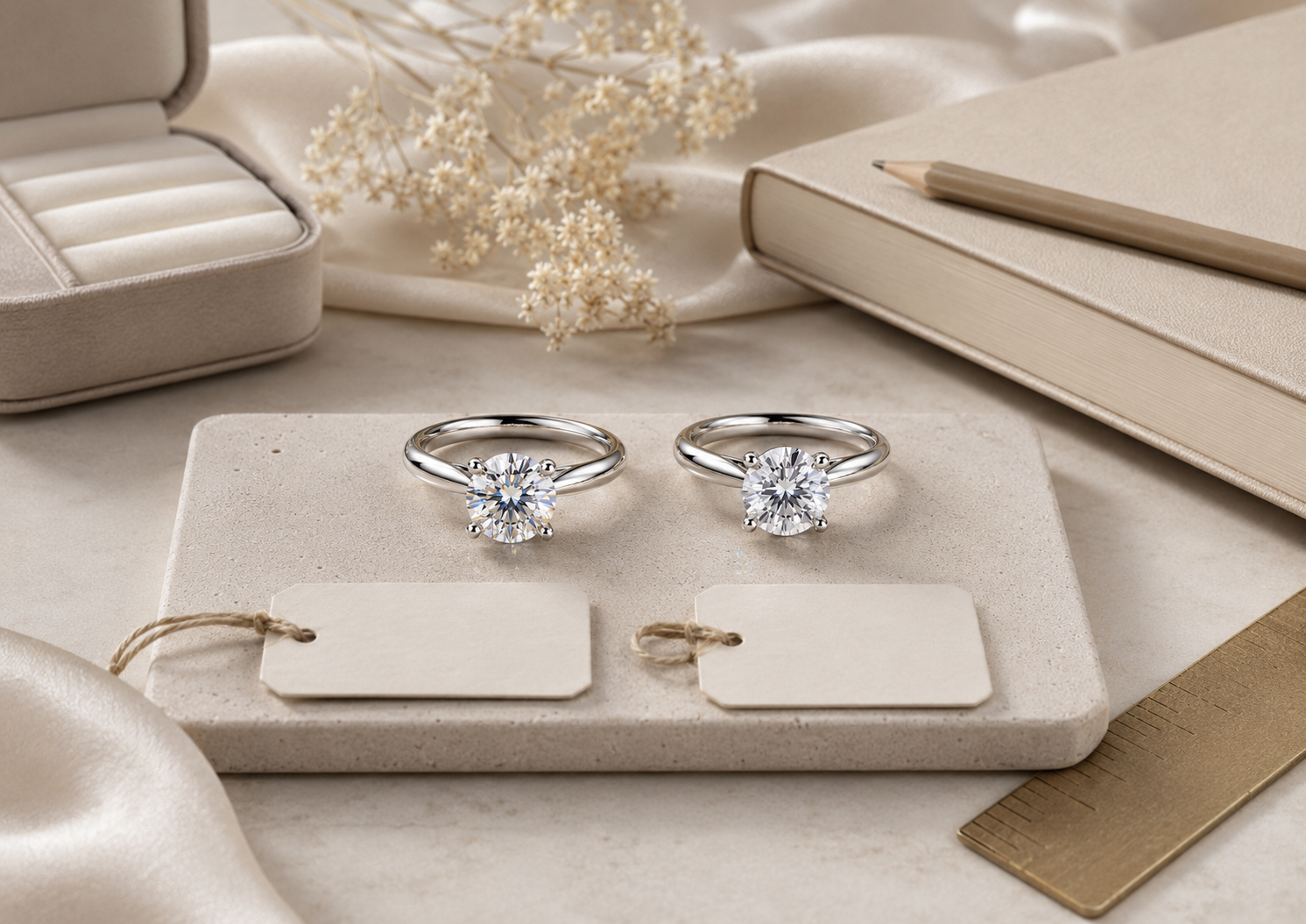
Moissanite and lab-grown diamonds can both create beautiful,
durable and eye-catching jewelry, but they are not the same
gemstone. They differ in composition, sparkle, price,
grading and the type of value they offer.
Choose moissanite when you want strong rainbow
fire, a larger-looking stone for your budget and excellent
durability for everyday jewelry.
Choose a lab-grown diamond when owning a real
diamond is important to you and you prefer the classic white
brilliance, grading language and material identity of diamond.
Neither choice is automatically better. The right stone depends
on your budget, preferred sparkle, desired size, jewelry design
and what the word “diamond” means to you.
01
Lower-Cost Sparkle
Moissanite generally offers more visible size and lively
sparkle for a lower purchase price.
02
Real Diamond Identity
A lab-grown diamond has essentially the same chemical
composition and crystal structure as a natural diamond.
03
Different Light Performance
Moissanite is known for colorful fire, while diamonds are
known for crisp brilliance and contrast.
04
Both Suitable for Daily Wear
Both stones are very hard, although diamond remains the
harder material on the Mohs scale.
01 · UNDERSTANDING THE STONES
What Are Moissanite and Lab-Grown Diamonds?
MOISSANITE
A Distinct Gemstone Made from Silicon Carbide
Moissanite is not a diamond. It is a separate gemstone made
from silicon carbide. Natural moissanite is extremely rare,
so nearly all moissanite used in modern jewelry is created
in controlled laboratory conditions.
It is loved for its high brilliance, colorful flashes and
impressive durability. Many buyers choose it because it
creates a refined fine-jewelry appearance while keeping the
cost more accessible.
A lab-grown diamond is produced through a technological
growth process rather than forming underground. It has
essentially the same chemical composition, crystal
structure and optical and physical properties as a
naturally formed diamond.
It should be clearly described as laboratory-grown or
laboratory-created so buyers understand that it was not
mined from the earth.
Moissanite is a diamond alternative. A lab-grown diamond is
a diamond with a laboratory origin. The two should not be
described as the same material.
02 · SIDE-BY-SIDE
Moissanite vs Lab-Grown Diamond Comparison
This table summarizes the differences that matter most when
choosing a ring, necklace, pair of earrings or meaningful gift.
Feature
Moissanite
Lab-Grown Diamond
Material
Silicon carbide
Carbon with a diamond crystal structure
Is It a Diamond?
No, it is a separate gemstone
Yes, it is a laboratory-grown diamond
Sparkle Style
Strong brilliance with colorful rainbow fire
Classic diamond brilliance with white light and contrast
Mohs Hardness
Approximately 9.25
10
Typical Price Position
Usually the more affordable option
Usually more expensive than moissanite
Size Language
Often listed by millimeters or diamond-equivalent size
Usually listed by actual carat weight
Visual Personality
Bright, lively and expressive
Crisp, classic and traditionally diamond-like
Best For
Maximum sparkle and size within a practical budget
Buyers who specifically want a real diamond
Price should be compared using stone size, quality,
setting metal and finished ring design—not the stone name alone.
03 · PRICE & VALUE
Which One Gives You Better Value?
In most like-for-like shopping situations, moissanite is the
lower-cost option. This often allows buyers to choose a larger
center stone, a more detailed setting or a complete jewelry
piece while staying within the same budget.
A lab-grown diamond normally costs more because it is a diamond
and is commonly priced according to carat weight, cut, color,
clarity, shape and grading documentation. It can still be more
accessible than a comparable natural diamond, but it usually
does not compete with moissanite at the lowest price level.
Choose Moissanite When:
You want a larger-looking center stone for your budget.
You enjoy noticeable, colorful sparkle.
You are prioritizing design, size and visual impact.
You want an elegant promise, anniversary or gift ring.
You prefer to keep more of your budget for the setting.
Choose Lab-Grown Diamond When:
Owning a real diamond is personally important.
You prefer traditional diamond grading terminology.
You want crisp white brilliance rather than strong fire.
You are comfortable paying more for diamond identity.
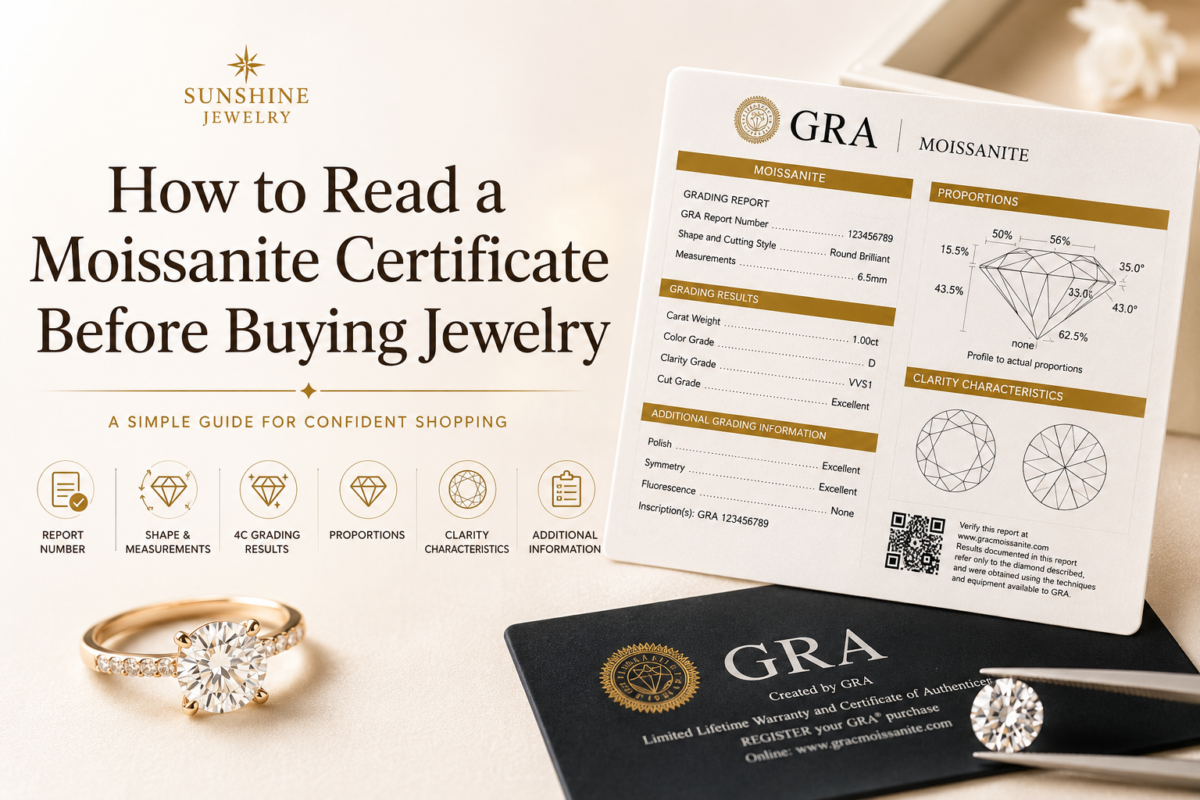
You want a grading report for the individual stone.
Value Is More Than the Lowest Price
The best value is the option that gives you the appearance,
meaning, comfort and confidence you want at a price you can
comfortably afford. Neither stone should be purchased with a
guaranteed resale return in mind.
04 · LIGHT PERFORMANCE
Which Stone Sparkles More?
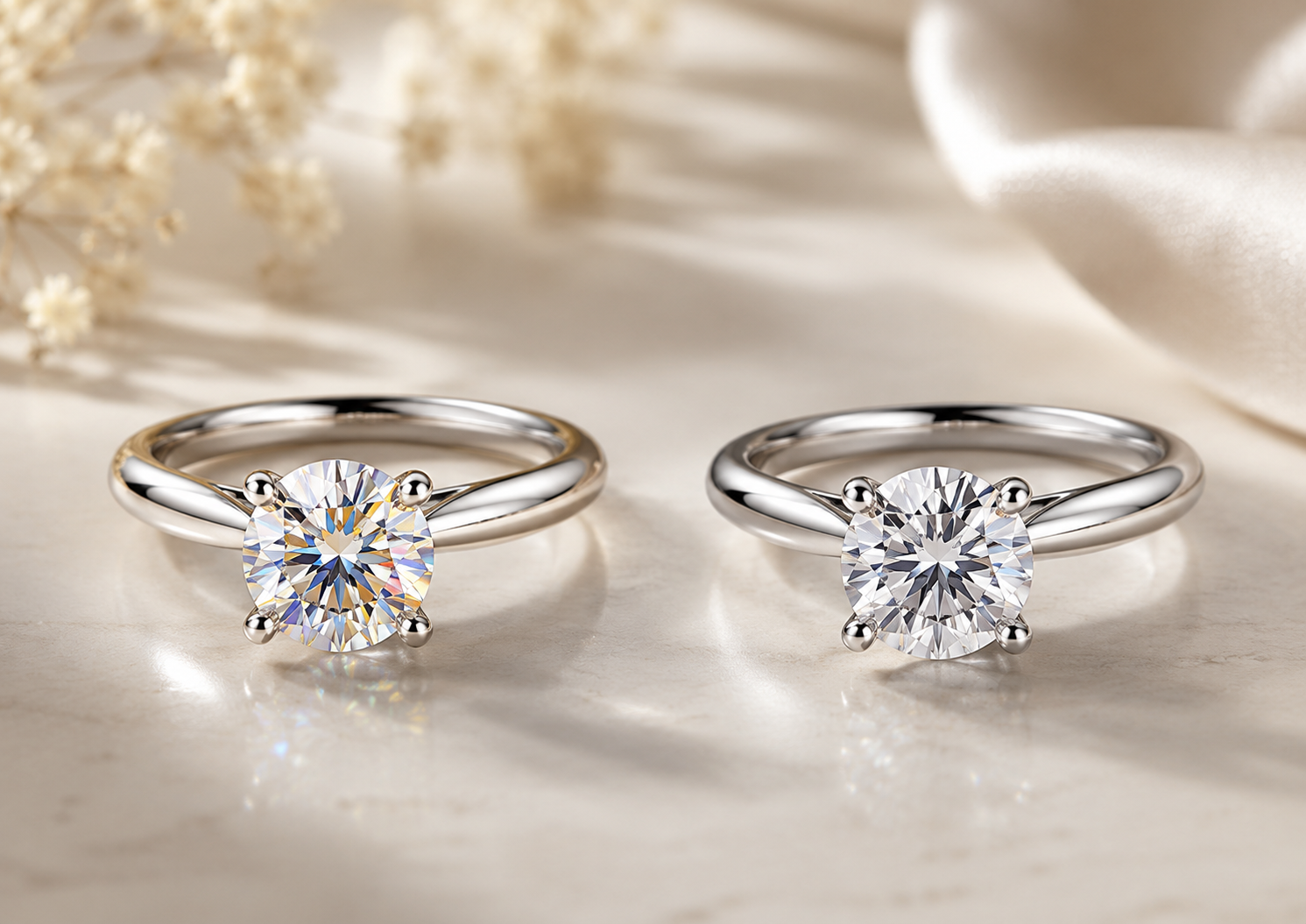
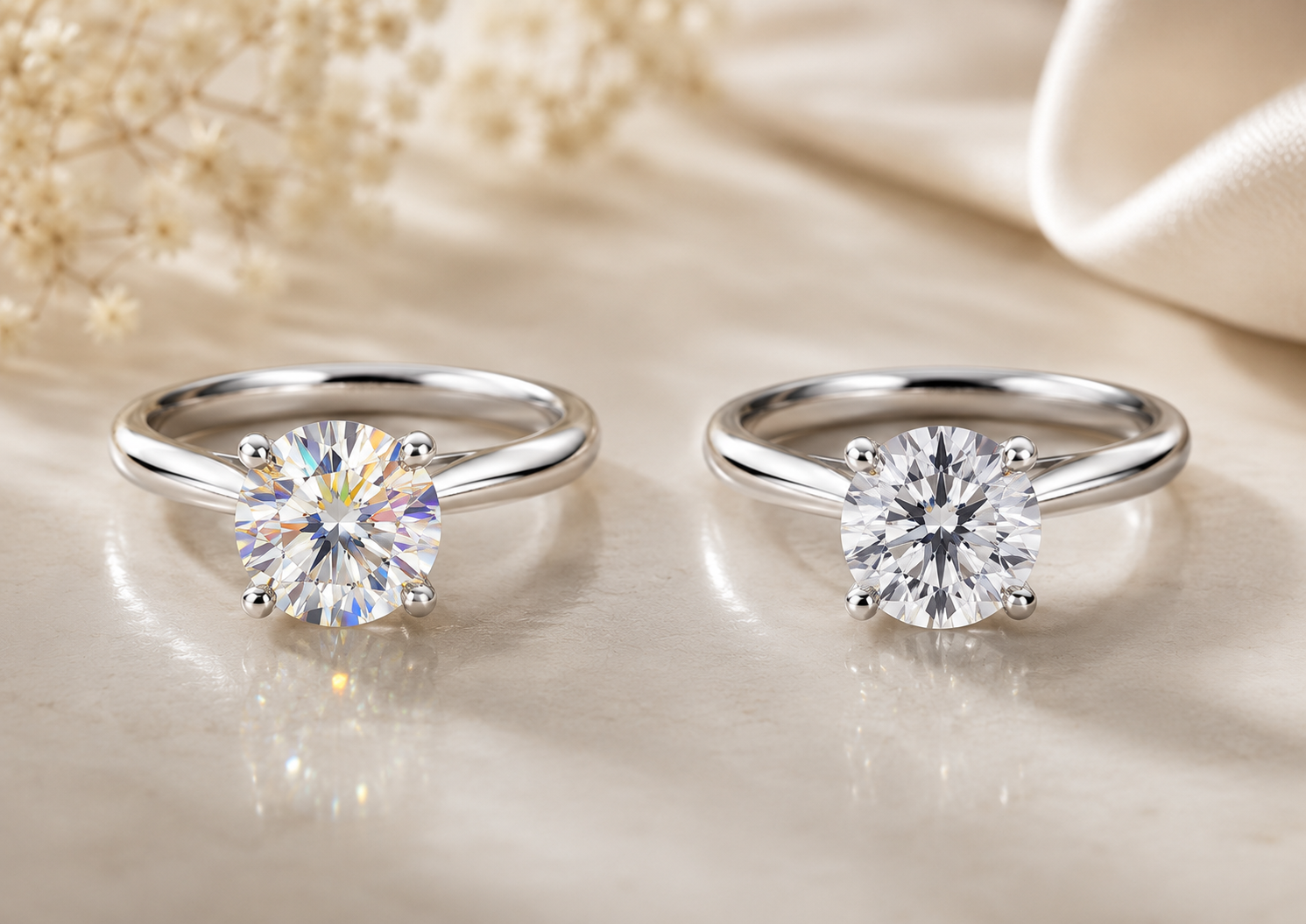
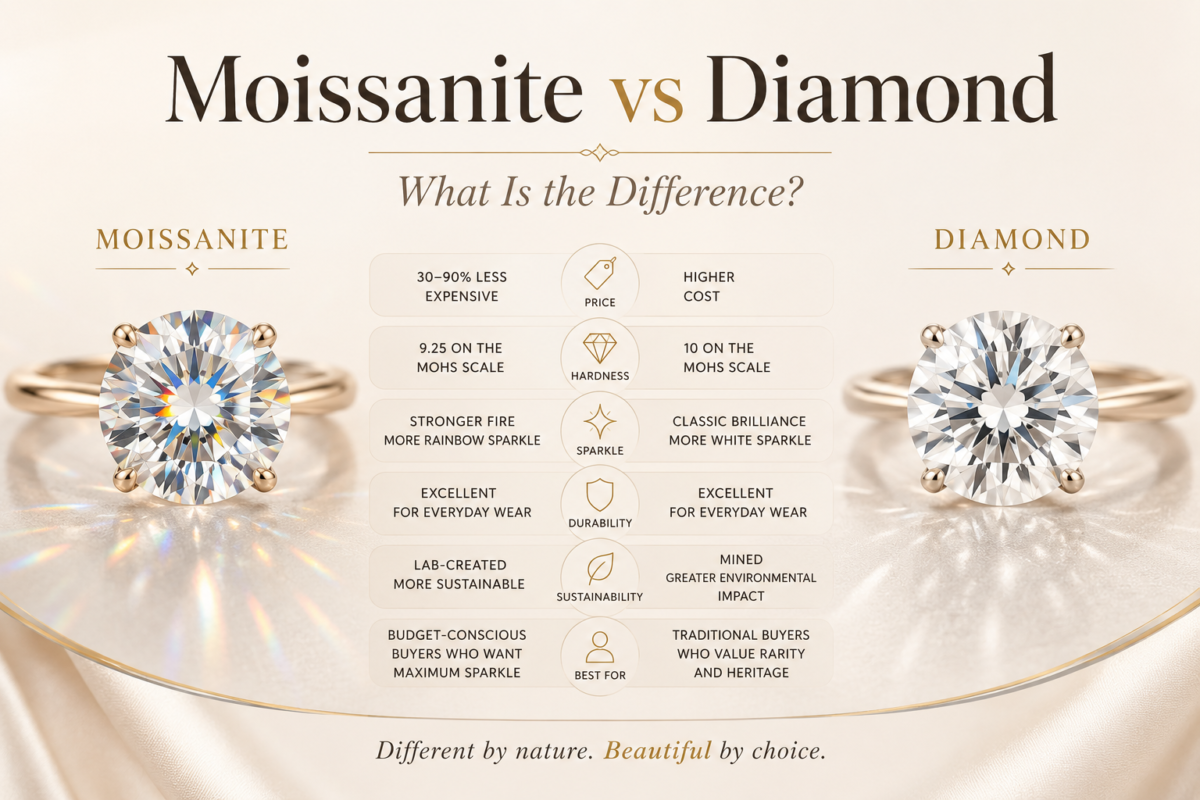
Moissanite often shows stronger rainbow fire, while a
lab-grown diamond produces classic diamond brilliance.
MOISSANITE
More Colorful Fire
Moissanite has very strong dispersion. Under direct
lighting, it can produce noticeable rainbow flashes in
yellow, blue, orange and other colors.
Some buyers love this lively appearance because it creates
dramatic sparkle. Others may prefer a quieter, whiter light
pattern.
LAB-GROWN DIAMOND
Classic White Brilliance
A well-cut lab-grown diamond reflects bright white light,
darker contrast and smaller flashes of spectral color in
the same general way as a naturally formed diamond.
Its appearance often feels more traditional and may be
preferred by buyers who want the familiar visual character
of diamond.
Shopping tip:
Always view stones in natural daylight, indoor lighting and
direct spot lighting. A gemstone that looks subtle in one
environment may appear much more colorful in another.
05 · EVERYDAY WEAR
Durability: Can You Wear Both Every Day?
Both moissanite and lab-grown diamonds are suitable for
jewelry that is worn regularly. Diamond ranks 10 on the
Mohs hardness scale, while moissanite ranks approximately
9.25.
Hardness describes resistance to scratching, but it is only
one part of durability. Toughness, setting security, prong
condition, impact and care habits also influence how well a
ring performs over time.
Daily Wear Advice
Remove rings before heavy lifting or impact-heavy work.
Avoid catching raised prongs on clothing and fabric.
Keep jewelry away from harsh household chemicals.
Store separate pieces to reduce surface scratching.
Even a diamond can chip if it receives a strong impact at a
vulnerable edge. A secure setting and sensible daily habits
remain important for either stone.
06 · SIZE
Carat Weight vs Visible Millimeter Size
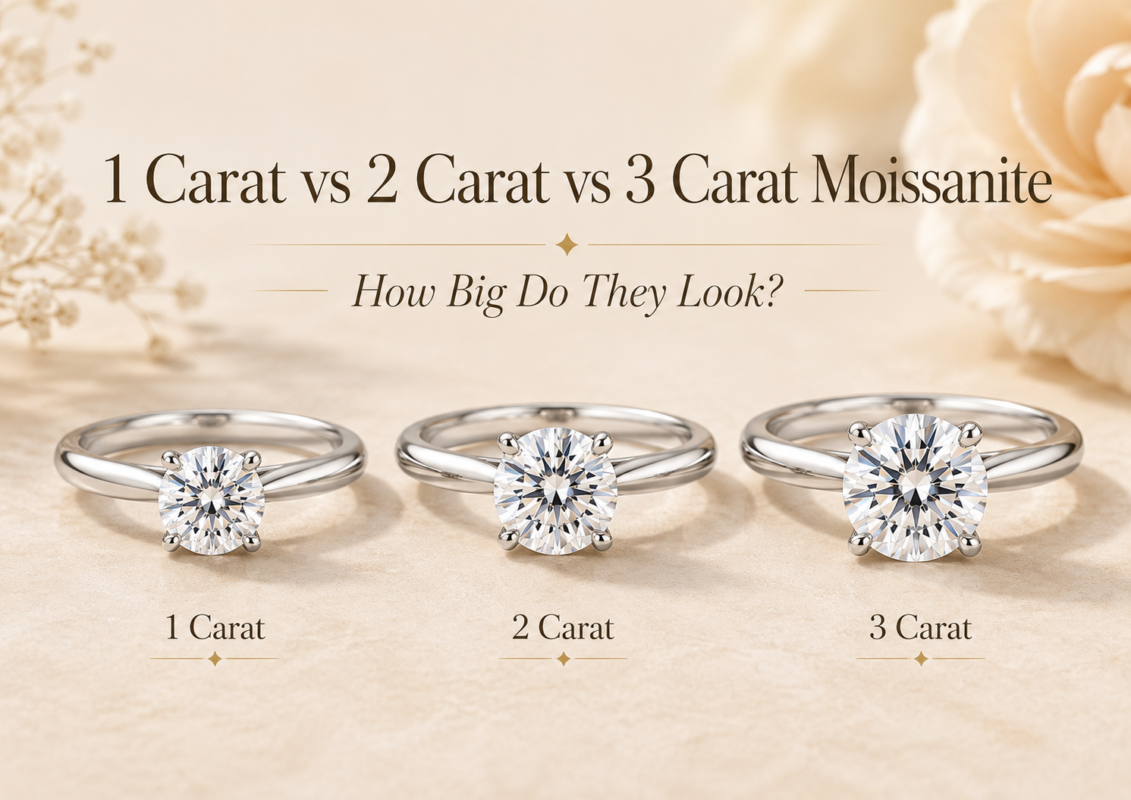
Carat measures weight, not visible width. This matters because
moissanite and diamond have different densities. Two stones can
have a similar face-up diameter while weighing different amounts.
Moissanite listings may use terms such as diamond-equivalent
weight, carat equivalent or DEW. Lab-grown diamonds are normally
described using their actual carat weight.
CHECK 01
Millimeter Dimensions
Compare the stone’s visible length and width rather than
relying only on the carat number.
CHECK 02
Stone Proportions
Depth, table size and cutting proportions can change how
large a gemstone looks from above.
CHECK 03
Setting Design
Halos, bezels, slim bands and raised settings can all change
the overall visual footprint.
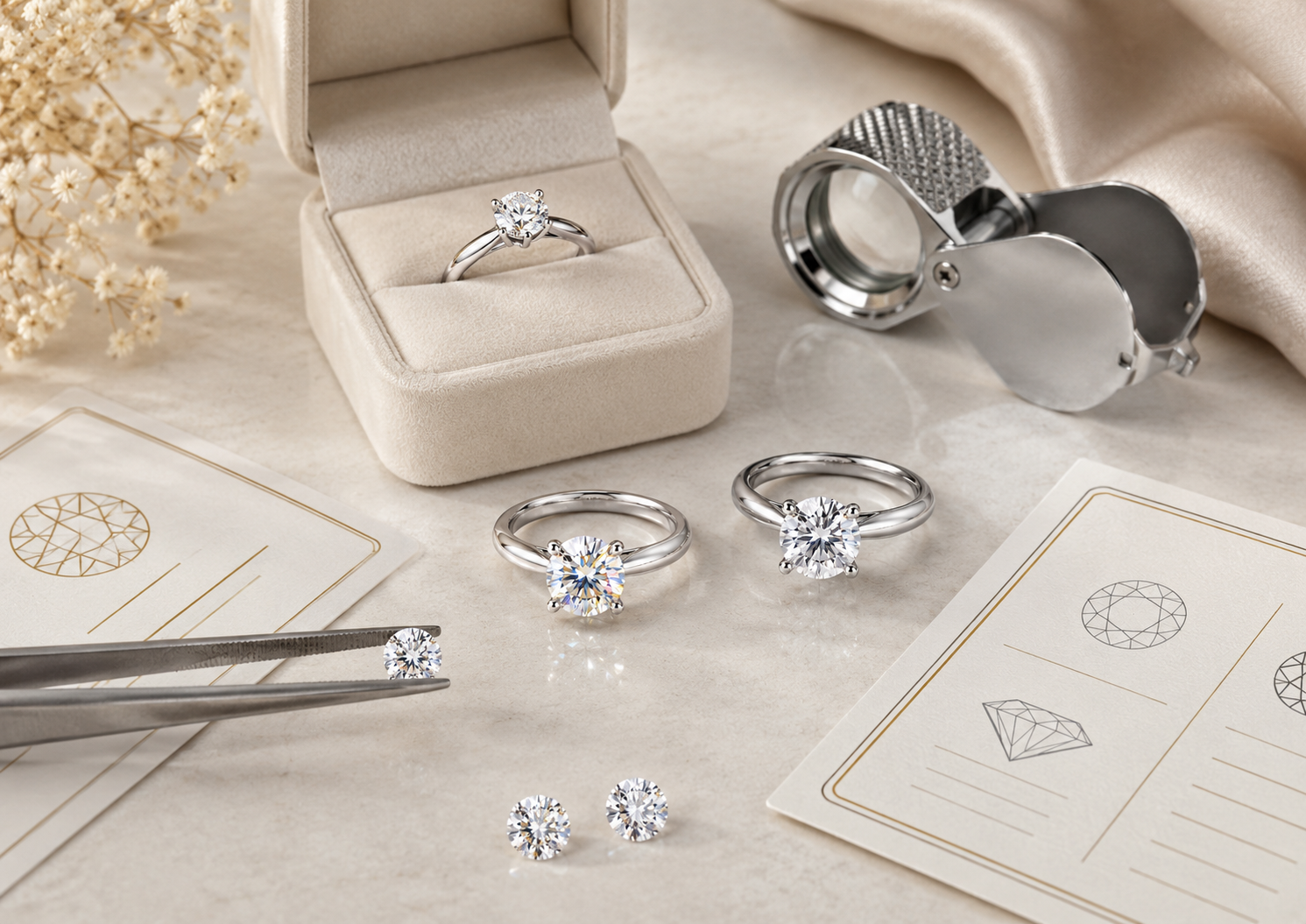
Check stone identity, measurements, metal, setting and
documentation before comparing prices.
For Moissanite, Confirm:
That the stone is clearly identified as moissanite.
The stone’s millimeter length, width or diameter.
Whether “carat” means actual or diamond-equivalent weight.
The number and total weight of stones in the piece.
The metal type, plating finish and ring size.
The seller’s warranty, return and care information.
For Lab-Grown Diamond, Confirm:
That it is clearly disclosed as laboratory-grown.
The actual carat weight and millimeter measurements.
Cut, color and clarity information.
The grading laboratory and report number.
The metal, setting design and craftsmanship.
The seller’s return, resizing and warranty policies.
Can a Basic Diamond Tester Identify Them?
Basic testing devices can produce confusing results.
Professional identification may require specialized
gemological instruments. A seller should disclose the stone
type clearly rather than expecting the buyer to identify it
after purchase.
08 · DESIGN
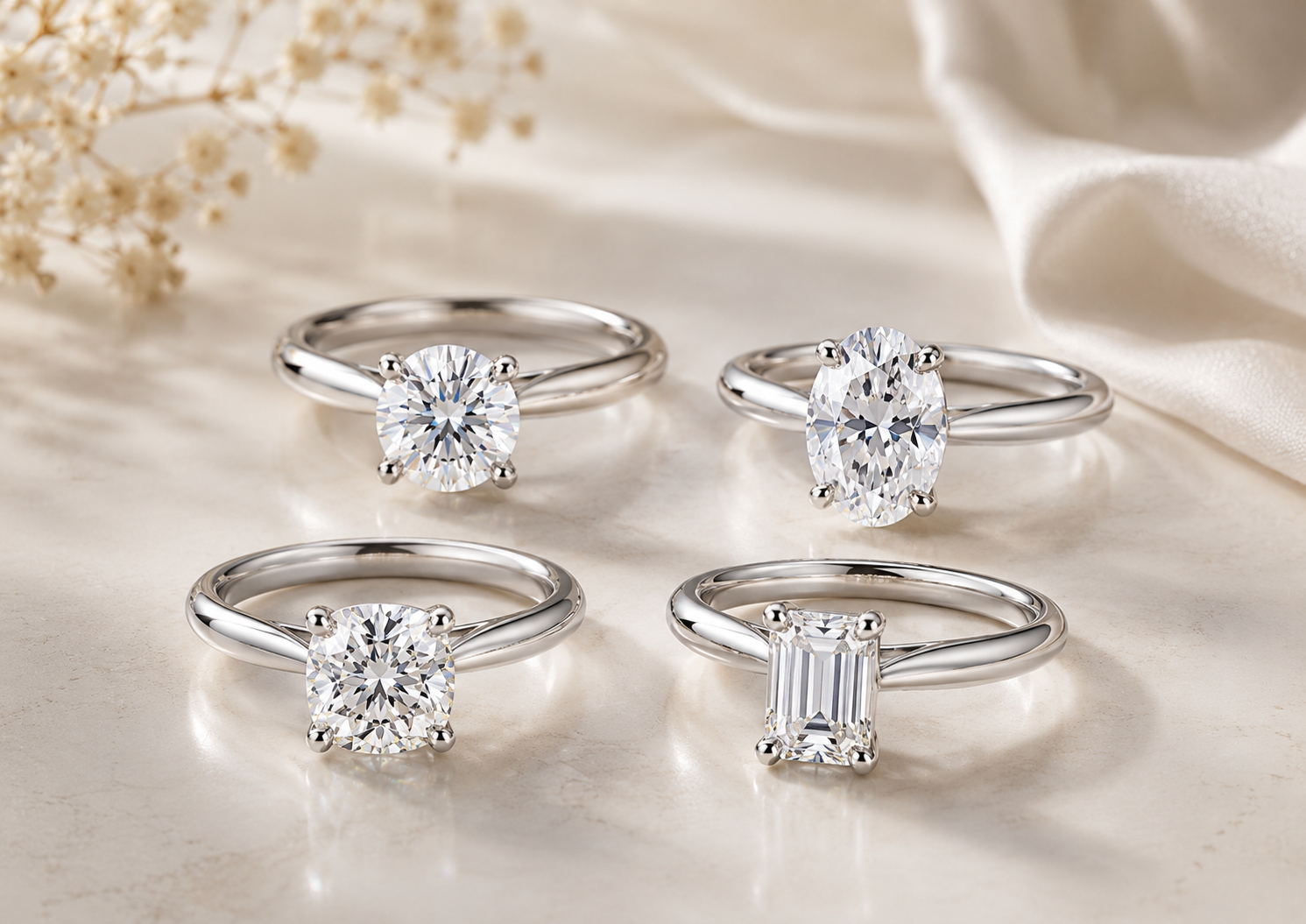
Which Cuts and Shapes Look Best?
Shape changes light performance, finger coverage and the
overall personality of the finished ring.
Round
A balanced classic shape with strong brilliance and broad
setting compatibility.
Oval
Creates an elongated outline and can provide greater visible
finger coverage.
Cushion
Combines a softly rounded square outline with a romantic,
vintage-inspired character.
Emerald
Emphasizes clean step facets and broad flashes rather than
intense brilliant-cut sparkle.
Moissanite or Lab-Grown Diamond: Which Is Better for You?
Your PriorityRecommended Direction
Largest visual size for the budgetMoissanite
Strong rainbow sparkleMoissanite
Owning an actual diamondLab-Grown Diamond
Classic white diamond brillianceLab-Grown Diamond
Durable everyday ringEither, with a secure setting
Lower-cost promise or anniversary ringMoissanite
Traditional diamond grading reportLab-Grown Diamond
Our Practical Recommendation
Moissanite is an excellent choice for buyers who want
noticeable sparkle, strong durability and a larger-looking
stone without moving into diamond-level pricing.
A lab-grown diamond is the better fit when the emotional or
material identity of diamond is central to the purchase.
Before deciding, compare the stones in person or through clear
videos, review their actual millimeter measurements and choose
a setting that suits your lifestyle.
No. Moissanite is a separate gemstone made from silicon
carbide. A lab-grown diamond is carbon with a diamond crystal
structure and essentially the same physical and optical
properties as a naturally formed diamond.
Which sparkles more: moissanite or lab-grown diamond?
Moissanite normally produces stronger rainbow fire.
A lab-grown diamond creates the classic white brilliance,
contrast and smaller spectral flashes associated with diamond.
Which is more durable?
Diamond is harder, ranking 10 on the Mohs scale, while
moissanite ranks approximately 9.25. Both are suitable for
regular wear when protected by a secure setting and cared
for properly.
Does moissanite look larger than a lab-grown diamond?
Appearance depends on actual millimeter dimensions and
cutting proportions. Moissanite is less dense than diamond,
so carat and carat-equivalent terminology should be checked
carefully when comparing visible size.
Can people tell moissanite and lab-grown diamond apart?
Some viewers may notice moissanite’s stronger colorful fire,
especially under spot lighting. However, reliable
identification should be based on seller disclosure,
documentation and appropriate gemological testing rather
than appearance alone.
Does a lab-grown diamond test as a diamond?
Yes. A lab-grown diamond is diamond material. Basic tests may
confirm that it is diamond but may not reliably determine
whether it formed naturally or was grown in a laboratory.
Which stone has better resale value?
Resale prices depend on brand, condition, documentation,
market demand and the buyer. Neither option should be treated
as a guaranteed financial investment. Choose the stone for
its beauty, meaning and wearability.
Are both stones environmentally friendly?
Both can be produced in laboratory environments, but their
actual environmental footprint depends on energy sources,
manufacturing efficiency, transportation and supply-chain
practices. Avoid assuming that every laboratory-grown stone
has the same impact.
Pricing and availability vary by retailer, stone size, grade,
metal, setting and market conditions. Product specifications
should always be reviewed before ordering.
A practical guide to choosing and styling sapphire blue accessories, including jewelry types, metal and outfit pairings, product-label checks, care, and FAQs.
A complete moissanite vs diamond comparison covering price, hardness, sparkle, durability, sustainability, everyday wear and who each gemstone is best for.
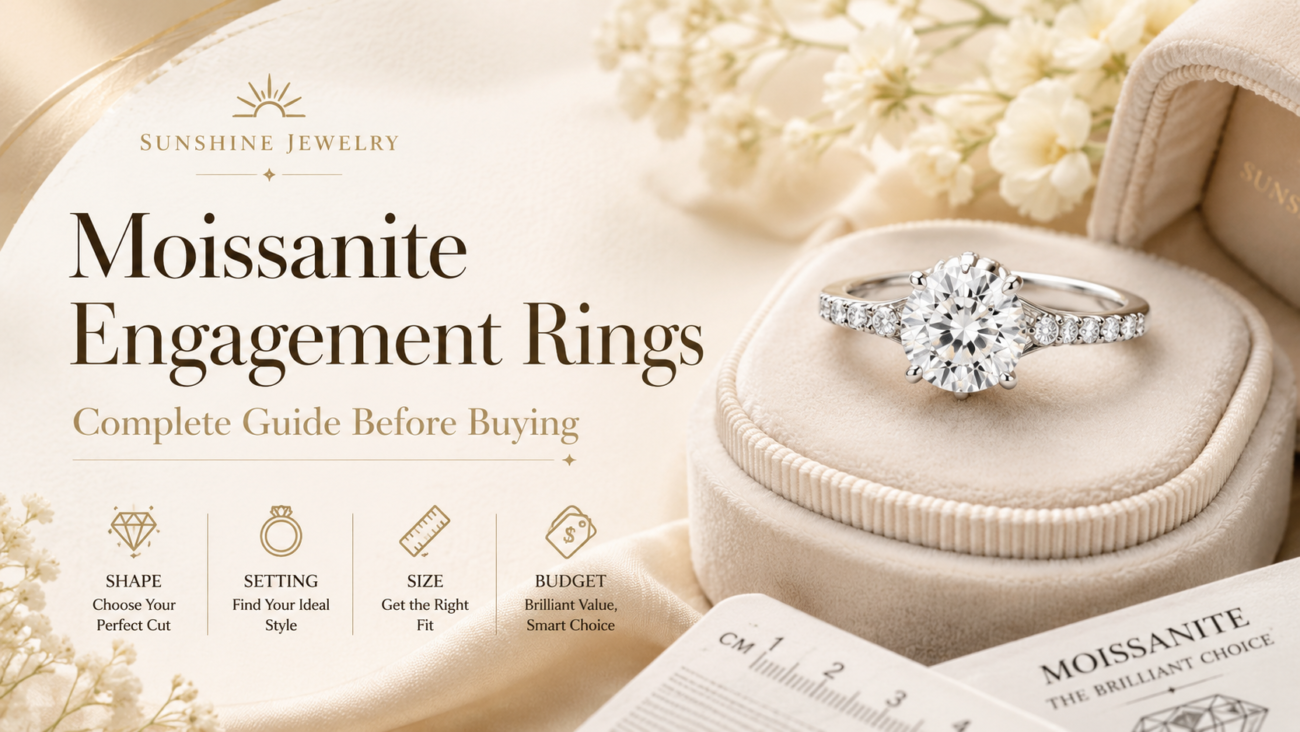
A complete guide to choosing a moissanite engagement ring, covering stone shapes, sizes, settings, ring sizing, materials, certificates, budget and care.