Choosing between a 1 carat, 2 carat and 3 carat moissanite
is not only about selecting a number. The visible difference
depends on millimeter diameter, finger size, band width,
stone shape and setting design. This guide compares all three
sizes so you can understand how they may look in a finished ring.
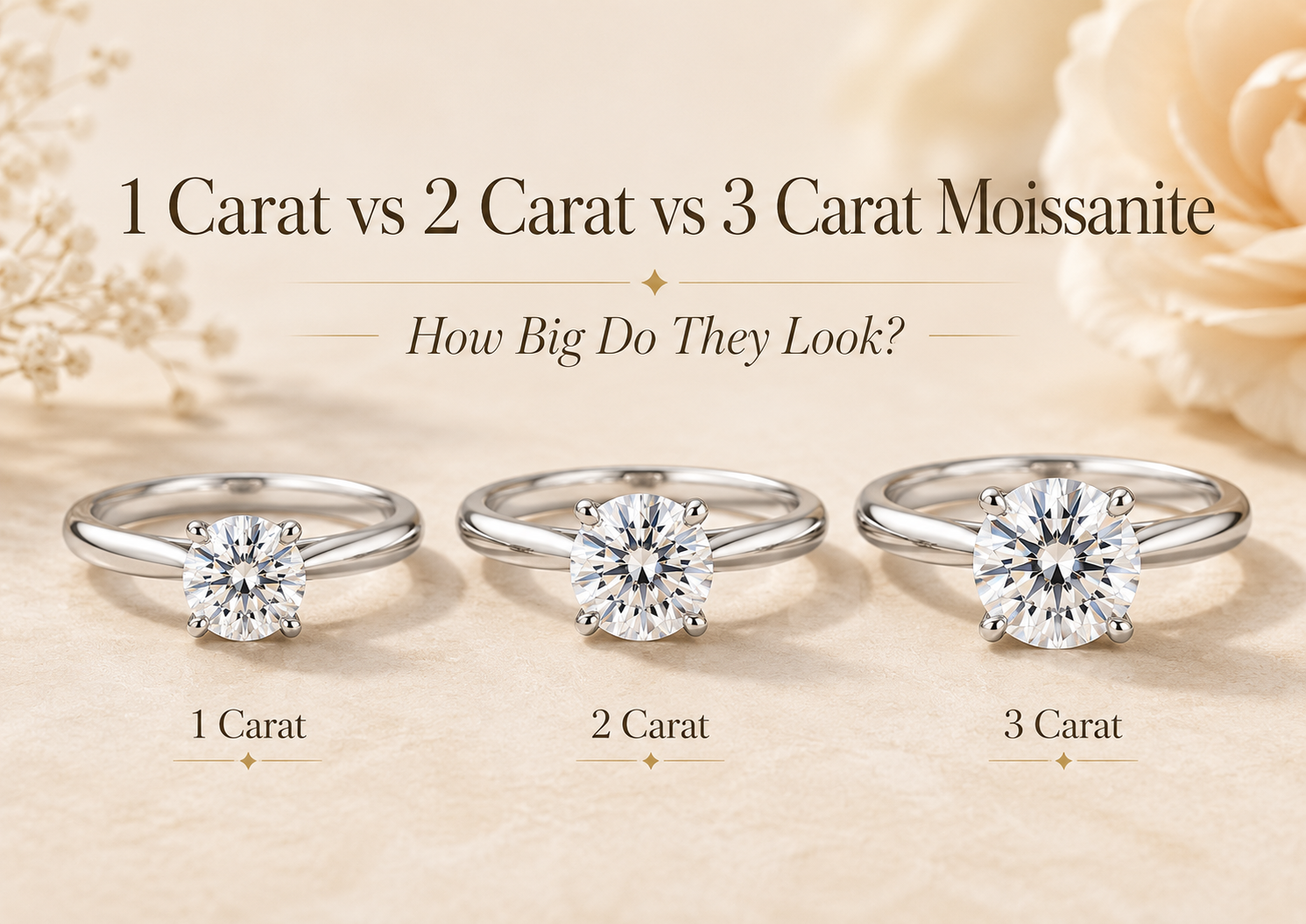
Visual comparison of 1 carat, 2 carat and 3 carat round
moissanite solitaire rings. Images are illustrative and
should not be treated as an exact-to-scale measurement.
01 · Understanding Size
Carat vs Millimeter: What Size Is 1, 2 or 3 Carats?
Carat is technically a measurement of gemstone weight,
while millimeters describe visible dimensions. For a round
gemstone, the most useful visible measurement is its diameter
from one edge to the opposite edge.
Moissanite is often listed using diamond-equivalent weight,
sometimes written as DEW, carat equivalent or ct eq.
This allows buyers to compare its face-up appearance with
familiar diamond sizes. Because moissanite and diamond have
different densities, a stone described as “1 carat equivalent”
does not necessarily weigh exactly one metric carat.
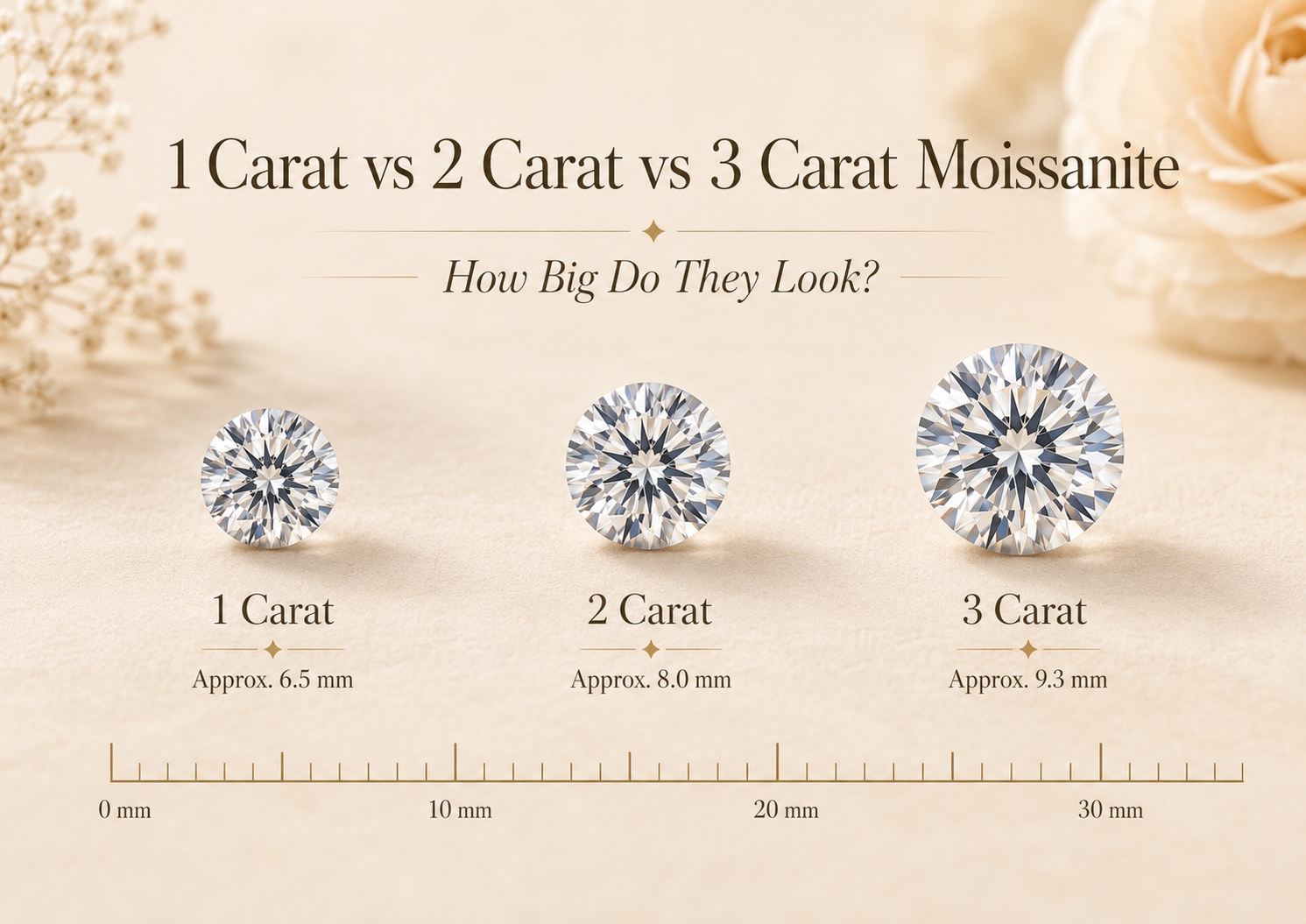
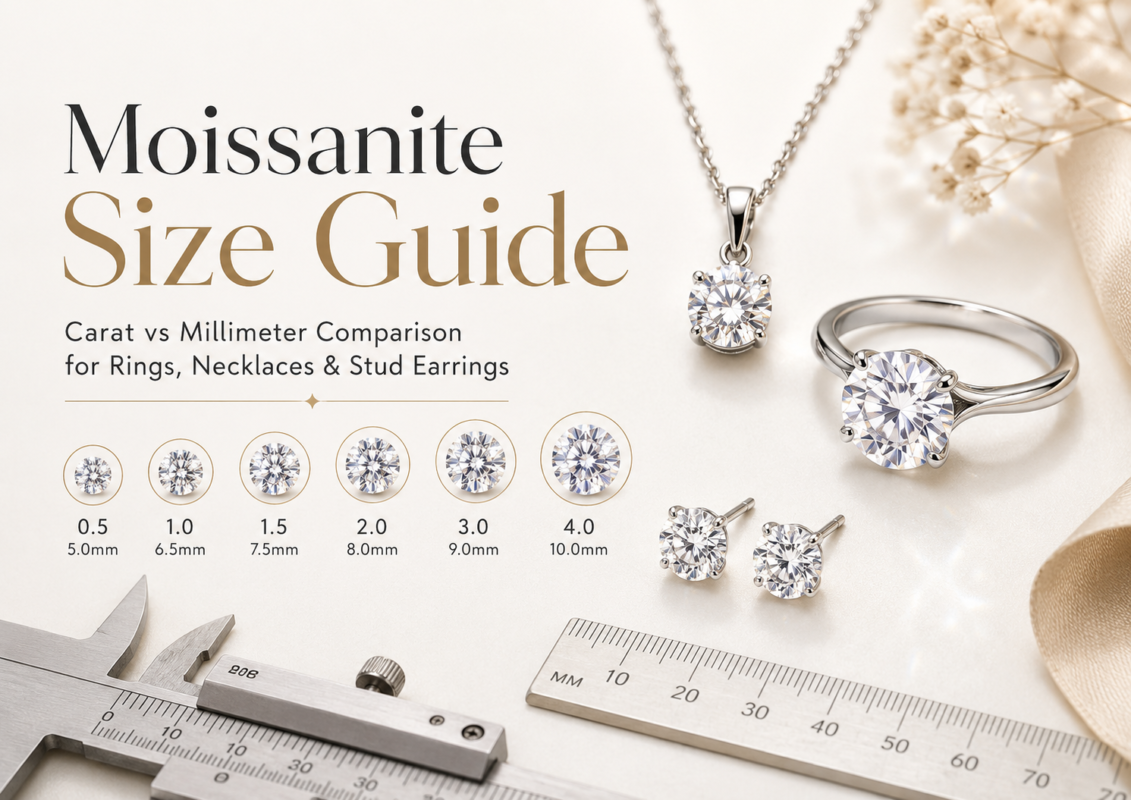
Approximate face-up diameter of common round
moissanite carat-equivalent sizes.
Carat equivalent
Approximate round diameter
Visual impression
Typical preference
1 carat
About 6.5 mm
Classic, refined and clearly visible
Minimal, traditional and everyday styles
2 carats
About 8.0 mm
Noticeable without being extremely oversized
Balanced engagement and statement rings
3 carats
About 9.0–9.3 mm
Bold, luxurious and attention-grabbing
High-impact and statement-focused designs
Measurement note:
These dimensions are approximate. Cutting depth, girdle
thickness, manufacturer specifications and setting design
can cause stones with the same stated carat equivalent to
have slightly different measurements.
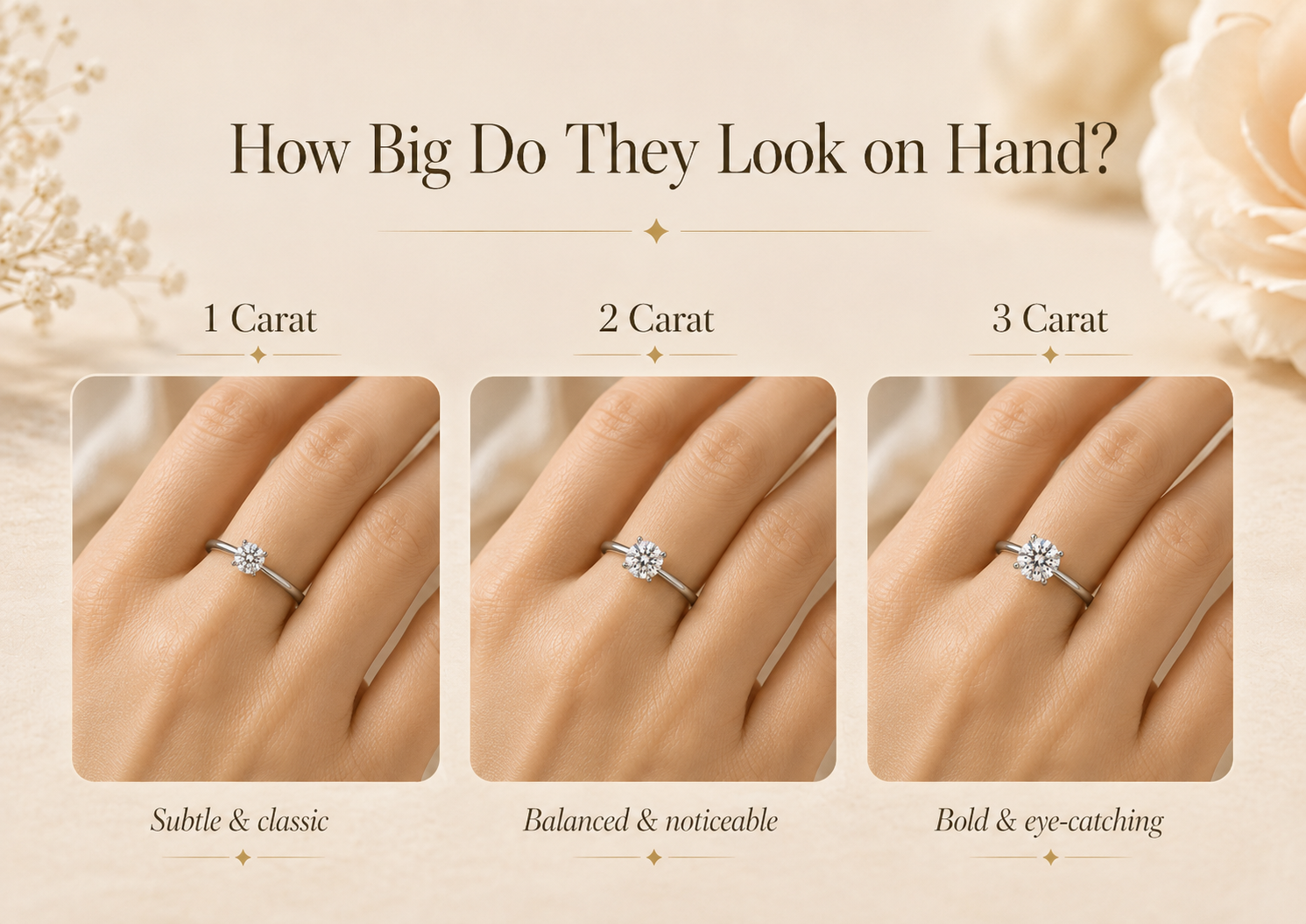
How Big Do 1, 2 and 3 Carat Moissanite Rings Look on Hand?
Moving from one carat to two carats creates a significant
increase in visible surface area. Moving from two to three
carats creates another clear increase, although the difference
may appear less dramatic than the carat numbers alone suggest.
One carat creates a subtle classic look, two carats feel
balanced and noticeable, and three carats make a bold statement.
Approx. 6.5 mm
1 Carat Moissanite
A one carat-equivalent round moissanite offers a
recognizable center-stone presence while remaining
refined and easy to style. It works especially well
with slim bands and classic solitaire settings.
Approx. 8.0 mm
2 Carat Moissanite
Two carats create stronger finger coverage and
noticeably more sparkle. It is a useful middle ground
for someone who wants an eye-catching ring without
moving fully into an oversized statement look.
Approx. 9.0–9.3 mm
3 Carat Moissanite
Three carats have a confident, luxurious appearance.
The stone becomes the dominant visual feature of the
ring, so secure prongs, balanced proportions and
comfortable construction become especially important.
03 · Finger Proportions
How Finger Size Changes the Appearance
The same stone can look very different on different hands.
A 2 carat stone may appear large on a narrow finger but more
moderate on a wider finger. This does not change the gemstone’s
actual dimensions—it changes how much of the finger’s visible
width the stone covers.
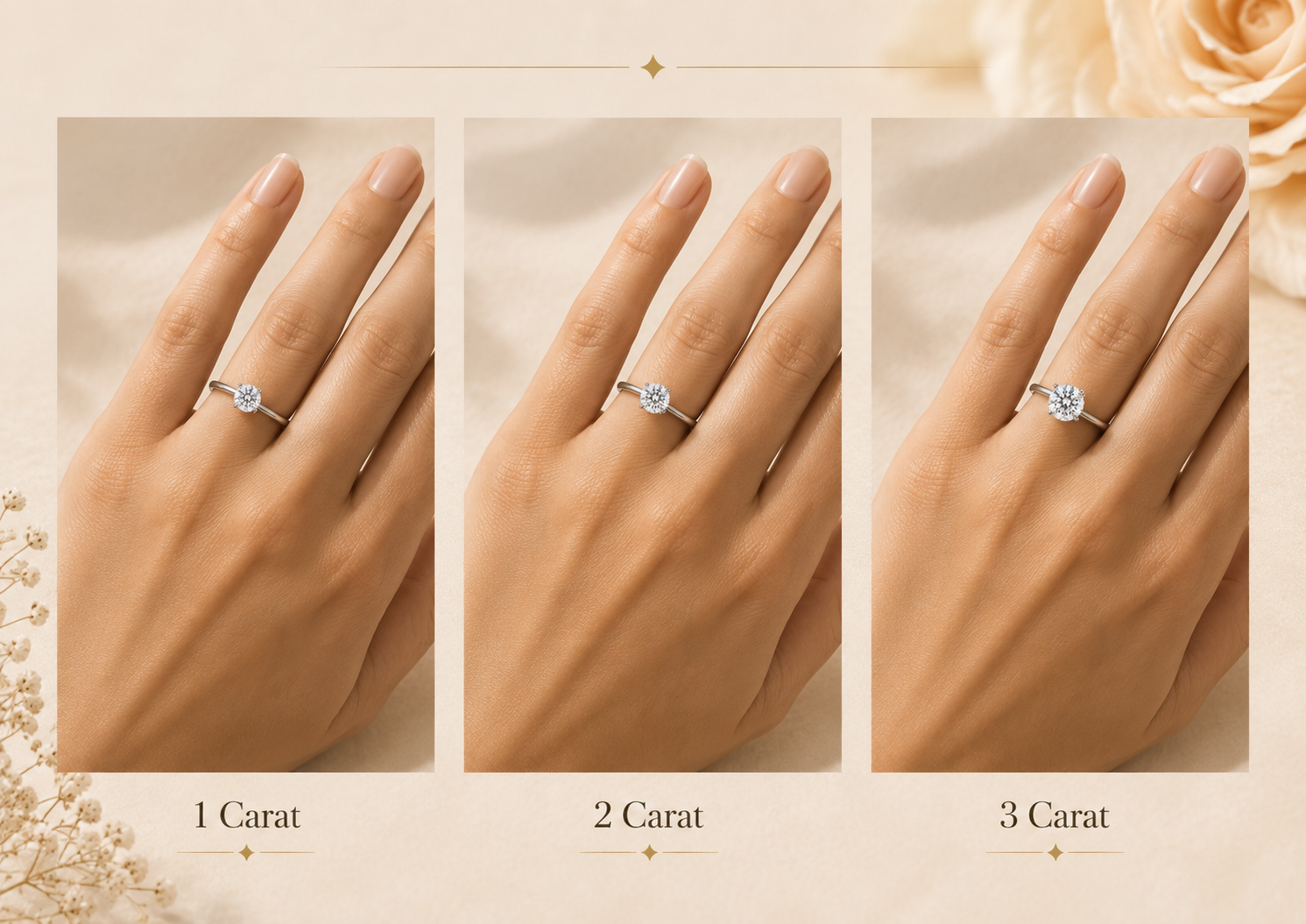
Comparing different center-stone sizes on a similar hand
helps show the change in visible finger coverage.
On smaller or narrower fingers
A 1 carat center stone can already look prominent. Two carats
may create a strong statement, while three carats can cover
a substantial portion of the finger width.
On medium-width fingers
One carat usually feels classic, two carats feel visibly
substantial, and three carats produce a bold appearance
without necessarily covering the entire visible width.
On wider fingers
Larger stones may look more proportionate because there is
more visual space around the center stone. Band width and
setting design can also help create a more balanced result.
Important:
There is no universally “correct” carat size for a particular
ring size. Finger proportions, knuckle width, nail shape and
personal style all affect the final appearance.
04 · Ring Construction
Side Profile, Setting Height and Everyday Comfort
Face-up diameter is only part of the comparison. A larger
gemstone may require a wider basket, stronger prongs or a
different setting profile. The stone does not always need to
sit higher, but the ring must provide enough support and
clearance for the chosen cut.
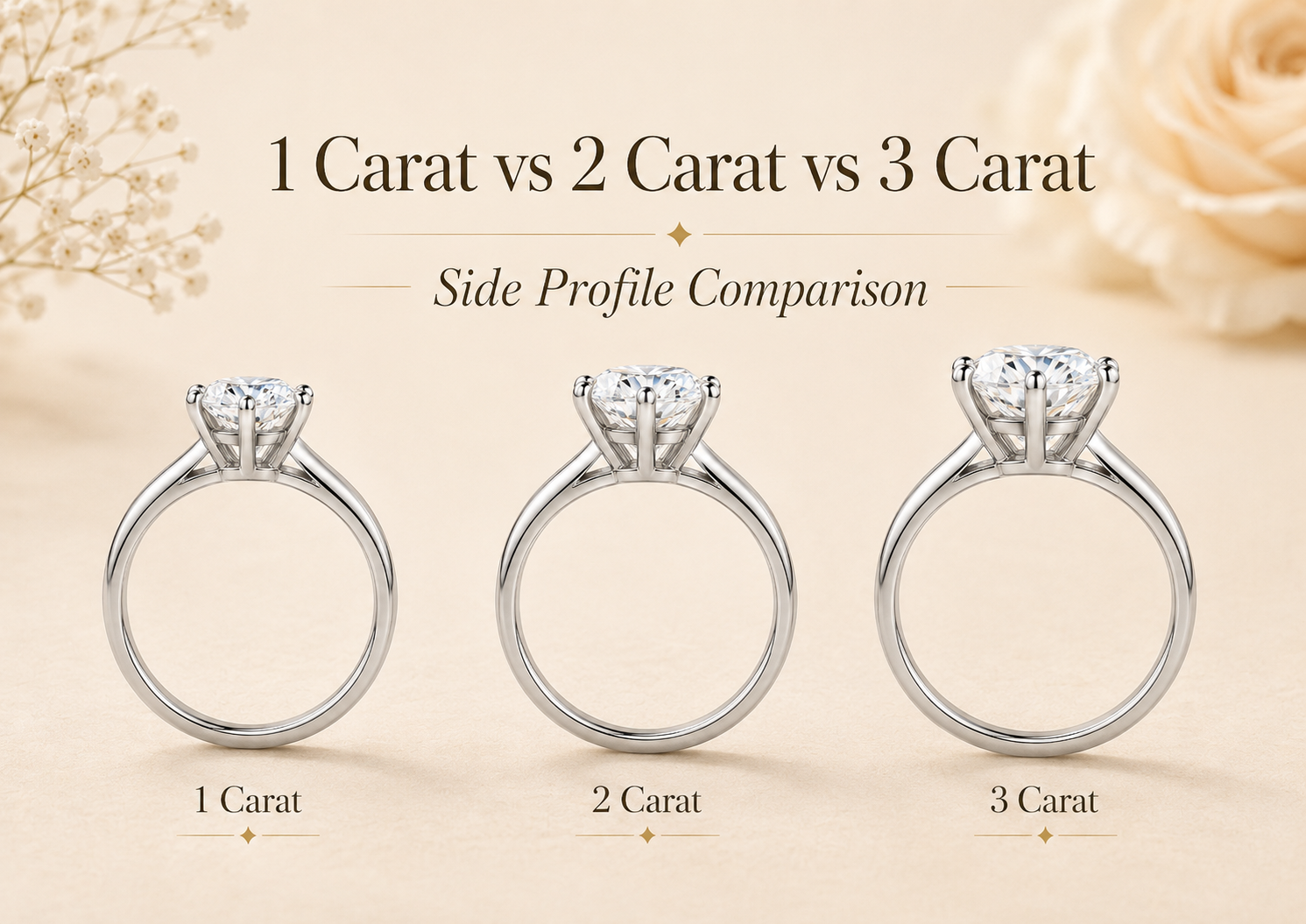
Side-view comparison illustrating how center-stone
diameter and setting structure may change as size increases.
Low-profile settings
A low setting keeps the stone closer to the finger. It can feel
practical for everyday wear and may be less likely to catch on
clothing, although the design must still allow adequate light,
cleaning access and structural support.
Higher settings
A higher profile can make the center stone more visible from
the side and may allow a wedding band to sit closer beside the
engagement ring. However, a high setting can also feel more
exposed during active daily use.
Prong security
Larger stones place more visual and structural emphasis on the
center setting. Prongs should be even, secure and proportionate
to the gemstone. The ring should also be inspected periodically,
especially if it is worn every day.
05 · Visual Size Factors
What Makes a Moissanite Ring Look Larger or Smaller?
Two rings using the same carat-equivalent center stone can
produce very different visual results. The complete design
matters just as much as the number shown in the product title.
Band Width
A slim band creates stronger contrast and can make the
center stone appear larger. A wider band may make the
overall ring feel more substantial but reduce the visual
contrast around the stone.
Halo Settings
A halo surrounds the center stone with smaller stones,
increasing the total visible footprint without requiring
a larger center gemstone.
Stone Shape
Oval, pear and marquise shapes create lengthwise finger
coverage and may appear larger in one direction than a
round stone with a similar carat equivalent.
Cut Proportions
A deeper-cut stone carries more of its weight below the
girdle, while a shallower stone may show more surface
area from above. Cutting quality should not be sacrificed
only to maximize visible diameter.
Prong Style
Fine, well-proportioned prongs expose more of the
gemstone. Heavy prongs may slightly reduce visible
surface area but can suit certain structural or
decorative designs.
Metal Color
White metal can visually blend with a colorless stone,
while yellow or rose-toned metal creates greater contrast
around the gemstone’s outline.
The best choice is not automatically the largest option.
A well-proportioned ring should suit the wearer’s lifestyle,
preferred level of sparkle, finger proportions and setting style.
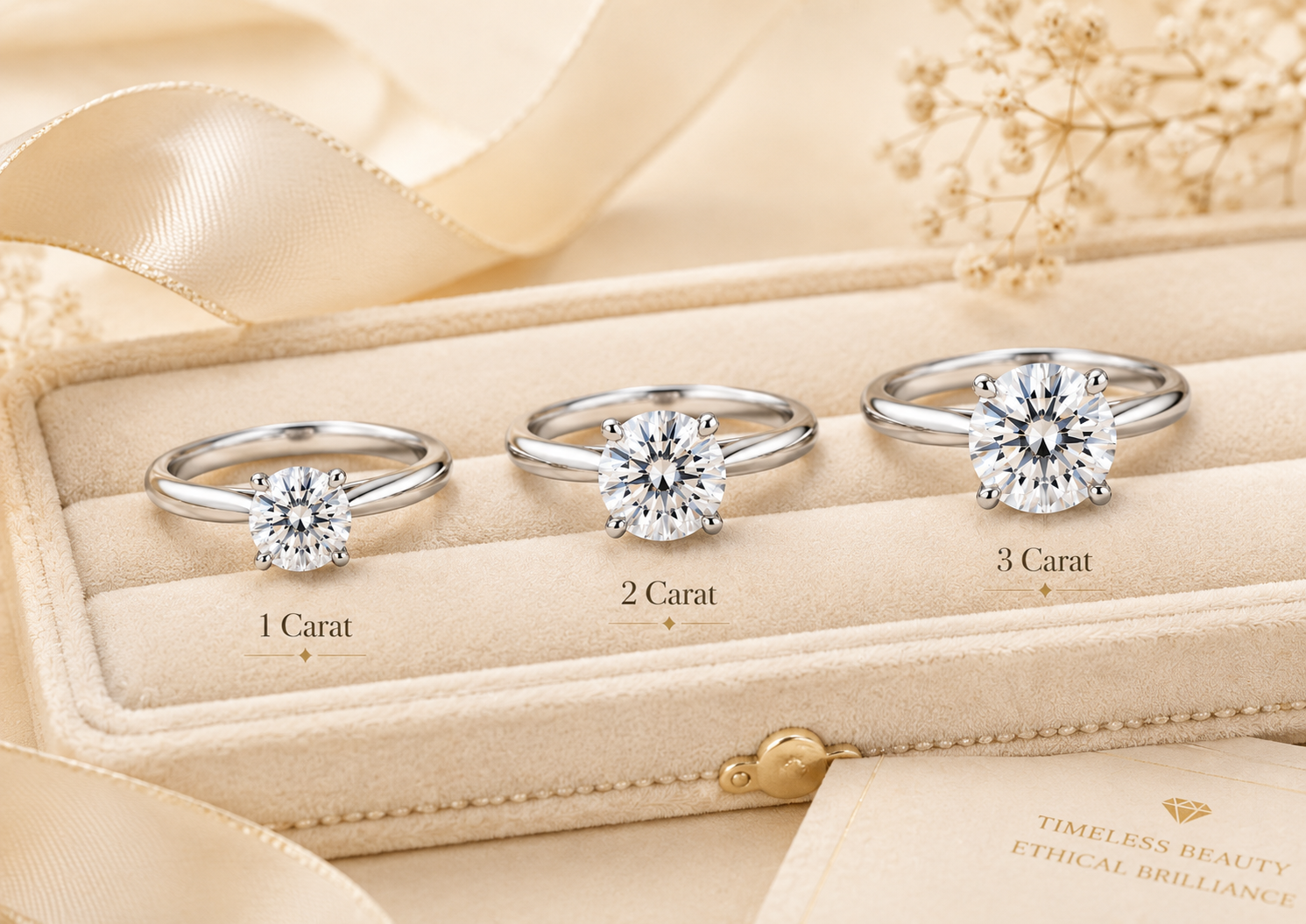
Three classic solitaire sizes shown together in a jewelry
tray for an overall style and proportion comparison.
Choose 1 Carat If…
You prefer a timeless, understated ring; want something
comfortable for regular wear; or enjoy delicate bands
and classic proportions.
Choose 2 Carats If…
You want a clearly noticeable center stone that still
feels balanced and versatile across engagement,
anniversary and statement-ring designs.
Choose 3 Carats If…
You enjoy bold jewelry, want the center gemstone to
dominate the design, and are comfortable with a ring
that attracts immediate attention.
Check the Millimeter Size
Compare the actual diameter rather than relying only on
the carat-equivalent label.
Consider Finger Proportions
Use photographs or printable size references to estimate
how much finger coverage you prefer.
Review the Setting
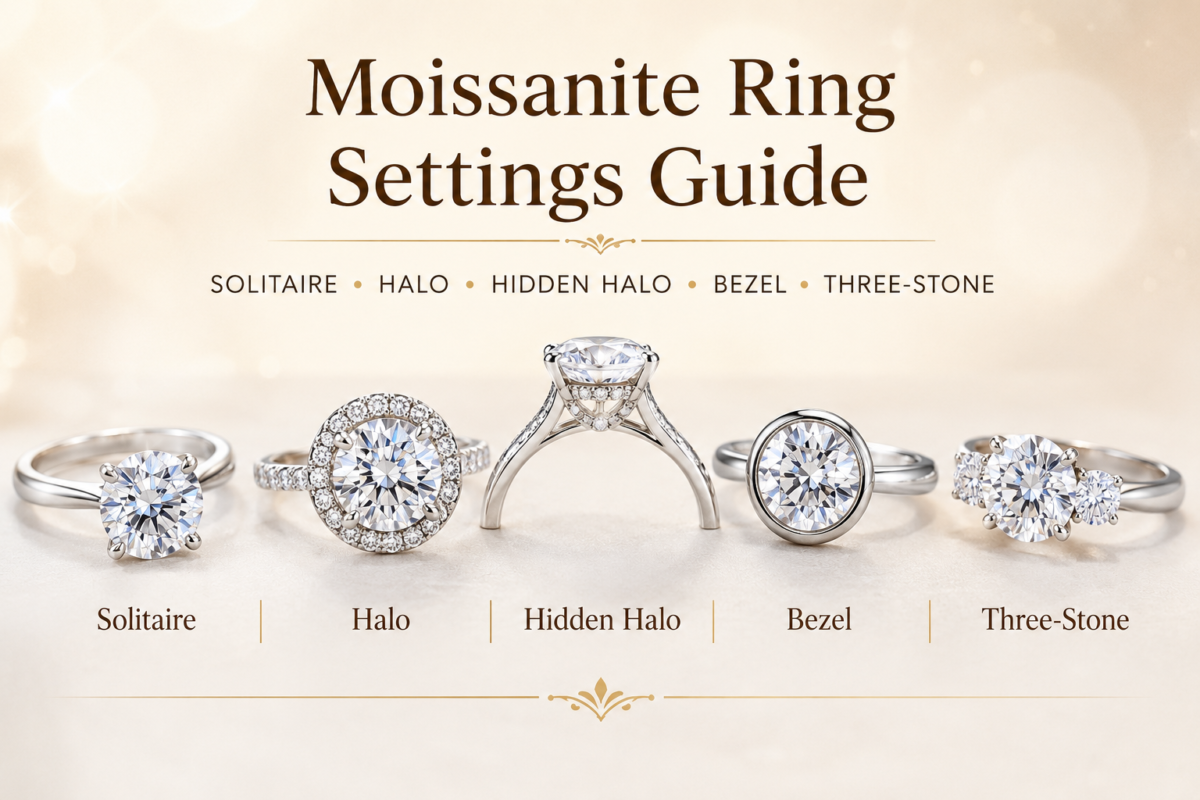
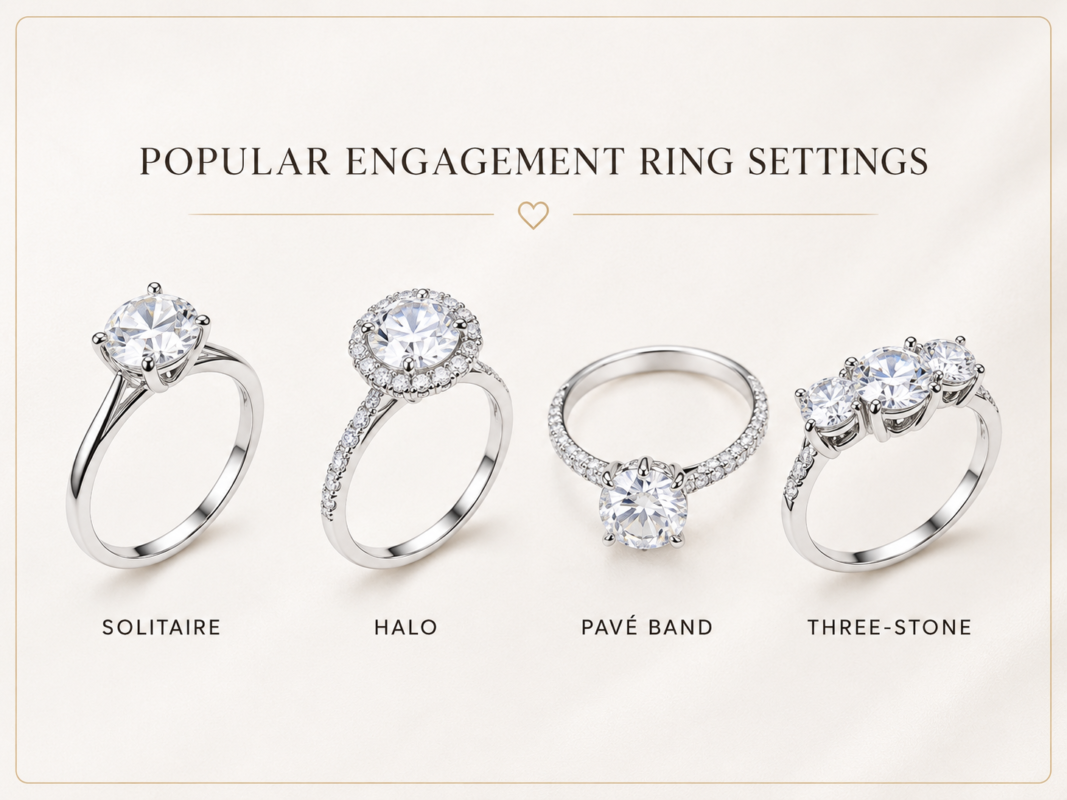
Compare solitaire, halo, bezel, pavé and hidden-halo
settings because each changes the overall footprint.
Think About Daily Wear
Consider work, clothing, exercise and everyday hand use
when choosing setting height and stone size.
Is a 1 carat moissanite the same size as a 1 carat diamond?
A round moissanite measuring about 6.5 mm is commonly
described as having a 1 carat diamond-equivalent
appearance. Its actual weight may differ because
moissanite and diamond have different densities.
Is the difference between 1 and 2 carats noticeable?
Yes. A typical round stone increases from approximately
6.5 mm to 8.0 mm in diameter. That change creates
noticeably greater surface area and finger coverage.
Does a 3 carat moissanite look too large?
That depends on finger size, personal style and setting
design. Three carats create a bold appearance, but a
balanced band and well-proportioned setting can keep the
ring visually harmonious.
What is the most popular size for a moissanite engagement ring?
There is no single best size, but round stones around
6.5–8.0 mm offer a classic-to-noticeable range that works
with many engagement ring settings and finger proportions.
Does an oval moissanite look larger than a round moissanite?
An oval may appear larger in length and create more
vertical finger coverage. Always compare actual length
and width measurements because oval proportions vary.
Should I choose moissanite by carat or millimeters?
Use millimeters when visible size is your main concern.
Carat-equivalent weight is useful as a general category,
but actual dimensions provide a clearer idea of how the
stone will look.
Final measurement disclaimer:
All carat-equivalent and millimeter comparisons are approximate.
Actual dimensions, weight, setting height and appearance vary by
stone shape, cut proportions, ring construction and manufacturer.
Review the measurements listed on the individual product page
before placing an order.
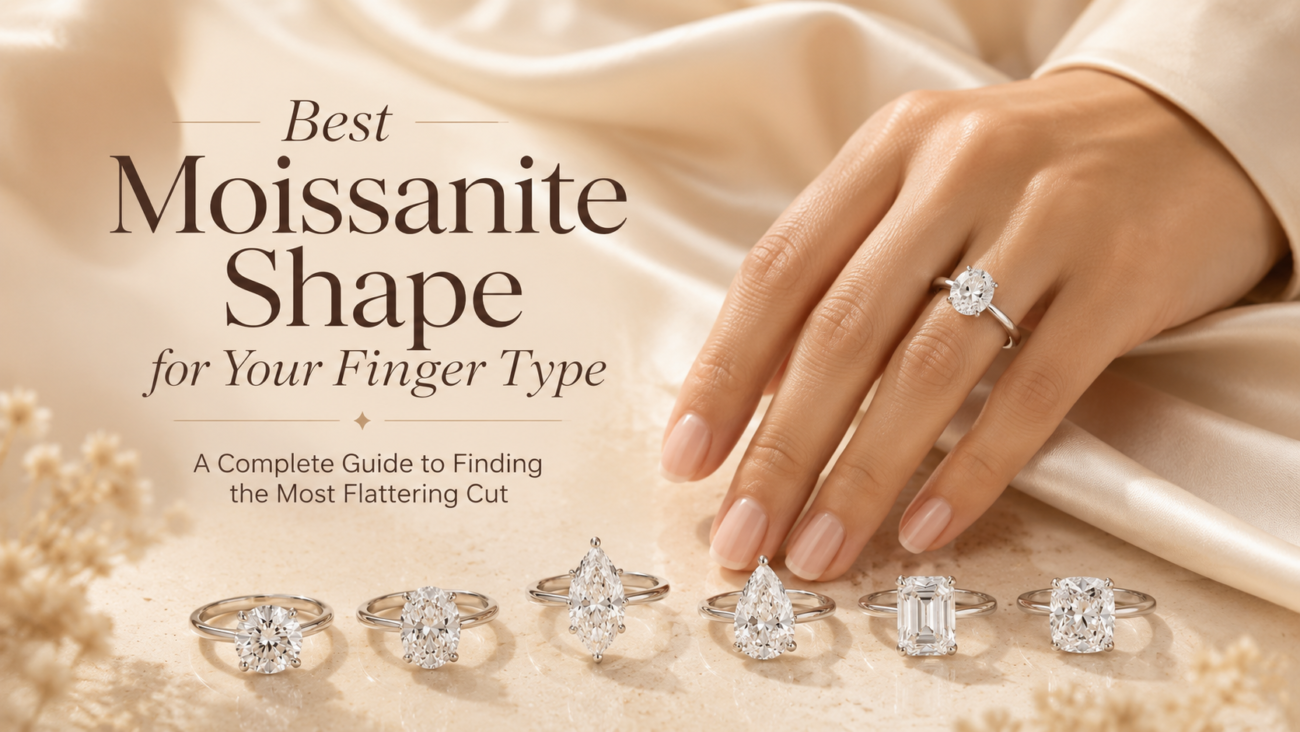
Not every moissanite shape looks the same on every hand. This complete guide compares round, oval, marquise, pear, emerald and cushion cuts to help you choose the most flattering moissanite shape for your finger length, width, hand size and personal style.
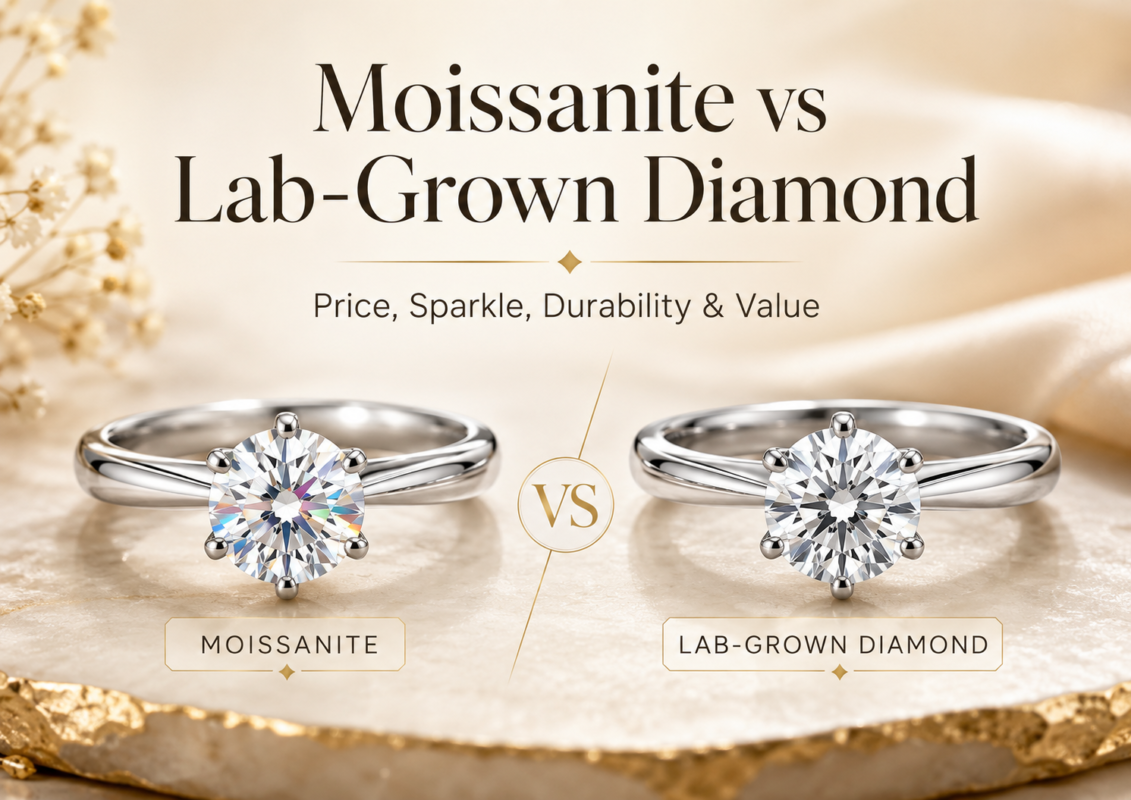
Compare moissanite vs lab-grown diamond by price, sparkle, durability, size and value. Learn the differences and choose the right stone for your jewelry.
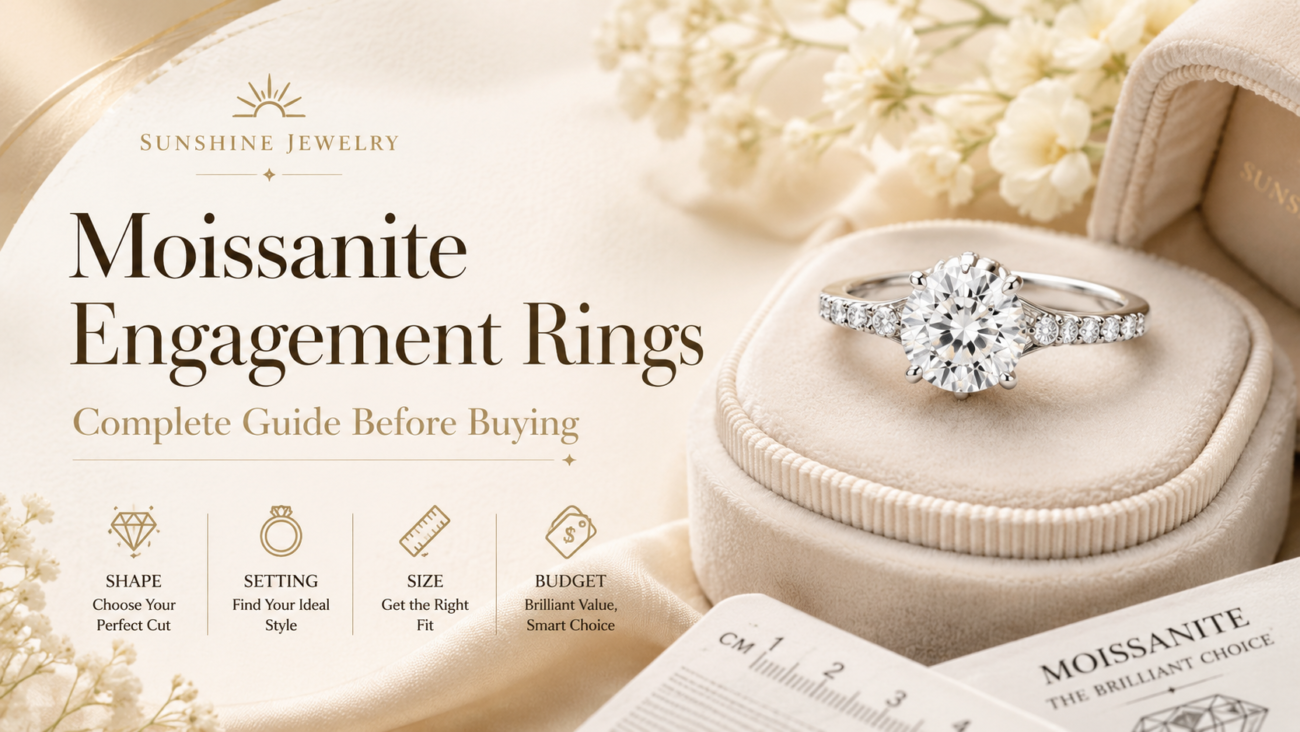
A complete guide to choosing a moissanite engagement ring, covering stone shapes, sizes, settings, ring sizing, materials, certificates, budget and care.