Sapphire blue accessories are jewelry and fashion accents chosen for their rich blue appearance, but the color name alone does not prove which gemstone or material a piece contains. Choose them by checking the product specifications first, then match the jewelry type, metal tone, size, and shade of blue to your wardrobe. For balanced styling, let one blue piece lead and keep the surrounding colors intentional.
Deep blue can feel polished, expressive, or quietly dramatic depending on how it is used. A small blue stud can act like a neutral accent, while a larger pendant or drop earring can become the center of an outfit. This guide explains what to verify before buying, how to coordinate blue jewelry without rigid rules, and how to care for the piece according to its actual materials.
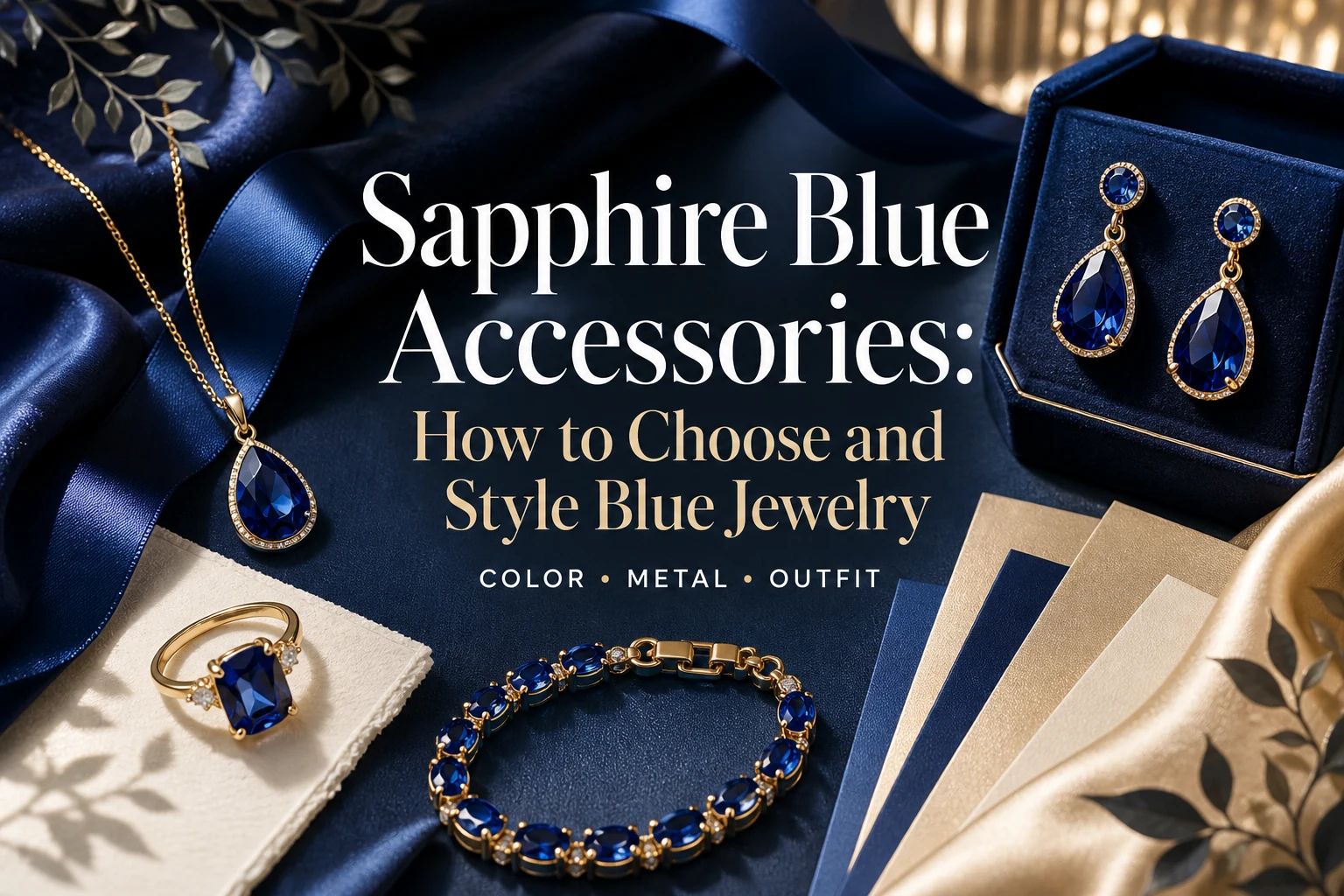
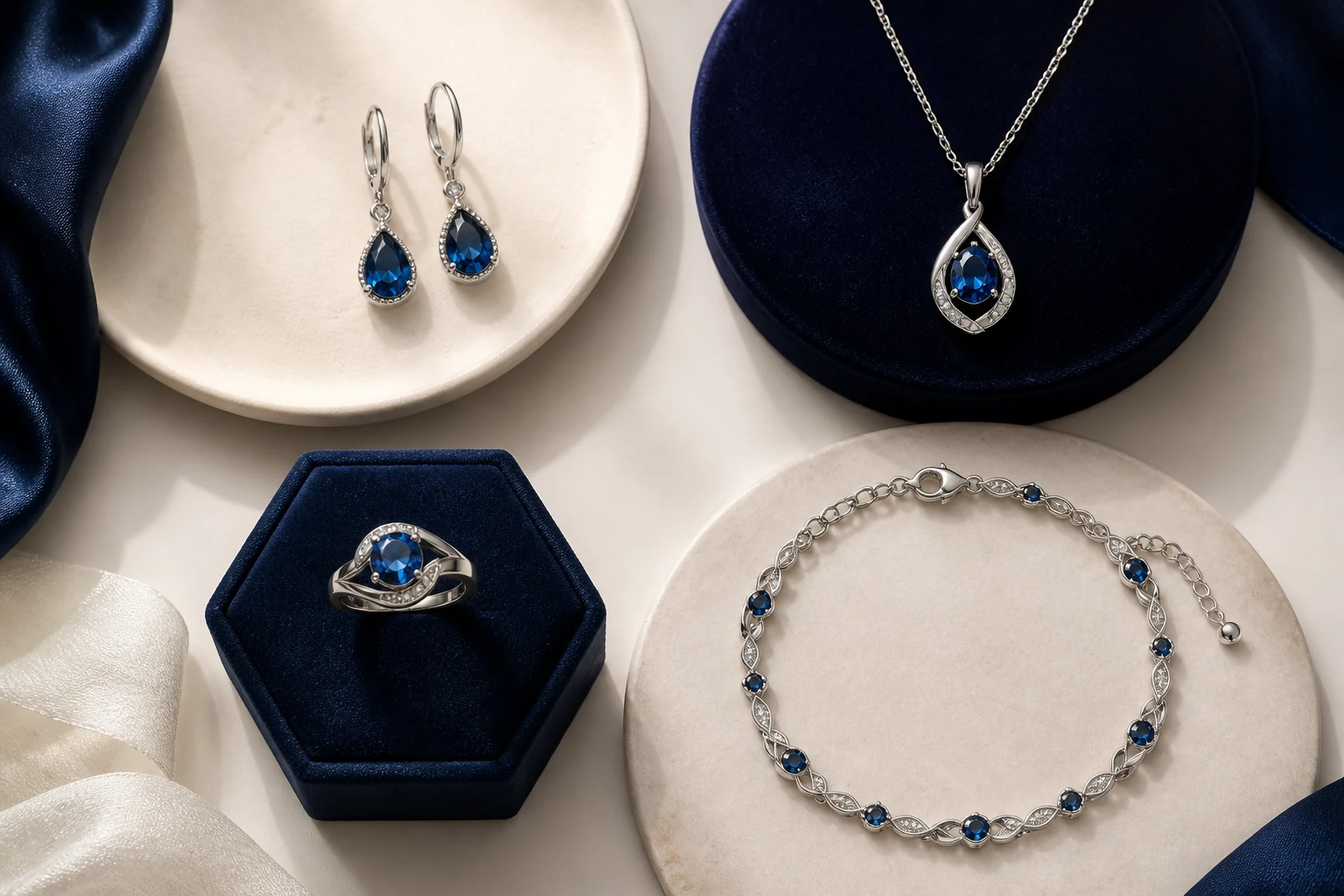
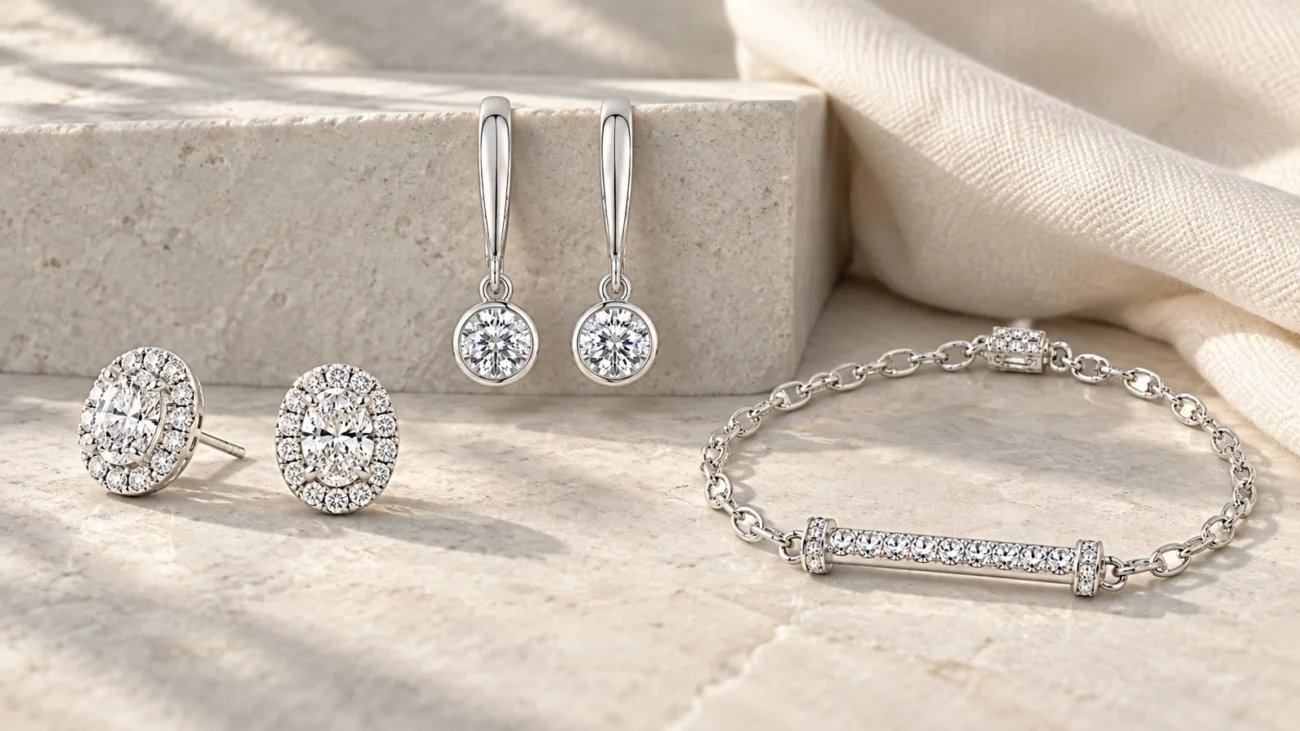
Sapphire blue accessories: how to choose color, metal tone, jewelry type, and outfit pairings.
What Are Sapphire Blue Accessories?
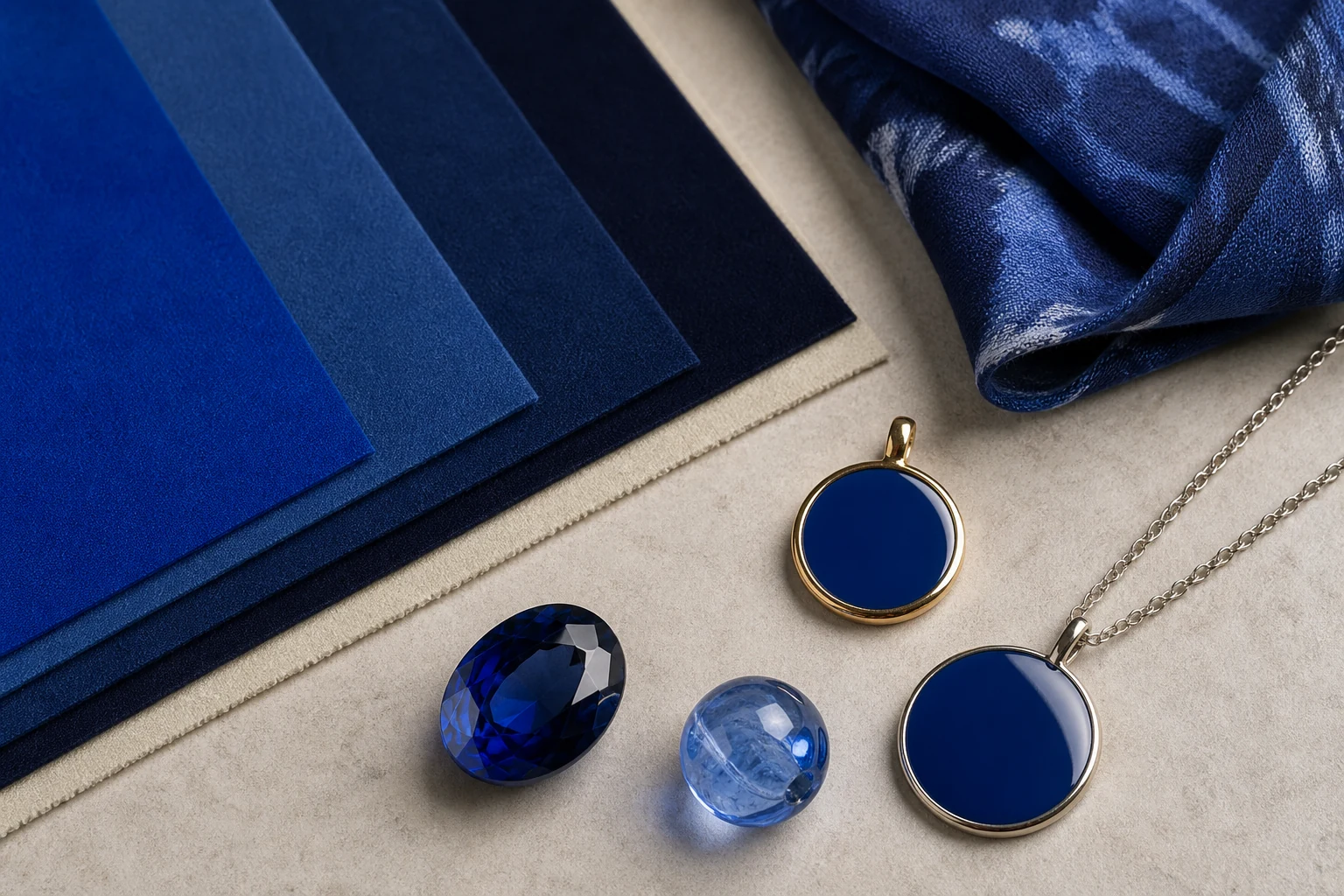
“Sapphire blue” usually describes a visual color family: a saturated blue that may range from clear royal blue to a darker inky shade. In an accessory name, it can describe the appearance of a stone, coating, enamel, crystal, fabric, or another decorative element. It should not automatically be read as a claim that the item contains natural sapphire.
This distinction matters because appearance, composition, care, and price are different questions. A title may help you find the color you want, while the specifications should tell you what the piece is actually made from. When a listing uses terms such as “sapphire color,” “blue stone,” or “deep blue,” treat those words as appearance cues unless the material section clearly states otherwise.
What a label may tell you
What it does not confirm by itself
Where to verify
The intended blue color or visual mood
The exact gemstone identity
Stone or material specifications
The style name of a design
Whether the color is natural, treated, coated, or created another way
Product description and seller information
A general metal-tone appearance
The base metal, plating, or metal purity
Metal and finish specifications
A visual size in photographs
The real dimensions, weight, or fit
Measurements and size chart
A sapphire-blue color description can cover different appearances and does not establish gemstone identity.
Read the Product Page Before You Choose the Color
The most useful buying habit is to separate the color you see from the construction you are buying. Before comparing shades, confirm four groups of details.
1. Stone or decorative material
Look for a direct statement of the stone or decorative material. If a listing describes moissanite, crystal, enamel, or another material, do not replace that description with “sapphire” simply because the piece looks sapphire blue. If the wording is unclear, ask the seller rather than filling in the gap yourself.
2. Metal and finish
Check the base metal, any stated purity mark, and whether a surface finish or plating is listed. “Silver color,” “white gold plated,” and “925 sterling silver” are not interchangeable descriptions. The live product page should control your understanding of the item.
3. Measurements and fit
Photographs can make a stone, pendant, or earring look larger or smaller than it is. Review millimeter measurements, chain length, earring drop, closure type, and available ring sizes. For gifts, necklaces and earrings may reduce sizing uncertainty, but comfort and personal style still matter.
4. Care and purchase terms
Care depends on the real stone, metal, finish, setting, and construction—not on the word “blue.” Review the seller’s care instructions, what is included, and the current exchange or return information before ordering.
If you are comparing color grading rather than fashion color, Sunshine Jewelry’s moissanite color and clarity guide explains that separate buying question. That page is about evaluating moissanite color and clarity; this guide is about choosing and styling visibly blue accessories.
Choose the Right Type of Blue Jewelry
The same blue shade sends a different visual message in earrings, a necklace, or a ring. Start with the category the wearer already uses most often, then choose the amount of blue you want the outfit to carry.
Blue earrings: light near the face
Studs, huggies, and short drops keep the blue close to the face. Small designs can add color without controlling the entire outfit; longer drops create more movement and become more noticeable. Check pierced-ear requirements, closure, dimensions, and likely weight. Sunshine Jewelry’s Blue Teardrop Moissanite Drop Earrings provide one real example of a blue earring direction; use the live listing to verify its current specifications.
Blue necklaces: a clear focal point
A pendant sits near the neckline, so chain length and clothing neckline work together. A small blue pendant can brighten a simple shirt, while a larger motif may suit an open neckline or evening look. The Rose Gold Plated Sapphire Color Moissanite Necklace shows how a sapphire-color description can appear in a product title without changing the need to read the stone and metal details on the page.
Blue rings: concentrated color and higher fit risk
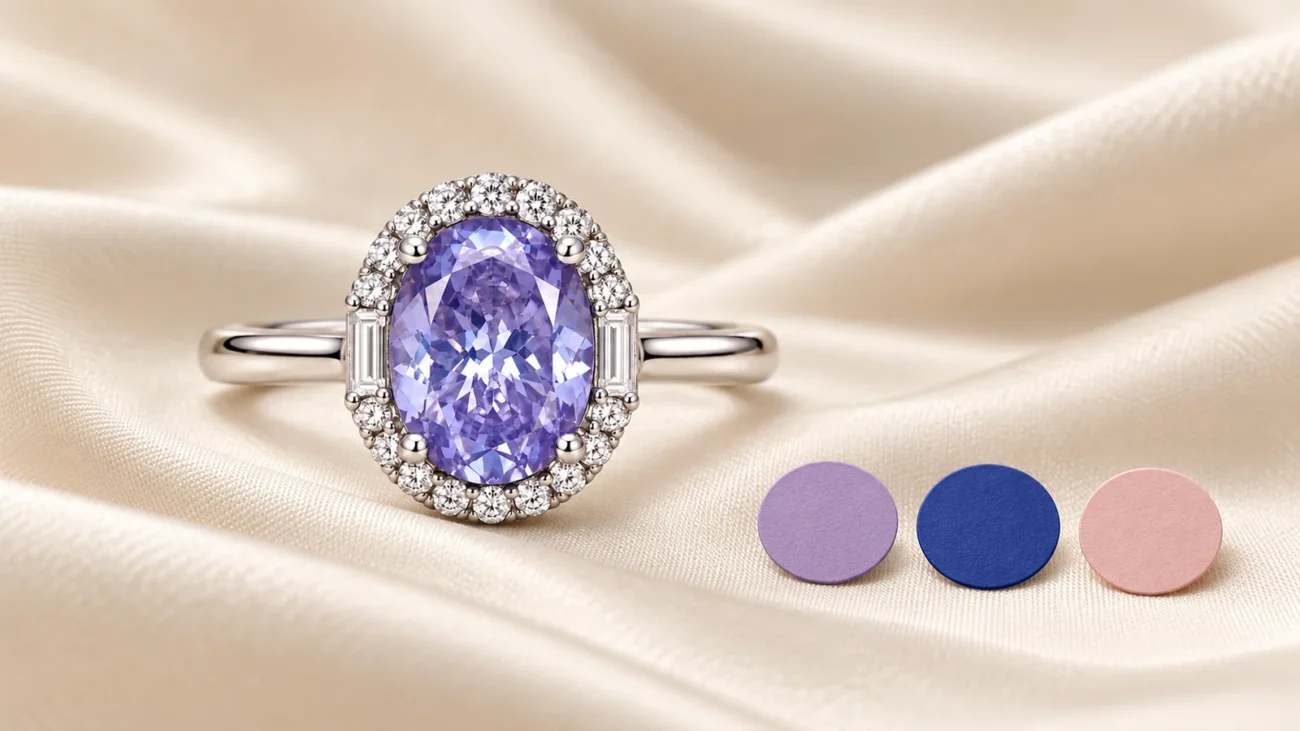
A ring places the color where it is constantly visible to the wearer. It can be an effective statement piece, but exact size, setting height, daily tasks, and the meaning of the gift all deserve attention. The White Gold Plated Deep Blue Moissanite Ring is one design example. Confirm its live size and material information instead of inferring details from the title or photograph.
Blue bracelets: movement and layering
Bracelets place color farther from the face and can be easier to combine with a watch or plain chain. Check wrist measurement, closure, adjustability, and whether decorative elements could catch during daily activity. When layering, repeat either the metal tone or the scale so the pieces look related.
Compare the visual impact and fit considerations of blue earrings, necklaces, rings, and bracelets.
Which Metal Tone Works With Sapphire Blue?
There is no universal “best” metal tone. The strongest choice is the one that matches the wearer’s existing jewelry and creates the contrast you want.
Silver-toned or white-metal looks can make blue feel crisp, cool, and graphic. This is a practical direction when the wearer already uses cool-toned jewelry.
Yellow-gold-toned looks create a warmer color contrast. The blue may appear more pronounced because the surrounding tone is visually different.
Rose-gold-toned looks add a softer warm contrast. This can work when blush, cream, muted pink, or warm neutral colors already appear in the wardrobe.
Mixed metals can look intentional when one feature repeats, such as a consistent chain scale, shape, or finish. Avoid mixing only because separate pieces happen to be available.
These are styling effects, not rules about skin tone or who is “allowed” to wear a color. Personal preference and the jewelry already owned are better guides than a rigid color formula.
How to Pair Blue Jewelry With Outfits
Start by deciding whether the blue should blend, contrast, or lead. Then limit the number of competing focal points.
Outfit palette
What blue jewelry contributes
Simple styling approach
Black, white, gray, cream, or denim
A clear color accent
Use one blue focal piece and keep other jewelry restrained
Navy or tonal blue
Depth and a coordinated color story
Vary the shade or texture so the jewelry does not disappear
Warm beige, camel, rust, or muted coral
Visible warm-cool contrast
Repeat the metal tone elsewhere and let the blue remain the accent
Floral or patterned clothing
A color pulled from the pattern
Choose a smaller piece and repeat an existing blue in the print
Bright multicolor outfit
Another potential focal point
Reduce jewelry scale or choose only one visible blue piece
For work or polished daytime outfits
Choose a compact earring or pendant, especially when the clothing already has strong structure or pattern. The blue adds identity without making the outfit difficult to repeat. Confirm that the size, drop, and setting suit the wearer’s workplace and comfort needs.
For relaxed weekends
Denim, knitwear, plain shirts, and casual dresses give blue jewelry room to show. A small pendant or drop earring can be the only colored accessory. If several pieces are worn, repeat the metal tone and vary the scale.
For evening or special occasions
A larger blue focal piece can work with a simpler neckline or monochrome outfit. More sparkle is not automatically better: decide whether the earrings, necklace, or ring should lead, then let the other pieces support it.
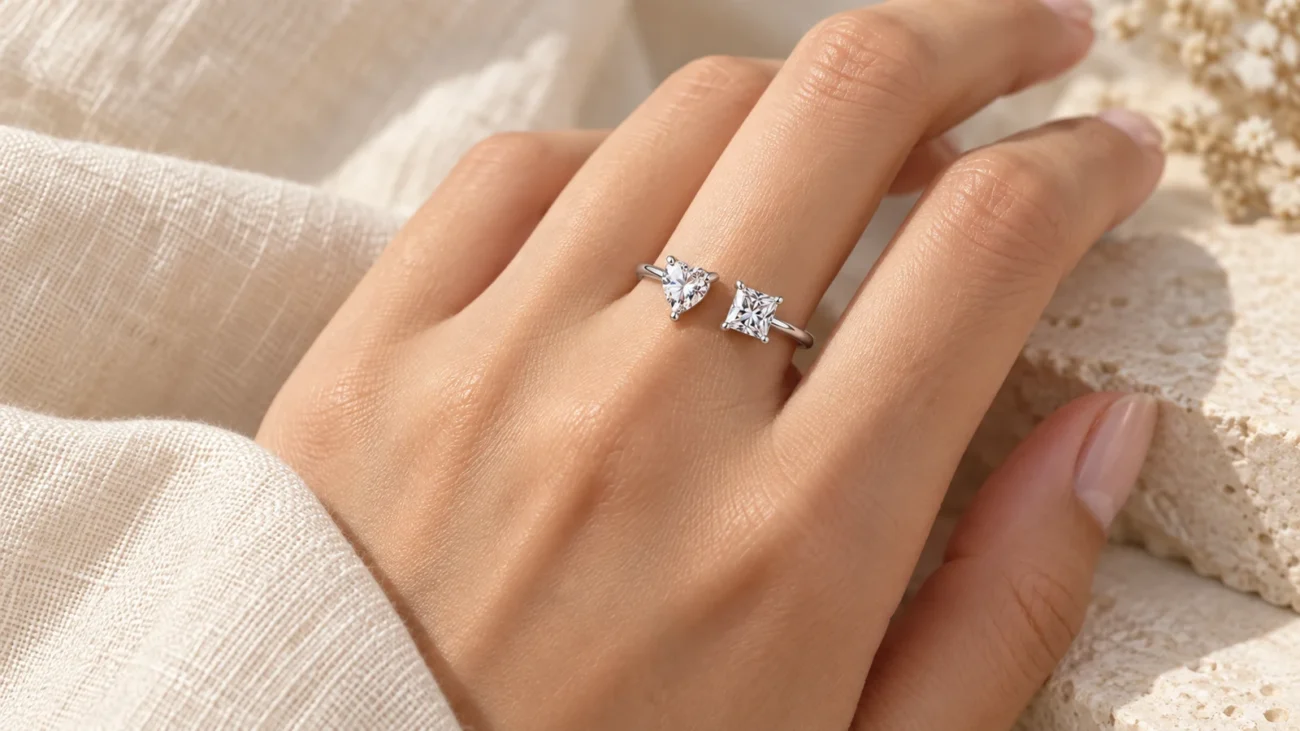
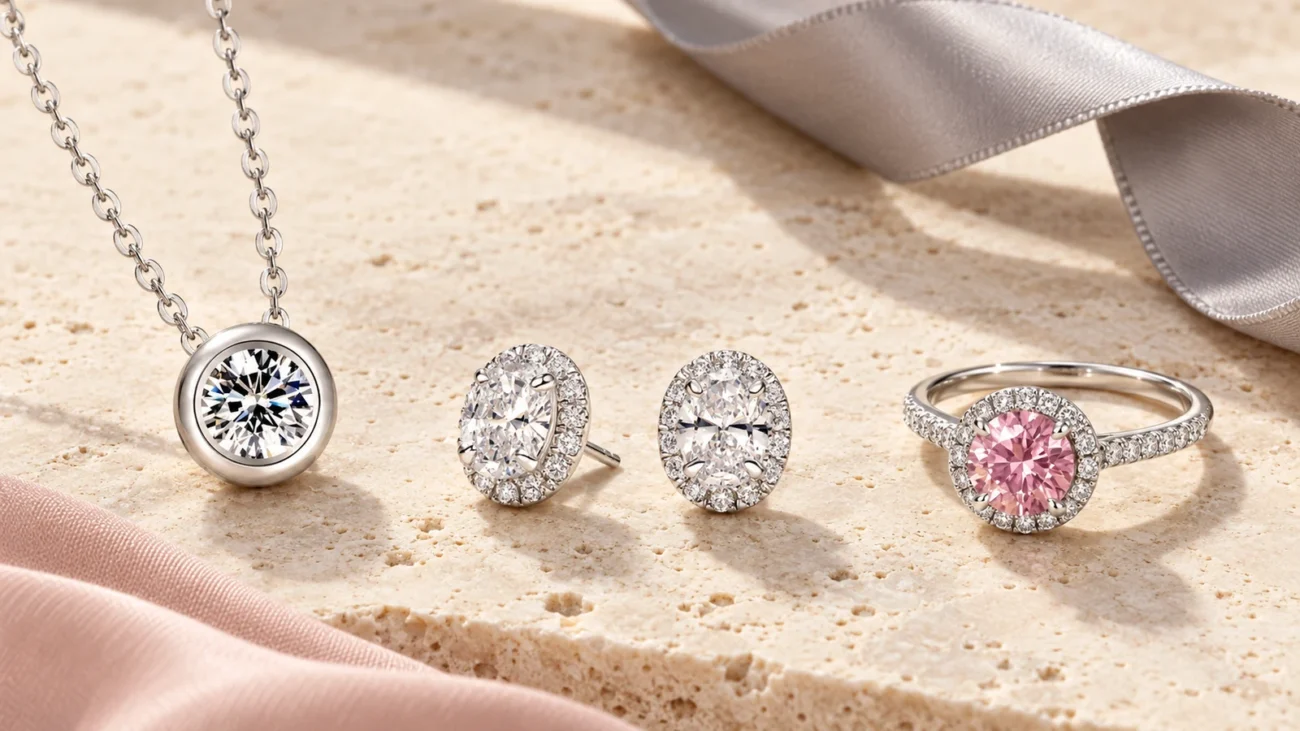
One blue focal piece can add color to a neutral everyday outfit without competing with other jewelry.
Use One Focal Piece or Build a Set?
One focal piece is the lowest-effort way to style sapphire blue accessories. Choose the item closest to the face or most visible in the outfit, then keep the rest of the jewelry quieter. This makes the blue look intentional and reduces competition between shapes.
A coordinated set can work when the pieces share one design language without looking identical. Repeat two elements—such as blue color and silver-toned metal—while varying one element, such as scale. If the necklace is large, use smaller earrings. If the earrings are long, consider skipping a necklace and using a simple bracelet or ring instead.
How to Choose Sapphire Blue Accessories as a Gift
A gift should begin with the recipient’s habits. Check whether they wear earrings, necklaces, rings, or bracelets most often; notice their usual metal tone and the size of their everyday pieces. Blue is a strong preference signal, so confirm that the color appears in their clothing or accessories rather than assuming it will become a favorite.
Choose the jewelry category they already wear.
Match the metal tone they use most often.
Select a blue shade that appears elsewhere in their wardrobe.
Check dimensions, closure, fit, and current product specifications.
Keep the receipt or exchange information available.
For a recipient whose preferences are uncertain, a moderate-size necklace or familiar earring style may be easier than a ring. A ring can carry extra sizing and symbolic questions, so choose it only when those details are known.
Care for the Materials, Not Just the Color
There is no single care method for every blue accessory. A moissanite stone, plated setting, sterling silver component, enamel detail, and fabric accessory may each require different handling. Follow the instructions for the specific item and ask the seller if those instructions are missing.
Check the construction before selecting a cleaner or method.
Avoid assuming that every blue surface reacts the same way to water, heat, cosmetics, or cleaning products.
Store pieces separately when contact could scratch stones, finishes, or metal surfaces.
Inspect clasps, prongs, and settings periodically, especially on frequently worn jewelry.
Use professional help when a piece is damaged, loose, or made from materials you cannot identify.
Sunshine Jewelry’s jewelry care guide provides a broader starting point. The product-specific instructions should still take priority when they differ from general advice.
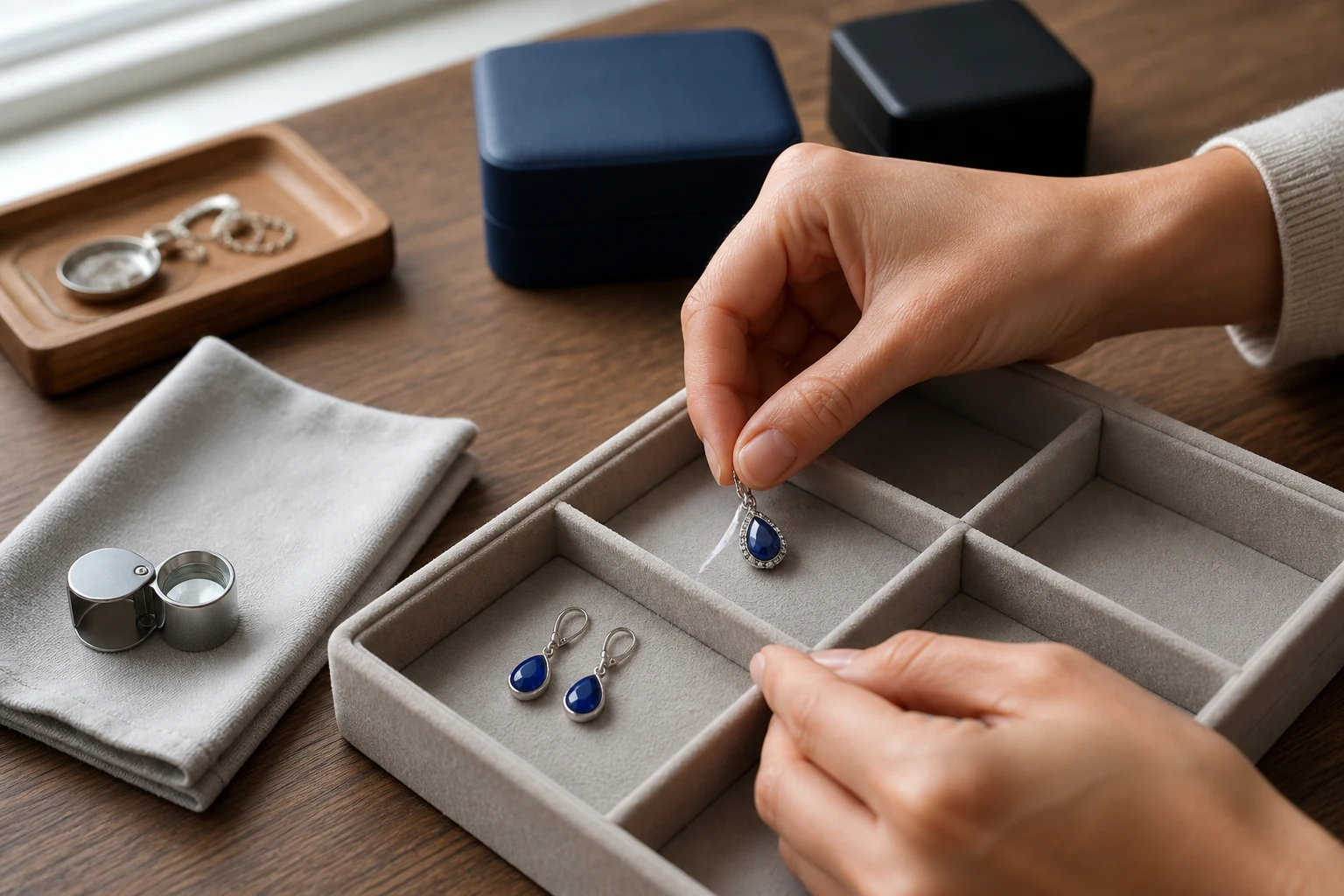
Store jewelry separately and follow care guidance for its actual stone, metal, finish, and construction.
Common Mistakes to Avoid
Assuming “sapphire blue” means natural sapphire. Verify the stone or material instead of relying on color language.
Buying from photographs alone. Check dimensions, fit, metal, finish, closure, and current terms.
Matching every accessory exactly. Repeating color, metal, and scale at once can feel overly uniform; vary one element.
Using several competing statement pieces. Choose one visual leader and let the rest support it.
Following rigid skin-tone rules. Personal preference and an existing wardrobe are more useful than a universal formula.
Applying generic care advice to an unknown material. Identify the construction before cleaning.
A Final Buying Checklist
Is “sapphire blue” describing color, verified gemstone identity, or a product style name?
What are the stated stone, metal, finish, and construction?
Are the dimensions, chain length, drop, closure, and size appropriate?
Will the piece blend, contrast, or act as the outfit’s focal point?
Does its metal tone match jewelry the wearer already uses?
Are care instructions and purchase terms clear?
When you are ready to compare forms and colors, you can browse all Sunshine Jewelry products. Read each live listing for the current materials, dimensions, availability, and care information before deciding.
Frequently Asked Questions
Does sapphire blue jewelry always contain sapphire?
No. “Sapphire blue” can be a color description or style name. It does not prove that a piece contains natural or lab-created sapphire. Verify the stone or decorative material in the specifications, and ask the seller when the wording is unclear.
Can moissanite be used in blue-looking jewelry?
Some product listings describe blue or sapphire-color moissanite jewelry. The specific product page should explain what is being sold and how the color is described. Do not infer treatment, origin, or composition from a photograph alone.
What colors look good with sapphire blue accessories?
Neutrals such as black, white, gray, cream, and denim can make blue the focal accent. Navy creates a tonal look, while warm muted colors can create contrast. These are styling options, not fixed rules; use the wearer’s wardrobe as the guide.
Should I choose silver, gold, or rose gold with blue jewelry?
Choose the metal tone that matches the wearer’s existing collection and the contrast you want. Silver-toned looks can feel cool and crisp, yellow-gold-toned looks warmer, and rose-gold-toned looks softer. Confirm the actual metal and finish separately from its color.
Can sapphire blue accessories be worn every day?
They can be styled for everyday use when the size, comfort, closure, setting, and materials suit the wearer’s routine. Everyday suitability depends on the specific item and activities, not on blue color alone.
How do I clean blue jewelry?
Follow the instructions for the actual stone, metal, finish, and construction. Do not choose a cleaner only because the jewelry is blue. If the materials are unknown or the setting is loose, ask the seller or a qualified jewelry professional before cleaning.
Is blue jewelry a good gift?
It can be a thoughtful gift when the recipient already likes blue and wears the chosen jewelry category. Confirm metal preference, size or fit, and the strength of the color. Include exchange information in case the style feels different in person.
Let the Blue Look Intentional
Sapphire blue accessories work best when color, construction, fit, and styling are treated as separate decisions. Verify what the piece is made from, choose the jewelry type the wearer will actually use, and decide whether the blue should blend, contrast, or lead. One well-chosen piece can carry the entire color story without needing every accessory to match.
Choose a women's sunshine diamond ring gift by checking her style, exact ring size, verified listing details, daily routine, and current store policies.