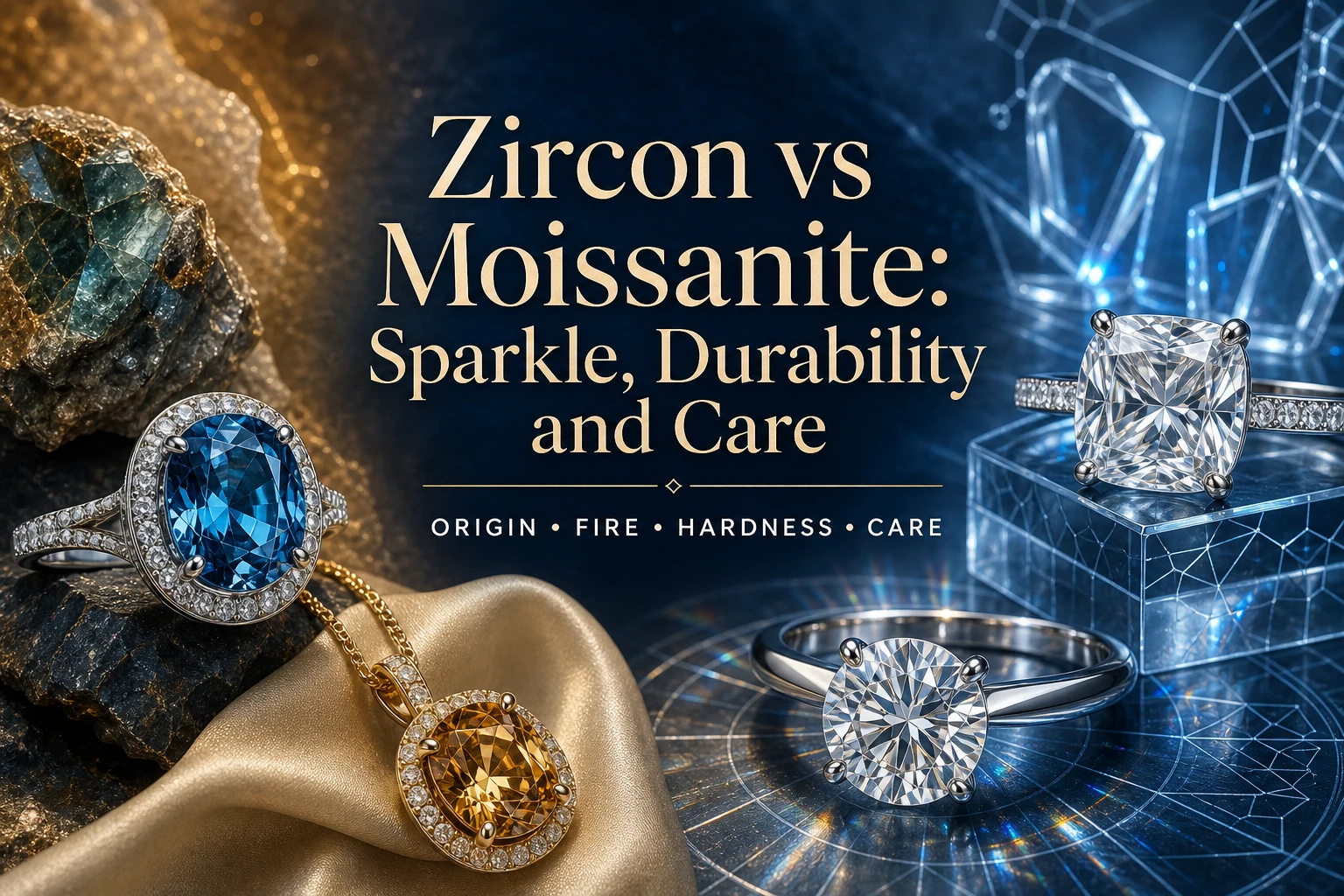
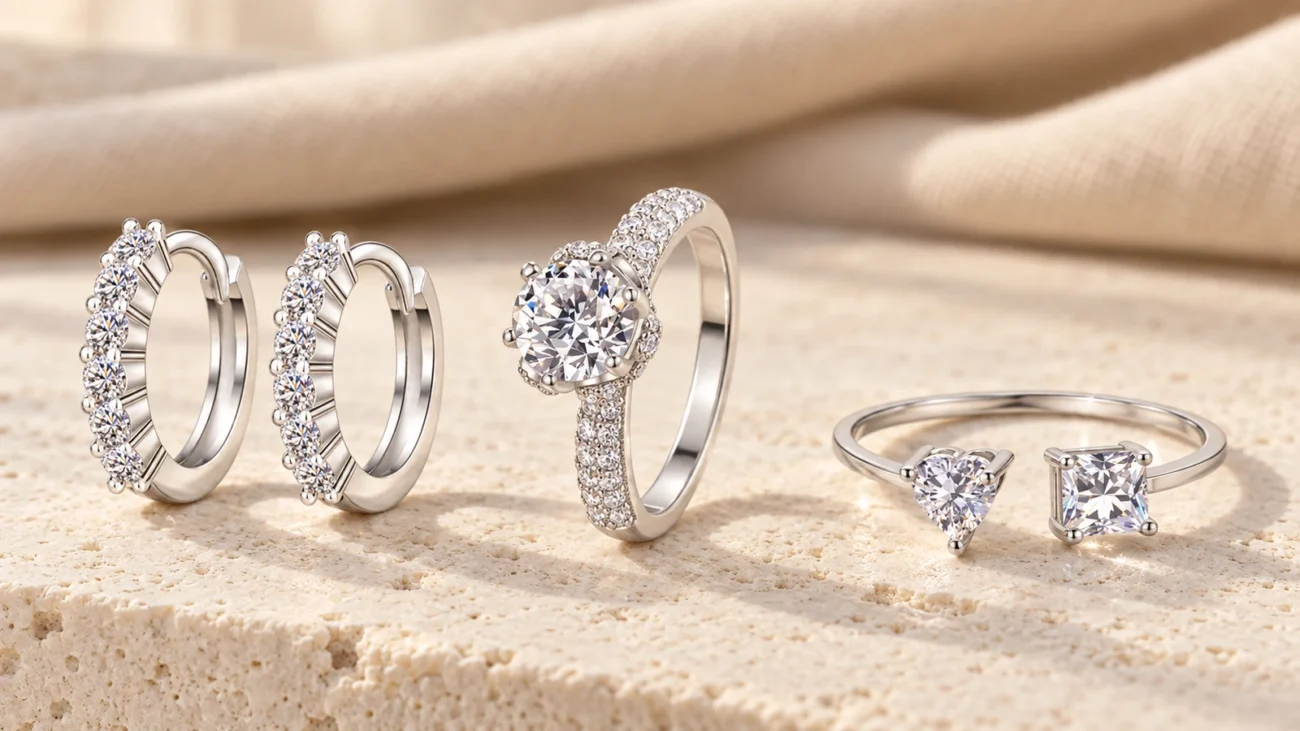
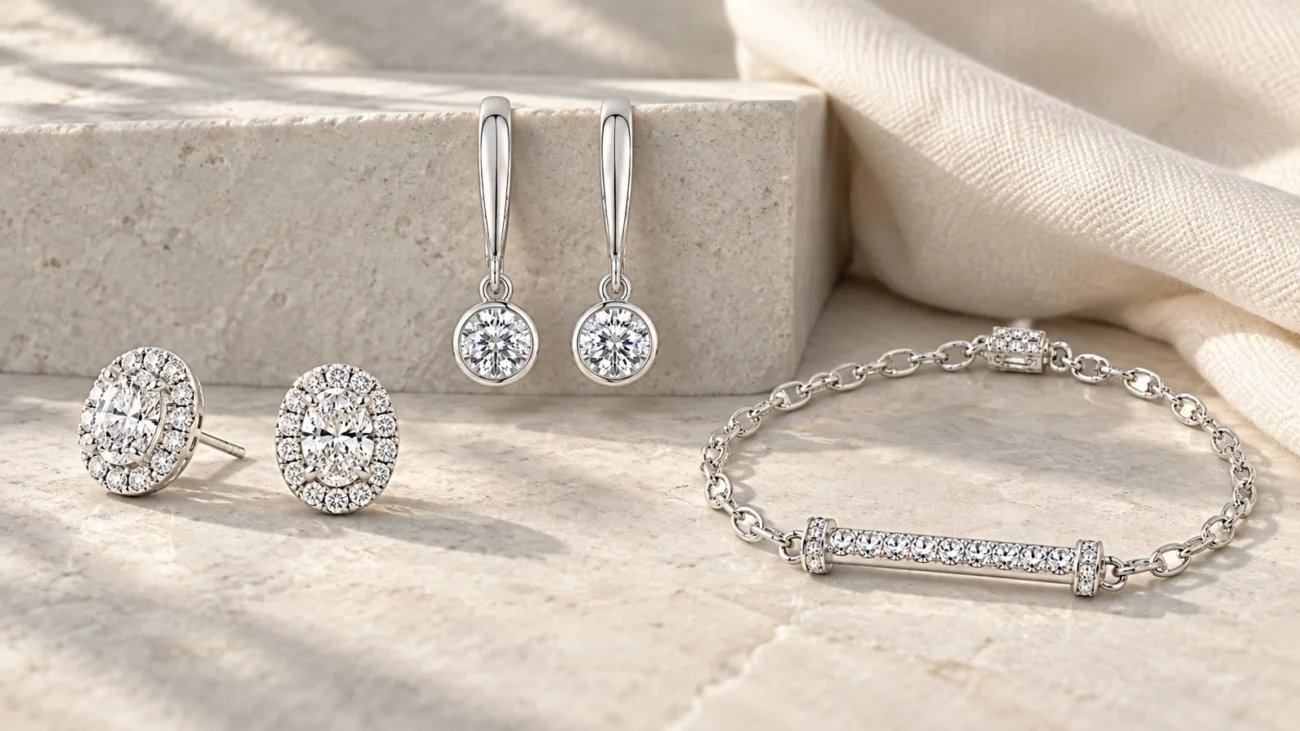
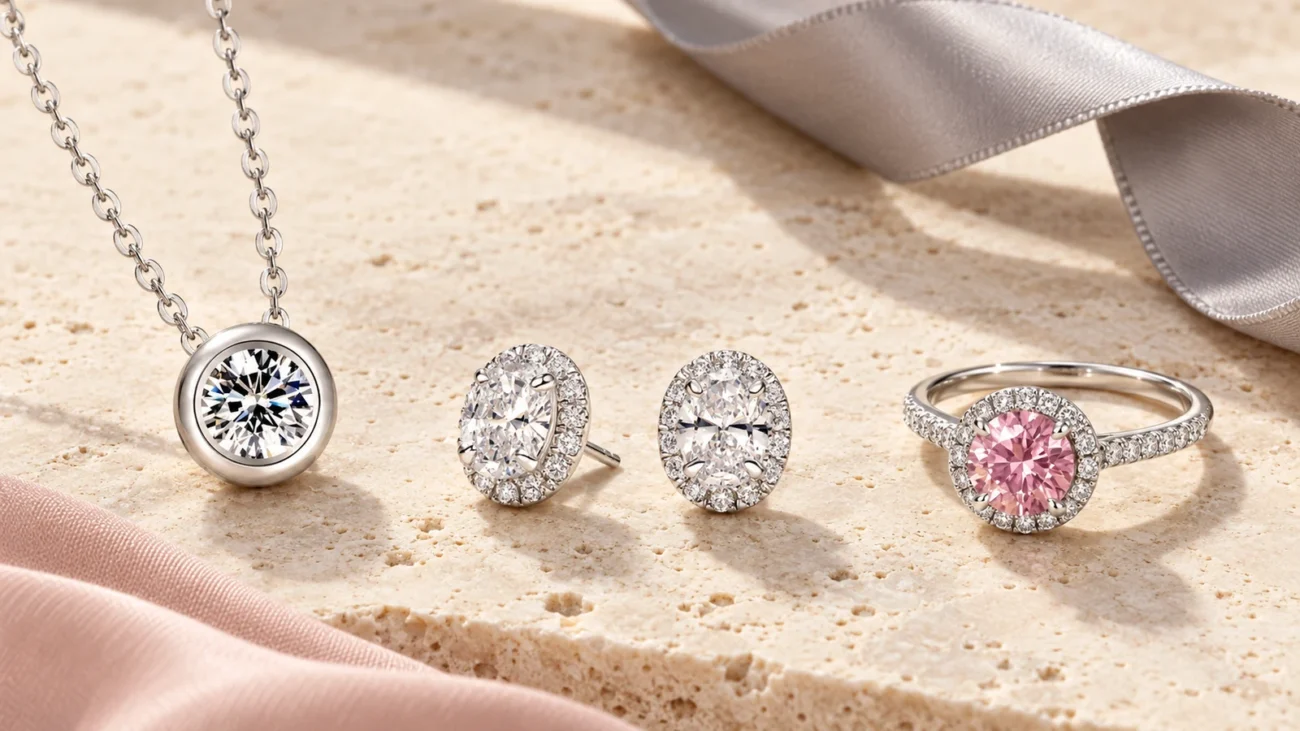
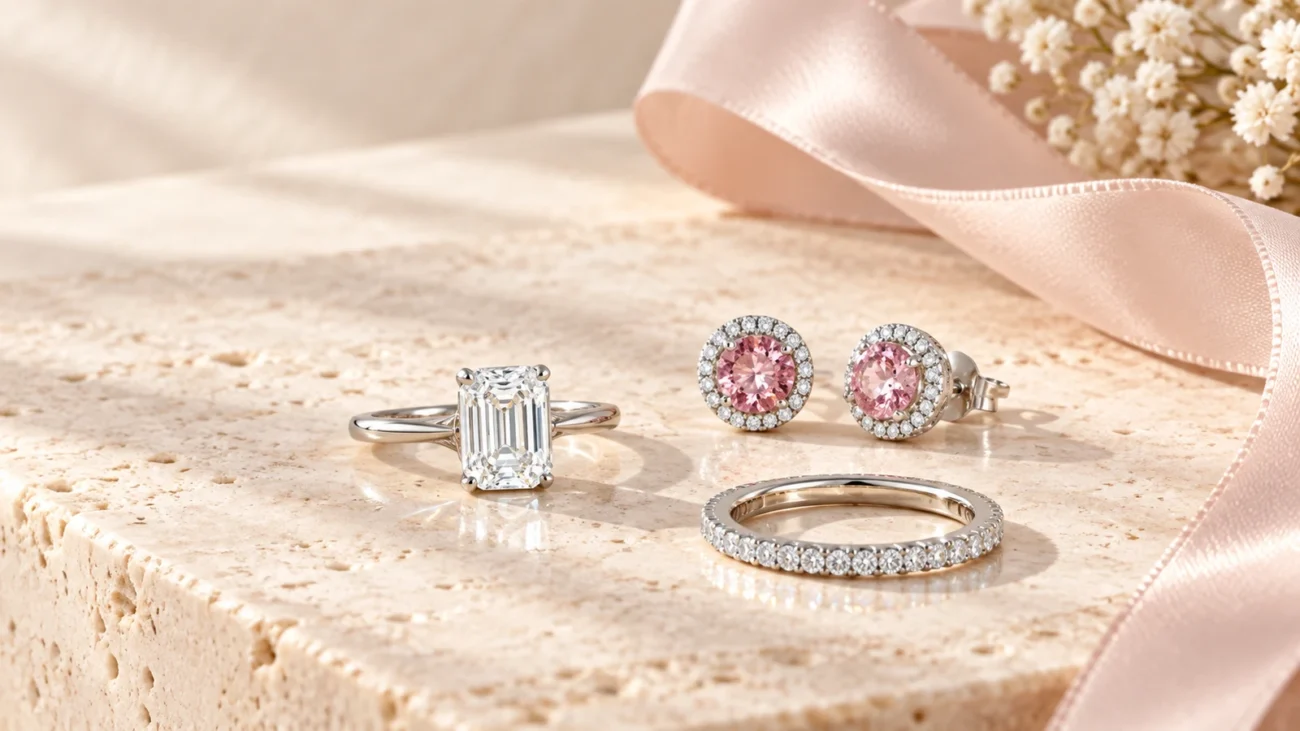
Zircon and moissanite are different gemstones. Zircon is a natural mineral valued for bright fire and a wide color range, while jewelry-quality moissanite is lab-created silicon carbide known for strong brilliance, high fire, and greater scratch resistance. For frequent-wear rings, moissanite is usually the more practical choice; zircon can still be beautiful when its setting, care, and wear conditions respect its lower hardness and greater brittleness.
The comparison becomes confusing because both stones can look lively and both names appear near “diamond alternative” searches. Zircon is also regularly mistaken for cubic zirconia, even though zircon and cubic zirconia are not the same material. This guide separates the three names, then compares zircon vs moissanite by origin, appearance, color, durability, care, identification, and buying priorities.
Zircon vs moissanite: compare the material, appearance, wear needs, and care—not just the sparkle in a photograph.
What Is the Main Difference Between Zircon and Moissanite?
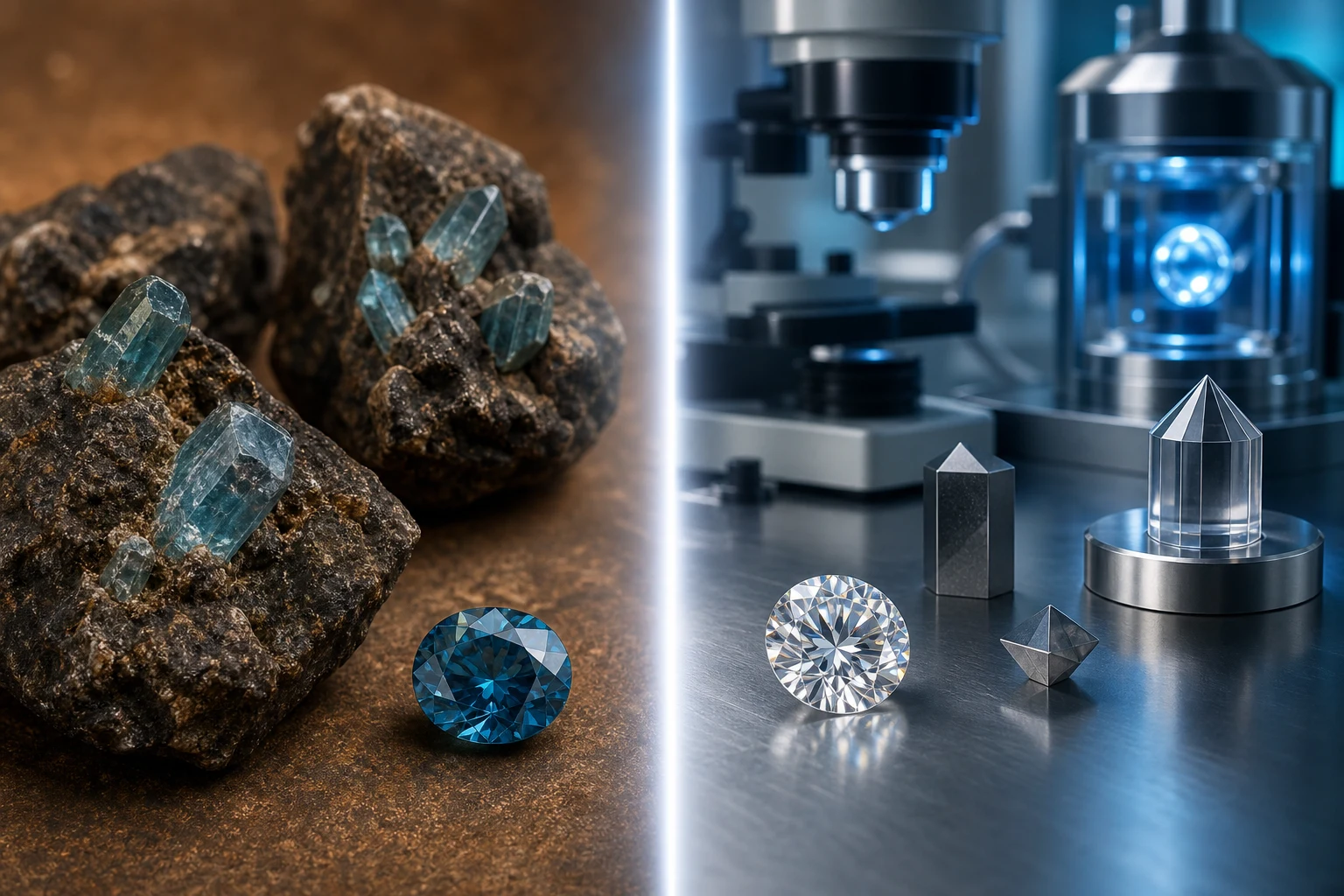
The main difference is material identity. Zircon is zirconium silicate, written chemically as ZrSiO4, and occurs naturally in the earth. Moissanite is silicon carbide, or SiC. Natural moissanite exists in extremely limited geological settings, but the moissanite sold for jewelry is generally lab-created.
That origin difference does not make one gemstone automatically “real” and the other “fake.” Natural zircon is a real gemstone. Lab-created moissanite is also a real material with its own composition and optical properties; it is not diamond and should not be labeled as diamond. The useful question is which material, appearance, and wear profile suit the buyer.
Factor
Zircon
Moissanite
Material
Natural zirconium silicate gemstone
Silicon carbide; jewelry material is generally lab-created
Typical color range
Colorless, blue, yellow, orange, brown, red, and green, among other appearances
Commonly colorless to near-colorless, with some colored options
Mohs hardness
About 6 to 7.5, with variation among stones
About 9.25
Everyday-ring fit
Possible with careful wear and a protective setting
Generally more practical for frequent wear
Important caution
Can abrade or chip; treatment and care details matter
Still needs a sound setting and routine cleaning
Is Zircon the Same as Cubic Zirconia?
No. Zircon and cubic zirconia are separate materials. Zircon is a natural mineral. Cubic zirconia, usually abbreviated CZ, is a manufactured crystalline material made from zirconium dioxide. The shared word “zircon” is the source of much of the confusion, but it does not make their chemistry, structure, origin, or wear behavior equivalent.
This distinction is essential for accurate shopping. A listing for natural zircon should not be interpreted as CZ, and a CZ listing should not be upgraded in the buyer’s mind to natural zircon. If your actual question is how moissanite compares with CZ, Sunshine Jewelry’s moissanite vs cubic zirconia guide addresses that separate search intent. The present guide compares natural zircon with moissanite.
A simple name check
Zircon: a natural zirconium silicate gemstone.
Cubic zirconia: a manufactured zirconium dioxide material, usually shortened to CZ.
Moissanite: silicon carbide; material used in jewelry is generally created in a laboratory.
Diamond: crystalline carbon, distinct from all three materials above.
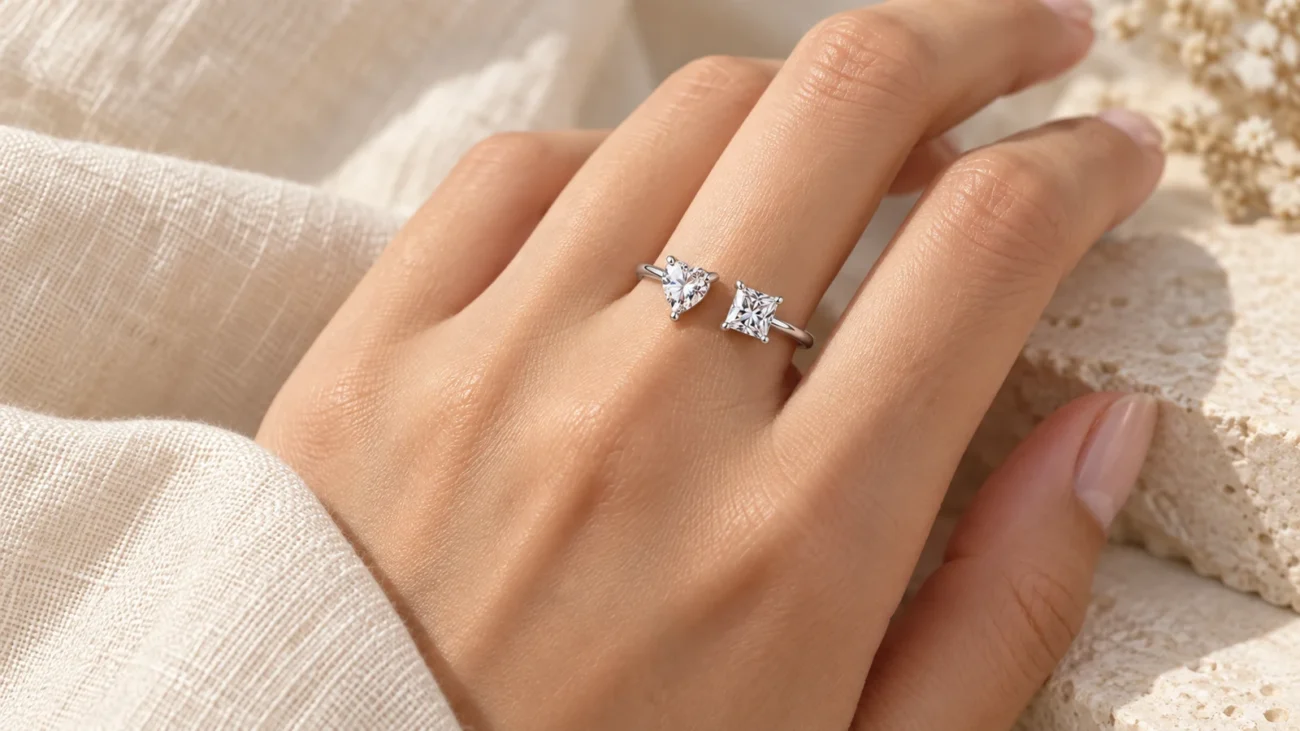
Zircon is a natural mineral, while jewelry-quality moissanite is generally lab-created silicon carbide.
How Do Zircon and Moissanite Look Different?
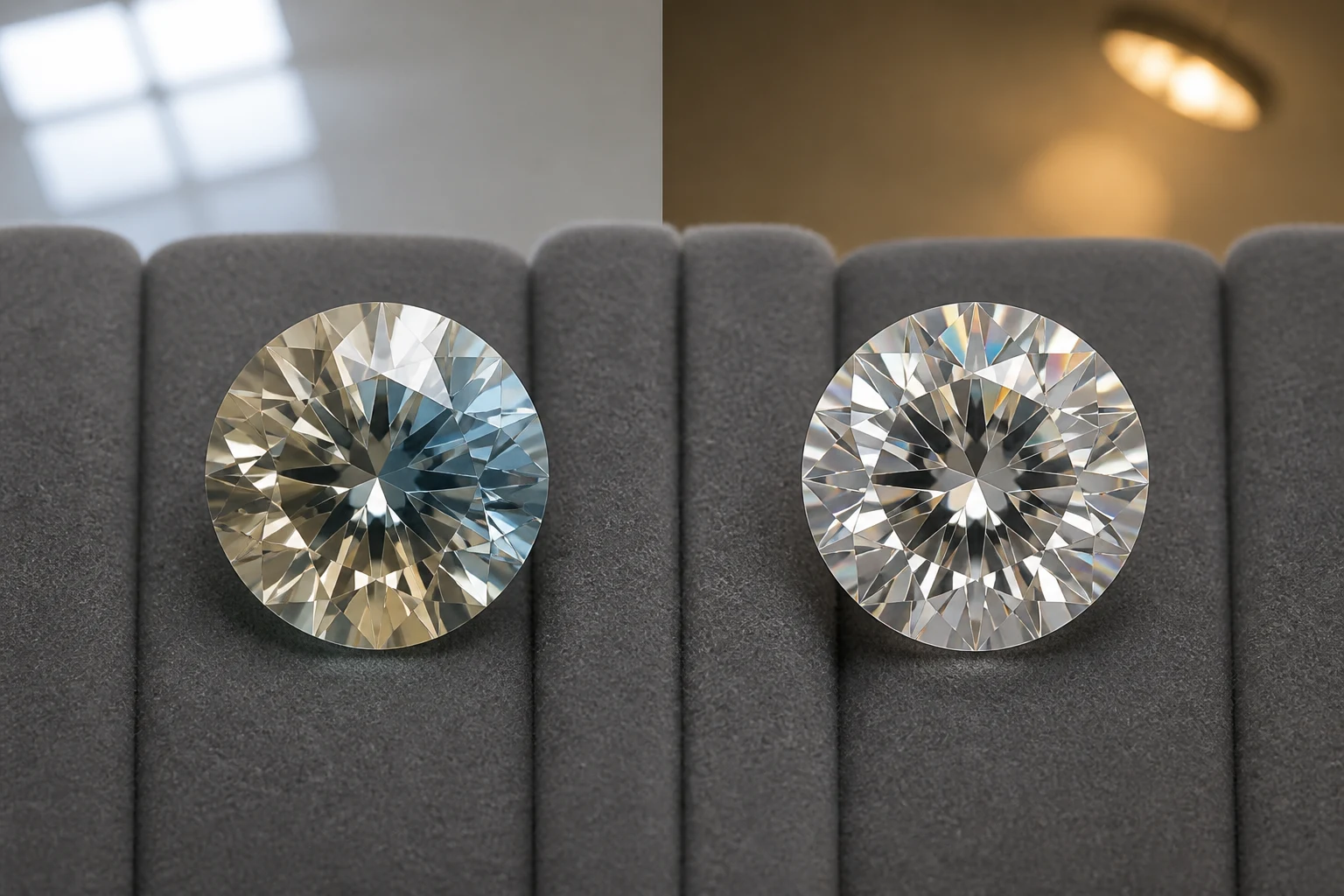
Both stones can be brilliant and show colored flashes, but they do not create an identical visual effect. Cut quality, lighting, color, size, and viewing angle can change what a shopper sees, so appearance should be judged in more than one type of light and not from a single enlarged photograph.
Zircon has bright luster, fire, and visible doubling
Well-cut zircon can show strong brilliance and rainbow-colored fire. Zircon is doubly refractive, meaning light can split into two rays inside the stone. In some viewing directions, the back facet edges may appear doubled. That visual texture can be part of zircon’s character, but it can also make the interior look different from a singly refractive stone.
Moissanite is known for intense fire and brilliance
Moissanite also has double refraction and can produce conspicuous rainbow flashes. Some buyers enjoy that lively effect; others prefer a quieter pattern. Stone size, cut, and lighting affect how noticeable the fire appears. A product video in neutral daylight can be more useful than a spotlight clip designed to maximize sparkle.
Neither visual description proves identity
Fire, brilliance, color, or facet doubling can suggest what a trained observer should investigate, but they do not replace reliable disclosure or gemological testing. Several materials can appear similar in photographs. For a significant purchase, ask what the stone is, whether any treatment is disclosed, and what documentation accompanies the exact item.
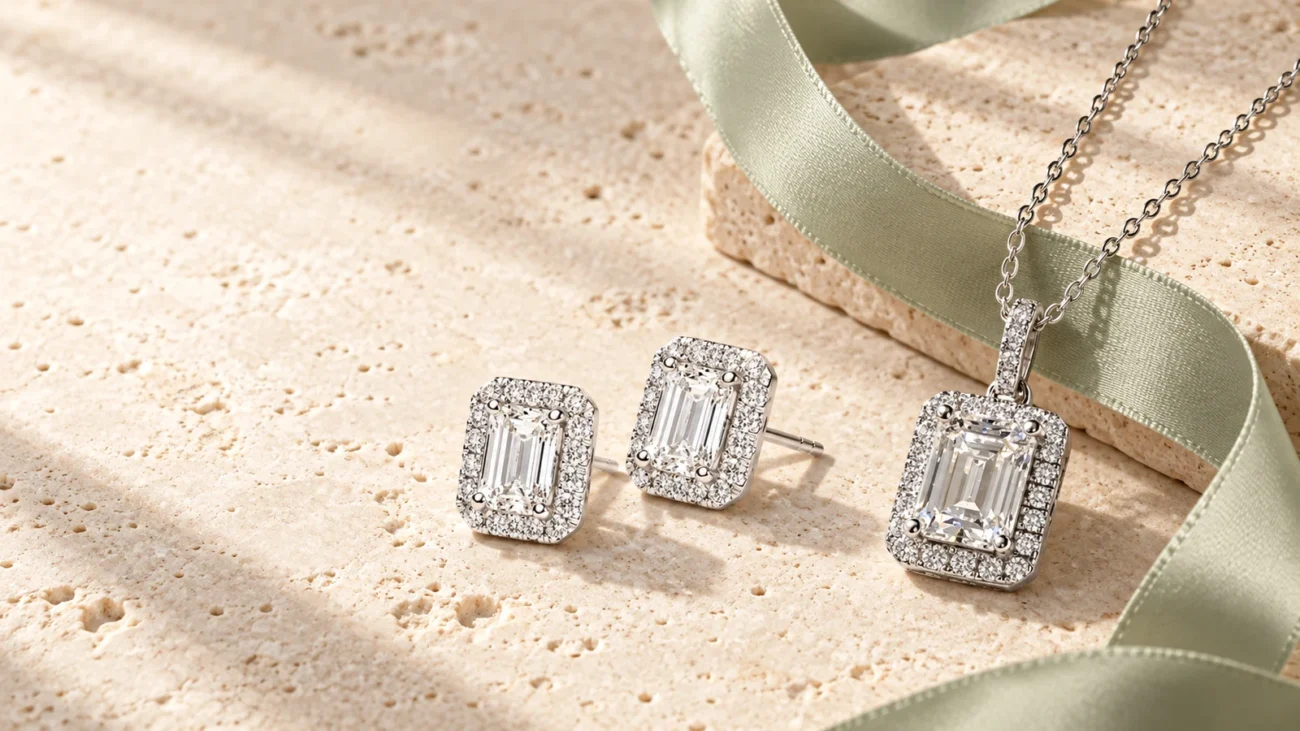
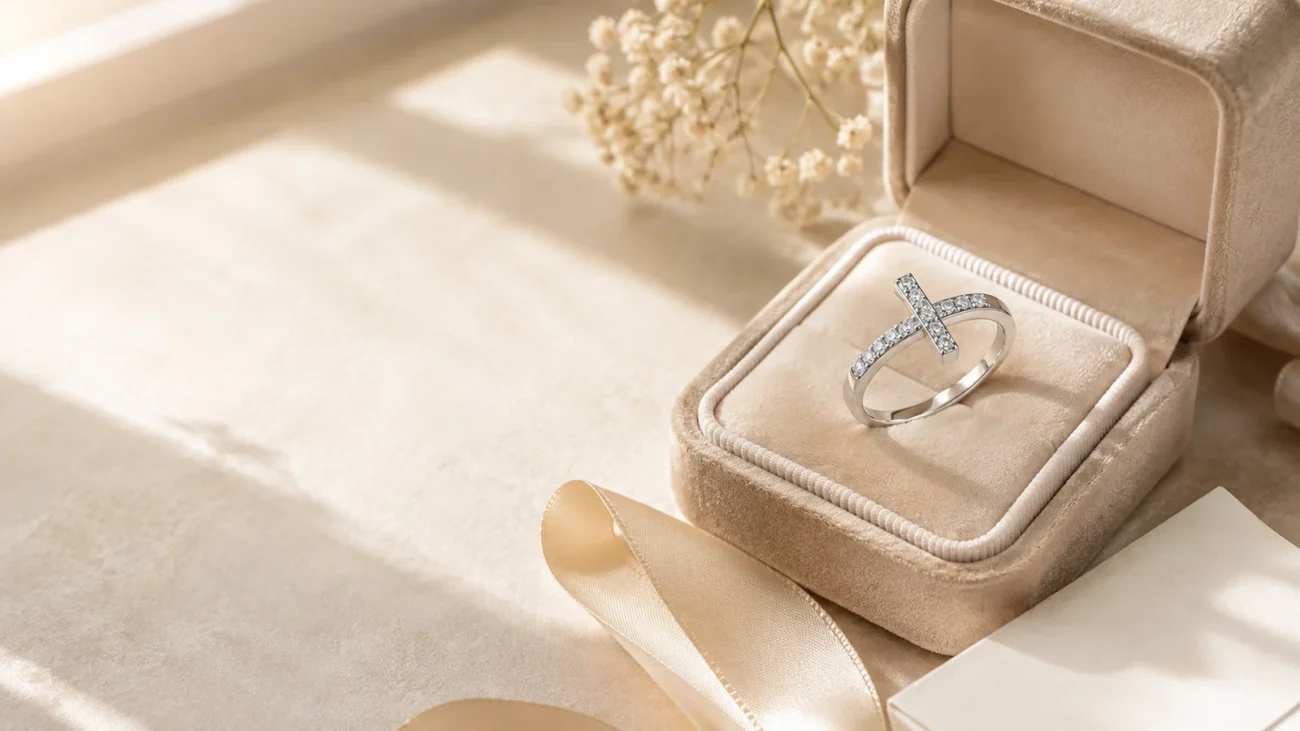
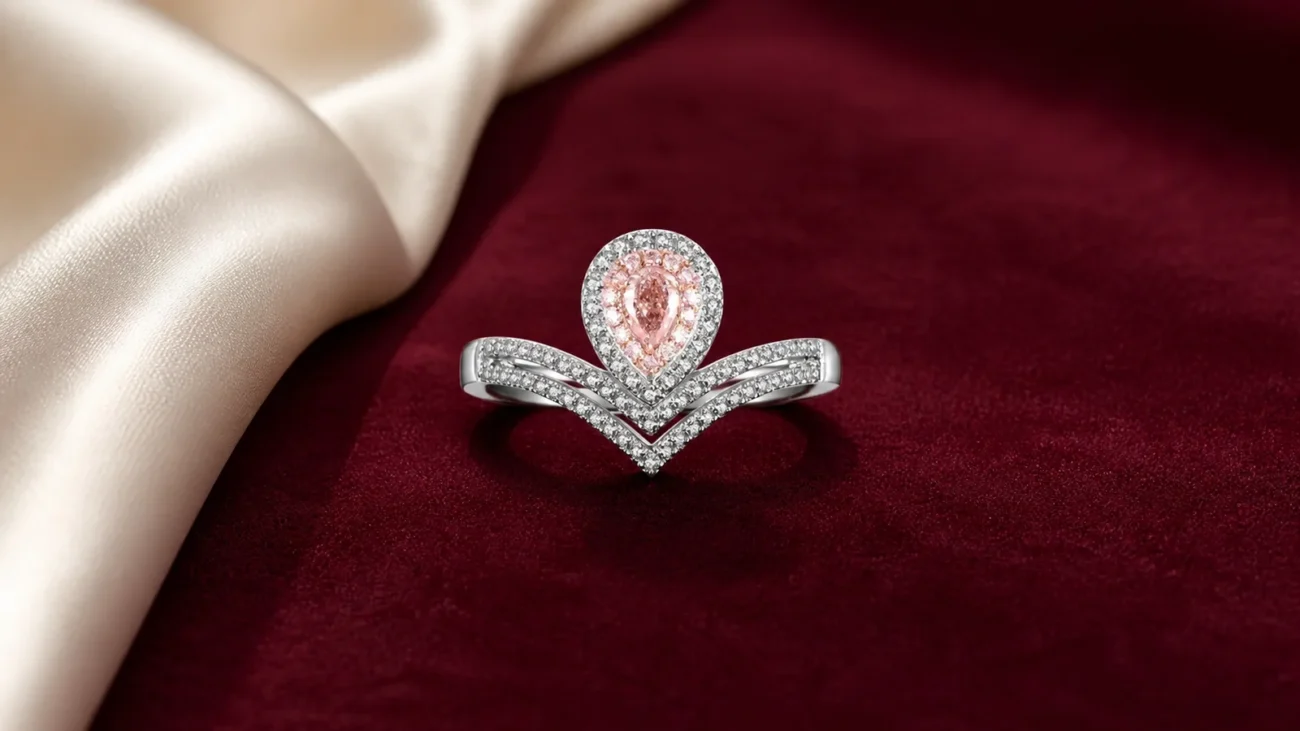
Compare sparkle in neutral and mixed lighting; an illustrative image cannot identify an unknown gemstone.
How Do Color and Clarity Compare?
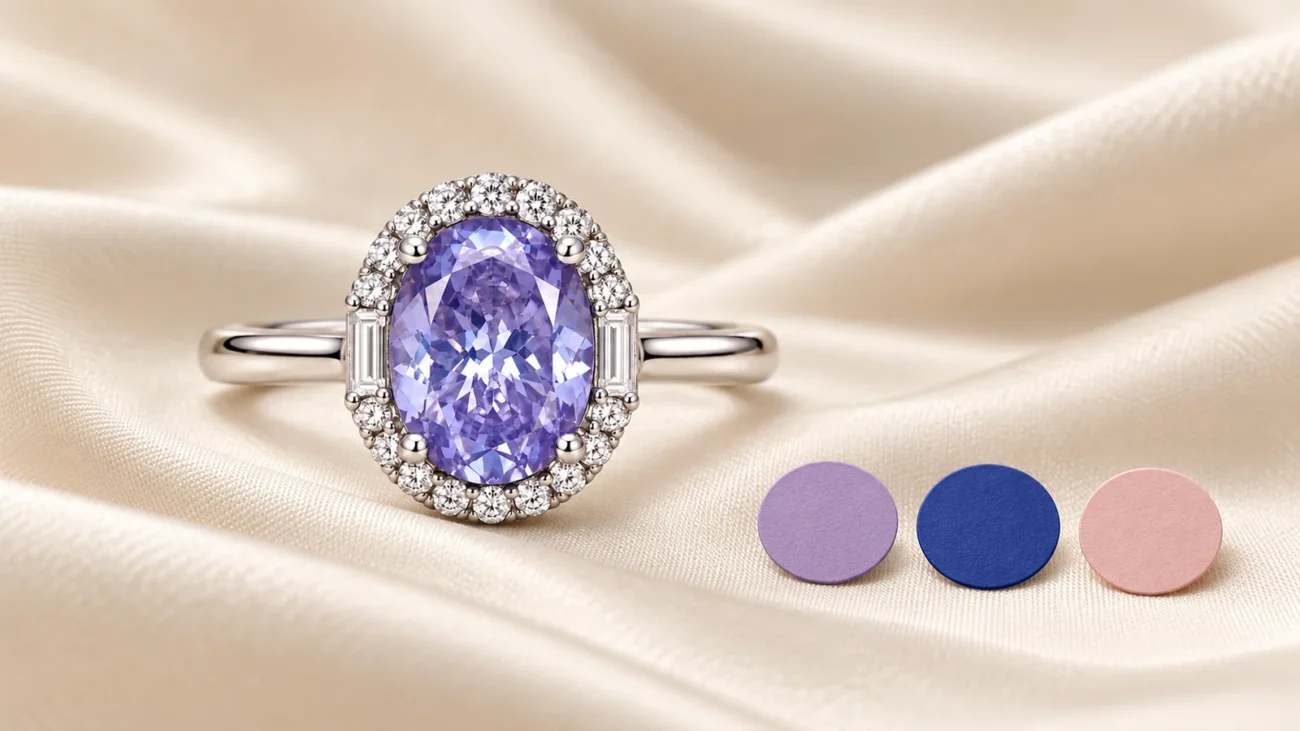
Zircon offers a broad natural color story. Jewelry may feature colorless, blue, yellow, orange, brown, reddish, or green zircon. Some zircon colors are produced or modified through heat treatment, so treatment disclosure matters. Color can also affect the design role: a blue zircon may be selected as a colored gemstone, while a colorless zircon may be chosen for its bright, fiery look.
Moissanite is frequently sold in colorless or near-colorless ranges, although colored material also exists. Descriptions such as colorless, near-colorless, or a letter range should be read according to the seller’s actual grading system rather than assumed to be universally identical across every brand.
Clarity language can be equally easy to overgeneralize. An eye-clean appearance means no inclusion is obvious to an unaided observer under ordinary viewing, not that the stone is flawless. Compare the specific stone or stated quality information, and do not transfer a diamond clarity term to zircon or moissanite without understanding how the seller uses it. Sunshine Jewelry’s moissanite color and clarity guide helps interpret that material-specific decision.
Which Is More Durable: Zircon or Moissanite?
Moissanite is generally the more durable choice for frequent-wear jewelry, especially rings. Its Mohs hardness is about 9.25, while zircon ranges roughly from 6 to 7.5. Hardness describes resistance to scratching; it does not describe every form of durability, and the Mohs scale is ordinal rather than evenly spaced.
Zircon has fair-to-good toughness but can be brittle. Facet edges can abrade, and a sharp impact can damage the stone. This does not mean zircon cannot be worn in a ring. It means the wearer should choose a thoughtful setting, avoid rough use, and accept that its care needs differ from those of moissanite.
Wear situation
Zircon consideration
Moissanite consideration
Daily ring
Use a protective design and remove it for impact-prone tasks
More scratch-resistant, but prongs and metal still need inspection
Earrings
Lower impact exposure can make zircon easier to enjoy
Well suited to repeated wear when closures are secure
Pendant
Usually less exposed than a ring, though hard knocks remain possible
Practical for regular wear; chain and bail condition still matter
Occasional statement jewelry
Allows color and fire to lead while limiting routine abrasion
Supports larger, high-fire designs if that look is preferred
What Settings Work Best for Zircon and Moissanite?
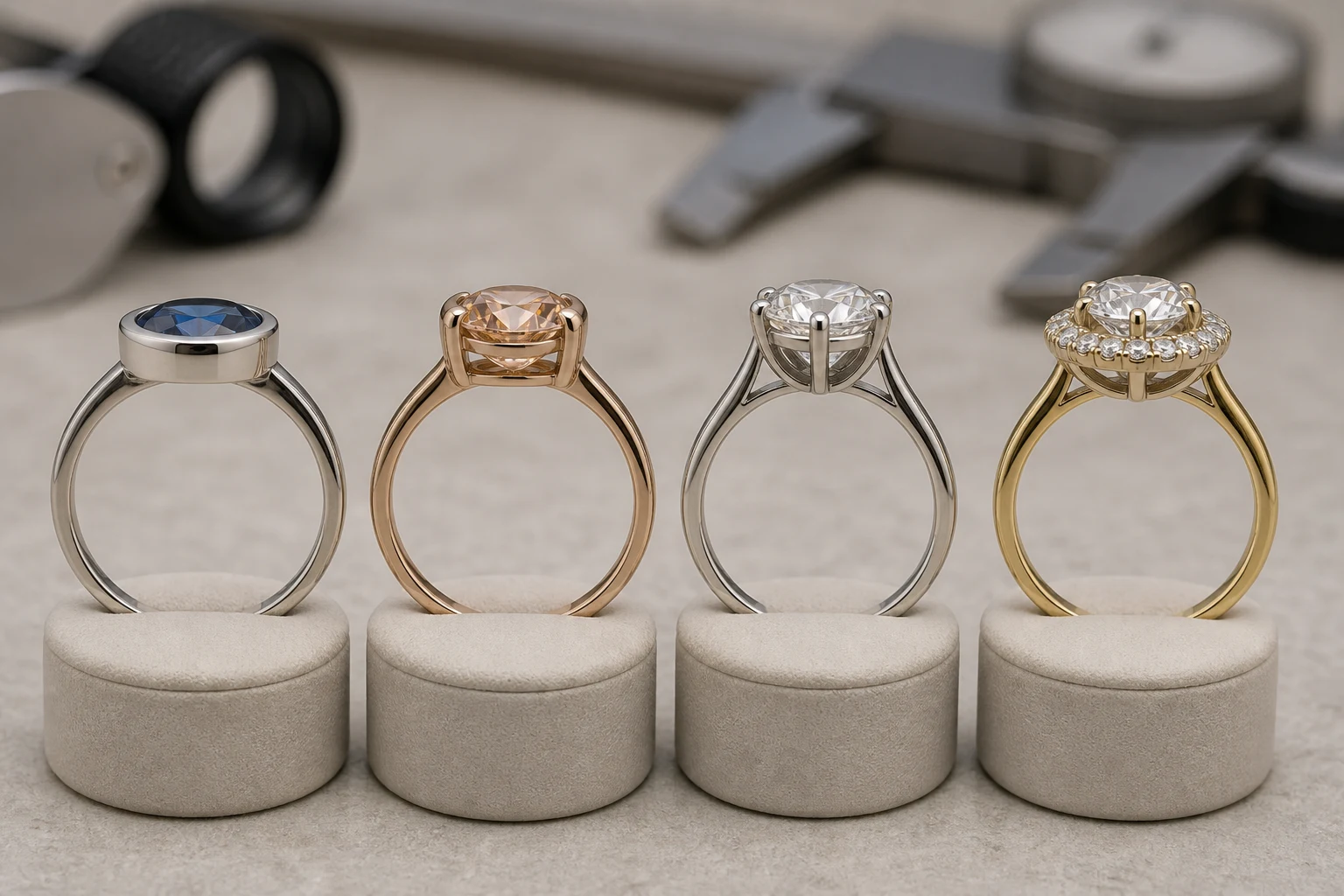
A setting cannot change the gemstone’s properties, but it can influence exposure to knocks and abrasion. For zircon, a bezel or partial bezel can shield more of the perimeter than an open high-prong design. A halo or protective border may also reduce direct contact at the girdle, provided the setting is correctly made and does not place damaging pressure on the stone.
Moissanite allows more flexibility because of its higher scratch resistance, but it is not maintenance-free. Prongs can bend, metal can wear, and a raised setting can snag. The right choice depends on the wearer’s tasks, preferred profile, and how often the ring will be removed.
Choose a lower profile when gloves, pockets, hair, or knitwear are part of the daily routine.
Ask whether pointed corners or thin edges receive extra protection.
Inspect prongs and the seat around the stone rather than judging only the face-up view.
Consider earrings or pendants for zircon when a ring would face frequent impacts.
Arrange professional inspection if a stone moves, clicks, or catches unexpectedly.
For an overview of common construction choices, the moissanite ring settings guide explains solitaire, halo, bezel, hidden-halo, and three-stone layouts. Use those concepts as questions for the exact item rather than assuming one setting is universally best.
Setting height and edge protection help determine how exposed a gemstone will be during daily wear.
How Should Zircon and Moissanite Be Cleaned?
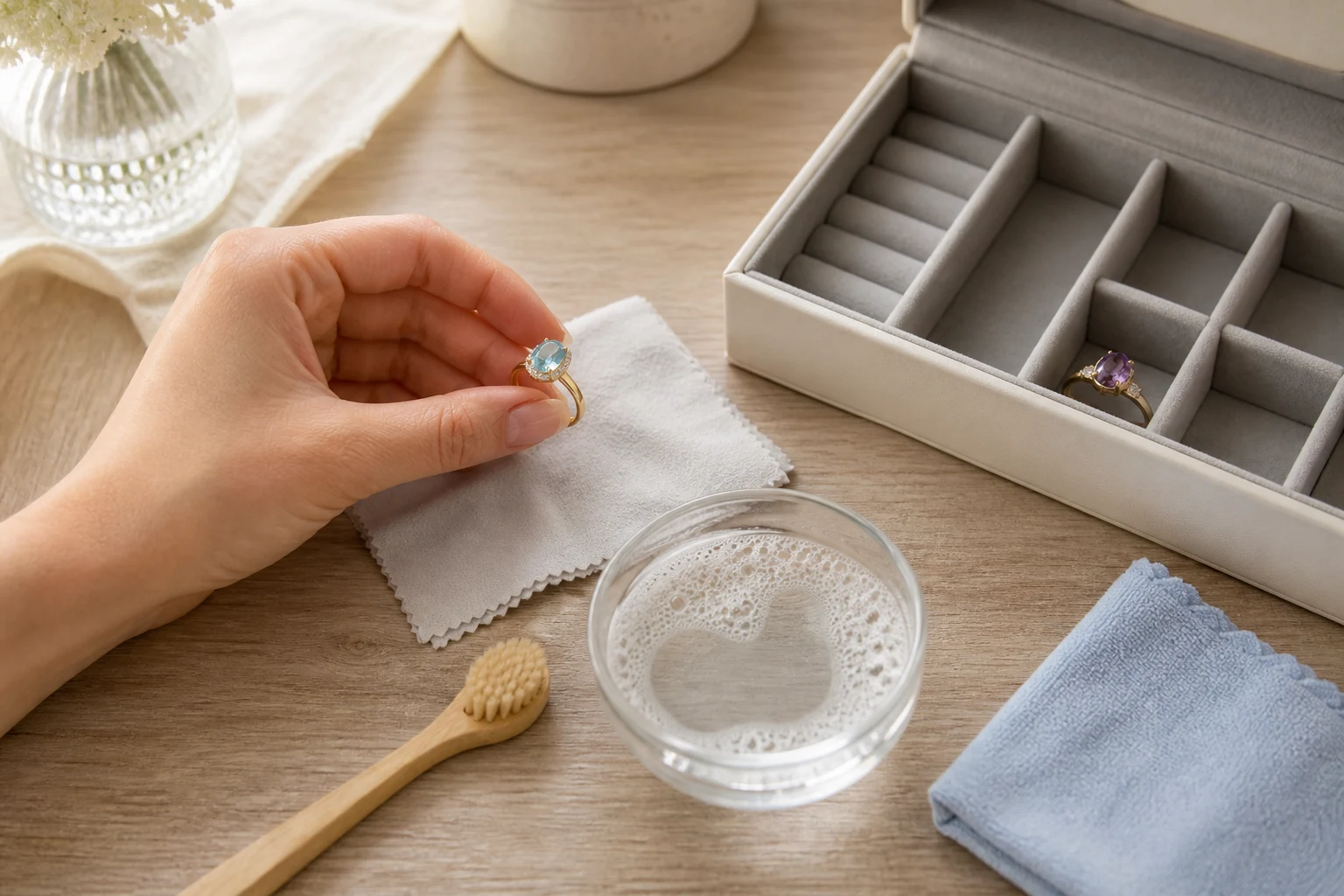
Warm, soapy water is the conservative starting point for zircon. Use a soft brush where appropriate, rinse carefully, and dry the piece without knocking the stone against a hard surface. Steam and ultrasonic cleaning are generally not recommended for zircon because of its durability profile and the possibility of treatment or inclusions that cannot be assessed at home.
Moissanite is easier to maintain in many everyday settings, but the cleaning method must also be safe for the ring’s metal, plating, accent stones, adhesives, and construction. Follow the specific seller’s instructions. A method that is acceptable for a loose moissanite stone may not be suitable for every finished piece.
Confirm every material and any disclosed treatment before cleaning.
Prepare lukewarm water with a small amount of mild soap.
Use a soft brush around the back of the stone and setting without forcing it under delicate parts.
Rinse safely so the piece cannot fall into an open drain.
Pat dry with a clean, soft cloth and allow recessed areas to dry fully.
Store zircon separately to reduce contact abrasion against harder jewelry.
Use material-appropriate cleaning and separate storage; zircon deserves particular protection from abrasion and hard blows.
Is Zircon or Moissanite More Valuable?
There is no reliable one-line price winner. Zircon value varies with color, clarity, cut, carat weight, treatment, origin disclosure, condition, and market rarity. Moissanite price varies with size, cut, color description, quality system, brand, setting, metal, and seller services. A broad price claim can become misleading when the compared stones or finished pieces are not equivalent.
Compare the total item rather than only a per-carat figure. Review the center stone, accent stones, metal, setting complexity, dimensions, craftsmanship, warranty or service terms, and return policy. A lower initial price does not automatically mean a better fit for the intended wear, and a higher price does not prove identity or quality.
How Can You Tell Zircon From Moissanite?
You should not rely on a home visual test to identify an unknown stone with confidence. Both materials can show strong fire and double refraction, and photographs can distort color and sparkle. Gemologists use multiple observations and instruments, considering properties such as refractive behavior, specific gravity, inclusions, spectra, and other diagnostic features.
For a purchase, begin with written disclosure from the seller and documentation tied to the item. If identity materially affects the decision, use an independent qualified gemological professional. Avoid scratch tests, heat tests, or destructive experiments. Sunshine Jewelry’s guide to checking moissanite explains why a single at-home method should not carry the whole identification decision.
Which Stone Should You Choose?
Choose zircon when you value a natural gemstone, distinctive color, historical mineral character, and bright fire—and you are comfortable with more careful wear. It can be especially appealing in earrings, pendants, or occasional rings where impact exposure is lower.
Choose moissanite when you want strong brilliance and fire, a colorless-to-near-colorless look, consistent lab-created availability, and a more scratch-resistant option for frequent wear. It is often the more straightforward choice for an everyday ring, although the setting and metal still require care.
Choose by priority, not by a universal ranking
Natural origin and varied color: zircon may fit better.
Frequent-wear ring durability: moissanite usually has the advantage.
Rainbow fire: compare actual stones or videos in several lighting conditions.
Low-maintenance expectations: moissanite is generally easier, but no ring is maintenance-free.
Collector interest: an accurately disclosed natural zircon may offer a different story from a lab-created stone.
Unknown stone identity: pause and obtain reliable disclosure or testing before buying.
A Zircon vs Moissanite Buying Checklist
Does the listing say zircon, cubic zirconia, or moissanite clearly?
Is the center stone identity separate from the accent-stone description?
For zircon, are color treatment and care information disclosed?
For moissanite, is the seller’s color and quality terminology explained?
Are the stone dimensions, setting height, metal, finish, and ring size listed?
Does the setting match the wearer’s impact exposure and maintenance habits?
Can the seller provide documentation and current return or exchange terms?
No. Zircon is a natural gemstone with its own chemical composition and identity. Colorless zircon has historically been used as a diamond look-alike, but resemblance does not make it diamond or “fake.” It should be sold and understood as zircon.
Is moissanite a type of zircon?
No. Moissanite is silicon carbide, while zircon is zirconium silicate. They differ in origin, chemistry, hardness, color range, and wear behavior.
Which sparkles more, zircon or moissanite?
Both can show strong brilliance and rainbow fire, while moissanite is particularly known for intense dispersion. The perceived result depends on cut, size, color, lighting, and personal taste. Compare actual stones under neutral daylight and ordinary indoor light.
Can zircon be worn every day?
It can be worn regularly with care, but it is more vulnerable to abrasion and hard blows than moissanite. A protective setting, lower-impact activities, separate storage, and periodic inspection reduce avoidable risk.
Is moissanite better for an engagement ring?
Moissanite is usually the more practical of the two for a frequently worn engagement ring because of its higher hardness. “Better” still depends on whether the wearer prioritizes lab-created durability and strong fire or the natural origin and color character of zircon.
Why is zircon confused with cubic zirconia?
The names sound related, and both can be used in jewelry, but they identify different materials. Zircon is a natural mineral; cubic zirconia is a manufactured zirconium dioxide crystal. Always read the complete material name.
Can a photo identify zircon or moissanite?
No. A photo may show color, cut, and visible sparkle, but it cannot reliably confirm identity. Written disclosure, documentation, and appropriate gemological testing are stronger evidence.
Final Answer: Zircon or Moissanite?
Moissanite is generally the stronger choice for a frequently worn ring because it resists scratching better and fits a lower-maintenance routine. Zircon is the better match when natural origin, varied color, and collector-style character matter more—and when the wearer can protect it from abrasion and impact. Whichever you choose, verify the exact material and setting before letting sparkle decide.
Choose a women's sunshine diamond ring gift by checking her style, exact ring size, verified listing details, daily routine, and current store policies.