Sunshine disc pendant meaning, style, size, chain and styling guide.
A sunshine disc pendant is a circular necklace charm decorated with a sun, rays or a sun-inspired setting. People often choose it to represent warmth, optimism, renewal or a personal source of light, but the meaning is not universal. The right pendant depends on the wearer’s interpretation, preferred scale, neckline, metal, chain and everyday routine.
That combination of symbolism and wearability makes the style appealing as both a personal piece and a thoughtful gift. However, two necklaces described as “sunshine pendants” can look very different: one may be a smooth engraved disc, another an open sunburst, and another a stone-centered halo that only suggests rays. This guide explains the differences so you can compare what is actually being offered instead of choosing by a product name alone.
What is a sunshine disc pendant?
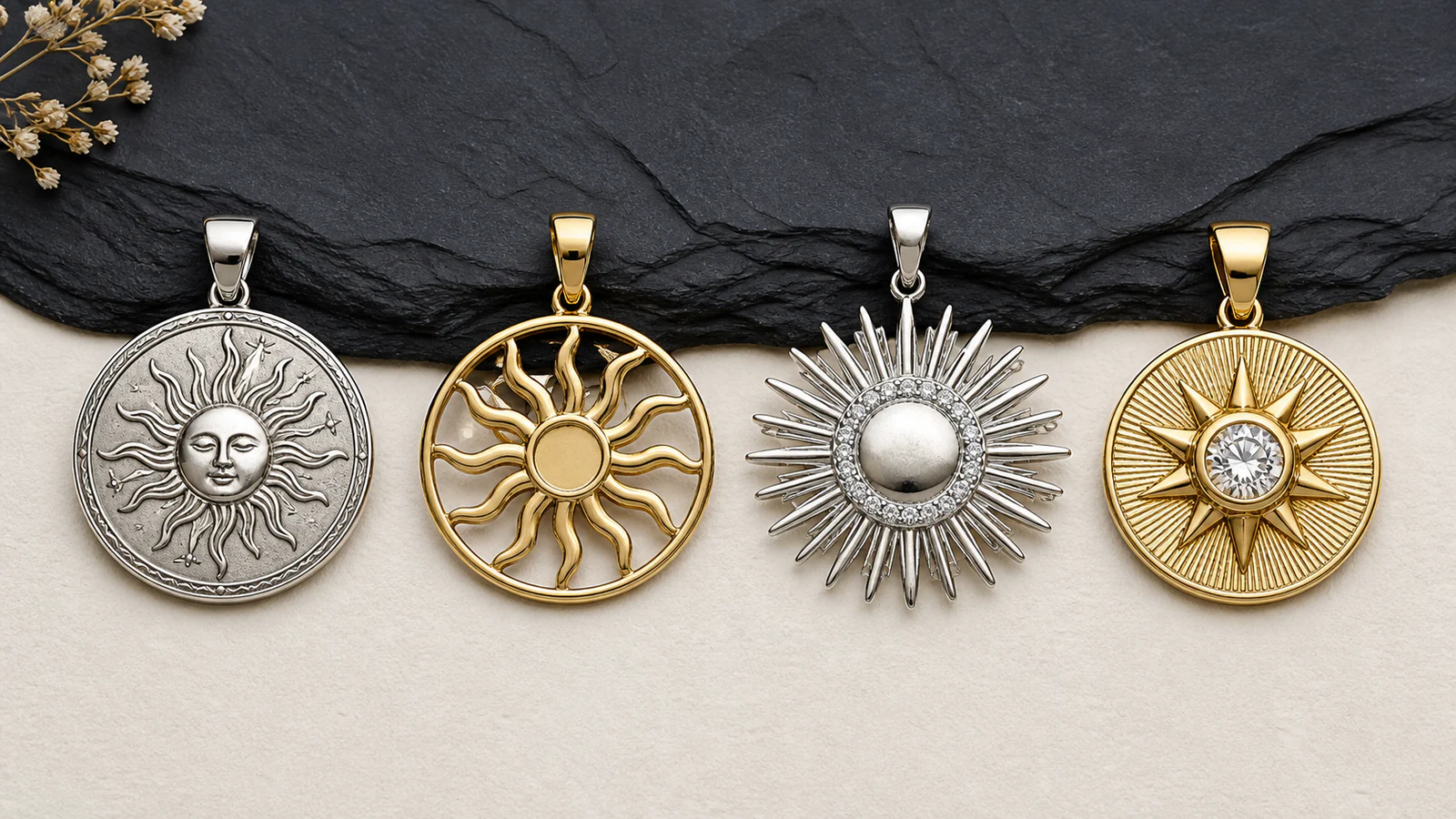
A sunshine disc pendant uses a round or nearly round base as the visual field for a sun motif. The disc may be flat, softly domed, textured, engraved, pierced with openwork or framed by radiating details. Some versions are all metal, while others use a center stone or small accent stones to create a brighter focal point.
The word disc describes the circular base. The word sunshine describes the design idea rather than a standardized jewelry construction. A seller may also use terms such as sun disc, solar medallion, sunburst pendant or ray pendant. Because those names can overlap, inspect the photographs, dimensions, metal description, stone disclosure, bail and chain details before deciding whether a piece matches the look you want.
A disc pendant is also different from a locket. A locket normally opens to hold a small photograph or keepsake; a standard disc pendant does not. It is different from a coin pendant as well: a coin design imitates currency or a historical medallion, while a sunshine disc places the emphasis on a solar motif.
What can a sunshine pendant symbolize?
A sunshine pendant can symbolize encouragement, energy, hope, renewal or a person who brings warmth into your life. These are common modern interpretations, not fixed rules. Solar symbols have appeared in many cultures and periods, so it is better to ask what the motif means to the wearer than to claim one universal definition.
Optimism: a visual reminder to look for light during a difficult season.
Renewal: the return of daylight can suggest a new beginning or fresh chapter.
Warmth and connection: the pendant may represent someone whose presence feels reassuring.
Direction: radiating lines can be read as confidence, purpose or moving outward from a strong center.
Personal identity: some wearers simply love celestial imagery, bright details or circular designs without attaching a deeper meaning.
If the necklace is a gift, include a short note explaining why you chose it. “You bring light to ordinary days” is more personal and less presumptive than presenting a broad cultural interpretation as fact. That small explanation gives the symbol a meaning shared by the giver and recipient.
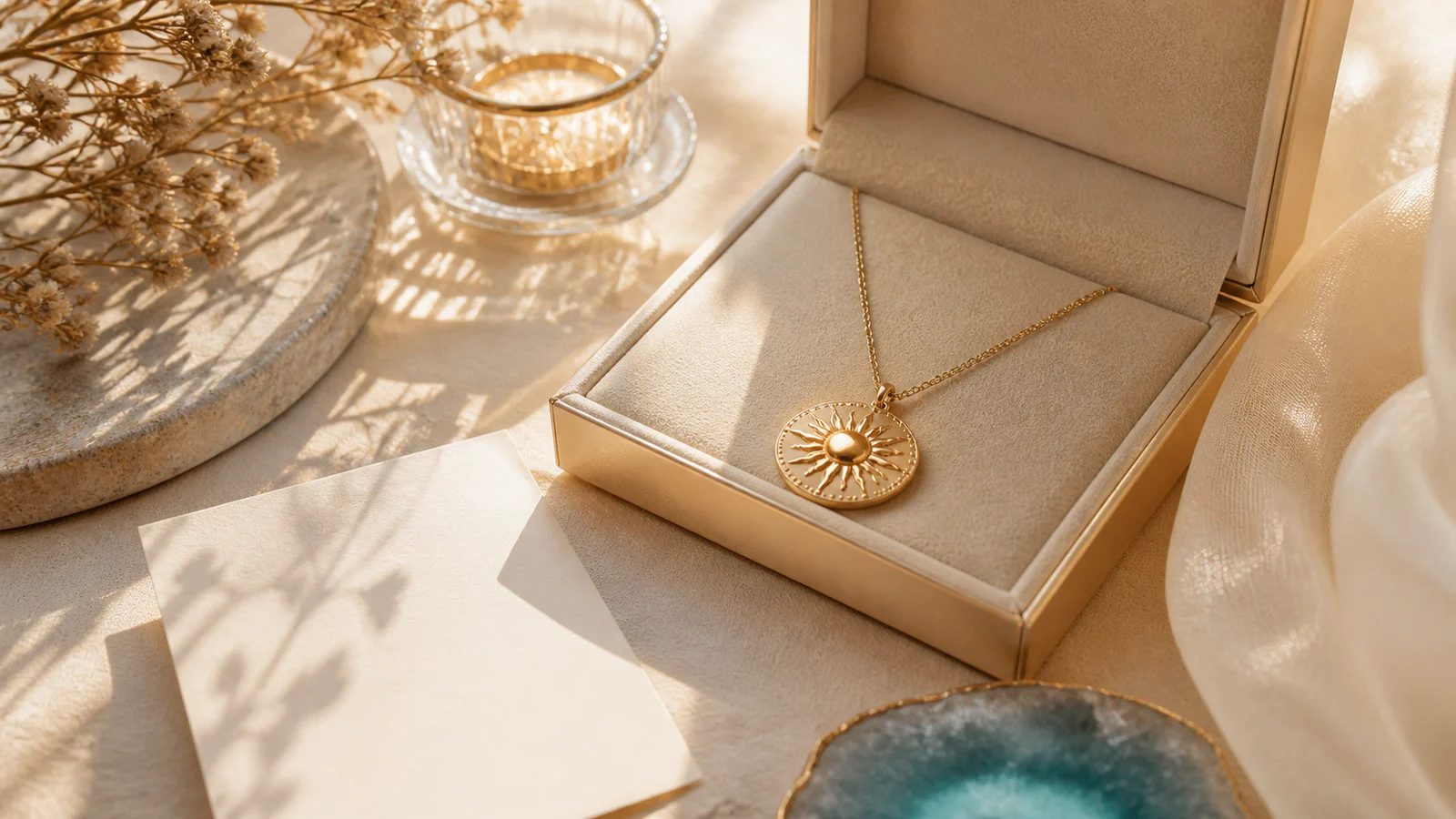
A sun disc pendant can carry a personal meaning of warmth, hope or renewal.
Which sunshine pendant style should you choose?
The best style is the one that matches the wearer’s visual preferences and practical needs. Start by deciding whether the necklace should feel quiet, graphic, sparkling or sculptural. Then compare how the rays are created and how far the pendant projects from the chest.
Style
Visual effect
Often suits
What to inspect
Engraved disc
Clean, compact and easy to read up close
Minimal wardrobes, daily layering and optional personalization
Engraving depth, edge finish, reverse side and whether personalization is offered
Textured or hammered disc
Reflects light from an all-metal surface
Wearers who want movement without prominent stones
Texture consistency, snag points and how the finish may show wear
Openwork sun
Light, airy and more visibly symbolic
Warm-weather outfits and delicate styling
Ray strength, smooth edges and how the openings interact with fabric
Sunburst or halo
Radiating outline with stronger sparkle or contrast
Dressier looks and a brighter focal point
Prongs, stone disclosure, setting height and whether the rays catch on clothing
Center-stone pendant
A defined central point surrounded by metal or accents
People who prefer a gemstone-led necklace
Stone identity, treatment disclosures, setting security and care requirements
“Sunburst” usually describes rays extending from a center, while “halo” usually describes a border around a center stone or shape. A design can use both ideas at once. Product naming is not perfectly consistent, so the construction and disclosed materials matter more than the label.
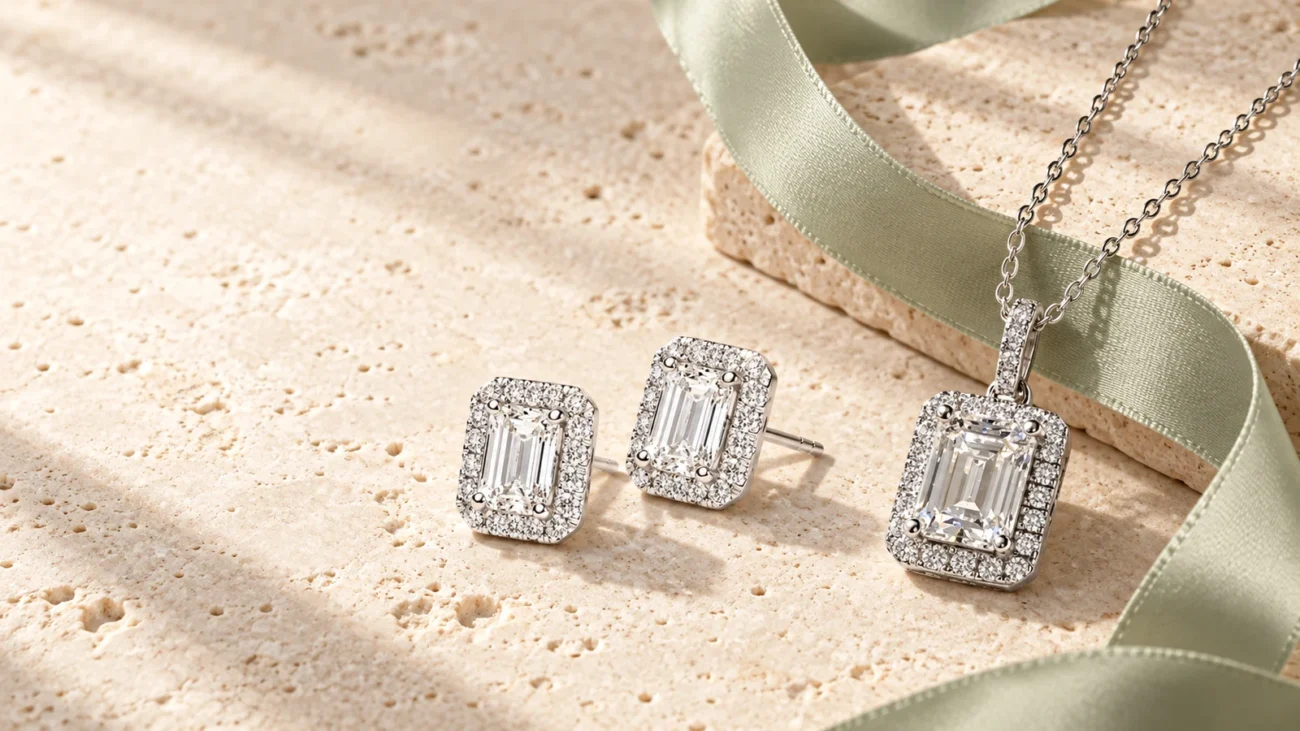
For a useful real-site comparison, look at the published photographs and specifications for a classic six-prong moissanite necklace and a round-cut halo moissanite pendant. Neither page should be treated as a generic promise about every sun design; the comparison simply helps you see how an open solitaire and a framed center create different silhouettes.
A visual comparison of four common sunshine pendant construction styles.
How do you choose the right pendant size and chain length?
Choose size and chain length together, because the same pendant can look subtle near the collarbone and more prominent when it hangs lower over a plain top. Product photos can make scale difficult to judge, so use the listed millimeter dimensions and compare them with a ruler, paper circle or a necklace you already own.
Step 1: Decide how much visual presence you want
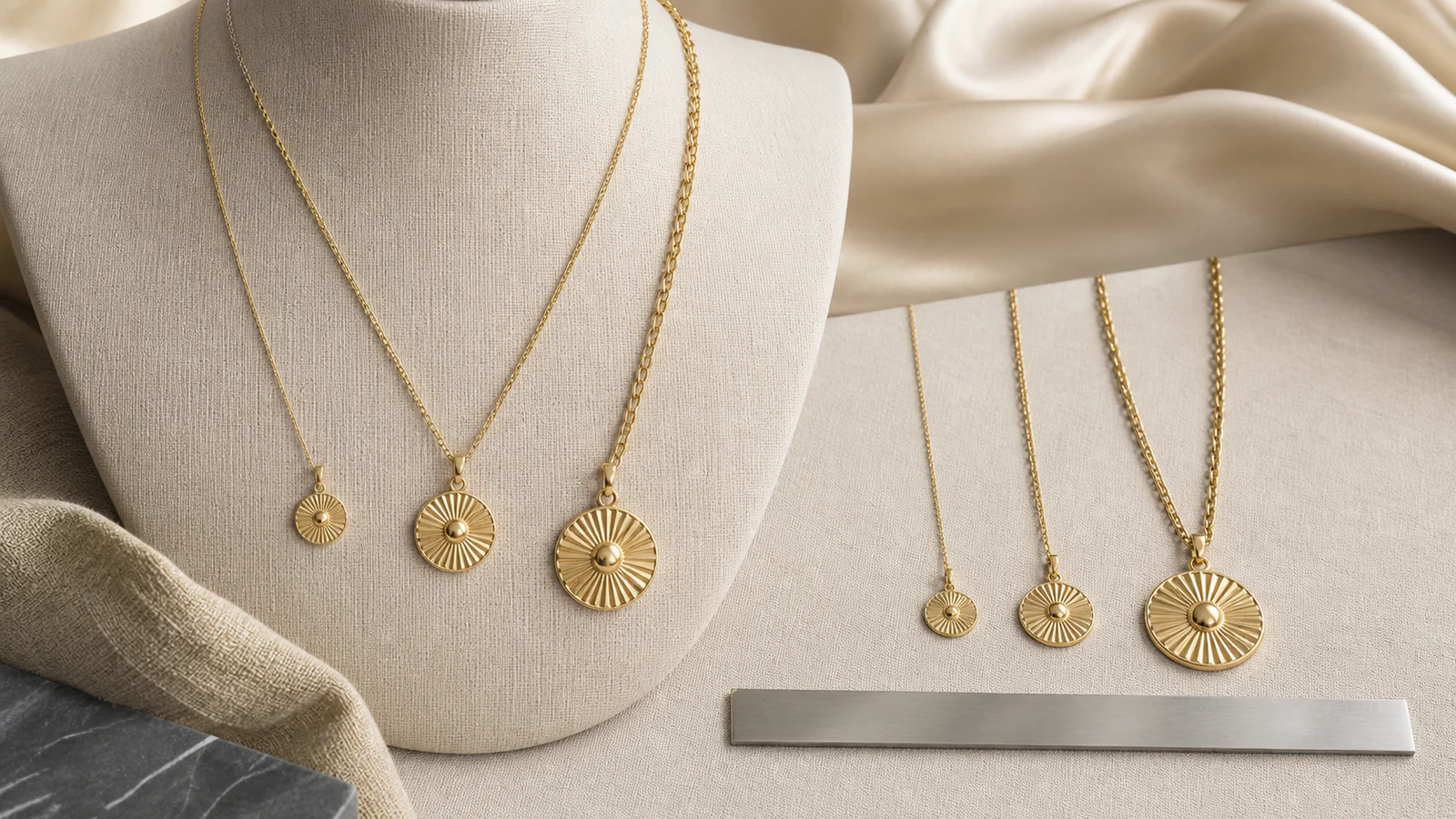
A small disc tends to read as a delicate accent, a medium disc is usually easier to wear alone or in a layered set, and a larger disc acts more like a medallion. Those descriptions are relative: body proportions, chain thickness, clothing and the amount of empty space around the pendant all affect how large it appears.
Do not rely on carat weight to estimate the size of an entire pendant. Carat describes gemstone weight, not the outer diameter of the metal design. For a stone-set sunburst, ask for both the center-stone measurements and the pendant’s complete width and height, including rays but excluding the chain unless the seller specifies otherwise.
Step 2: Map the chain to the neckline
Common necklace lengths such as 16, 18, 20 and 24 inches can be useful comparison points, but they do not land in exactly the same place on every person. Neck circumference, torso length, clasp position and pendant weight all change the result. Measure a comfortable necklace you own, or use a soft cord to test where the pendant would sit.
A shorter chain can keep a small disc close to the collarbone and visible above many open necklines.
A mid-length chain often gives a versatile pendant enough space to sit alone over skin or a simple top.
A longer chain can create a relaxed medallion effect, but the pendant may swing more and contact desks, bags or zippers.
An adjustable chain gives the wearer more control when switching between necklines.
Step 3: Balance the chain with the pendant
A very fine chain can make a large disc feel visually top-heavy, while a thick chain can overwhelm a tiny charm. Check whether the chain is included, whether it is removable, and whether the bail opening is large enough for an alternative chain. Also inspect the clasp type and any extension links; these details affect daily usability more than a styled photograph may show.
Pendant scale and chain weight should be considered together.
Which metal and stone details matter?
Metal color changes the mood of the motif. Yellow-toned metal can reinforce a warm solar look; white-toned metal can make the design feel crisp and contemporary; rose-toned metal can soften the contrast. Color alone does not tell you the composition. Read the exact listing to distinguish solid precious metal, sterling silver, plated metal and other alloys, and check whether the chain and pendant use the same material.
If you see an S925 or 925 mark, it generally refers to sterling silver with 925 parts per thousand silver. A hallmark is useful information, but it is not a complete quality assessment on its own. Sunshine Jewelry’s guide to what S925 means on jewelry explains the term, alloy context and practical checks in more detail.
For a stone-set pendant, confirm whether the center and accents are moissanite, diamond, cubic zirconia, another gemstone or a mixture. These materials are not interchangeable names. Ask for clear disclosures rather than guessing from sparkle in a photograph. Also consider how the setting affects maintenance: raised prongs can create an airy, bright appearance, while a lower framed setting may present a smoother outline, but the actual security depends on workmanship and condition.
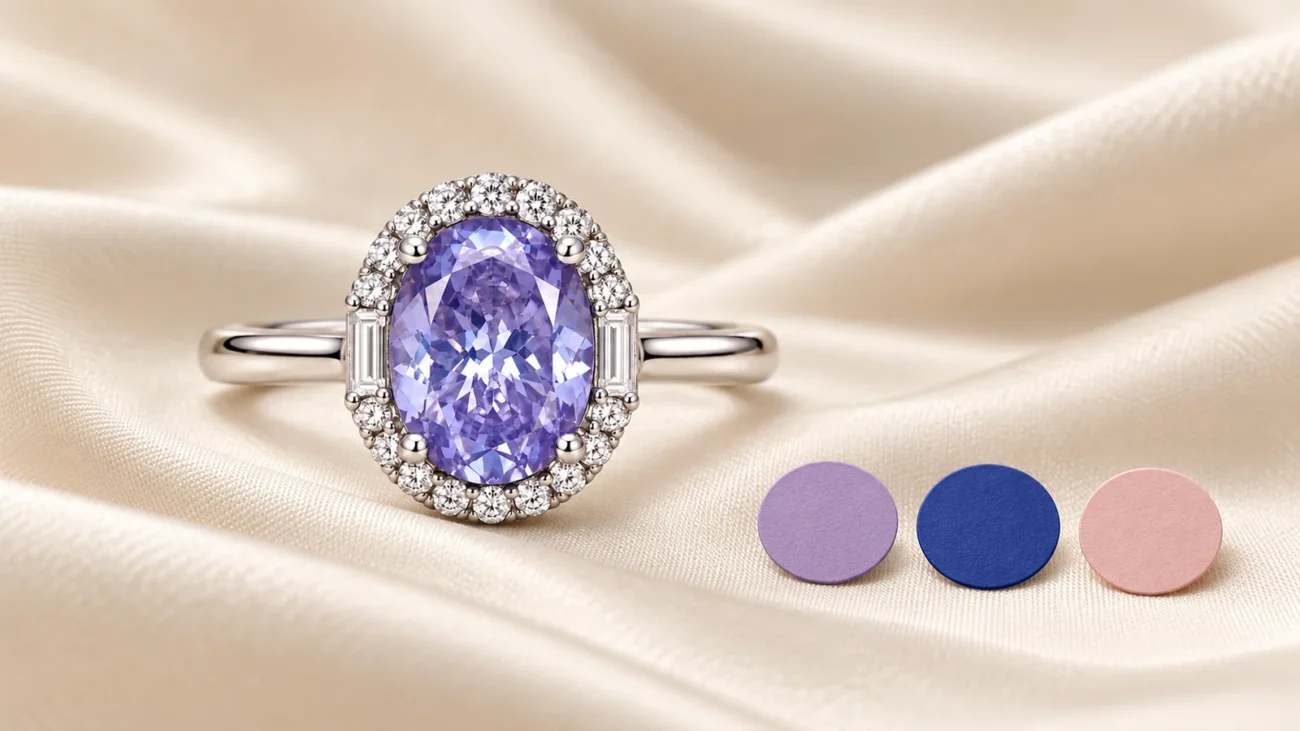
If you prefer a symbolic outline with a more romantic center, the published heart halo moissanite pendant necklace offers another real example of how motif, center shape and framing can work together. Use its listed details for that product only.
Sunshine disc pendant buying checklist
Before purchasing, save the product page and confirm the following points. A strong listing should make the important specifications understandable without forcing you to infer them from lifestyle images.
Motif: Is it an engraved disc, open sun, sunburst, halo or center-stone interpretation?
Complete dimensions: What are the outer width and height, and is the bail included in the height?
Metal description: Is the piece solid, alloyed, plated or vermeil, and does the description apply to both pendant and chain?
Stone identity: Are the center and accent materials named separately and accurately?
Chain: Is it included, adjustable and removable, and what are its length and width?
Wearability: Are the reverse, edges, bail, clasp and setting height shown clearly?
Care: Do the instructions match the disclosed metal, plating, gemstone and treatments?
Policies: Review the current size, customization, return and warranty information before ordering.
Quality cannot be confirmed from a motif alone. Construction, finishing, setting security and final inspection matter. You can review how Sunshine Jewelry checks pieces before shipping to understand the site’s stated inspection process and which details are examined.
How can you style or layer a sun disc necklace?
A sun disc necklace is easiest to style when it has a clear role: wear it as the focal point, or give it its own vertical space in a layered set. Start with two necklaces rather than several. Separate their lengths enough that the pendants do not sit directly on top of one another, and vary the visual weight so the arrangement has a clear lead piece.
Everyday minimal: pair a small disc with a plain crew-neck or open-collar shirt and simple stud earrings.
Balanced layering: place a fine, short chain above a medium disc on a slightly longer chain.
Statement styling: wear a larger textured disc alone over an uncluttered neckline.
Mixed motifs: keep one shared element—such as metal color, chain texture or stone tone—so celestial and geometric pieces feel intentional together.
Layering increases chain contact and tangling. Check the necklaces during the day, avoid forcing knots apart, and store each chain separately after wear. If two pendants repeatedly strike each other, change the spacing or wear them separately to reduce abrasion.
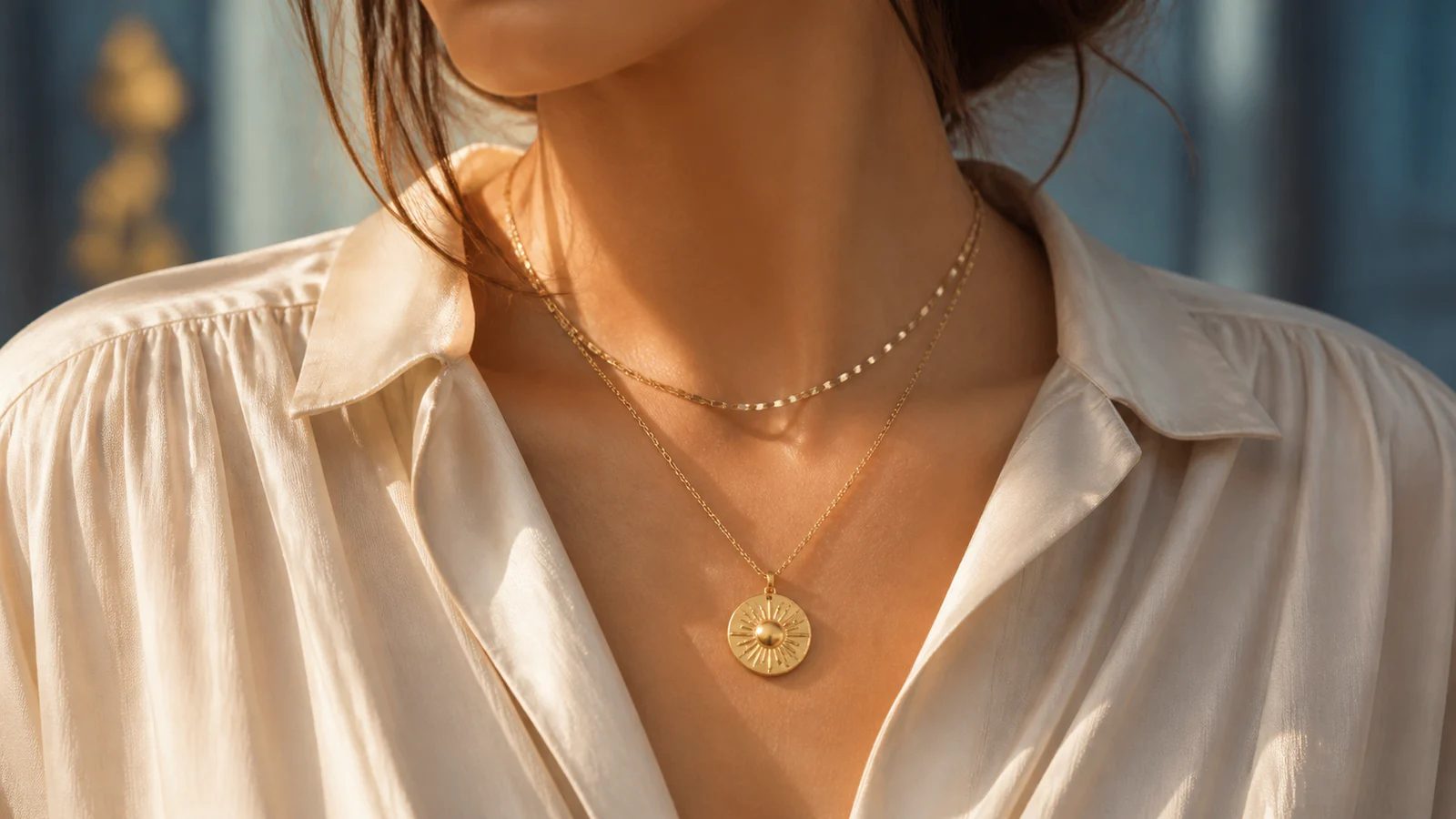
A sun disc pendant worn as the lower focal point in a two-necklace layer.
Is a sunshine pendant a good gift?
Yes, a sunshine pendant can be a thoughtful gift when the recipient likes necklaces and the giver explains the personal meaning. It can suit a birthday, graduation, thank-you, new beginning or an everyday “thinking of you” moment. The motif communicates warmth without automatically carrying the same commitment message as an engagement ring.
Choose the recipient’s normal metal color first, then consider pendant scale and chain length. If you do not know those preferences, look at the necklaces they already wear rather than guessing from current trends. For a surprise, an adjustable chain and a moderate visual scale can offer flexibility, but always use the actual listing dimensions and current policies to make the final decision.
A meaningful presentation does not require an exaggerated claim. Add a note describing a shared memory, a quality you admire or the reason the sun motif felt appropriate. That story is what turns a broadly recognizable symbol into a personal gift.
How should you care for a sunshine disc pendant?
Care depends on the metal, finish, gemstone and any surface treatment. The safest routine is to follow the maker’s instructions, wipe the pendant gently with a clean soft cloth after wear and store it separately so the disc, rays and chain do not rub against harder pieces.
Fasten the chain before storage to reduce tangles.
Keep the necklace away from perfume, hairspray and household cleaners until you know what the finish can tolerate.
Do not assume an ultrasonic or steam cleaner is suitable; some stones, treatments and settings require different care.
Inspect the bail, clasp, jump rings and prongs periodically, especially if the pendant is worn often.
Ask a jeweler for help if a stone moves, a ray bends, plating changes noticeably or the chain stretches.
For many jewelry pieces, a soft cloth is a conservative first step. If the product instructions allow washing, use only the method specified for its exact materials and dry it thoroughly. Avoid generic “one solution cleans everything” advice because pearls, porous gems, treated stones, plated surfaces and solid metals can have different needs.
Frequently asked questions
Is a sunshine disc pendant the same as a sunburst necklace?
Not always. A sunshine disc has a circular base, while a sunburst emphasizes rays extending from a center. One pendant can combine both features, but an open sunburst may have no solid disc at all. Check the silhouette and dimensions rather than relying only on the product name.
What does a sun necklace mean as a gift?
It often expresses warmth, encouragement or a bright presence in the giver’s life. The most accurate meaning is the one you communicate to the recipient. Include a short personal note instead of assuming the symbol has one fixed cultural definition.
Can I wear a sunshine pendant every day?
Possibly, if its materials, construction and care needs match your routine. Consider chain strength, setting height, ray edges, plating, stone security and exposure to water, chemicals, sports or sleep. Follow the specific product instructions rather than treating every pendant as equally durable.
What chain length is best for a sun disc pendant?
There is no single best length. Choose where you want the pendant to sit, then measure a necklace or soft cord on your own body. Common retail lengths can be comparison points, but neck circumference, torso proportions, neckline and pendant size determine the final position.
Should the chain match the pendant metal?
Matching creates a consistent look, but mixed metals can be intentional. More importantly, confirm material descriptions for both parts, make sure the chain can support the pendant and check that the bail fits if you plan to swap chains.
How do I know whether a stone is moissanite, diamond or cubic zirconia?
Read the seller’s explicit material disclosure and supporting product information; do not identify a stone from sparkle alone. Moissanite, diamond and cubic zirconia are different materials. If a listing is unclear about the center and accent stones, ask before purchasing.
Can a sunshine disc pendant be personalized?
Some designs can be engraved, but availability depends on the product and seller. Confirm the permitted character count, font, placement, production time and whether personalized items have different return terms before ordering. Never assume that a blank reverse side automatically means engraving is offered.
Final takeaway
A sunshine disc pendant works best when meaning and construction are considered together. Define what the sun represents to the wearer, compare engraved discs with open suns and stone-set sunbursts, verify the complete measurements, and choose a chain that places the pendant where it can be worn comfortably. Then confirm the metal, stone disclosures, care instructions and current policies.
To continue comparing real shapes and settings, browse Sunshine Jewelry’s current jewelry collection and use each product page’s published specifications as the source for that individual piece. A careful comparison will tell you more than a motif name alone.
Choose a women's sunshine diamond ring gift by checking her style, exact ring size, verified listing details, daily routine, and current store policies.