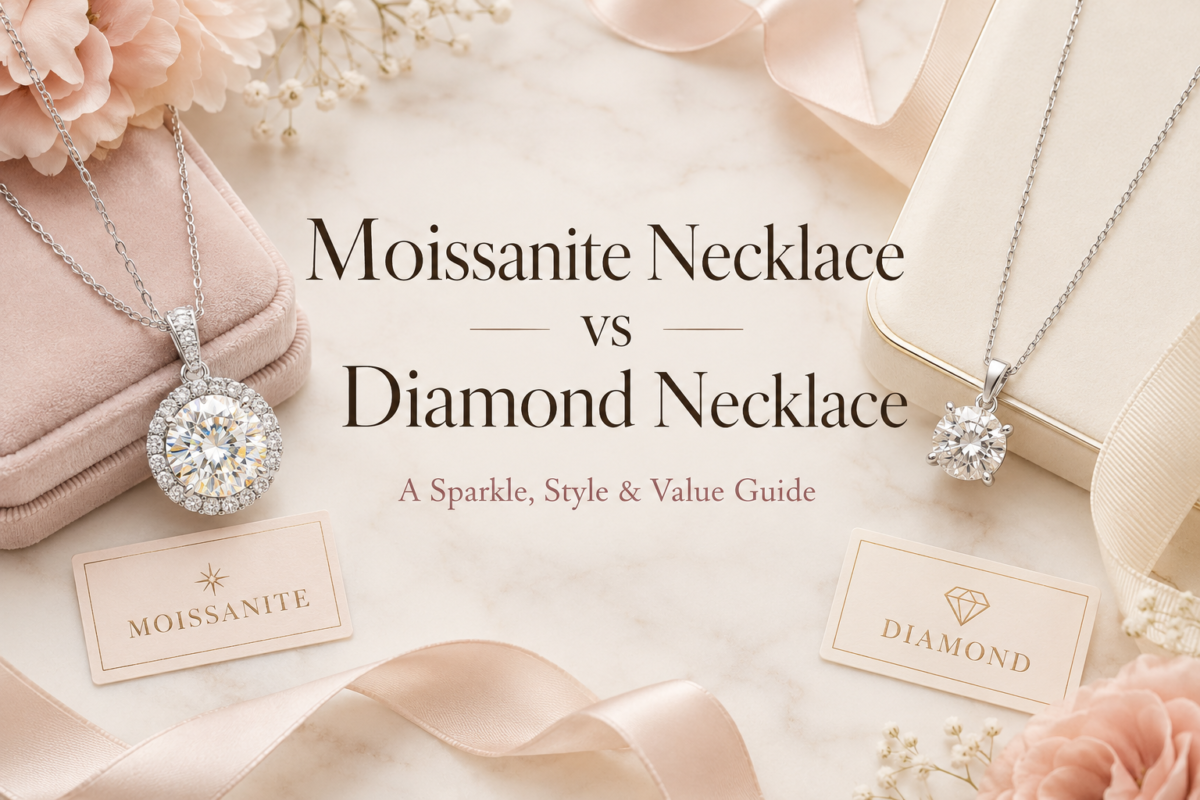
Compare moissanite and diamond by price, hardness, sparkle,
durability, origin, everyday wear and overall value before choosing
your next ring or jewelry piece.
By Sunshine JewelryUpdated July 16, 2026Estimated reading time: 12 minutes
Moissanite and diamond can create similar jewelry silhouettes, but
they differ in material, optical appearance, price and origin.
Quick answer
Moissanite is a laboratory-created silicon carbide gemstone known for
strong rainbow-like fire, high durability and a more accessible price.
Diamond is a carbon gemstone available in natural and laboratory-grown
forms, valued for traditional status, exceptional hardness and classic
brilliance. Neither is universally better—the right choice depends on
your budget, style and priorities.
Important identification note:
Moissanite is not a natural diamond and it is not a laboratory-grown
diamond. Each product should clearly identify the gemstone being sold.
What Is the Main Difference Between Moissanite and Diamond?
The most important difference is that moissanite and diamond are
different gemstones with different chemical compositions.
Moissanite is made from silicon carbide, while diamond is made from
carbon.
Natural moissanite is extremely rare, so jewelry-quality moissanite is
generally created in laboratories. Diamonds may be mined naturally or
produced in laboratories. A laboratory-grown diamond has essentially
the same crystal structure and physical properties as a natural
diamond, while moissanite remains a separate gemstone.
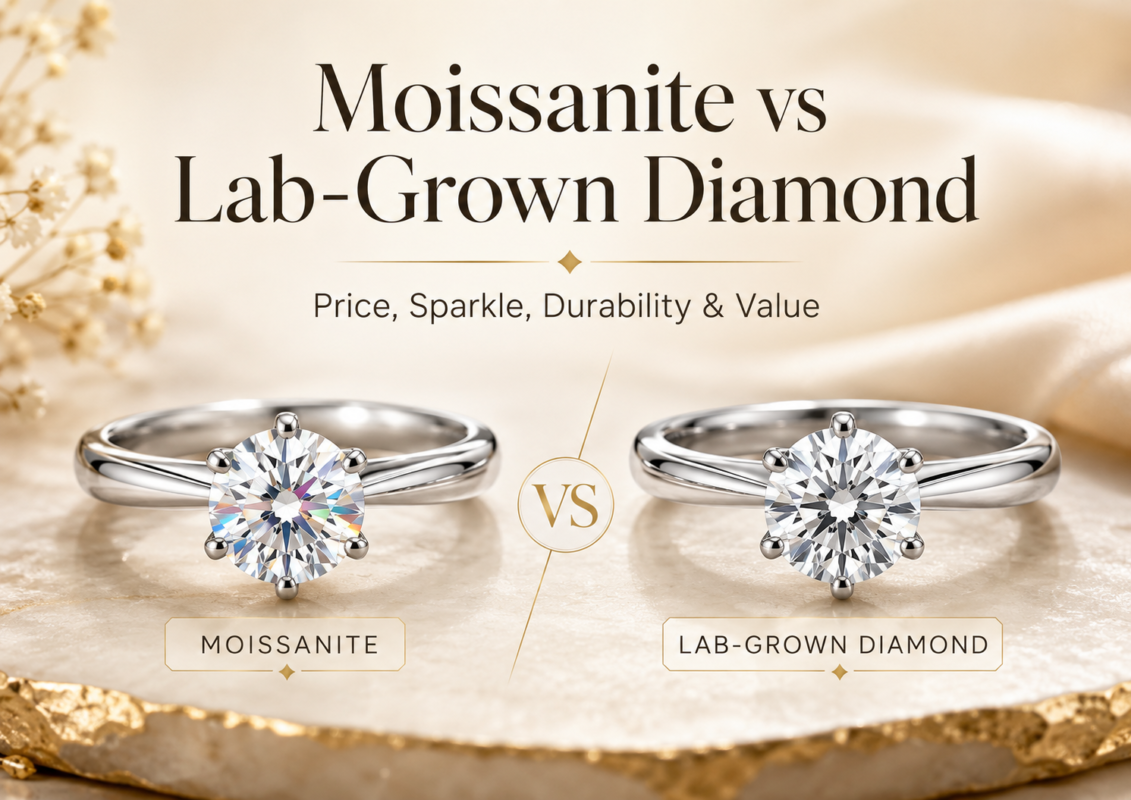
From a distance, both can appear bright and colorless. Under closer
observation, moissanite often displays more colorful flashes, while
diamond tends to create a more familiar balance of white brilliance,
fire and contrast.
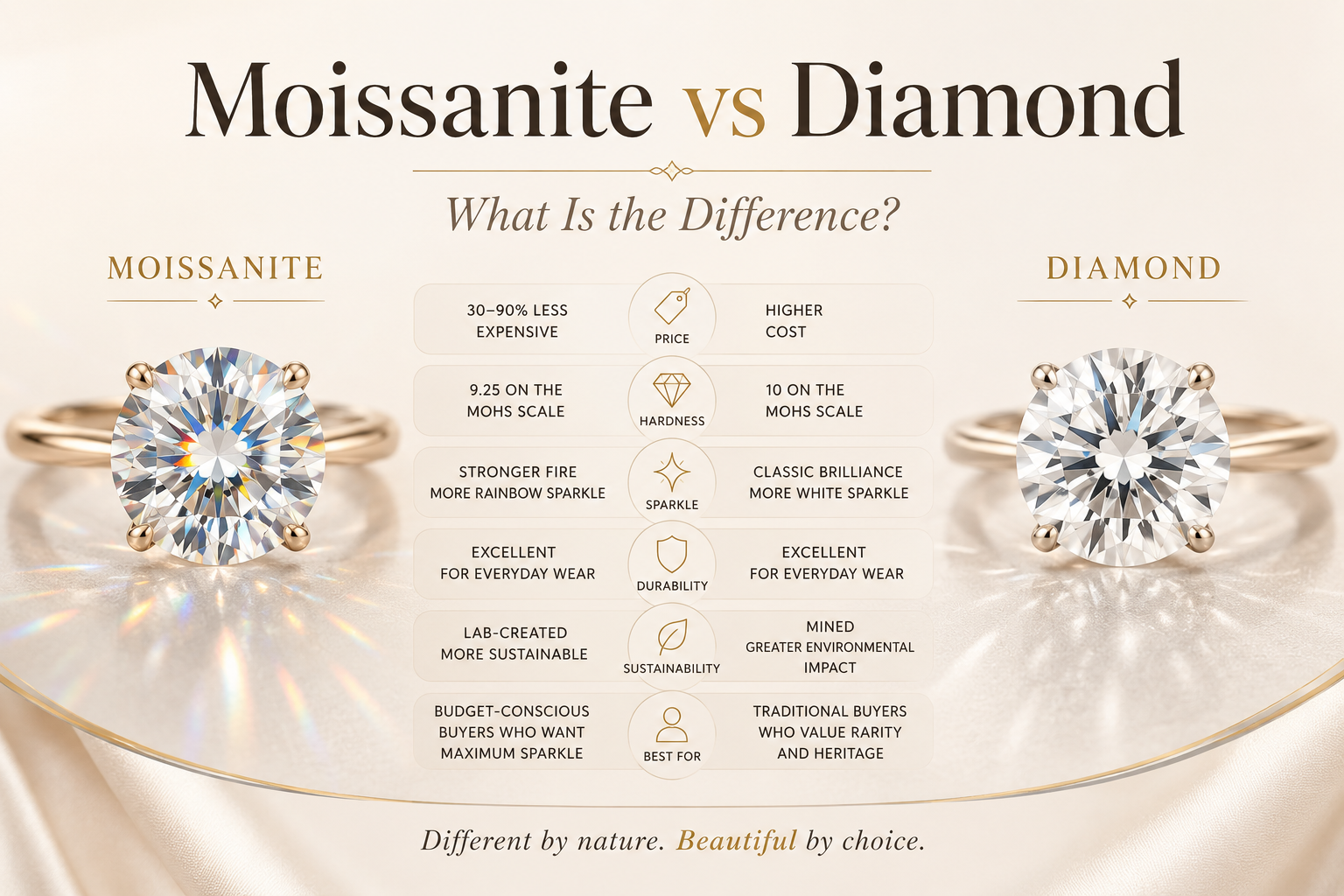
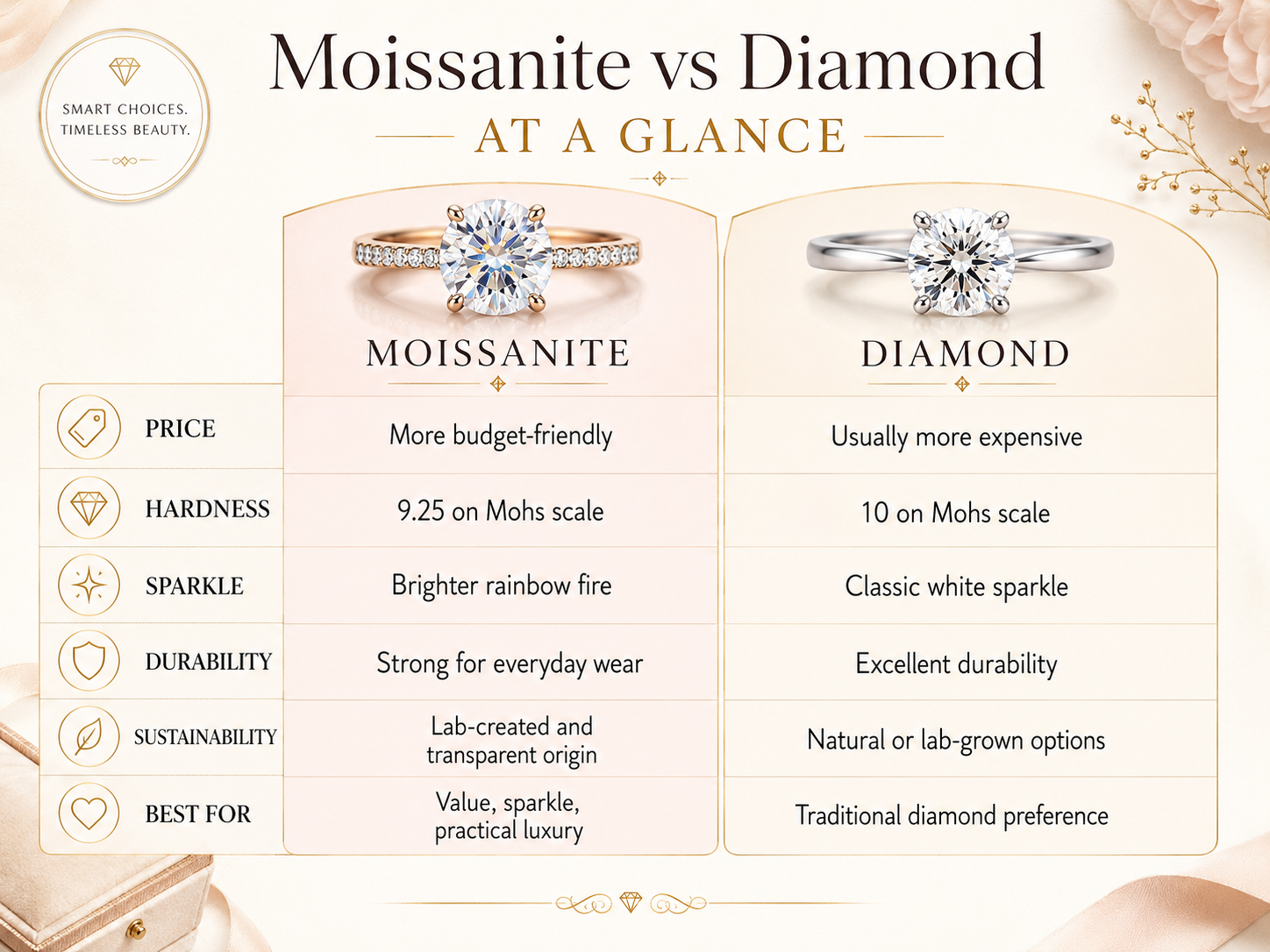
A quick overview of the main differences buyers should consider
before choosing between moissanite and diamond.
Feature
Moissanite
Diamond
Composition
Silicon carbide
Carbon
Jewelry origin
Generally laboratory-created
Natural mined or laboratory-grown
Price position
Usually more budget-friendly for a similar visual size
Varies widely; natural diamonds are commonly more expensive
Mohs hardness
Approximately 9.25
10
Sparkle
Stronger colorful or rainbow-like fire
Classic brilliance and crisp white flashes
Daily wear
Highly suitable when securely set and properly cared for
Highly suitable when securely set and properly cared for
Traditional status
Modern alternative gemstone
Long-established engagement and fine-jewelry gemstone
Best for
Value, visible size and strong sparkle
Buyers who specifically want a diamond
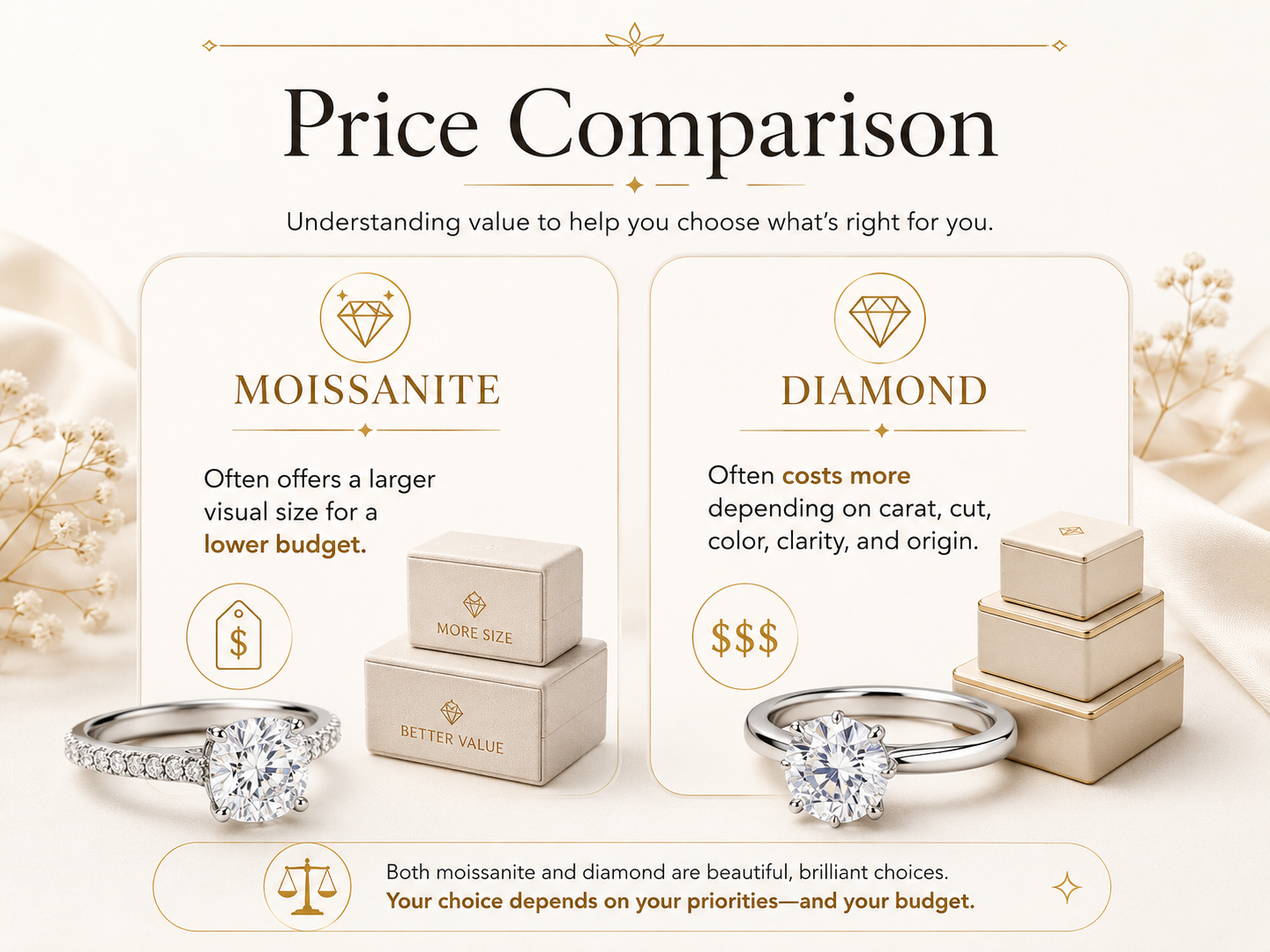
Moissanite vs Diamond Price
Price is one of the largest differences in a
moissanite diamond comparison. Moissanite usually
offers a larger face-up appearance for a lower budget than a diamond
with similar visible dimensions.
Moissanite generally allows buyers to prioritize visual size,
setting details or customization without choosing the same gemstone
budget as a comparable diamond.
Why Does Diamond Usually Cost More?
Diamond pricing is influenced by whether it is natural or
laboratory-grown, along with carat weight, cut, color, clarity,
certification, brand and market conditions. Natural diamonds and
laboratory-grown diamonds should not be treated as one identical
pricing category.
What Affects Moissanite Price?
Moissanite pricing can vary according to stone dimensions, cut
quality, color appearance, ring design, metal, accent stones,
craftsmanship, customization and the seller’s service.
Compare dimensions—not only carat labels.
Moissanite is often listed using a diamond-equivalent weight. The
actual millimeter length and width provide a clearer idea of how large
the gemstone will appear.
01
Lower Stone Budget
Moissanite can leave more room for a detailed setting, matching
wedding band or personalized design.
02
Larger Visual Presence
Buyers may choose a larger millimeter size without reaching the
price of a similarly sized natural diamond.
03
Different Value Priorities
Diamond may be the preferred purchase when tradition, rarity or
owning a diamond is the primary goal.
Hardness and Durability
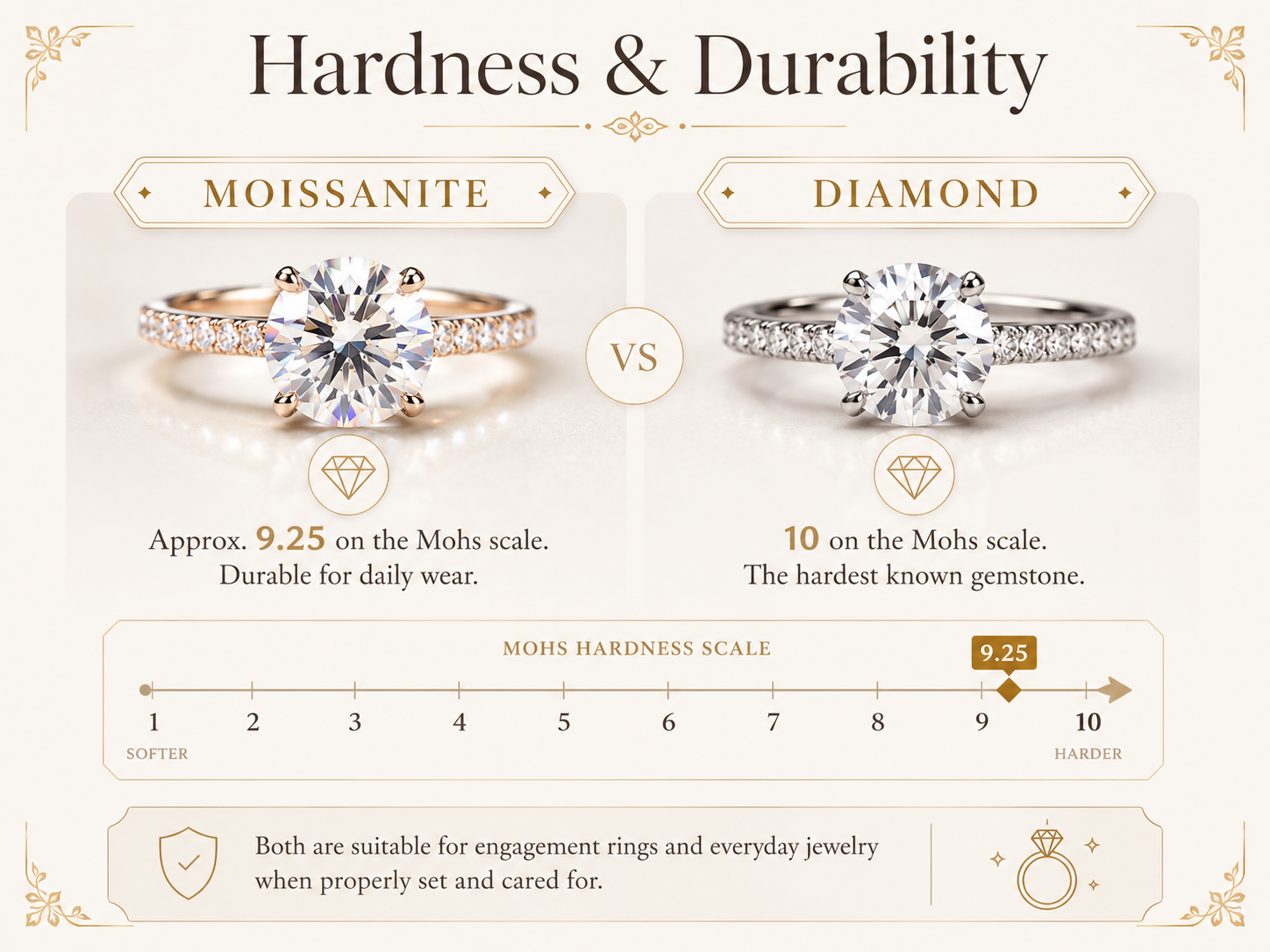
Diamond receives a hardness rating of 10 on the Mohs scale.
Moissanite is usually described at approximately 9.25, making it one
of the hardest gemstones commonly used in jewelry.
Diamond is harder, but both gemstones are highly resistant to
everyday surface scratching when used in well-made jewelry.
Hardness Is Not the Same as Being Indestructible
Hardness measures resistance to scratching. It does not mean a
gemstone cannot chip, loosen or become damaged after a strong impact.
Diamond and moissanite should both be removed before heavy physical
work, exercise or activities that may strike the setting.
The Setting Is Just as Important
A secure ring depends on prong alignment, gallery construction,
setting height, band thickness and workmanship. Even a very hard stone
can be lost if the setting becomes bent or a prong is damaged.
For active lifestyles:
consider a lower-profile setting, protective gallery rail, smooth
band or securely supported prongs.
Which One Sparkles More?
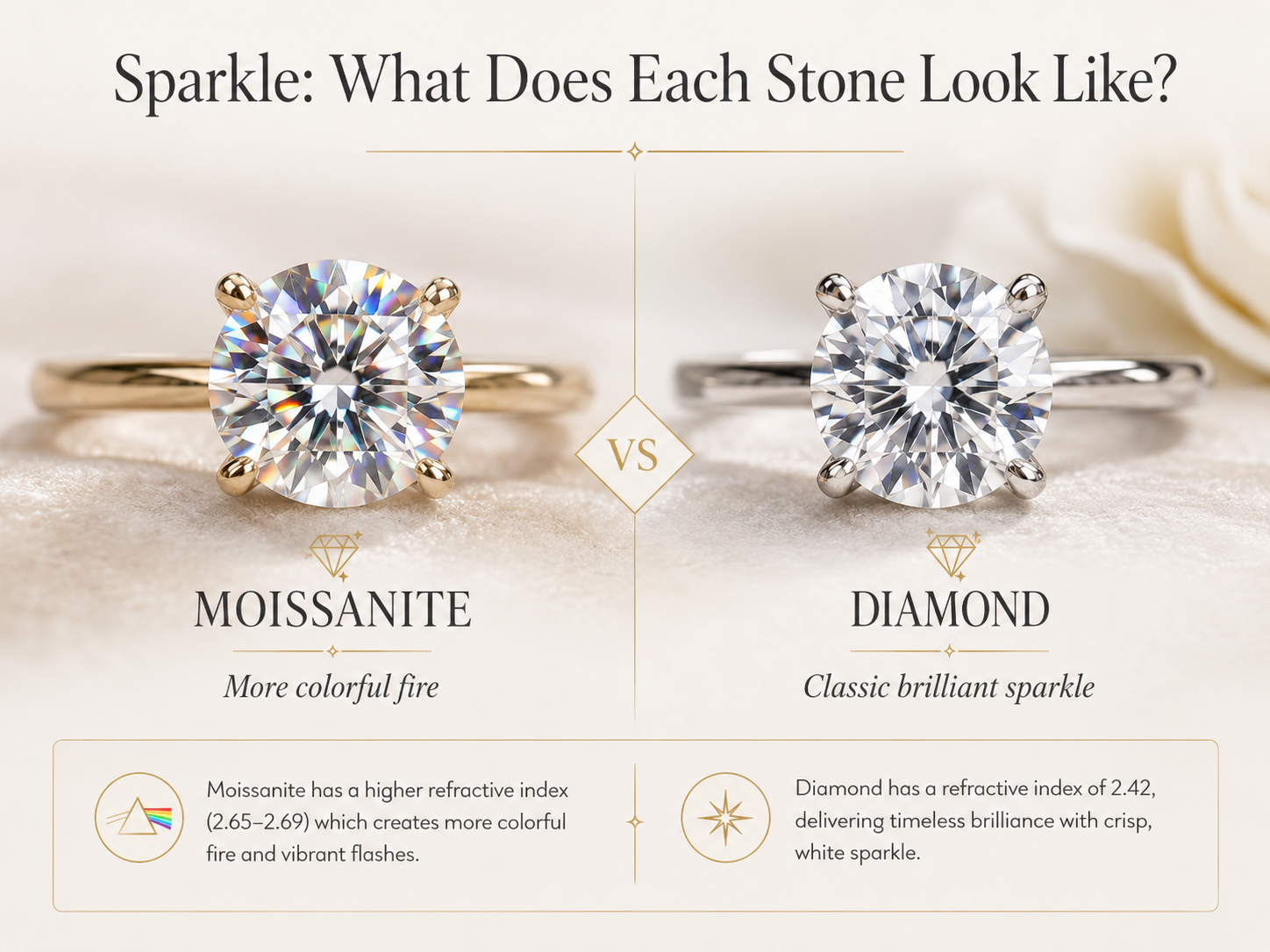
Both gemstones sparkle strongly, but their light performance does not
look exactly the same.
Moissanite often produces stronger colorful fire, while diamond
commonly presents a crisper pattern of white brilliance and
contrasting flashes.
Moissanite Sparkle
More visible rainbow-like flashes
Lively appearance under strong lighting
Colorful fire may become more noticeable in larger stones
Popular with buyers who enjoy maximum sparkle
Diamond Sparkle
Classic combination of brilliance, fire and scintillation
Often appears whiter and more contrast-driven
Appearance depends heavily on cut quality
Preferred by buyers who want a traditional diamond look
Neither sparkle style is automatically better.
Some people love moissanite’s colorful fire, while others prefer the
more familiar visual character of a well-cut diamond.
Which Is Better for Everyday Wear?
Both moissanite and diamond can be suitable for engagement rings and
everyday jewelry. The better choice depends on the complete piece,
including the setting, band construction, metal and how the wearer
uses her hands.
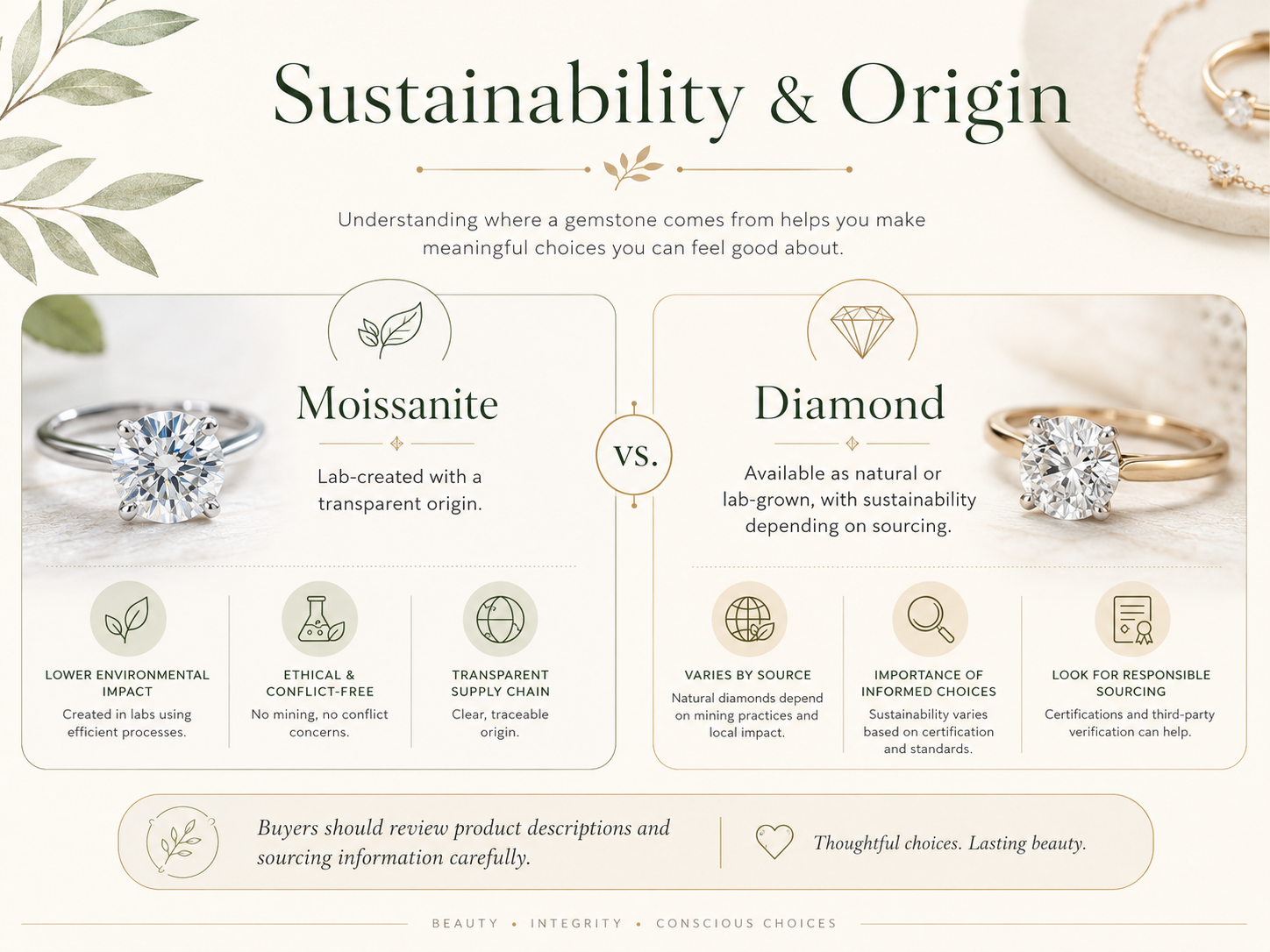
Sustainability is more complex than labeling one gemstone
“eco-friendly” and the other “not eco-friendly.” Environmental and
social impact depends on energy use, manufacturing efficiency,
mining practices, labor standards, transportation, metal sourcing and
the transparency of the seller.
Review the actual origin and sourcing information of the gemstone
rather than relying only on broad environmental marketing claims.
Moissanite Origin
Jewelry-quality moissanite is generally laboratory-created, which
provides a clear manufactured origin and avoids gemstone mining.
However, laboratory production still requires energy and materials,
so total environmental impact can vary between manufacturers.
Diamond Origin
Natural diamonds come from mining operations whose environmental and
community impact differs by region and producer. Laboratory-grown
diamonds avoid diamond mining but require significant controlled
energy for growth, cutting and processing.
Responsible buying approach:
ask whether the gemstone is natural, laboratory-grown or moissanite,
and review sourcing, manufacturing and certification information
before accepting broad sustainability claims.
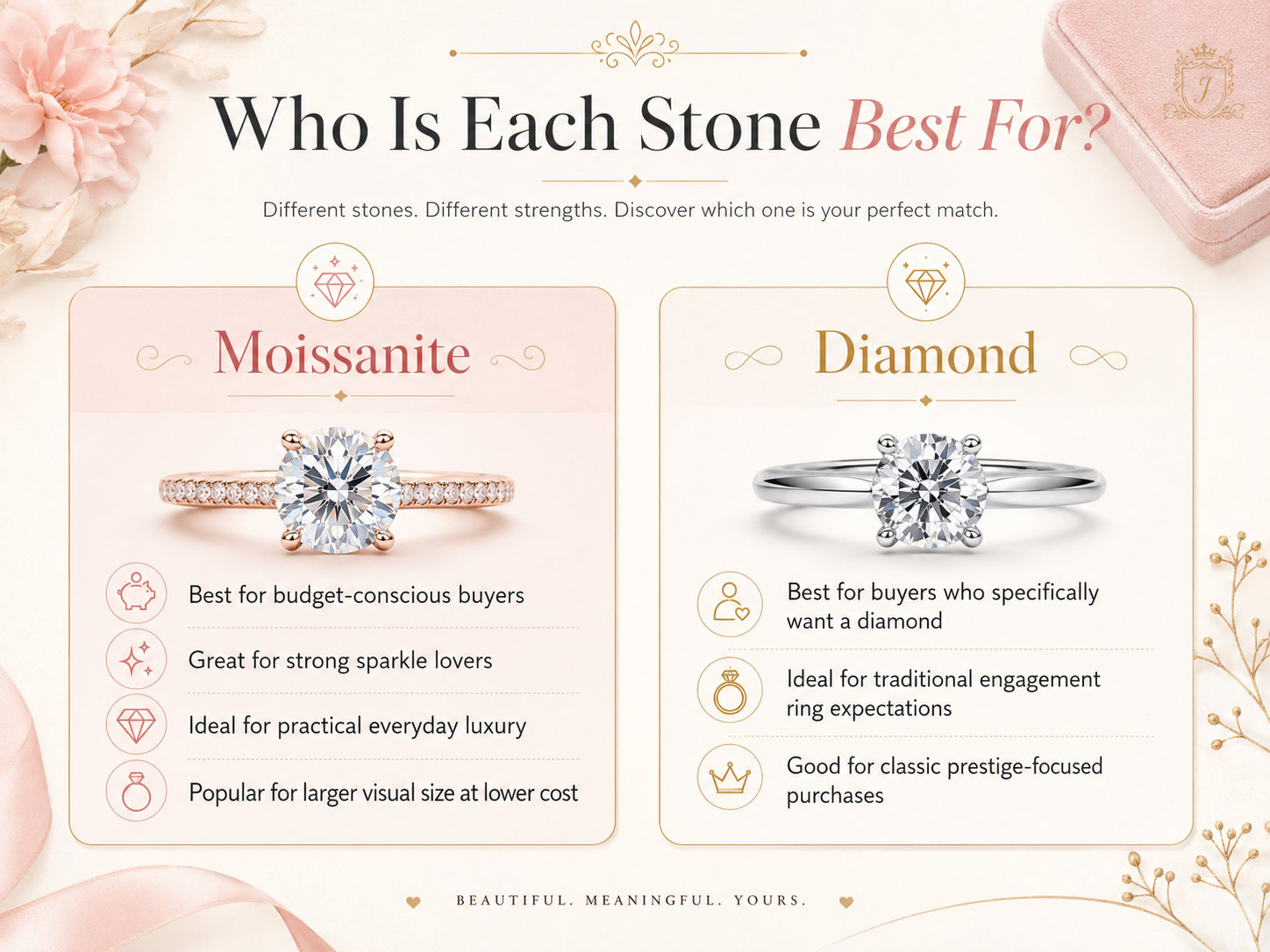
Who Is Each Stone Best For?
Your priorities matter more than choosing the gemstone other people
expect you to buy.
Moissanite May Be Best If You:
Want a larger visual size for a controlled budget
Love strong, colorful sparkle
Prefer a laboratory-created gemstone
Want more budget room for a detailed setting
Value everyday beauty more than traditional gemstone status
Want an engagement-inspired or romantic ring at accessible pricing
Diamond May Be Best If You:
Specifically want a diamond rather than an alternative gemstone
Prefer classic diamond brilliance
Value traditional engagement-ring expectations
Want the maximum Mohs hardness
Have a particular natural or laboratory-grown diamond preference
Are comfortable with the required budget
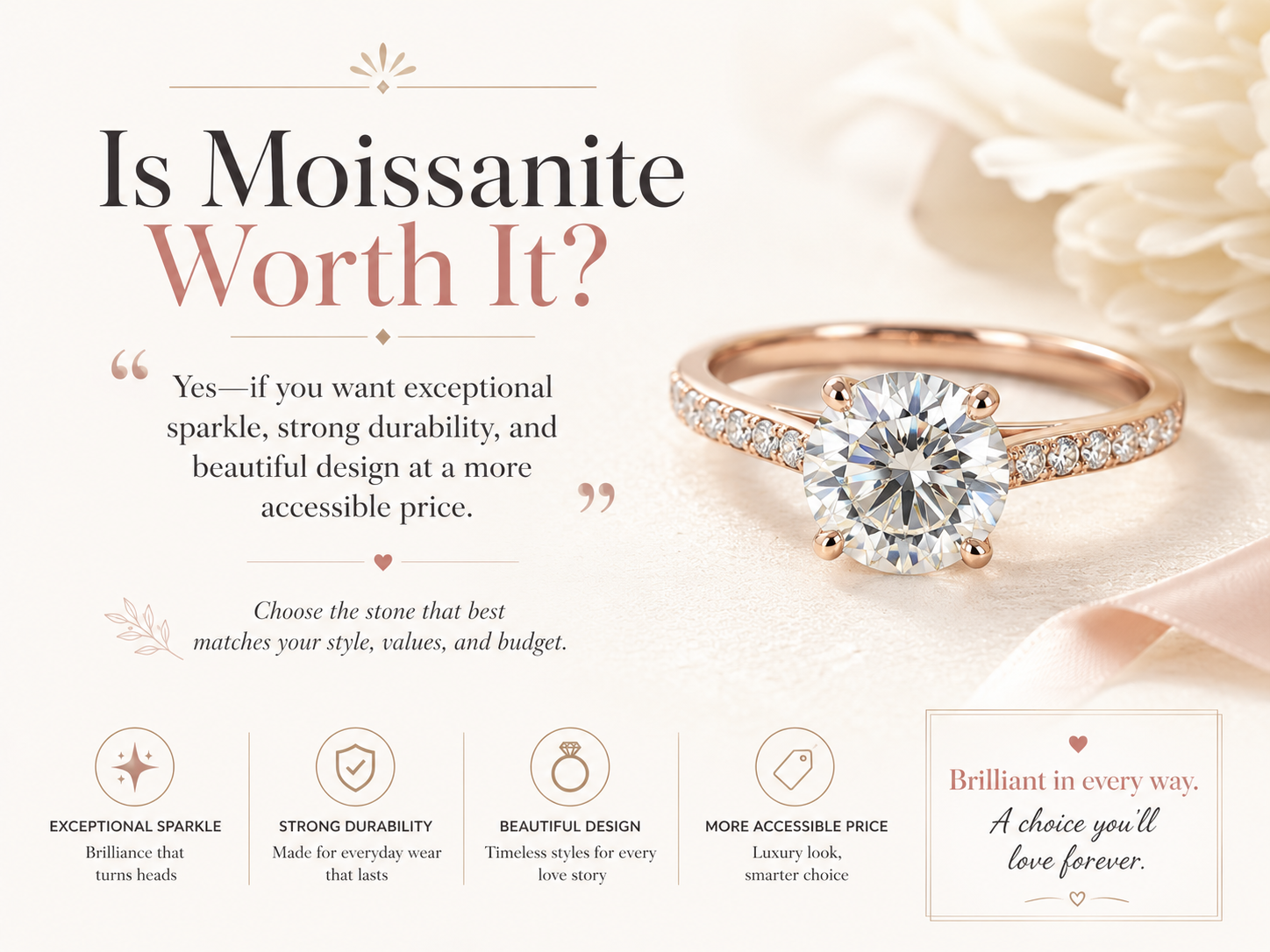
Is Moissanite Worth It?
For many buyers, the answer is yes. Moissanite can be worth it when
your priorities are strong sparkle, high scratch resistance, a larger
visual presence and an accessible jewelry budget.
Moissanite offers compelling value when its appearance, origin and
symbolism match what the buyer genuinely wants.
Moissanite Is Worth Considering When:
You genuinely enjoy its rainbow-like fire.
You want high durability for regular wear.
You prefer a laboratory-created gemstone.
You want to allocate more budget to the setting or wedding.
You understand that it is not a diamond.
You prioritize visual beauty over traditional gemstone status.
Moissanite May Not Be the Right Choice When:
You specifically want a natural or laboratory-grown diamond.
You dislike strong rainbow flashes.
Traditional diamond ownership is personally important.
You are buying it only because you expect it to be identical to diamond.
Best buying principle:
moissanite is valuable as moissanite. It should be chosen for its own
beauty and practical strengths—not because it is being mistaken for
another gemstone.
What to Check Before Buying
The gemstone is clearly identified as moissanite or diamond.
A diamond is identified as natural or laboratory-grown.
Stone dimensions are listed in millimeters.
The metal and any plating are clearly disclosed.
Front, side and close-up product images are available.
The center stone appears straight and securely set.
Prongs are even, smooth and properly aligned.
Ring size and sizing system have been confirmed.
Care, delivery and return information are available.
Environmental or ethical claims include supporting information.
Do Not Compare Only the Center Stone
A well-made ring depends on more than the gemstone. Band thickness,
setting height, polishing, side-stone alignment, comfort and metal
care can affect long-term satisfaction.
No. Moissanite is silicon carbide, while diamond is carbon.
Moissanite is a separate gemstone and should be identified
accurately.
Can people tell the difference between moissanite and diamond?
The difference may not be immediately obvious from a distance.
Under close viewing and certain lighting, moissanite often shows
stronger rainbow-like fire, while diamond displays a different
pattern of brilliance and contrast.
Is moissanite worth buying?
It can be an excellent choice for buyers who want strong sparkle,
high durability, a laboratory-created origin and a more accessible
price than many comparable diamonds.
Which costs more, moissanite or diamond?
Moissanite generally costs less than a diamond of similar visual
dimensions. Diamond prices vary greatly depending on whether the
diamond is natural or laboratory-grown and on its carat, cut,
color and clarity.
Which is harder, moissanite or diamond?
Diamond is harder, with a Mohs rating of 10. Moissanite is
approximately 9.25 and is still highly resistant to surface
scratching.
Does moissanite become cloudy over time?
Normal oil, lotion, soap and cosmetic buildup can reduce visible
sparkle on any gemstone. Routine gentle cleaning usually restores
its appearance. Permanent changes should be assessed by a
qualified jeweler.
Is moissanite suitable for an engagement ring?
Yes. Its hardness and durability make it suitable for engagement
rings when it is securely set and properly cared for.
Is moissanite more sustainable than diamond?
Moissanite avoids gemstone mining because jewelry-quality stones
are laboratory-created. However, total environmental impact still
depends on production energy, manufacturing and sourcing.
Diamond impact also varies between natural and laboratory-grown
supply chains.
Should I choose moissanite or a lab-grown diamond?
Choose moissanite if you prefer stronger colorful fire and a more
accessible price. Choose a laboratory-grown diamond if owning a
real diamond with diamond’s chemical and optical properties is
important to you.
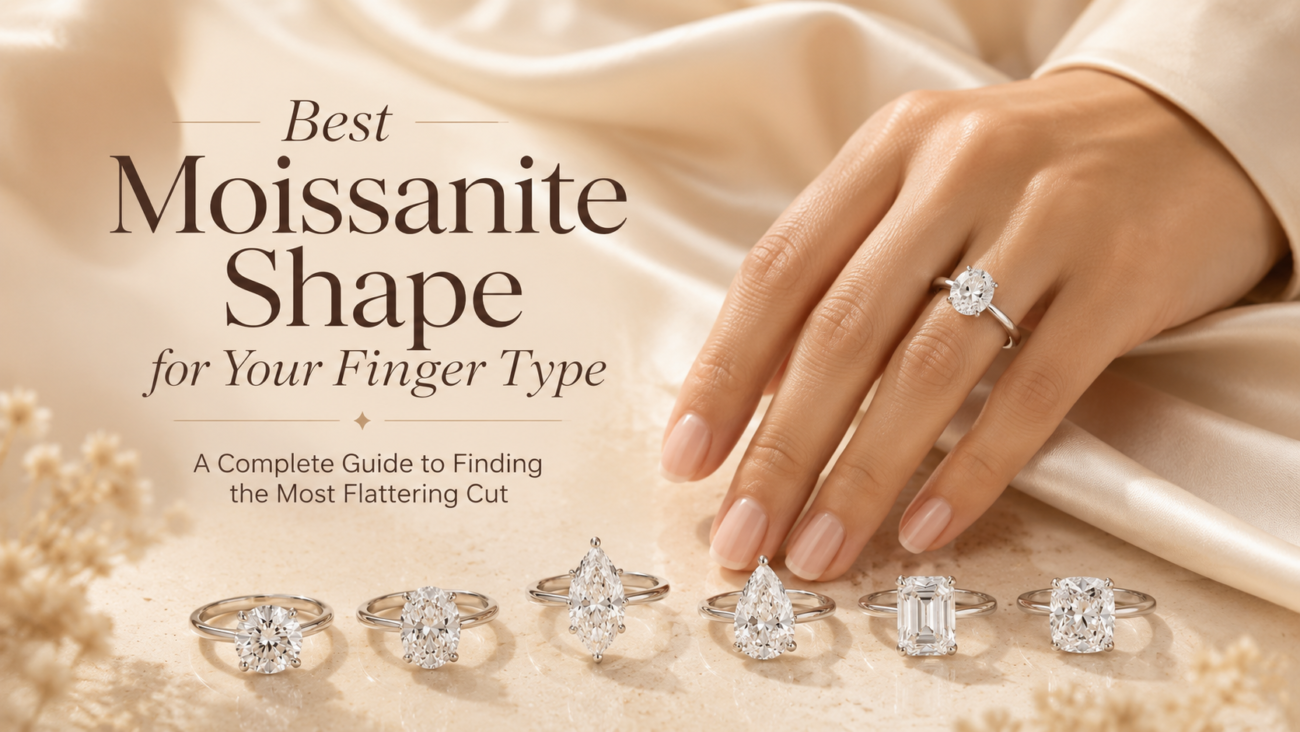
Not every moissanite shape looks the same on every hand. This complete guide compares round, oval, marquise, pear, emerald and cushion cuts to help you choose the most flattering moissanite shape for your finger length, width, hand size and personal style.
Compare moissanite vs lab-grown diamond by price, sparkle, durability, size and value. Learn the differences and choose the right stone for your jewelry.
A complete guide to choosing a moissanite engagement ring, covering stone shapes, sizes, settings, ring sizing, materials, certificates, budget and care.