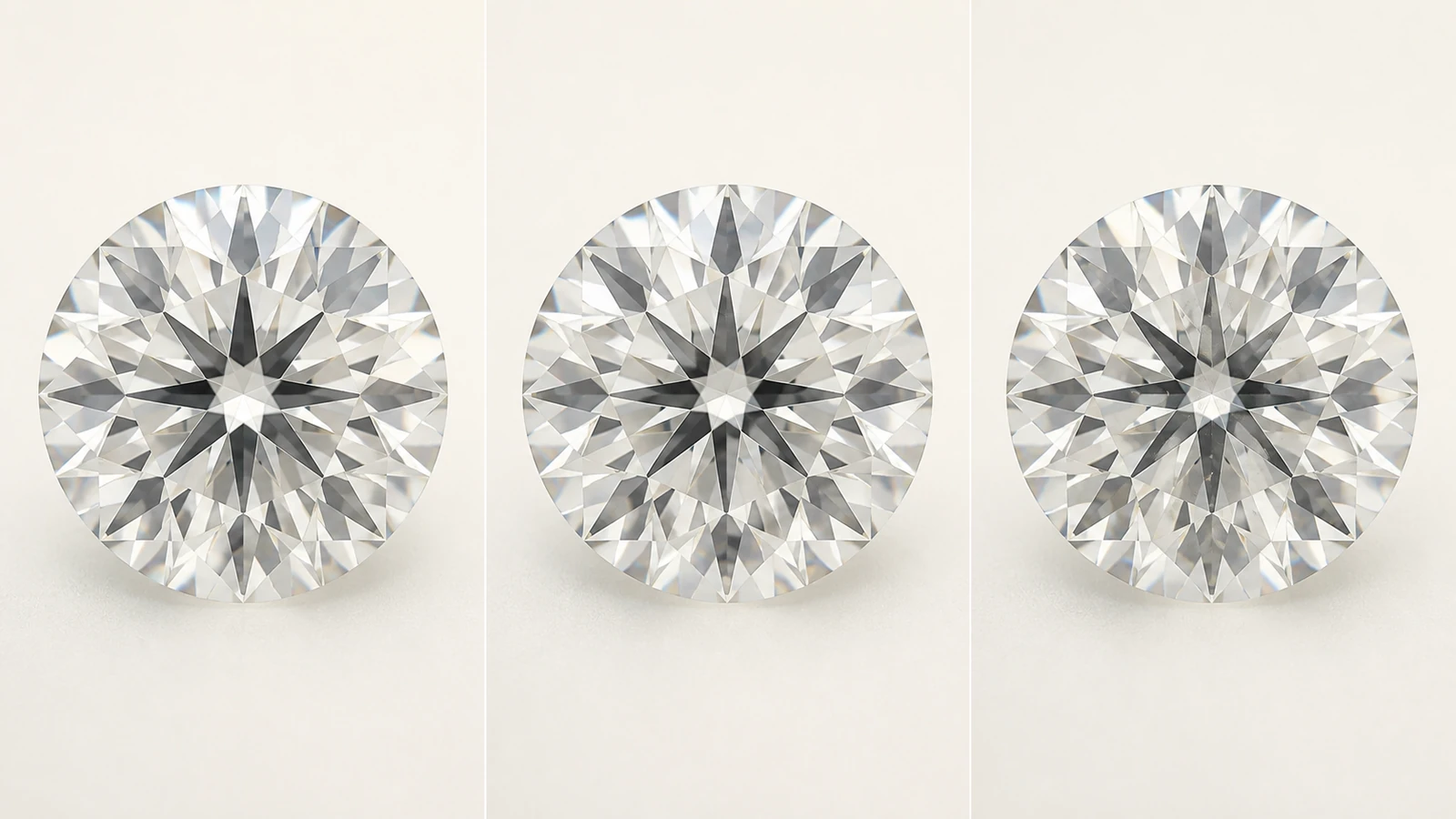
VVS moissanite clarity generally describes a moissanite with minute internal characteristics that should be difficult for a trained grader to find under 10× magnification. To a shopper viewing the stone without magnification, a well-cut VVS moissanite should normally look clean. However, VVS terminology comes from diamond grading, and moissanite grading practices can vary by seller or reporting laboratory. The label is useful only when you know who assigned it, how the stone was examined, and whether the report matches the exact stone.
Quick answer: For most jewelry buyers, the practical goal is a transparent, eye-clean moissanite with strong light performance—not the highest letters on a listing. Check the stone in ordinary lighting, review close-up media, confirm the report issuer, and compare cut, color, size, and setting before paying a premium for VVS.
VVS means “Very, Very Slightly Included” on the familiar diamond clarity scale.
VVS1 and VVS2 describe extremely small differences visible mainly under magnification.
Eye-clean is a practical viewing description, not a universal laboratory grade.
Moissanite is not diamond. A seller should identify the material accurately and explain any grading claim.
Cut quality and light return can influence visible beauty more than a tiny clarity difference.
What Does VVS Moissanite Clarity Mean?
In diamond grading, VVS refers to inclusions that are difficult for a skilled grader to see under 10× magnification. The GIA diamond clarity scale divides this range into VVS1 and VVS2. Jewelry sellers and some gem reports may use the same familiar terms to describe moissanite, but that does not mean every VVS moissanite has been graded by GIA or under one universal moissanite standard.
A sensible interpretation is therefore: the stone is represented as having only minute clarity characteristics. Before treating that representation as comparable across stores, verify the issuer, inspection method, and exact report language. A bare “VVS” in a product title offers less evidence than a report tied to the stone by an identifying number and supported by clear images.
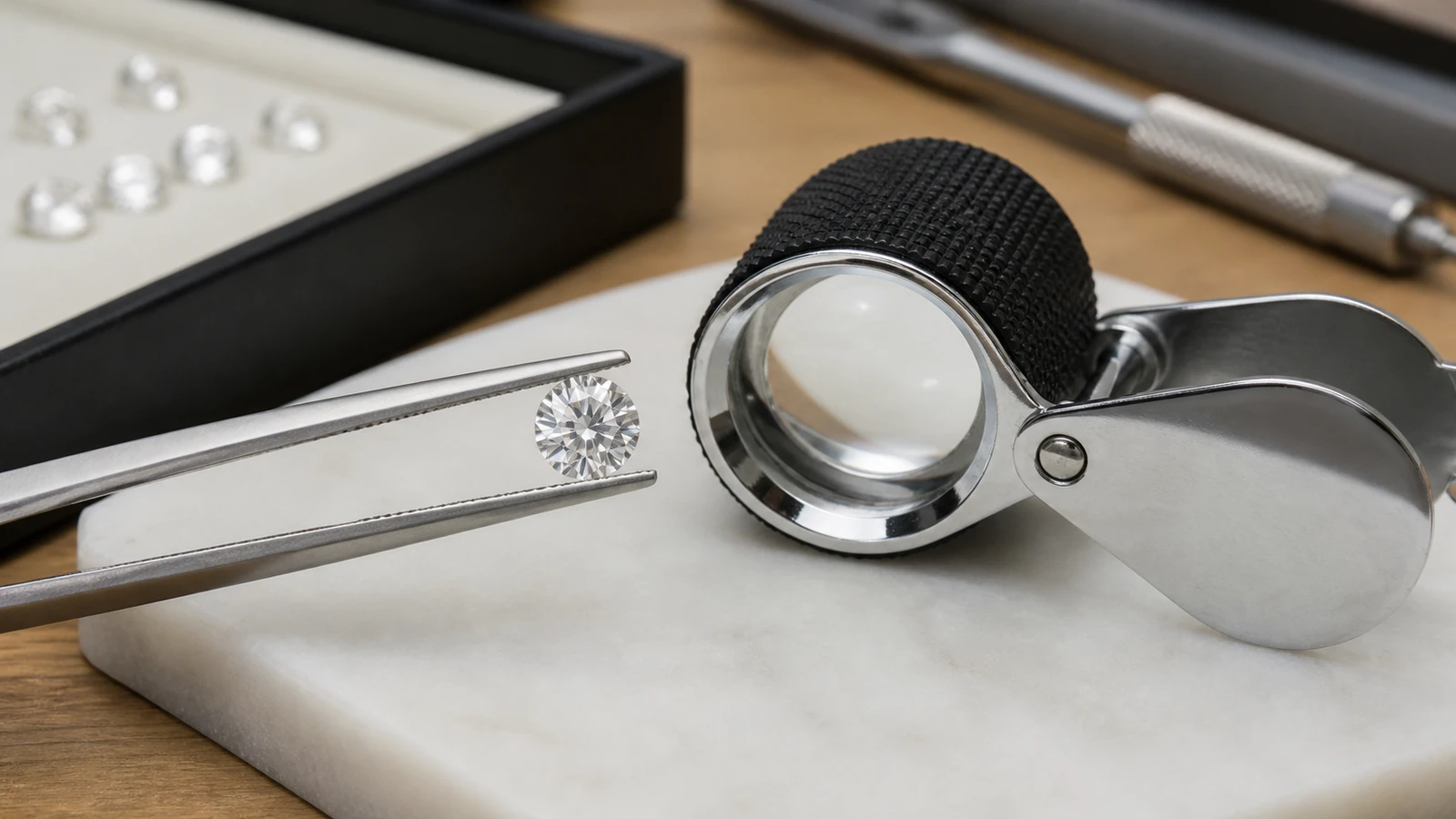
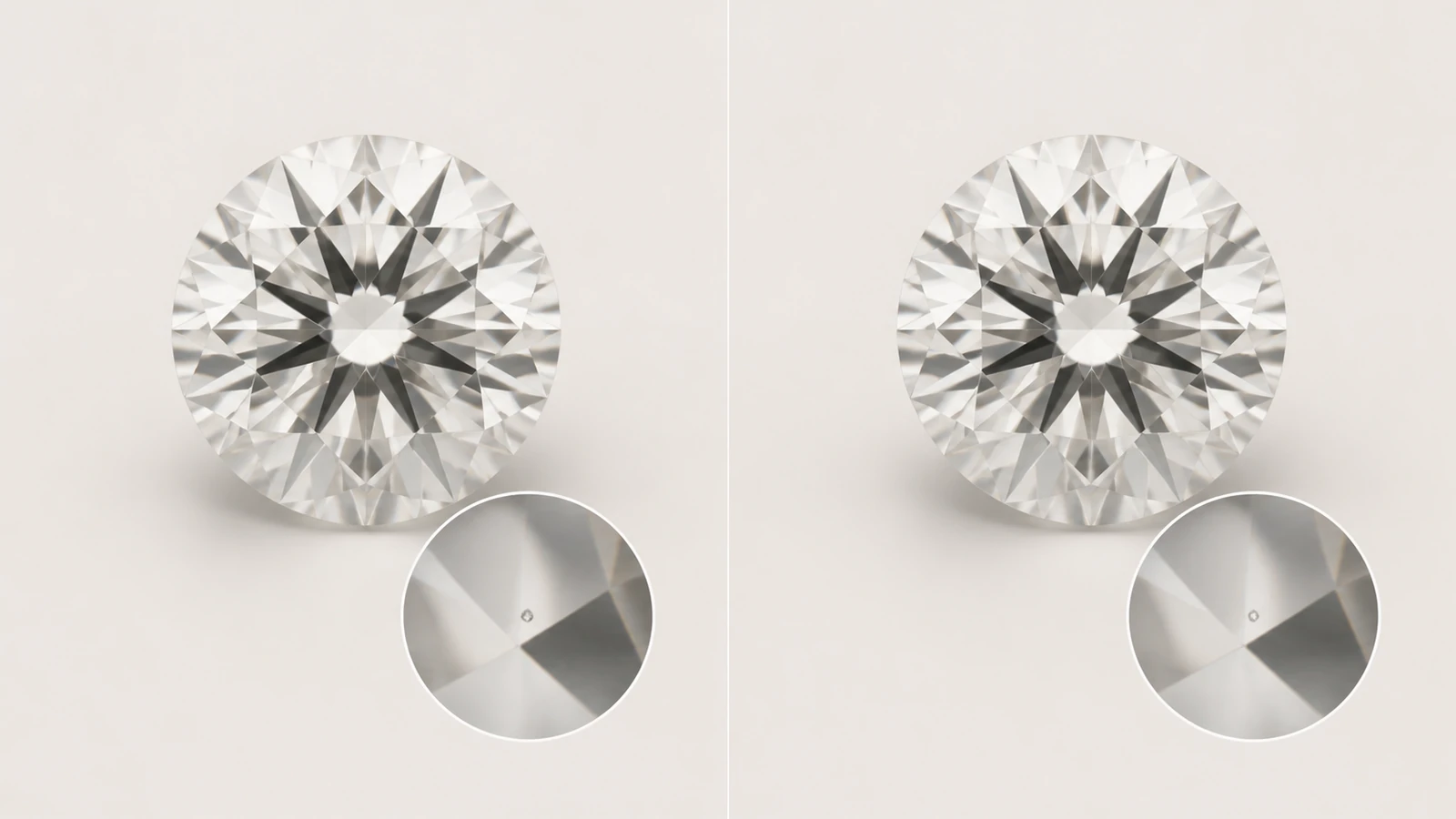
A loupe helps reveal minute internal characteristics that are usually invisible at normal viewing distance.
Does Moissanite Have an Official Clarity Scale?
Moissanite can be assessed for transparency and internal or surface characteristics, but buyers should not assume that every seller uses an identical grading system. The familiar FL, IF, VVS, VS, SI, and I labels were developed for diamonds. A GIA research note has even used the careful wording “if such clarity grades were assigned to synthetic moissanite,” which is a useful reminder that a diamond-style label on moissanite needs context.
The borrowed scale is a communication shortcut
Diamond-style terminology gives shoppers an approximate vocabulary. In a typical retail interpretation, VVS suggests minute characteristics, VS suggests minor characteristics, and SI suggests characteristics that are easier to locate under magnification. But the boundaries can differ when the seller, manufacturer, or report issuer applies its own system. Do not compare two listings by letters alone unless their grading basis is comparable.
Clarity is only one part of the stone’s appearance
GIA describes synthetic moissanite as generally having minor, if any, imperfections, while also noting its strong fire, brilliance, and double refraction. Those optical effects can influence what you see through the stone. Facet doubling, reflections, dust, or residue should not automatically be interpreted as inclusions.
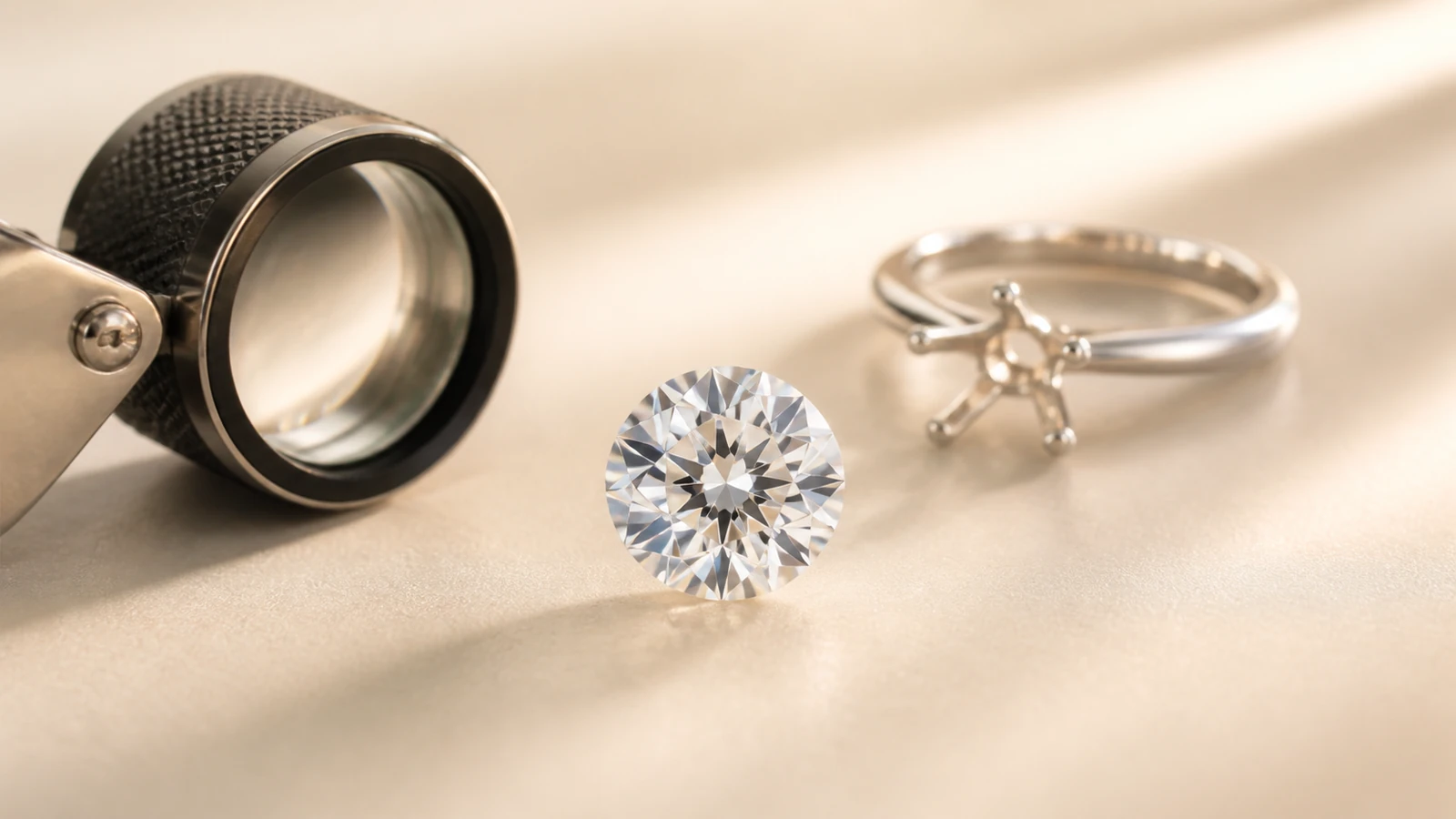
Conceptual illustration only: real grading requires controlled observation, not comparison with a generated image.
VVS1 vs VVS2 Moissanite: Is the Difference Visible?
VVS1 and VVS2 are adjacent high-clarity categories. In diamond grading, the distinction depends on how difficult clarity characteristics are to find and on factors such as their size, nature, position, relief, and number. On a moissanite listing, the practical difference should also be very small—but the exact criteria depend on the grading source.
Label
Practical interpretation
Typical unaided view
Buyer priority
VVS1
Minute characteristics represented as exceptionally difficult to locate at 10×
Expected to look clean
Verify the report and exact stone
VVS2
Minute characteristics represented as very difficult to locate at 10×
Expected to look clean
Compare price, cut, and video with VVS1
VS
Minor characteristics that may be easier to locate under magnification
Often eye-clean, depending on stone and grader
Inspect location and face-up appearance
This table is a shopping framework, not a substitute for a grading standard. Two stones with the same seller-assigned grade can look different, while a VVS1 and VVS2 from the same source may look identical without magnification.
At the VVS level, differences are primarily magnification-level details rather than obvious face-up flaws.
What Does “Eye-Clean” Moissanite Really Mean?
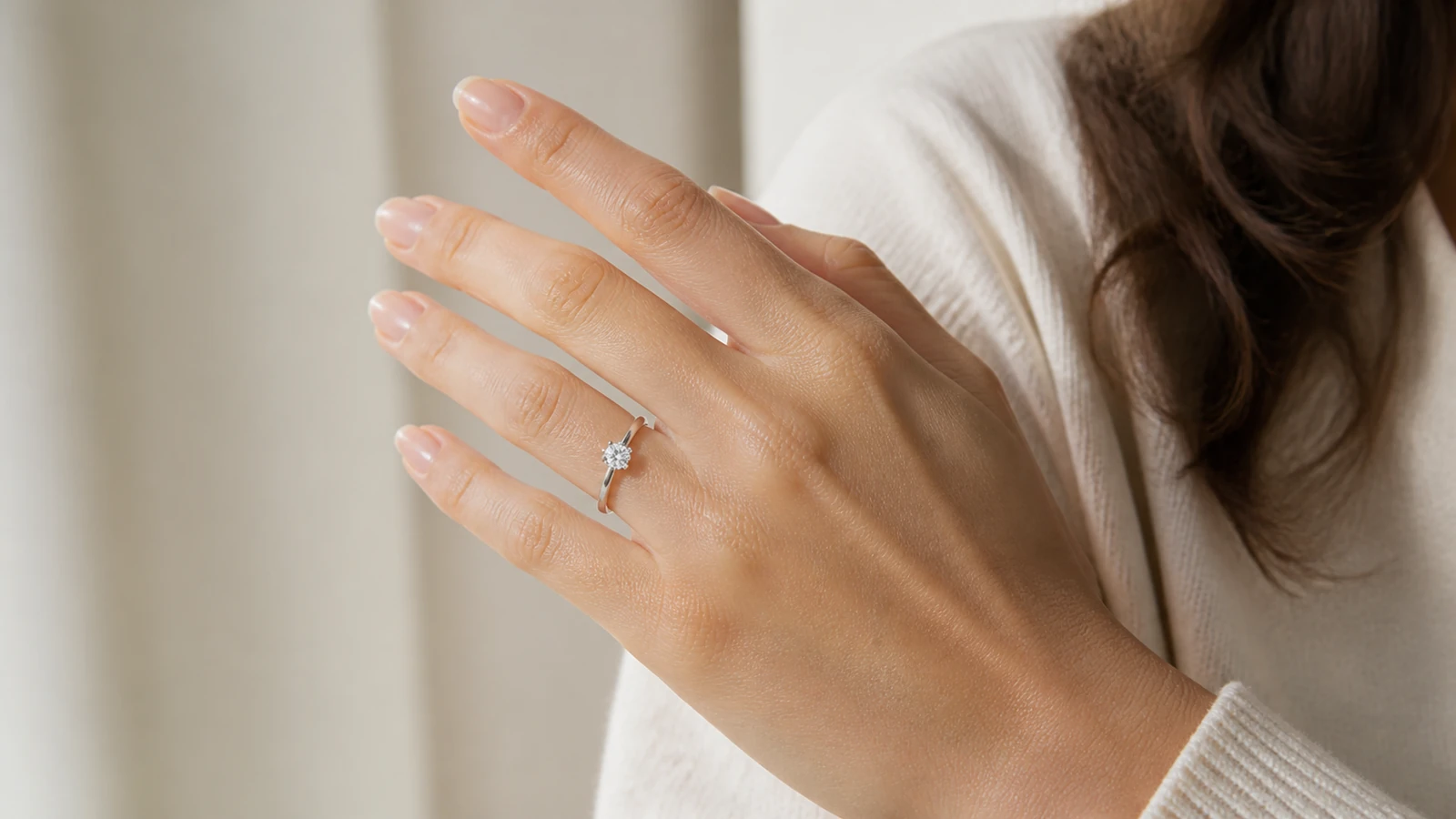
Eye-clean means no distracting clarity characteristic is visible without magnification under stated viewing conditions. It is not a single regulated grade. Distance, lighting, eyesight, stone size, cut, and the location of a characteristic can all change the result.
For a useful eye-clean check, view the exact stone or ring:
From approximately 8–12 inches away, then at normal arm’s-length viewing distance.
Face-up first, because that is how the jewelry is usually seen.
In diffuse daylight and ordinary indoor lighting, not only under intense jewelry spotlights.
After the surface is clean, since lint, fingerprints, and dried residue can resemble internal features.
Without pausing a highly enlarged video and treating every pixel as visible in real life.
Eye-clean is a real-world viewing test; it should not be confused with perfection under macro photography.
What Can Look Like an Inclusion in Moissanite?
A close-up image can show much more than the unaided eye. Before concluding that a stone has an inclusion, consider four possibilities:
Internal characteristics: minute growth-related features or small internal marks within the material.
Surface blemishes: polish marks, abrasions, or chips on the exterior rather than inside the stone.
Double refraction: moissanite’s optical structure can create doubled facet images when viewed from some directions.
Contamination: dust, oil, fibers, and cleaning residue may appear dark or cloudy in macro media.
If a feature appears in a seller’s video, ask whether it is internal, surface-reaching, or simply on the surface. Request a cleaned, face-up video in neutral lighting. If durability is a concern, the feature’s type and position matter more than an impressive grade label.
Clarity vs Cut, Color, Size, and Setting
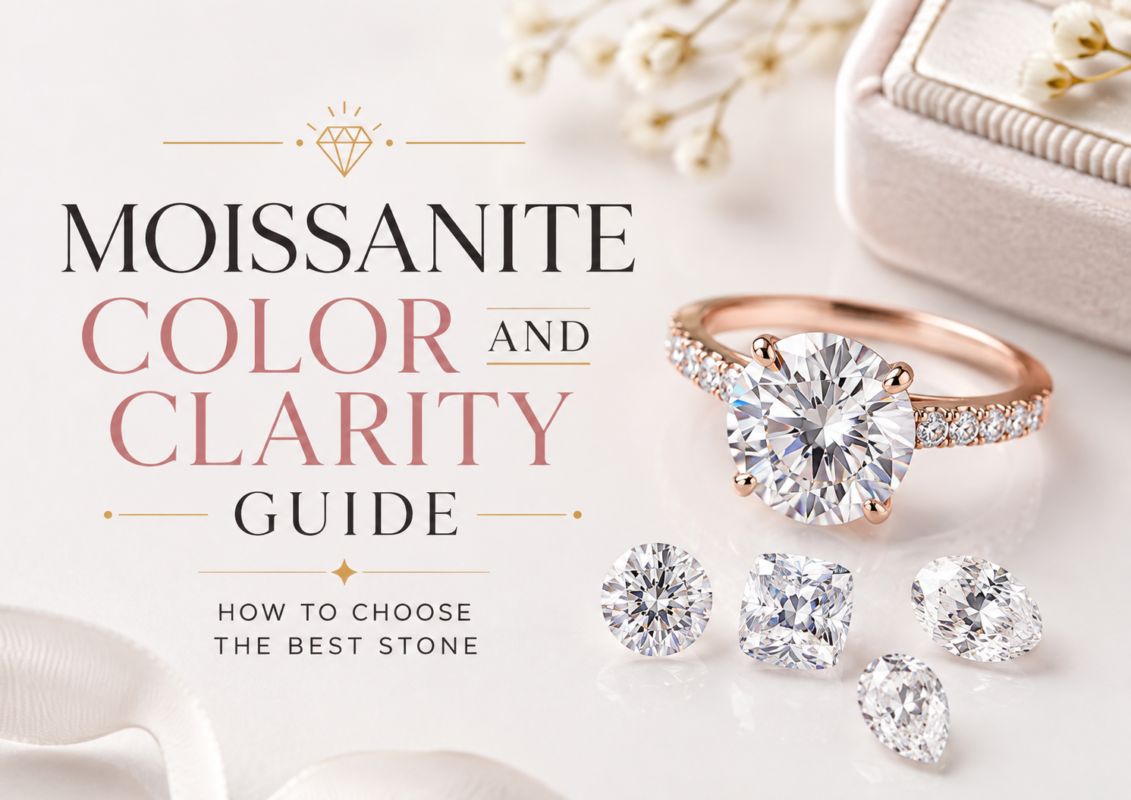
Clarity does not work alone. A transparent high-clarity stone can still look less attractive if its proportions or facet pattern produce weak light return. Likewise, a well-cut stone can appear lively even when it has a minute characteristic that never becomes visible during normal wear. Review the broader moissanite color and clarity guide when you want to balance both qualities.
Cut and facet pattern
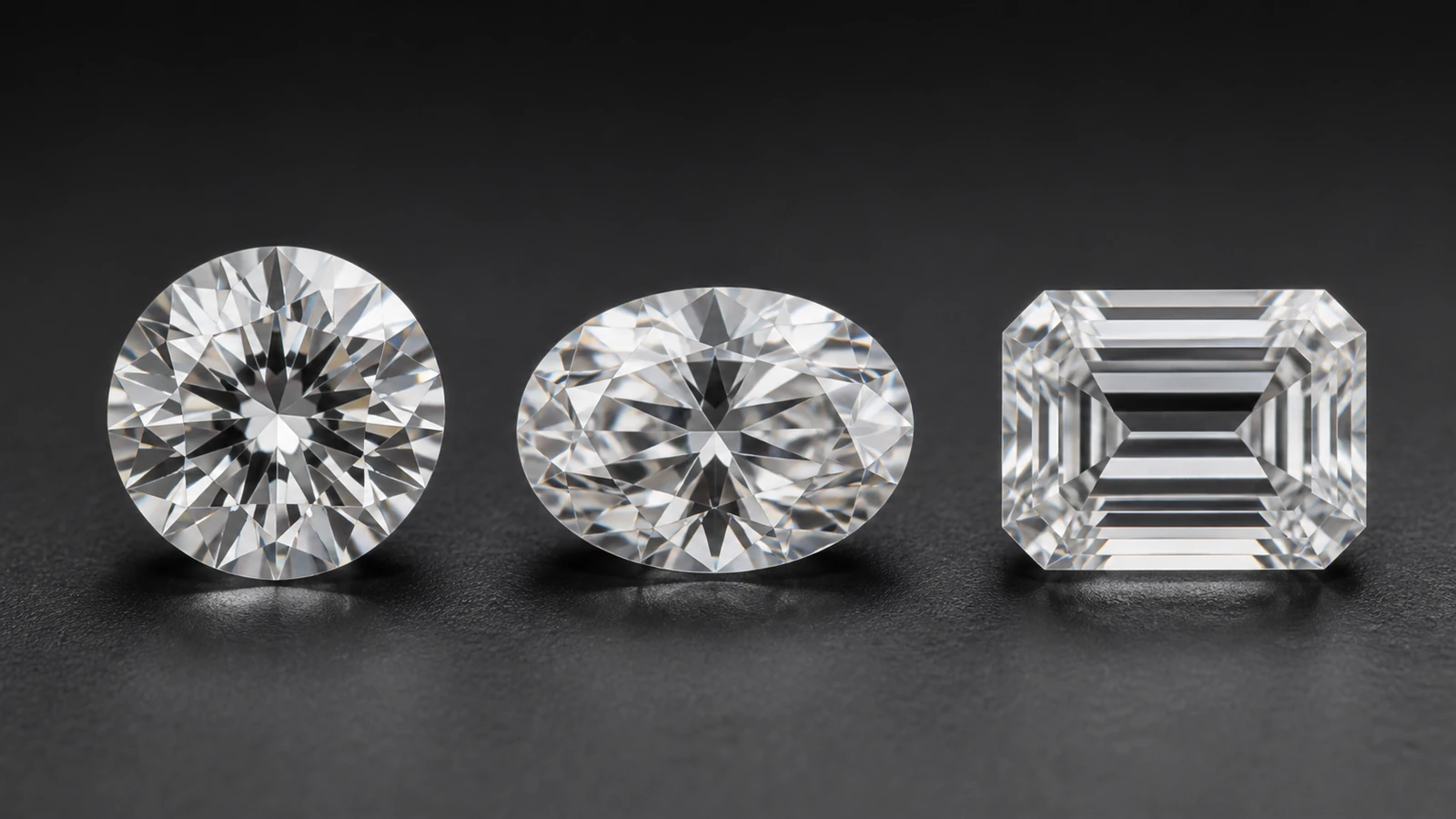
Round and oval brilliant cuts use many small facets that create active sparkle and can make tiny internal features difficult to notice. Step cuts, such as emerald cuts, have broad open facets that provide a clearer window into the stone. That does not make one cut better, but it can change how much clarity matters to you.
Stone size and viewing area
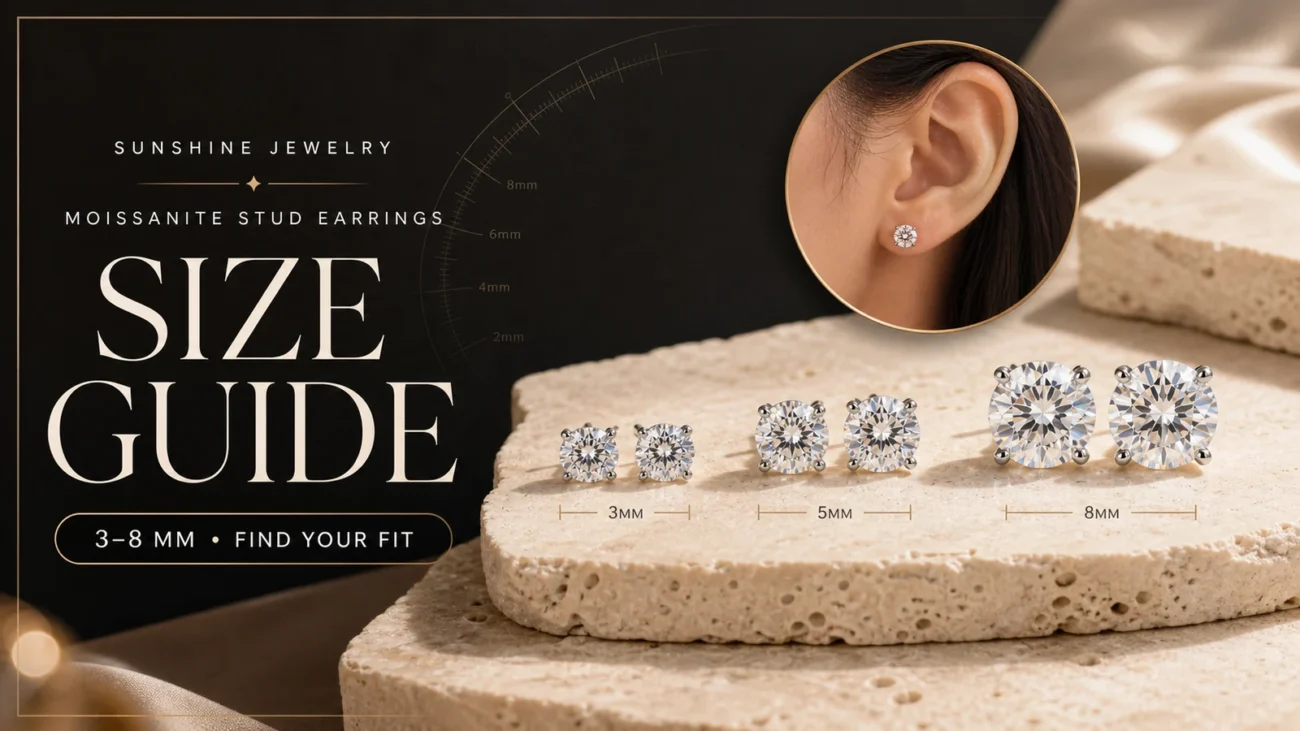
As dimensions increase, the central viewing area becomes larger. A characteristic under the table may be easier to locate in a large step-cut stone than in a smaller brilliant cut. Compare millimeter measurements and shape—not only a carat-equivalent description—using the moissanite size guide.
Setting style
Prongs, bezels, halos, and metal reflections can change what is visible from the face-up and side views. A bezel may conceal part of the girdle, while a high open setting exposes more of the pavilion. Choose the setting for protection, maintenance, and style first; do not use it to hide a stone you have not properly evaluated.
Facet pattern changes the viewing experience: clarity is only one part of overall appearance.
Is VVS Moissanite Worth Paying More For?
VVS can be worth a modest premium when the grade comes from a credible, clearly identified source and the exact stone performs well. It may appeal to buyers who value documentation, want a large step-cut stone, or simply prefer knowing that clarity characteristics should be extremely difficult to find.
It may not be worth a large premium when a lower-priced stone is equally eye-clean, better cut, better matched for color, or offered with clearer documentation and a stronger return policy. Once two stones are transparent and eye-clean, the next dollar often produces more visible value through cut, shape, setting craftsmanship, or dimensions.
Use this decision rule: pay for a visible or verifiable benefit, not for letters alone. If you cannot identify the difference in normal viewing, confirm what additional value the VVS grade actually provides.
How to Evaluate a VVS Moissanite Listing Online
Online shopping removes the ability to rotate the stone in your own lighting, so the quality of evidence matters. Use the following checklist before buying:
Confirm the material. The listing should state moissanite clearly rather than using language that could be confused with diamond. The FTC’s Jewelry Guides emphasize truthful representation of gemstone type, grade, quality, size, treatment, and origin.
Identify the grader. Ask whether the grade comes from the seller, manufacturer, or independent report issuer.
Match the report. Confirm that any identifying number, dimensions, shape, and other details correspond to the exact stone or finished item.
Request realistic media. Look for face-up and side views in neutral diffuse light, not only a high-contrast spotlight video.
Ask about the inspection basis. Determine whether the VVS statement refers to 10× observation and whether VVS1 or VVS2 is defined by the issuer.
Review the return policy. A reasonable inspection window lets you evaluate the item in real conditions. Read the current policy rather than relying on a screenshot or third-party summary.
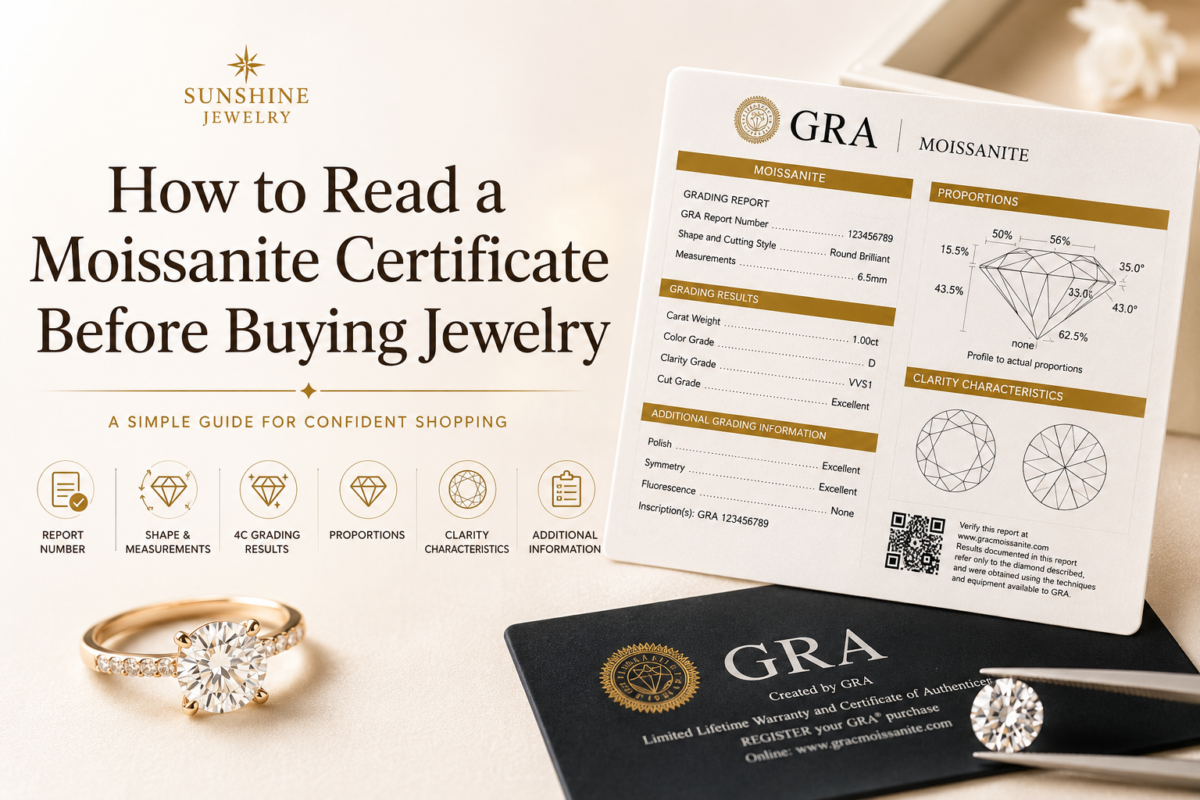
If a report is included, use the moissanite certificate guide to understand what the document does—and does not—prove. A report is evidence about described characteristics; it is not a guarantee that every buyer will prefer the stone.
Match the report, measurements, images, and seller description to the exact item before relying on a clarity claim.
A Simple VVS Moissanite Buying Decision
Use this order so that a high clarity label does not distract from more important checks:
Choose a shape and millimeter size that suit the jewelry and wearer.
Review cut pattern and light performance in realistic videos.
Confirm the color range in neutral lighting and against the chosen metal.
Check that the stone is transparent and eye-clean at normal distance.
Then compare VVS1, VVS2, or VS documentation and price.
Confirm setting quality, care needs, delivery terms, and return conditions.
VVS is a high-clarity description, but “best” depends on the grading source and the stone’s complete appearance. An eye-clean, well-cut stone with strong documentation can be a better purchase than a more expensive VVS listing with vague grading.
Can you see inclusions in VVS moissanite?
You normally should not see distracting inclusions without magnification in a stone accurately represented as VVS. A trained observer may locate minute characteristics at 10×, and macro photography can reveal details that are invisible during normal wear.
What is the difference between VVS1 and VVS2 moissanite?
Both indicate minute characteristics. VVS1 generally represents characteristics that are more difficult to locate than VVS2, but exact moissanite criteria can vary by issuer. Compare stones graded by the same source whenever possible.
Is VVS moissanite flawless?
No. VVS does not mean flawless. It means any clarity characteristics are represented as extremely difficult to see under magnification. FL and IF are separate diamond-scale terms, and moissanite use of those labels also requires context.
Does higher clarity make moissanite sparkle more?
Not automatically. Severe clarity issues can affect transparency, but among clean-looking stones, cut proportions, facet pattern, lighting, cleanliness, and viewing angle usually have a stronger visible effect on sparkle.
Why does my moissanite look blurry under a loupe?
Moissanite is doubly refractive, so some facet edges can appear doubled through certain viewing directions. Surface residue, focus, and reflections can also create blur. A qualified gem professional can help distinguish optical doubling from an internal feature.
Should a VVS moissanite come with a certificate?
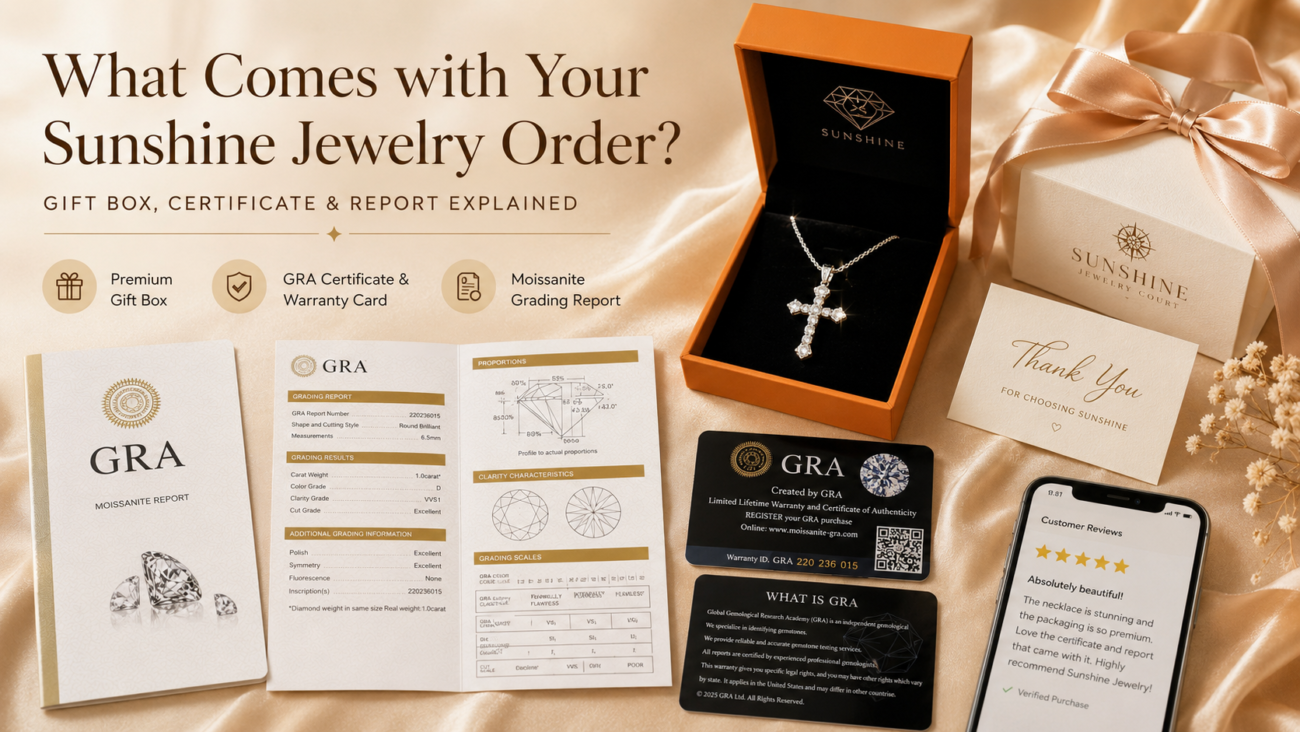
A report can make the claim easier to evaluate, but first identify who issued it and whether it matches the stone. Do not assume every document uses the same standard or provides an independent appraisal.
Final Takeaway
VVS moissanite clarity should signal minute characteristics that are hard to locate under magnification and not distracting without it. The smartest purchase combines an eye-clean appearance, attractive cut, suitable color and size, accurate material disclosure, and documentation you can verify. Use the VVS label as one data point—not as a substitute for seeing the stone and understanding the seller’s grading basis.
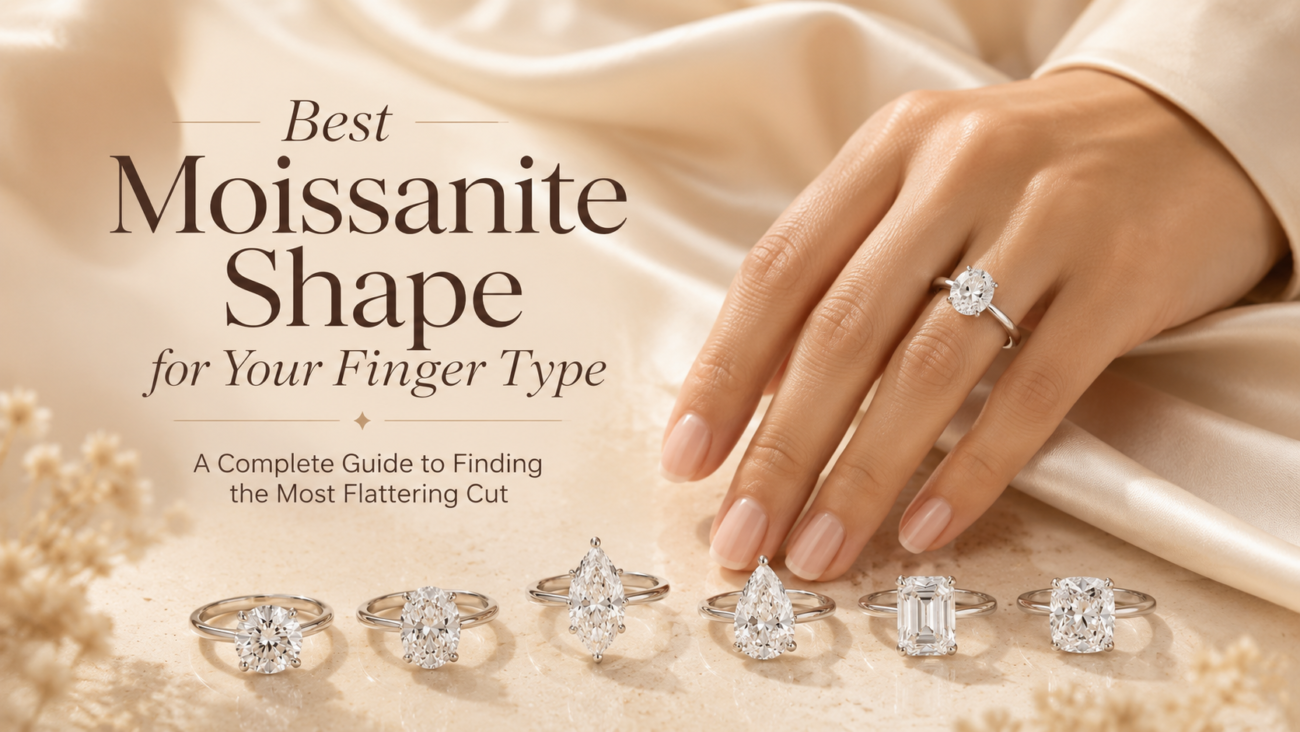
Not every moissanite shape looks the same on every hand. This complete guide compares round, oval, marquise, pear, emerald and cushion cuts to help you choose the most flattering moissanite shape for your finger length, width, hand size and personal style.
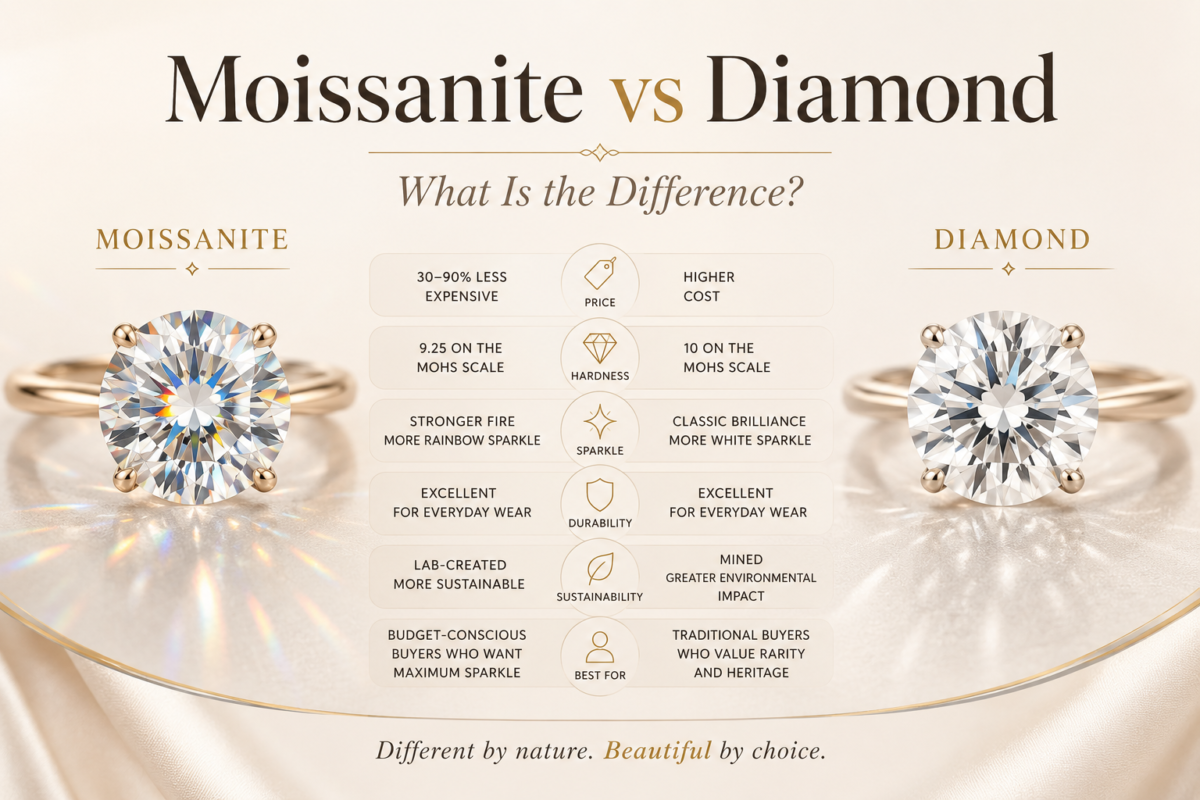
A complete moissanite vs diamond comparison covering price, hardness, sparkle, durability, sustainability, everyday wear and who each gemstone is best for.