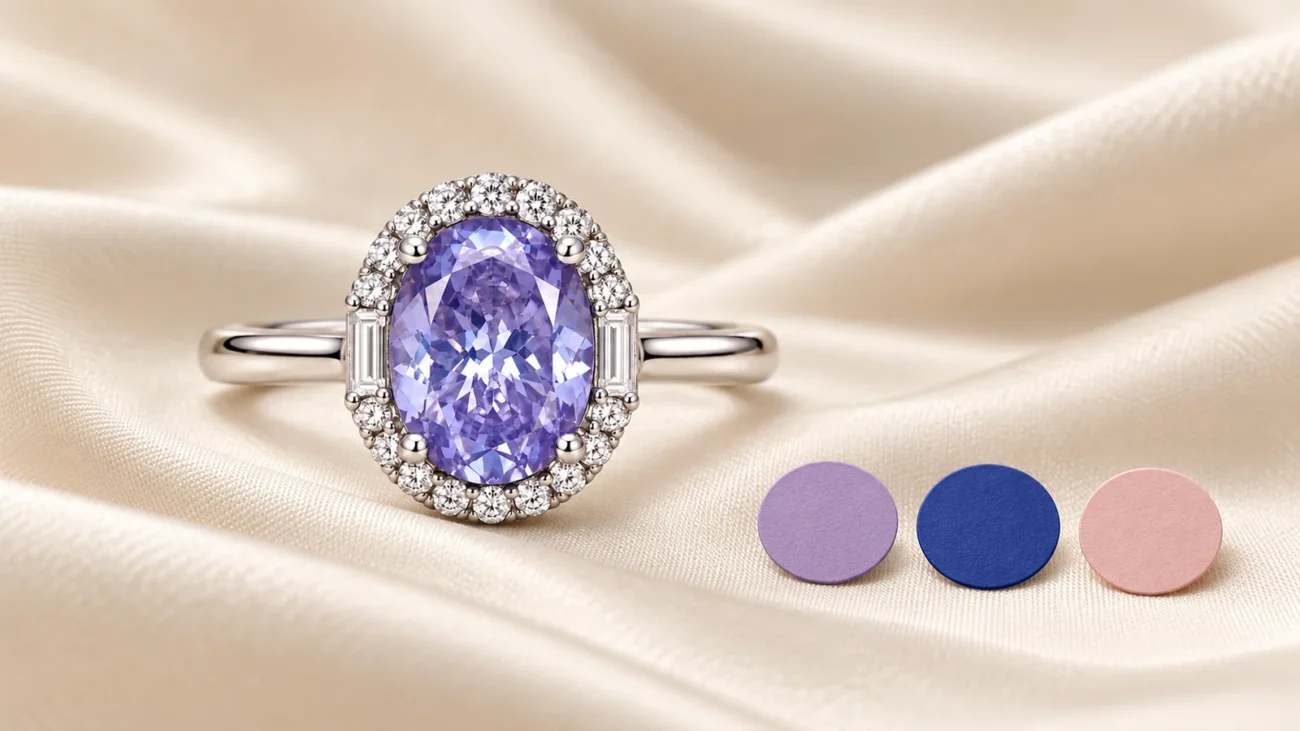
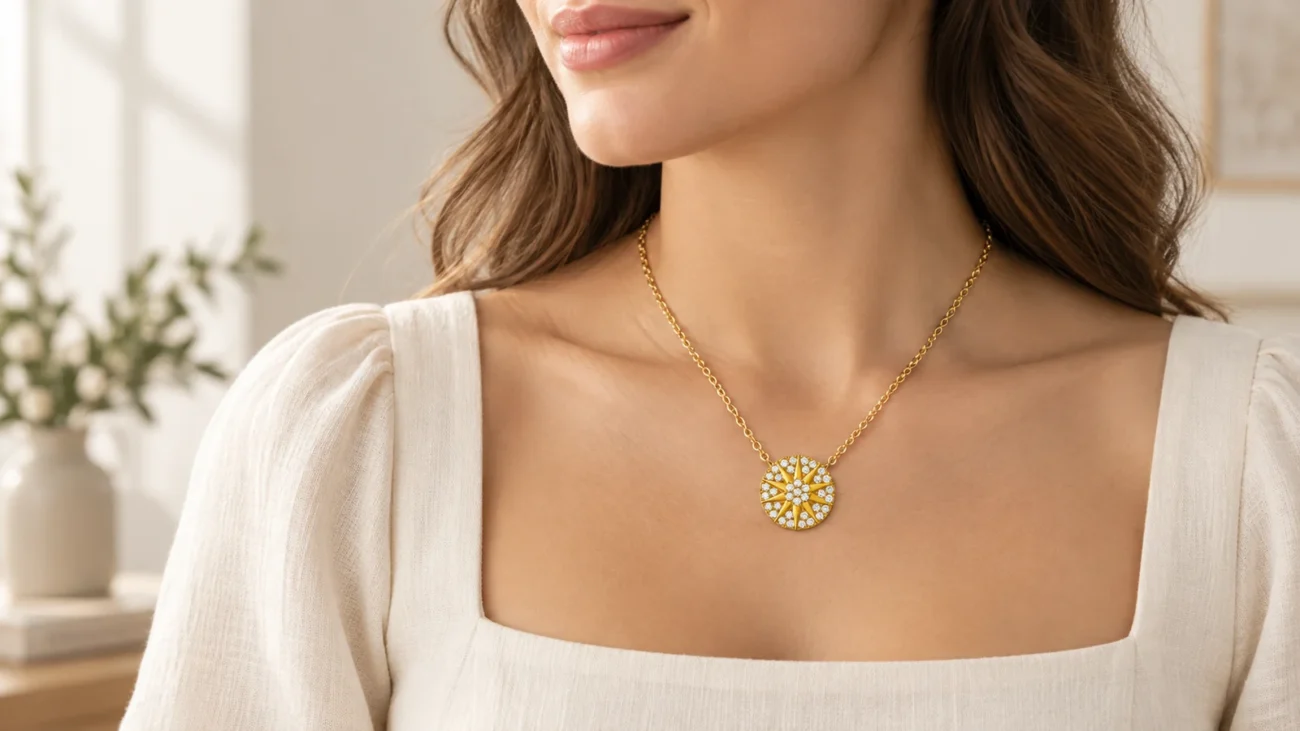
The simplest way to style a women’s sunshine diamond ring is to treat its radiating shape as the focal point. Pair it with one calm outfit base, repeat its metal tone once or twice, and leave enough space around the ring for the sunburst outline to read clearly. For stacking, begin with a single plain or curved band and check the fit from the side before adding more.
This guide focuses on styling rather than identifying or evaluating a specific product. “Sunshine diamond ring” is a search phrase, not a standardized jewelry category or proof of gemstone identity. A radiant ring may contain diamond, moissanite, cubic zirconia, crystal, or another material. Use the live product description for the actual stone, metal, measurements, and care instructions; do not infer those facts from a name or photograph.
What Makes a Sunshine Ring Easy—or Difficult—to Style?
A sunshine ring usually creates visual energy through a round center, rays, a halo-like outline, or another pattern that appears to radiate outward. That face-up geometry matters more to styling than the marketing name. A compact motif can behave like a bright everyday accent. A wide or sharply defined sunburst behaves more like a statement ring and needs more quiet space around it.
Start by looking at four visible features: the overall diameter of the decorative top, the length and direction of the rays, the width of the band, and the height of the setting. A large face with a slim band often feels airy but prominent. A broader band can make the same motif feel more graphic. A raised setting adds dimension, yet it may also overlap neighboring rings or catch on close-fitting sleeves. These are design observations, not durability claims; the construction of the individual ring must be checked separately.
Use the 60-30-10 balance rule as a visual shortcut
Think of the outfit as three levels of attention. Let roughly 60 percent be a calm base—such as denim, knitwear, or simple tailoring. Use about 30 percent for a supporting texture or color. Reserve the last 10 percent for the ring and perhaps one small repeating detail. The percentages are not measurements; they are a quick way to stop every element from competing at equal volume.
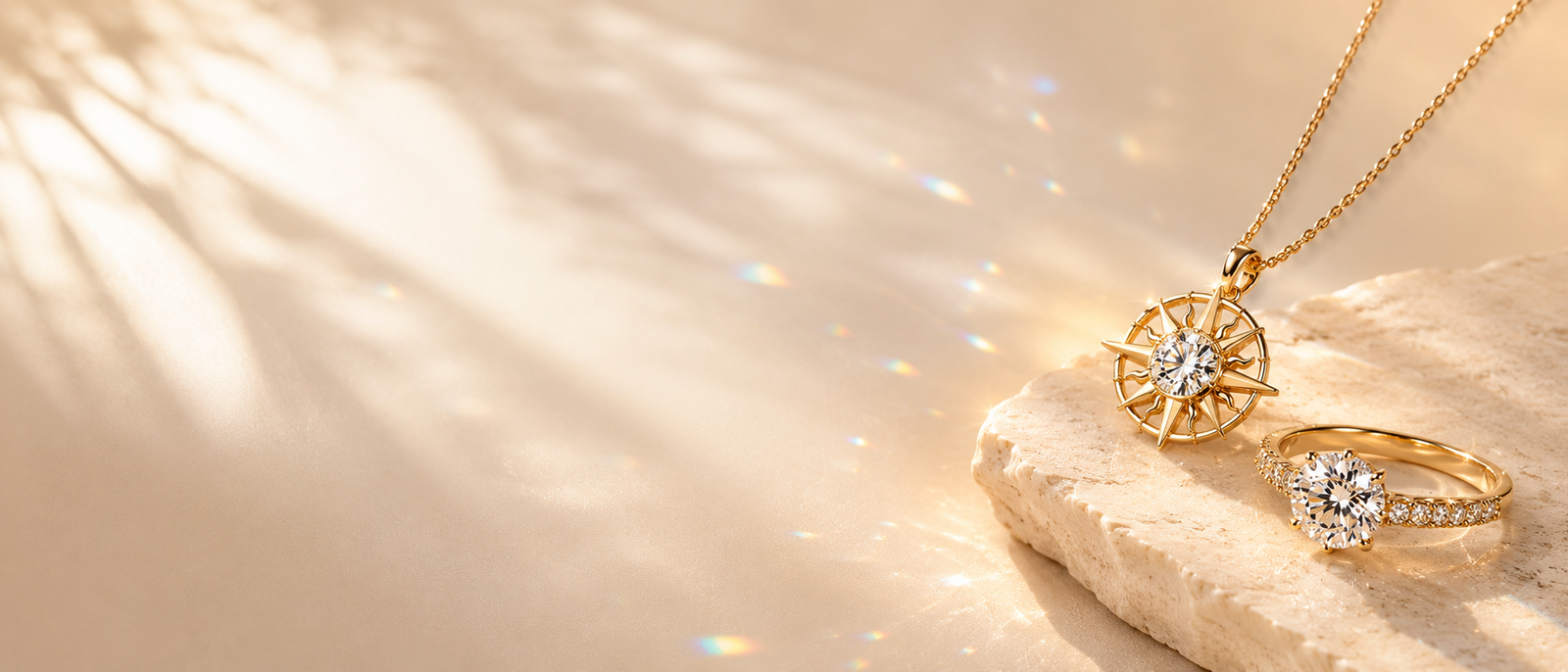
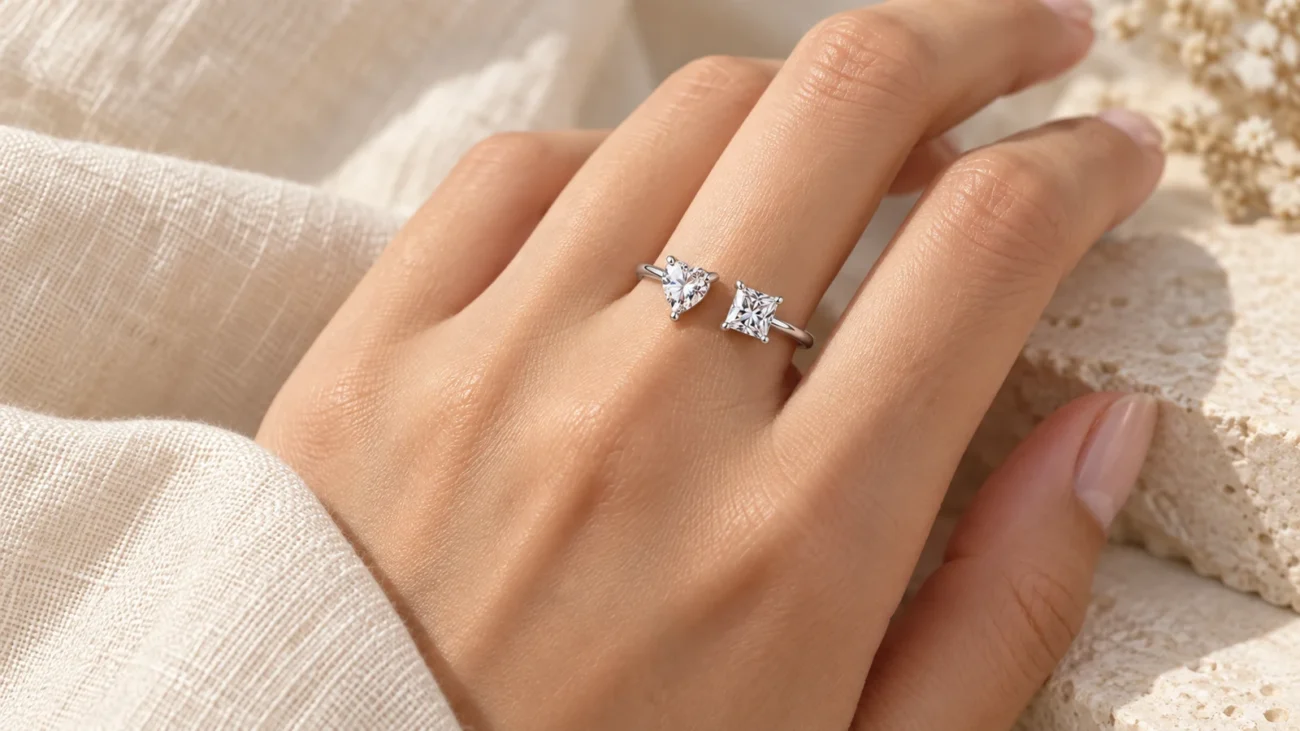
Let the radiating shape lead, then reduce visual competition around it. This is a generic styling image, not a product photograph.
If you first need help distinguishing a sun motif, sunburst, halo, or cluster, read the broader Sunshine rings for women guide. This article takes the next step: turning that design into a wearable outfit.
How to Match a Women’s Sunshine Diamond Ring to an Outfit
Choose the outfit mood before choosing the supporting jewelry. A radiant ring can work with casual, office, and evening clothing, but it should play a different role in each setting. Casual styling softens the sparkle with tactile fabrics. Work styling uses clean lines and controlled contrast. Evening styling can increase sheen while keeping the number of statement pieces low.
Outfit setting
Useful clothing base
Best supporting jewelry
Common styling risk
Relaxed daytime
Denim, cotton, oatmeal knit, or a simple tee
Small studs or no other jewelry
Too many playful motifs competing with the rays
Office or polished casual
Gray, navy, cream, or black tailoring
Fine chain, plain watch, or slim bracelet
A high-profile ring catching on tight cuffs
Date or dinner
Satin, smooth knit, monochrome dress, or dark separates
One quiet pair of earrings
Large earrings and a bright necklace stealing focus
Celebration
One rich color or a clean neutral column
A deliberate stack or one repeated celestial detail
Matching every accessory to the sun theme
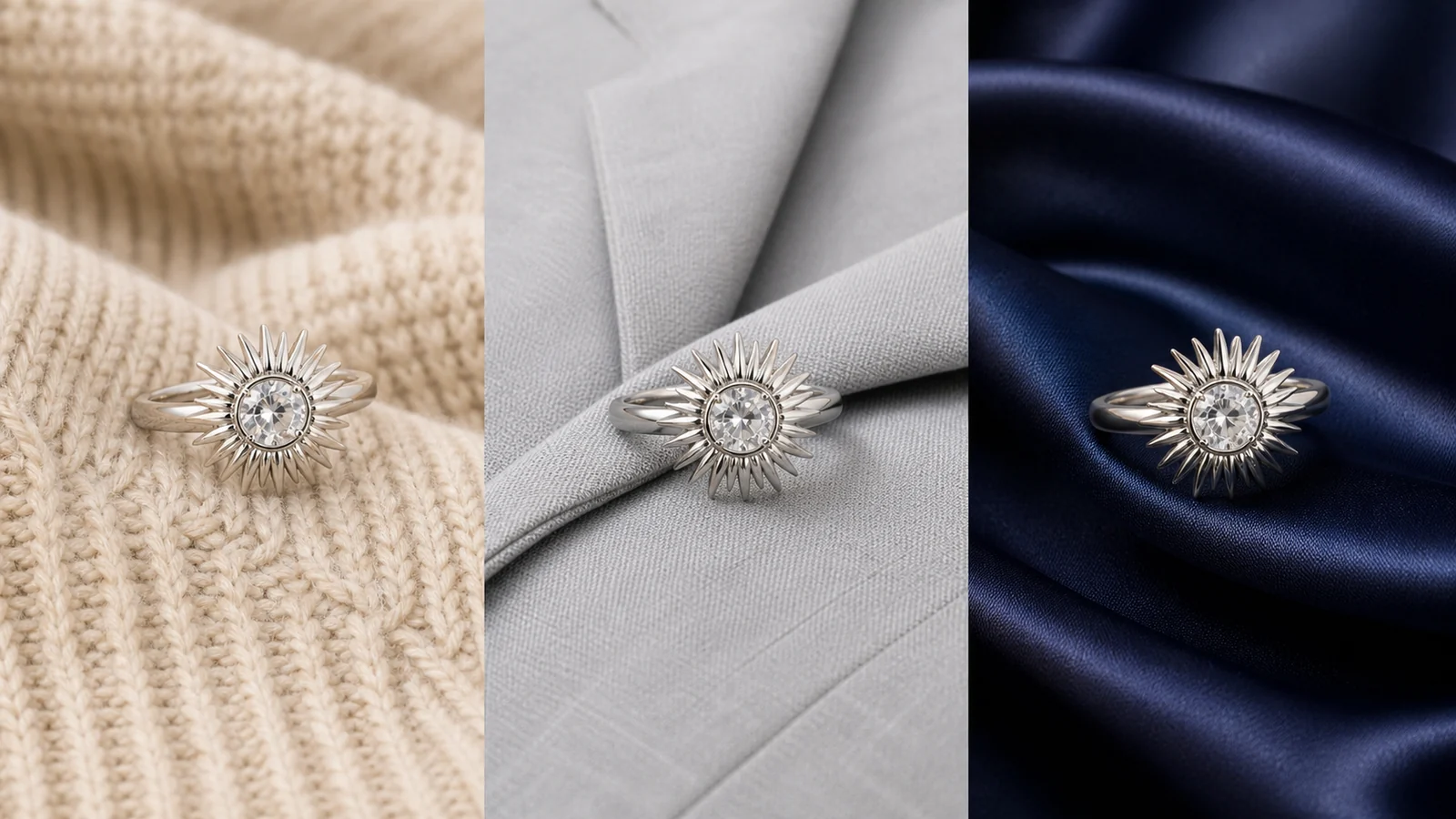
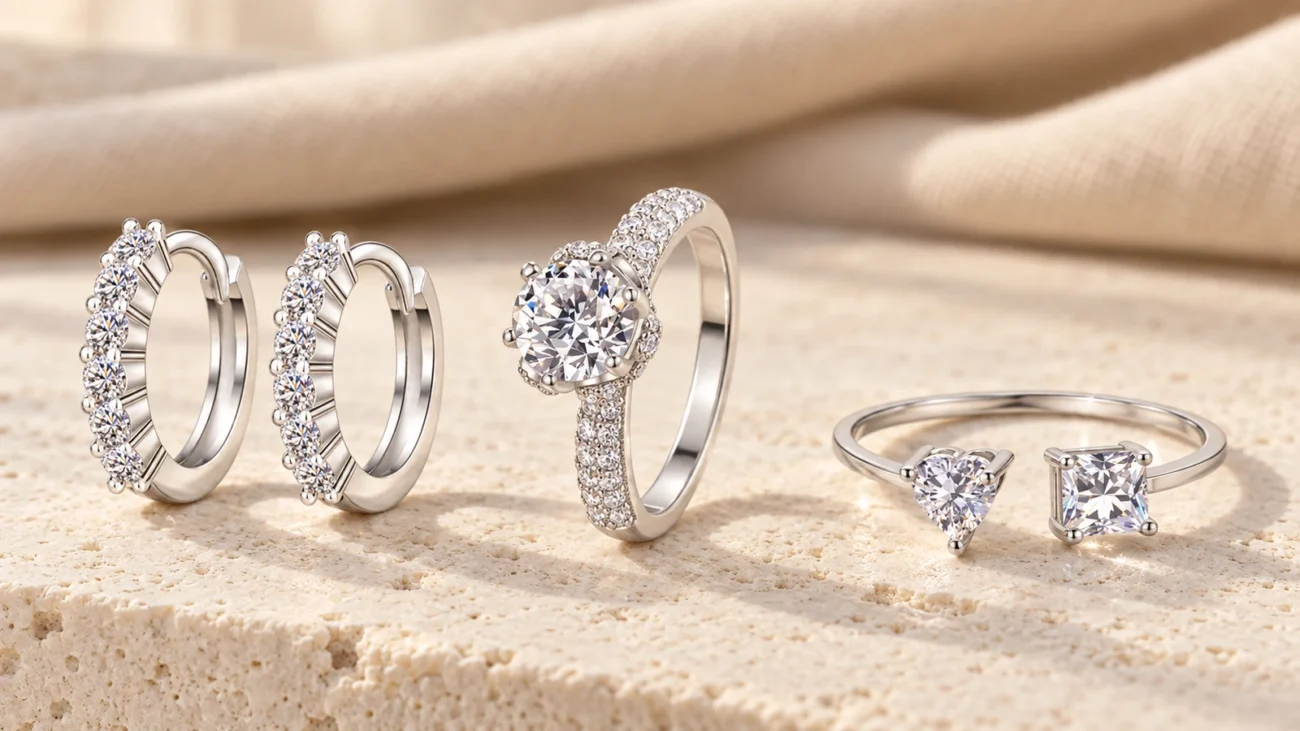
One generic radiant ring shown across casual knit, tailored gray, and evening satin moods.
Build from texture when color feels uncertain
Texture gives the ring context without forcing a strict color match. Soft knits reduce formality and make a precise sunburst feel approachable. Matte suiting creates contrast with polished metal and clear stones. Satin or smooth crepe reflects more light, so the total look feels dressier even if the palette stays neutral. When an outfit already includes sequins, metallic thread, or dense embellishment, place the ring against the simplest nearby sleeve or bag rather than adding another bright bracelet.
Warm ivory, camel, chocolate, navy, charcoal, and black are reliable backgrounds because they let a clear, reflective design remain legible. That does not mean bold color is off-limits. A cobalt blouse, emerald dress, or red manicure can work when it is the only other high-energy element.
How to Stack a Sunburst Ring Without Crowding It
Wear the ring alone first. This reveals its natural scale and shows whether the decorative face already extends toward adjacent fingers. If it looks balanced on its own, stacking is optional—not a requirement. To add a band, begin with the thinnest simple option you own and examine the combination from above and from the side.
Check contact points. The neighboring band should not force the decorative top to tilt or press against exposed settings.
Choose straight or curved by geometry. A straight band suits a ring with clearance beneath the center. A curved or contoured band may frame a low or wide top more naturally.
Leave intentional space. A small visible gap can look cleaner than a band that appears accidentally jammed beneath the rays.
Repeat one feature. Echo the metal tone, a smooth line, or a small-stone texture—never all three at maximum intensity.
Move your hand normally. Flex your fingers and simulate typing, opening a bag, and pulling on a sleeve before accepting the stack.
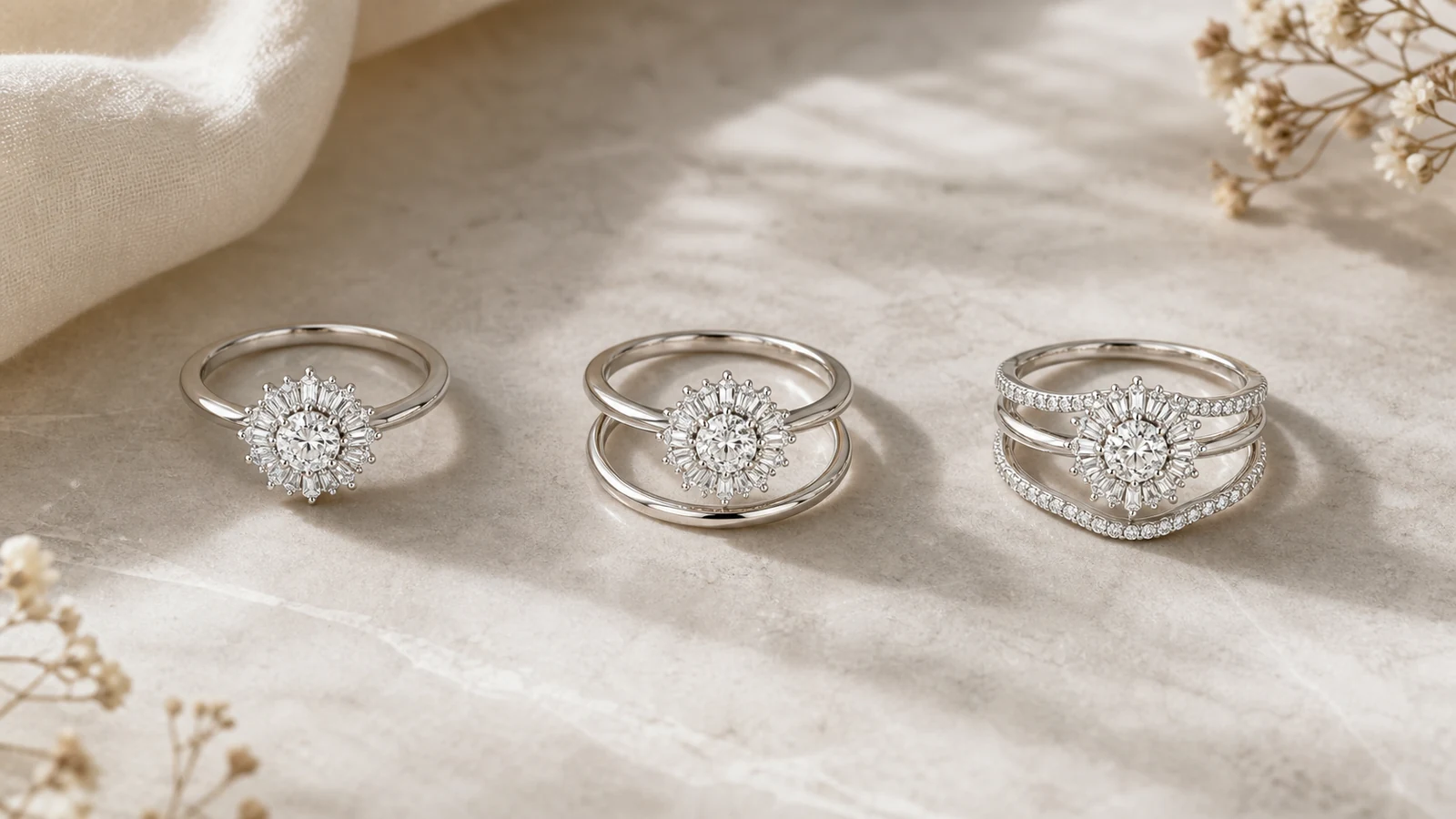
Three generic concepts: the ring alone, beside a plain band, and framed by curved bands with visible spacing.
For a closer look at combining two metal tones and controlling band proportions, use the two-tone ring stacking guide. The same spacing logic applies even when the materials or stone identities differ, but always check the individual ring specifications.
How to Coordinate Earrings, Necklaces, and Bracelets
A strong sunburst already supplies a center, rays, repetition, and sparkle. Supporting jewelry usually works best when it contributes only one of those features. Small round studs repeat the circular center without adding more rays. A fine chain adds a vertical line without competing at the hand. A slim bracelet can repeat the metal tone, but it should not sit so close to the ring that both pieces merge into one bright block.
Use distance to manage intensity. Earrings are far from the hand, so they can be slightly brighter than a nearby bracelet. A necklace sits in the center of the outfit and may become the first thing people see; if it is elaborate, wear the ring alone and keep the neckline simple. When wearing a watch, treat the watch as the bracelet layer and resist adding several more wrist pieces.
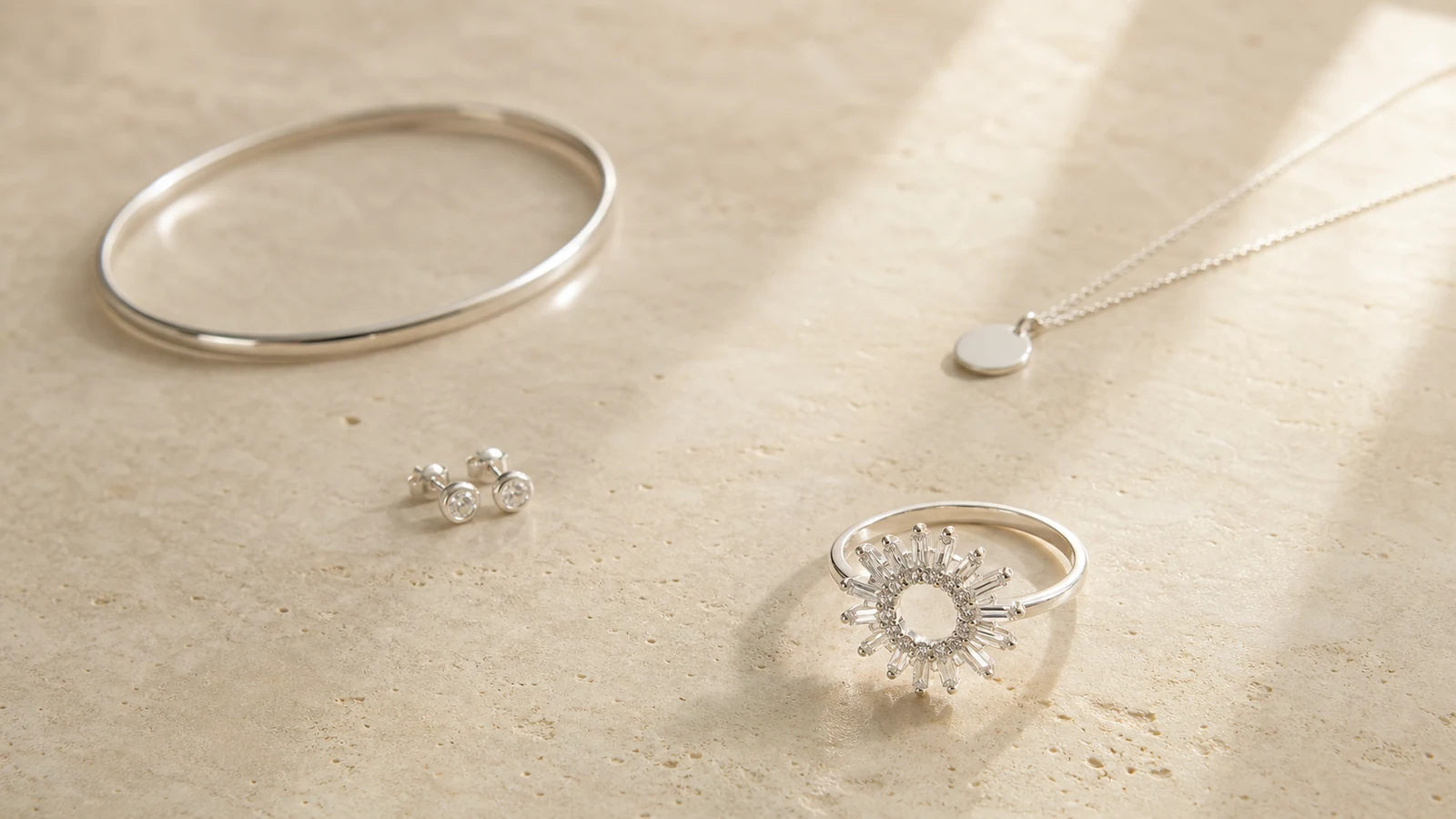
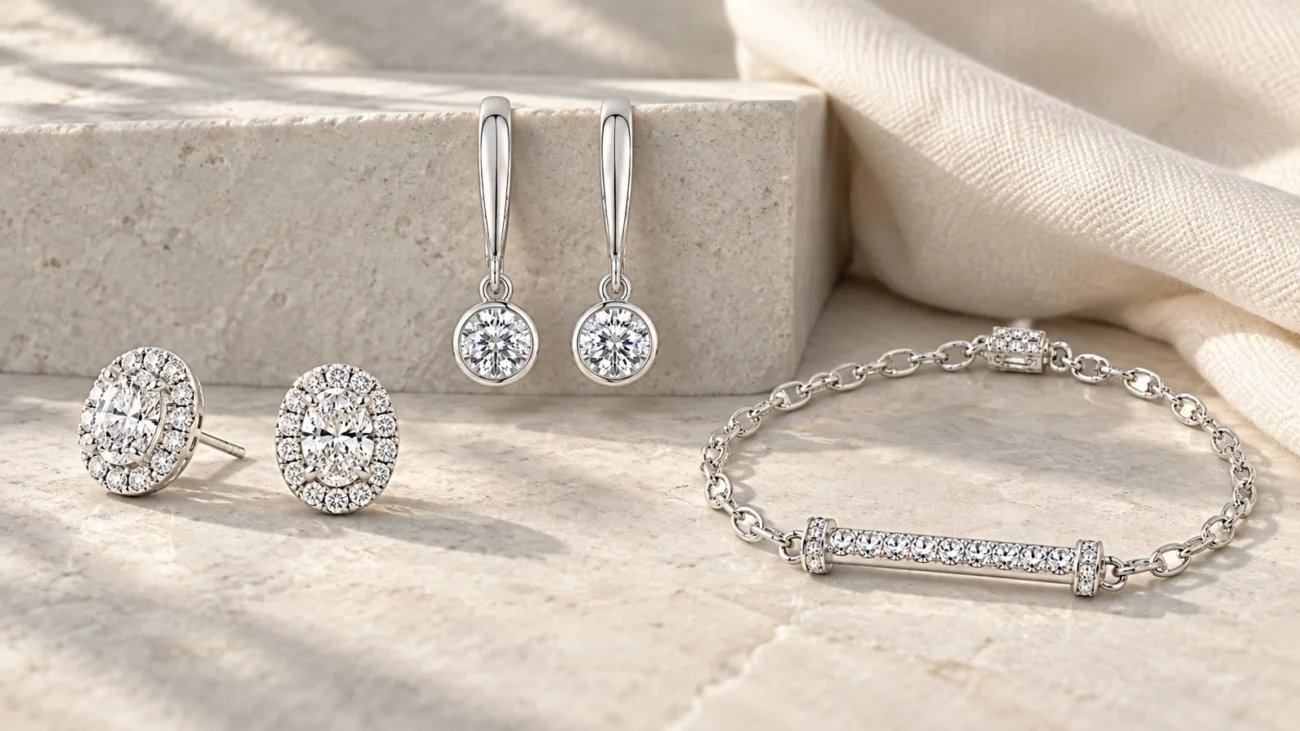
A generic visual hierarchy: one expressive ring supported by quieter studs, pendant, and bracelet.
Mixed metals should look repeated, not accidental
If the ring appears silver-toned, a gold-toned watch or necklace can still work. Repeat each tone at least once: for example, a silver-toned ring with small silver-toned studs, then a gold-toned watch with a fine gold-toned chain. A two-tone item can act as the bridge. “Silver-toned” and “gold-toned” describe visible color here, not metal composition; verify the actual metal and finish on each product page.
How Hand Shape, Nails, and Sleeves Change the Look
Face-up photographs isolate a ring, but real styling includes the hand around it. A wide sunburst may cover much of a narrow finger and read as bold. The same ring on a broader hand may feel more proportional and understated. Neither result is better. Compare the stated millimeter measurements with a ring you already wear instead of relying on an enlarged image.
Short neutral nails create a calm frame and are the easiest choice for everyday wear. A dark navy, burgundy, or black manicure increases contrast and makes a silver-toned radiant ring look sharper. Red or coral adds warmth. Glitter and nail art can work, but keep the pattern away from the ring finger or use one accent nail rather than ten competing surfaces.
Sleeves affect both appearance and practicality. A rolled cuff opens visual space around the hand. A tailored cuff makes the ring feel precise. A loose knit creates softness but may meet projecting details. Before wearing the ring with delicate lace, open-weave knitwear, gloves, or tights, check the ring’s edges and profile in normal movement.
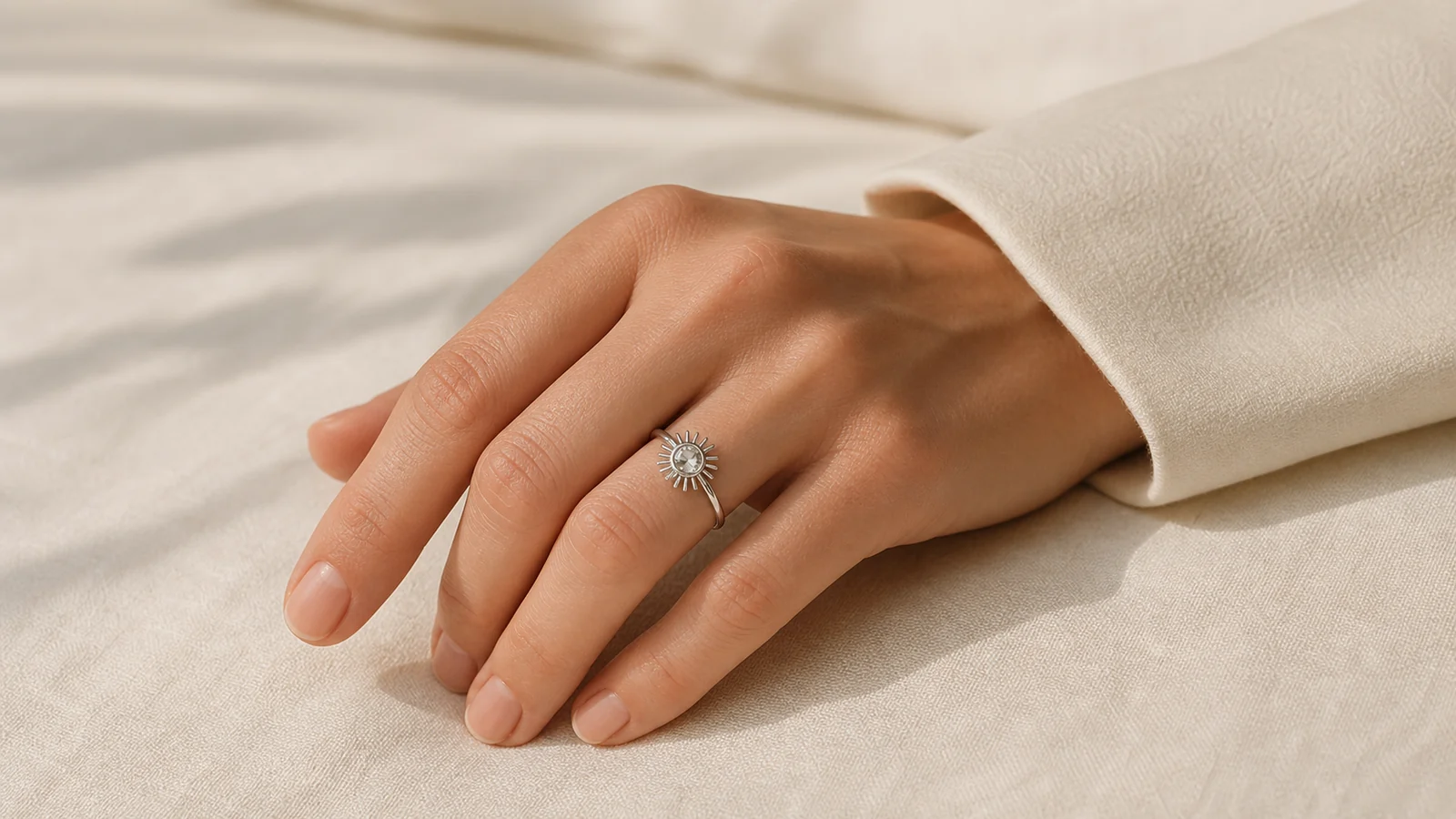
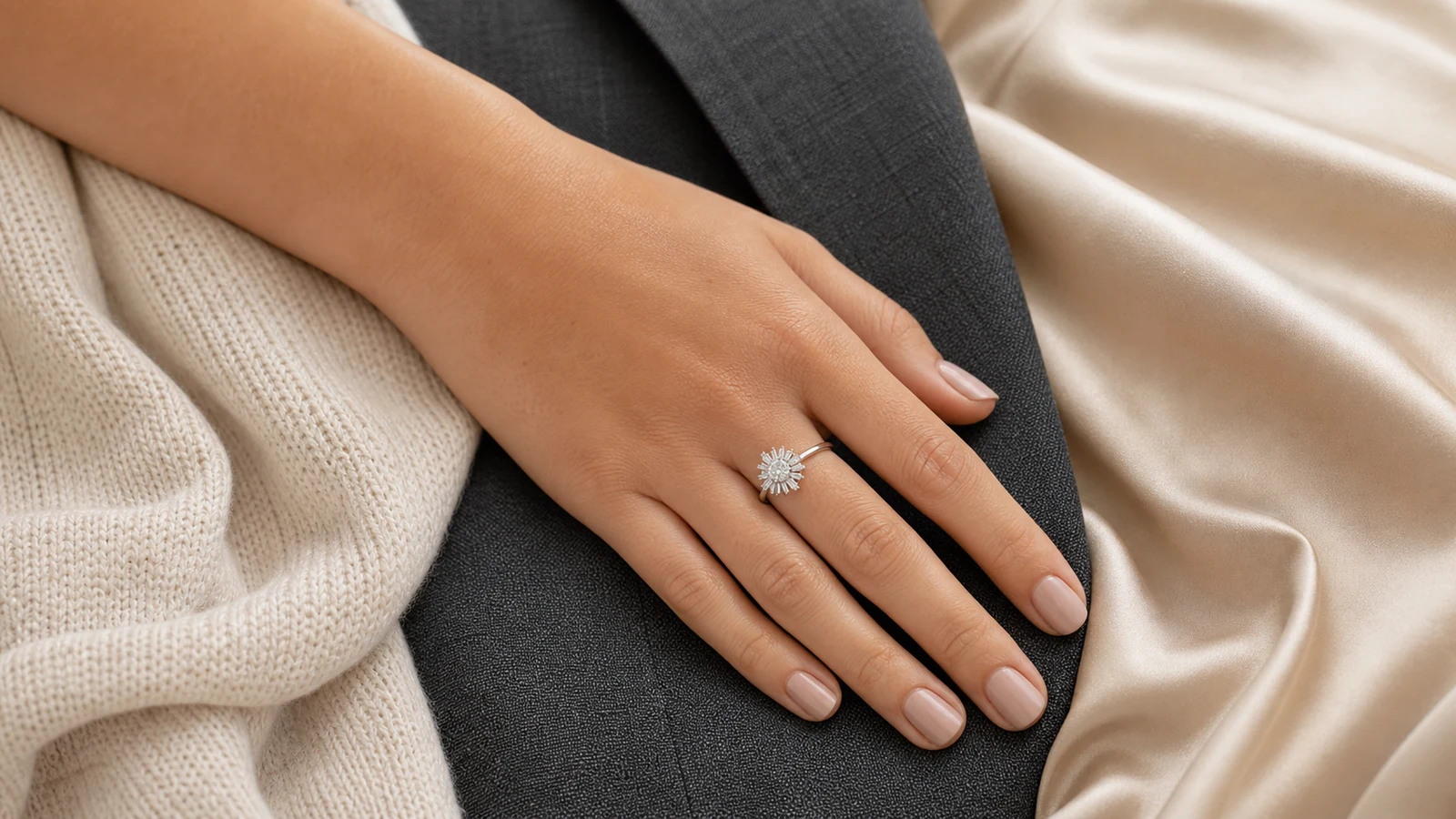
Hand proportions, a neutral manicure, and three fabric textures provide realistic styling context.
If fit is still uncertain, the at-home ring-size guide explains how to get a more useful starting measurement. Styling cannot compensate for a ring that rotates constantly, pinches, or sits insecurely.
A Five-Minute Day-to-Evening Styling Plan
You do not need a completely different jewelry collection for evening. Keep the ring as the fixed point and change the surfaces around it.
Remove a casual wrist stack and keep only a watch or one slim bracelet.
Swap a cotton or chunky-knit layer for a smoother jacket, blouse, or dress.
Move from a large tote to a small, simple bag without heavy hardware.
Add one controlled evening detail: a dark manicure, small bright studs, or a fine chain.
Check the ring under indoor light, then stop. More sparkle is not always more polish.
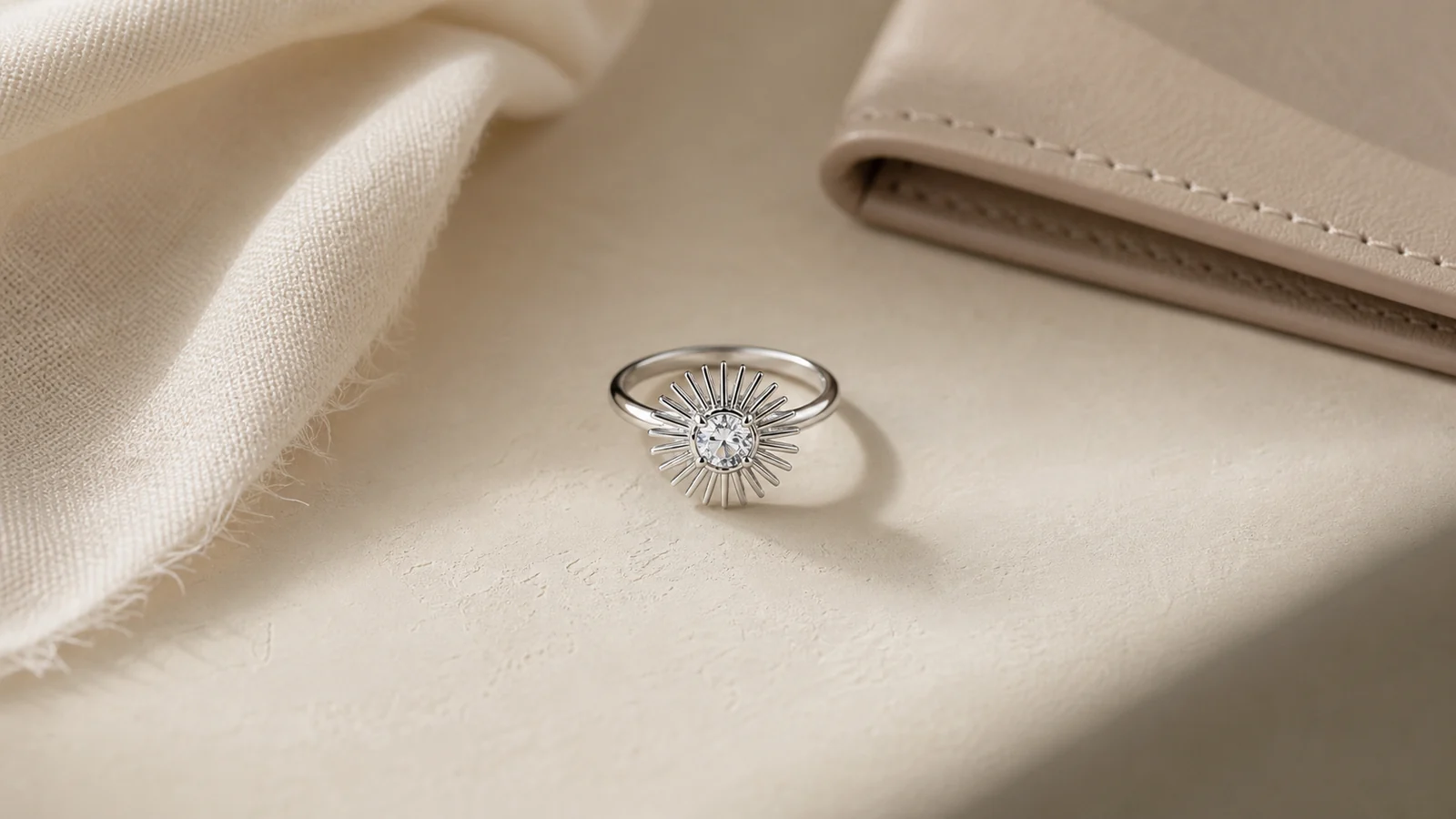
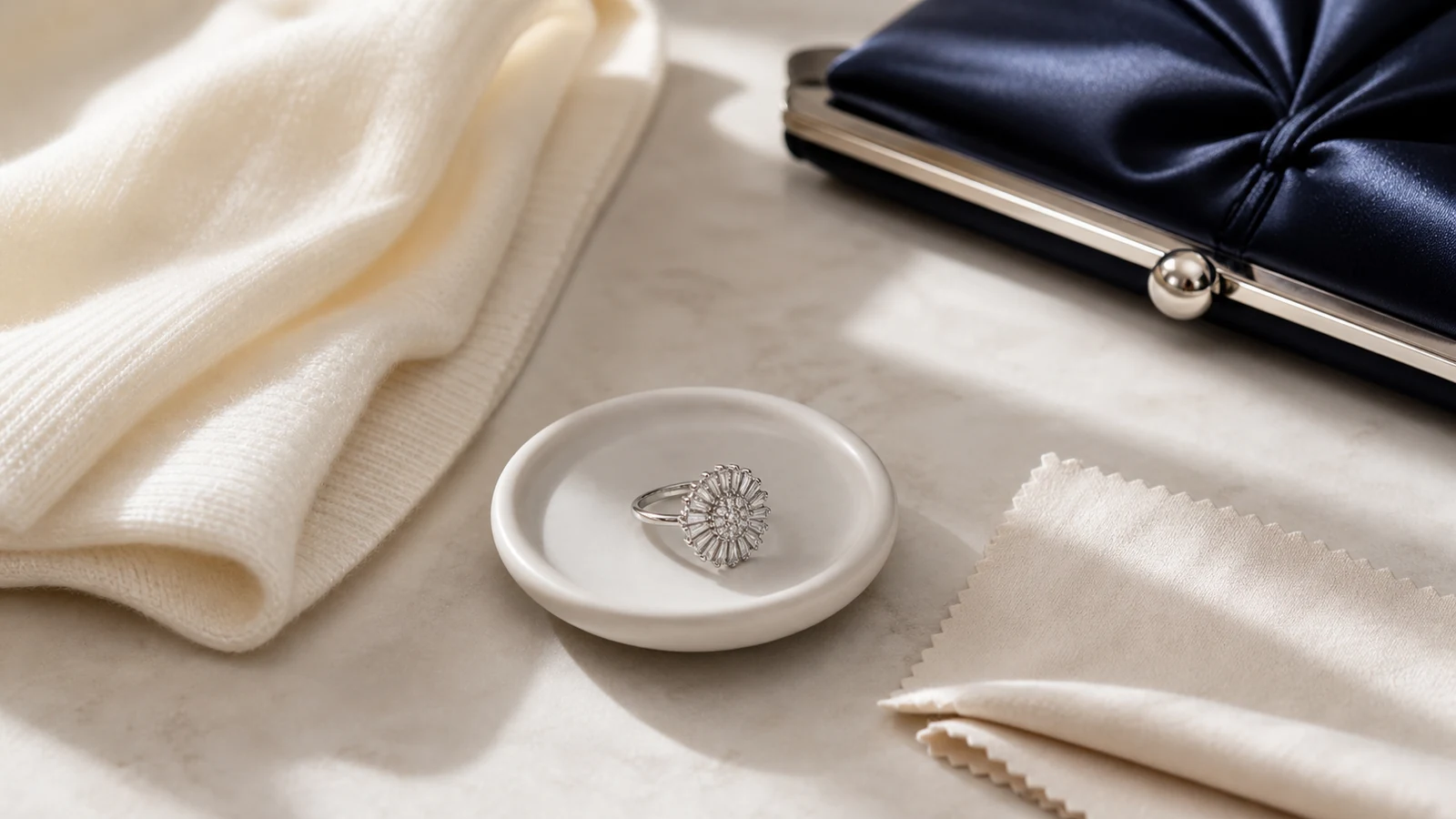
A ceramic dish offers a clear temporary resting place while moving between daytime knitwear and an evening clutch.
When changing clothes, place the ring in a dedicated dish rather than on a sink edge or loose inside a bag. Follow the product’s own care guidance before cleaning it. If you do not know whether the stone is diamond, moissanite, or another material, review the moissanite versus diamond guide and then confirm the live listing; appearance alone is not evidence.
Quick Styling Checklist Before You Leave
Can the entire sunburst outline be seen, or is another band crowding it?
Is the ring the main statement, or is another accessory intentionally leading?
Does at least one small detail repeat the ring’s visible metal tone?
Can you flex your fingers and pass the ring through the sleeve comfortably?
Have you checked the look in daylight and the light used at your destination?
Are your material and care assumptions based on the listing rather than the photo?
When you are ready to compare current options, browse the Sunshine Jewelry rings category. Treat each live product page as the authority for its materials, measurements, price, availability, and purchase terms.
FAQ: Women’s Sunshine Diamond Ring Styling
Can I wear a sunshine ring every day?
Possibly. Visually, a smaller or lower-profile radiant design is usually easier to combine with daily outfits. Practical suitability depends on the individual ring’s materials, construction, fit, setting, and care instructions. Check those facts on the product page rather than assuming every sunshine ring performs the same way.
Should I wear a sunburst ring alone?
Wear it alone when the decorative top is wide, the rays are detailed, or the outfit already includes other strong accessories. Add one band only when the ring has comfortable clearance and the stack improves the silhouette instead of hiding it.
What nail color looks best with a silver-tone sunshine ring?
Neutral pink, beige, and sheer polish create a quiet everyday frame. Navy, burgundy, black, or red adds contrast for evening. Choose the color that supports the outfit; the visible metal tone does not require one mandatory nail color.
Can I mix gold-tone jewelry with a silver-tone sunshine ring?
Yes. Repeat each visible tone once and use a two-tone watch, chain, or small earring as a bridge. The combination looks deliberate when the shapes remain simple and the ring stays visually dominant.
Does “sunshine diamond ring” guarantee a diamond?
No. The phrase may describe a search idea or radiant appearance. Only the product specifications can identify the center and accent stones. Do not label a clear stone as diamond, moissanite, or anything else without that evidence.
How many rings should be in the stack?
Start with two: the sunshine ring plus one plain or curved band. Add a third only if the stack remains comfortable, the settings do not press together, and the central motif still has a clear outline.
The Best Look Is Clear, Comfortable, and Verifiable
A women’s sunshine diamond ring is easiest to style when one decision leads the rest. Let the radiant shape be the focal point, choose an outfit texture that supports the mood, repeat the visible metal tone sparingly, and test a stack in real movement. Just as important, keep style language separate from product facts: enjoy the sunshine effect, but verify the actual stone, metal, dimensions, and care requirements before making claims or purchase decisions.