Sunshine bracelet meaning, fit, style and care guide.
A sunshine bracelet is a wrist-worn design featuring a sun, rays or a sun-inspired charm. It may represent optimism, warmth, renewal or someone who brings light into your life, but that meaning is personal rather than universal. To choose one well, compare the bracelet’s structure, wrist fit, closure, materials, motif size and care needs—not just its product name.
A sun motif can appear on a fine chain, a charm bracelet, a rigid bangle, a cord or a stone-set link design. Those constructions behave differently on the wrist. A delicate charm moves freely, a bangle must pass over the hand or open securely, and a tennis-style bracelet needs consistent articulation and setting security. This guide helps you identify those differences and choose a comfortable, clearly described piece.
What is a sunshine bracelet?
A sunshine bracelet uses a solar motif as its main visual idea. The motif might be a small round disc engraved with rays, an open sun charm, a raised sunburst, a central stone framed by radiating metal or a repeated pattern along the bracelet. “Sunshine” is a descriptive theme, not a standardized jewelry construction or material grade.
That distinction matters when shopping. Two bracelets with similar names may use different metals, stones, plating, link styles and closures. One may be adjustable with a sliding bead, while another uses a lobster clasp and extension links. A rigid design may be called a bangle or cuff, but those terms can also be used inconsistently. Read the measurements and construction details instead of assuming that the motif name tells you how the bracelet fits.
A sunshine bracelet is also different from a bracelet sold by a business named Sunshine Jewelry. The brand name identifies the seller; a sun motif describes the visible design. A Sunshine Jewelry bracelet does not automatically include a sun symbol, and a generated illustration in this article should not be treated as a photograph of a current product.
What can a sun bracelet symbolize?
A sun bracelet can symbolize encouragement, energy, hope, renewal, direction or a warm relationship. These are common personal interpretations, not fixed definitions shared by every culture or wearer. Some people choose the motif simply because they enjoy celestial designs or the balance of a circular charm.
Optimism: the sun can act as a small reminder to look for light during a difficult period.
New beginnings: sunrise imagery may feel appropriate for graduation, recovery, a move or a new role.
Warmth: the motif can represent a person whose presence feels reassuring.
Confidence: rays extending from a center may suggest energy, direction or self-expression.
Personal style: the wearer may value the graphic shape without attaching a symbolic story.
When giving the bracelet, explain why the motif made you think of the recipient. A specific note such as “You bring warmth to ordinary days” is more meaningful than presenting a broad symbolic interpretation as a fact. The message should suit the relationship and the recipient’s own preferences.
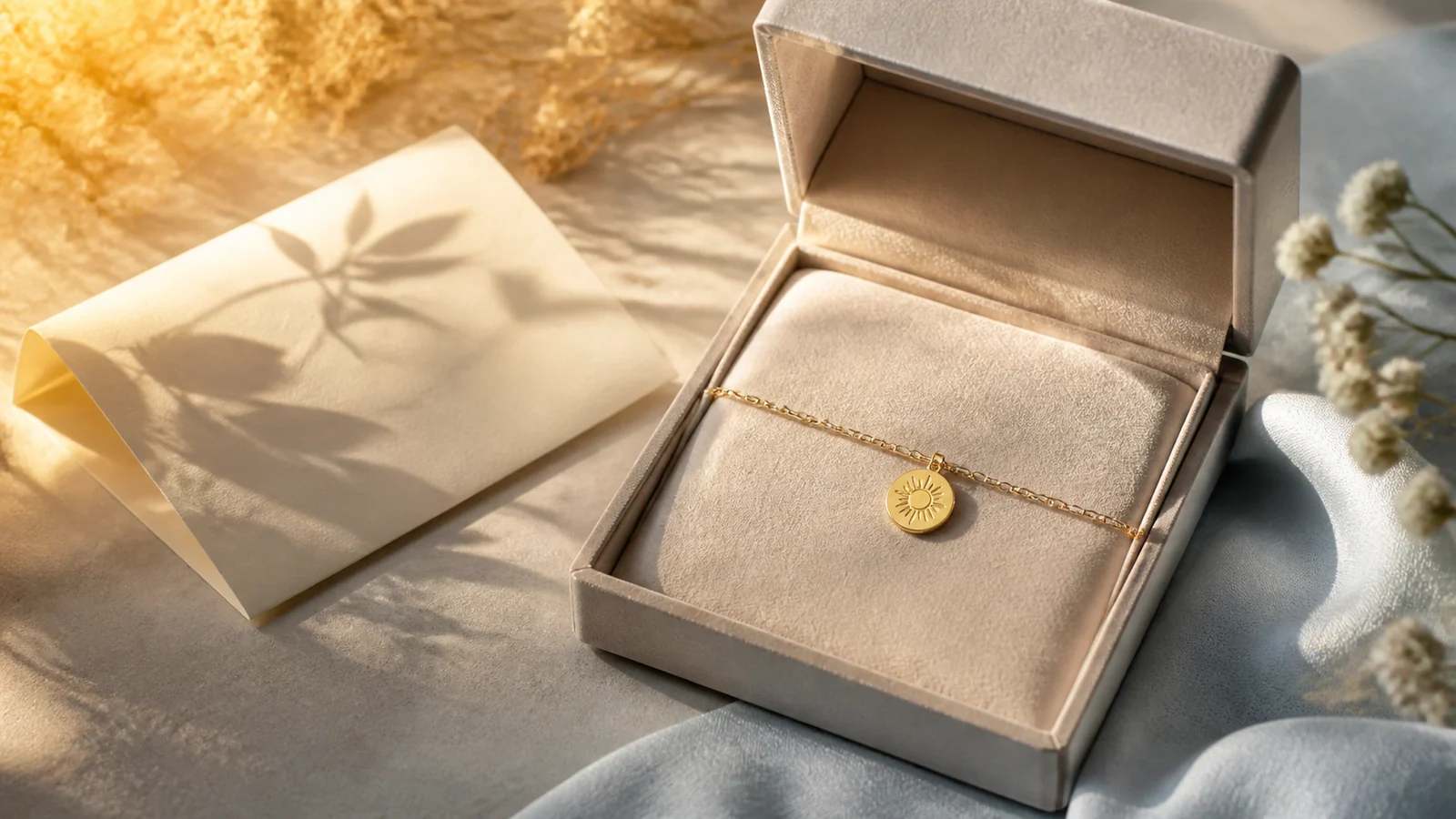
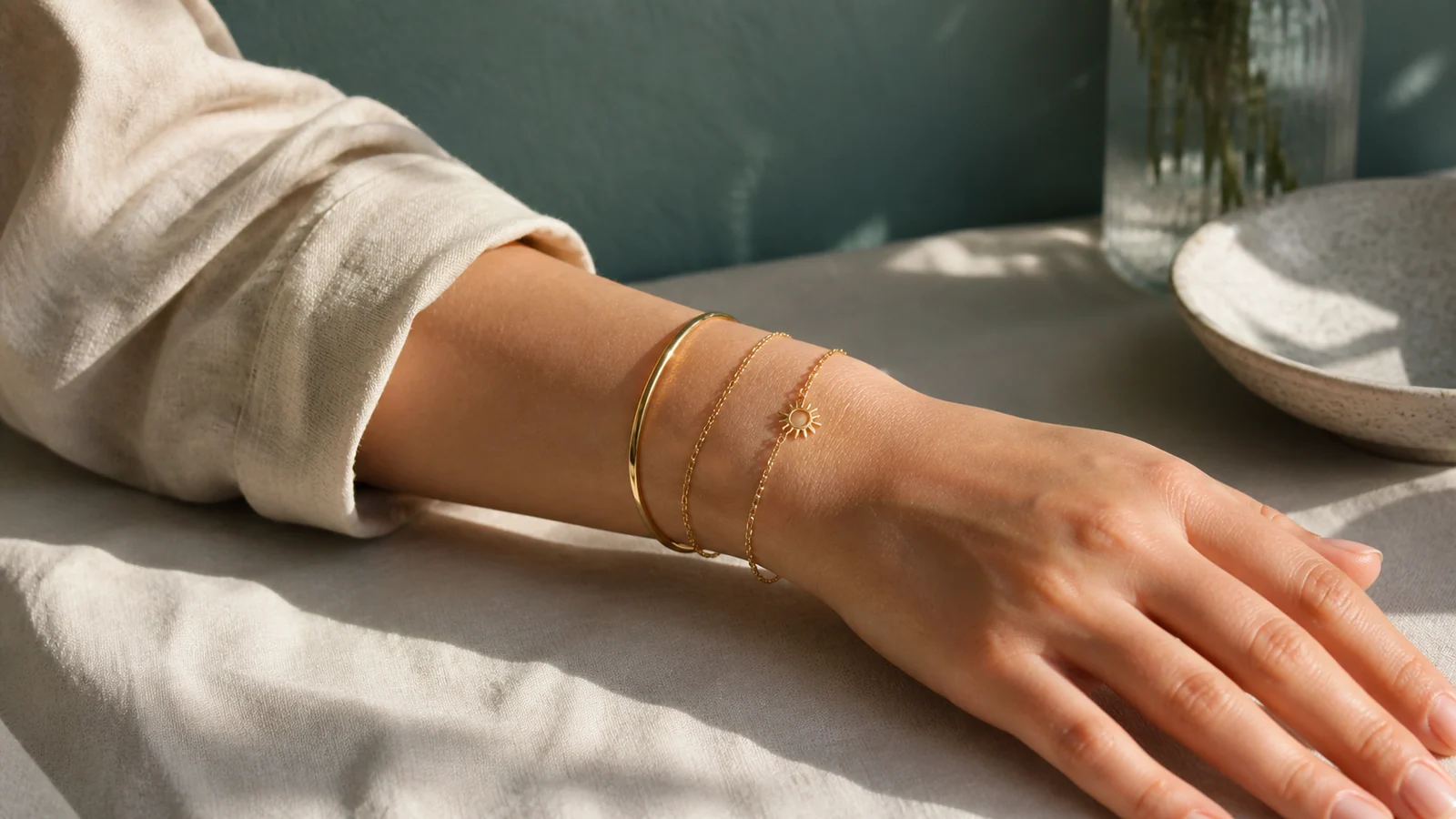
A sunshine bracelet can carry a personal meaning of warmth, hope or renewal.
Which sunshine bracelet style should you choose?
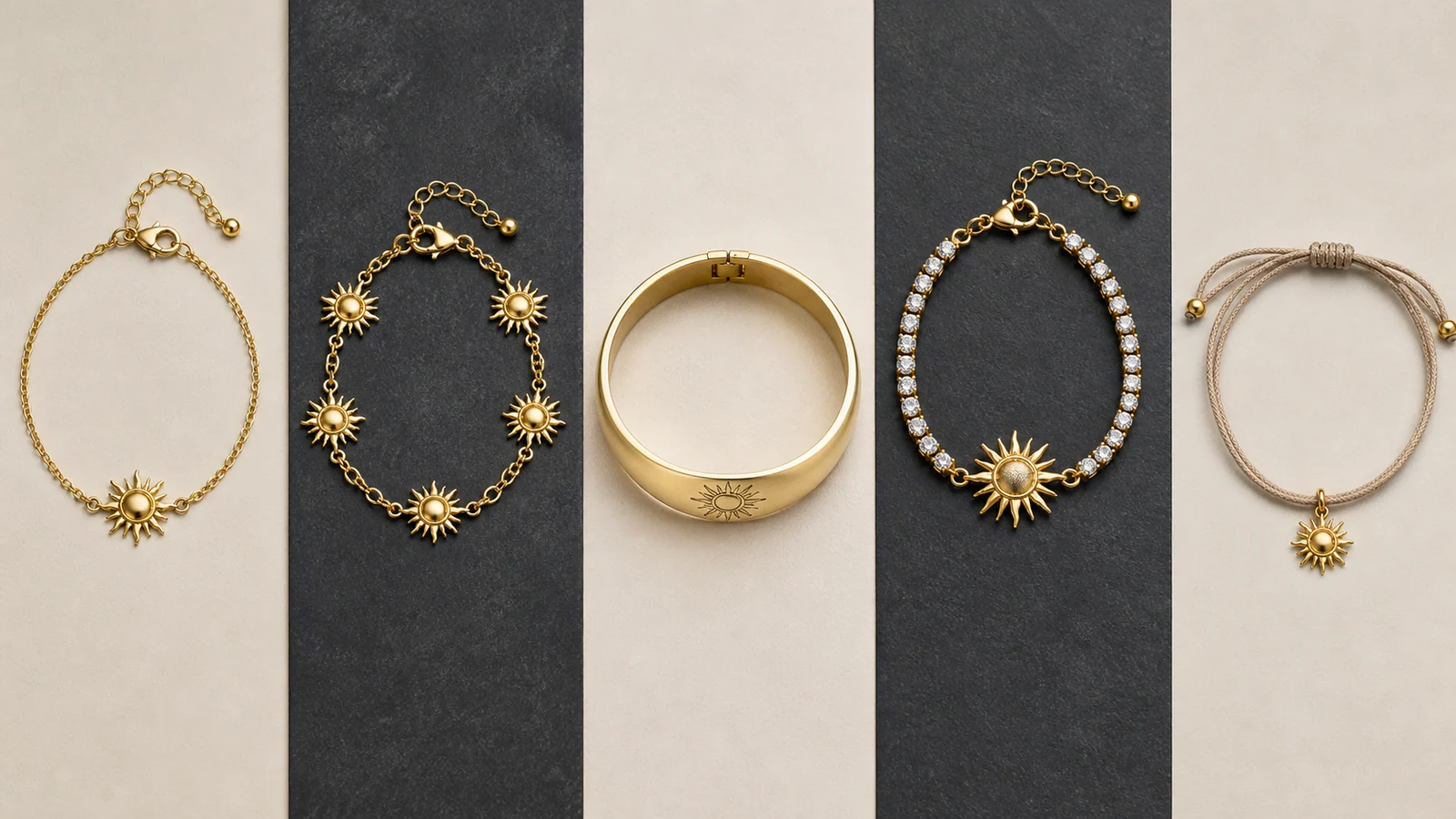
Choose the construction before focusing on decorative details. The structure determines how the bracelet moves, closes, layers and interacts with sleeves, desks and bags. The following comparison describes general design types; a specific product may combine more than one.
Bracelet style
How it wears
Often suits
What to inspect
Single-charm chain
Flexible with one moving focal motif
Delicate daily wear and easy layering
Charm attachment, chain gauge, clasp, extension and whether the charm flips
Multi-charm or station
More movement and repeated visual details
Expressive styling and collected motifs
Spacing, snag points, link wear and how charms contact one another
Bangle or hinged bracelet
Rigid or semi-rigid with a defined shape
A clean silhouette and wearing alone
Opening method, hinge, safety closure, inside dimensions and wrist clearance
Cuff
Open-ended and usually more structured
A bold motif and quick styling
Opening width, edge finish, flexibility and instructions about adjustment
Tennis or half-tennis style
Articulated line of stones or links
Continuous sparkle and dressier looks
Link movement, stone settings, clasp, safety feature and complete length
Cord or string bracelet
Soft, casual and often adjustable
Relaxed styling and lighter visual weight
Knot or slider security, cord wear, moisture guidance and charm attachment
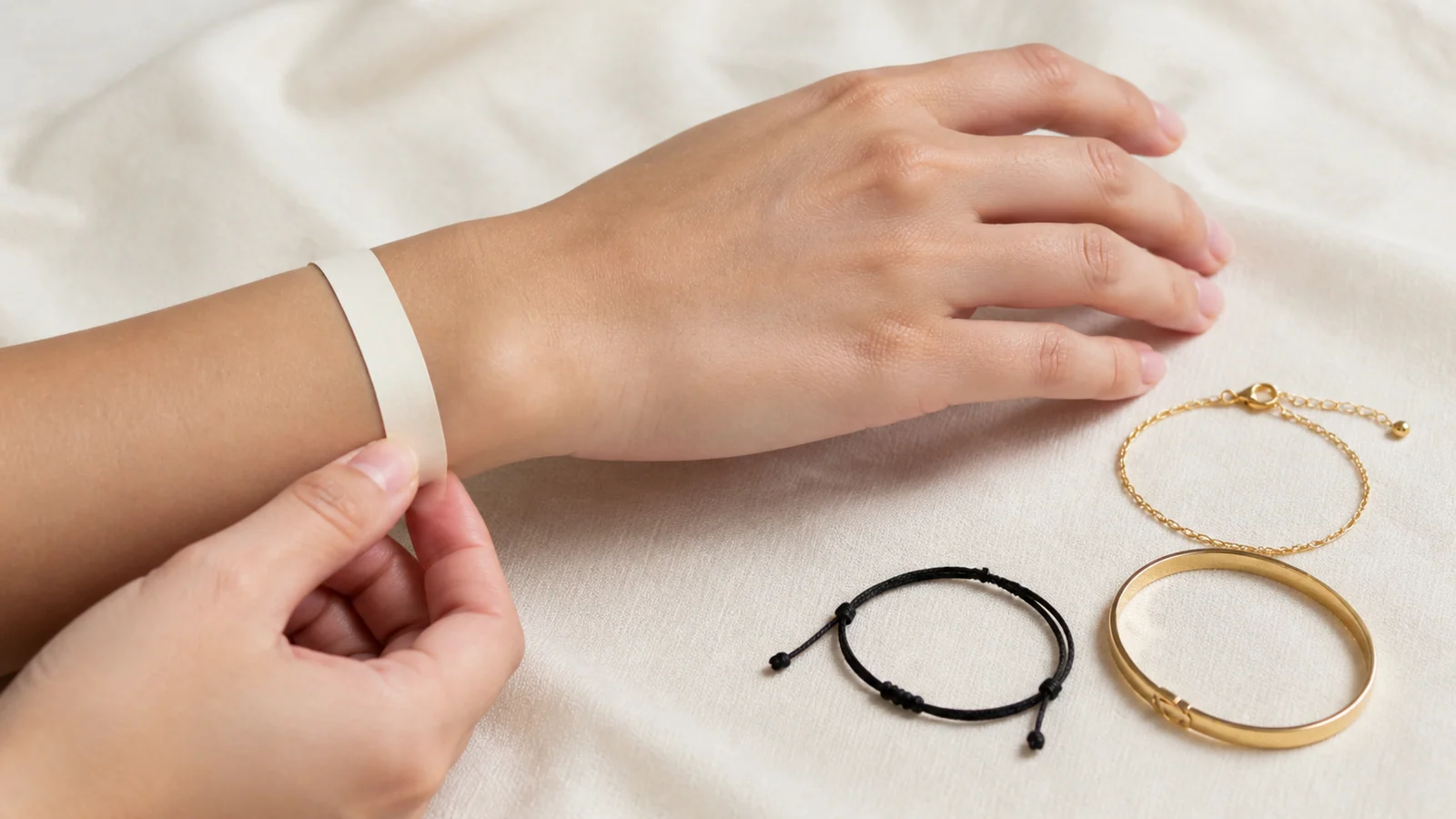
A visual comparison of five sunshine bracelet construction styles.
How do you measure your wrist for a bracelet?
Measure the wrist where you expect the bracelet to sit, record the snug circumference, and then follow the seller’s size chart for the specific construction. Do not copy a ring size or estimate from height. A flexible chain, closed bangle, hinged design and wide cuff can require different measurements and movement allowances.
Step 1: Measure the wrist without stretching the tape
Wrap a soft measuring tape around the wrist at the intended wearing point. Keep it in contact with the skin without compressing it. If you do not have a soft tape, use a non-stretch cord or narrow paper strip, mark the overlap and measure it against a ruler. Repeat the measurement to catch placement or reading errors.
Record the snug wrist measurement separately from any final bracelet length. The finished length may include a clasp, extension or decorative section, and sellers may define “length” differently. Ask whether the listed measurement is end to end, wearable inner circumference or a size label.
Step 2: Decide how much movement feels comfortable
A close fit keeps a small charm from rotating as much but can feel restrictive when the wrist flexes. A looser fit moves more freely and may be easier to layer, yet excessive space can allow the bracelet to catch on objects or slide toward the hand. The right balance depends on the structure, motif weight, daily activity and personal preference.
Use a bracelet you already find comfortable as a comparison. Measure it using the method appropriate to its construction, then compare that result with the seller’s instructions. Do not assume the same allowance works for a delicate chain and a wide rigid bracelet.
Step 3: Check hand clearance for a closed bangle
A closed bangle must pass over the widest part of the hand, so wrist circumference alone is not enough. Follow the seller’s stated bangle-sizing method and confirm the inside diameter or circumference. A hinged bangle opens, but you still need enough interior room for comfort and enough closure security for daily movement.
Step 4: Consider charm position and adjustability
An extension chain, sliding bead or multiple closure loops can provide flexibility, but each mechanism has limits. Check whether the sun motif remains centered at the chosen length, whether extra chain hangs comfortably and whether the closure can be operated without assistance.
Measure the wrist at the intended bracelet position and follow the seller’s construction-specific size method.
Which metal and stone details matter?
Metal color changes the mood of a sunshine motif, but color does not identify composition. Yellow-toned metal can reinforce a warm solar look; white-toned metal can feel crisp; rose-toned metal can soften the design. Read whether the item is solid precious metal, sterling silver, plated, vermeil or another alloy, and check whether the clasp, chain, charm and findings share the same description.
A 925 or S925 mark generally indicates sterling silver containing 925 parts per thousand silver. That mark is useful, but it is not a complete quality test by itself. Sunshine Jewelry’s explanation of what S925 means on jewelry covers the alloy, markings and practical buying checks in more detail.
If the bracelet contains stones, confirm the identity of the center and accent materials separately. Moissanite, diamond and cubic zirconia are different materials and should not be treated as interchangeable names. Do not identify a stone from sparkle in a photograph. Read the disclosure and ask for clarification when a listing uses only general words such as “crystal” or “diamond-like.”
Bracelets experience repeated movement and contact, so setting profile matters. Raised prongs may create an open, bright look but can interact with knitwear or hair. Smooth bezels and lower settings may present fewer exposed edges, although actual security still depends on workmanship, condition and appropriate use.
What should you check for comfortable everyday wear?
Closure: identify the clasp or slider and consider whether you can operate it comfortably.
Articulation: flexible links should move without obvious kinks in the listing photos or on inspection.
Edges: inspect the reverse, charm rays and openings for areas that could catch on fabric.
Balance: a heavy charm on a very fine chain may rotate or pull the design toward the underside of the wrist.
Activity: desk work, exercise, childcare, tools and frequent handwashing can change how practical a bracelet feels.
Maintenance: plated surfaces, cords, pearls, treated gems and stone settings may require different care.
Remove a bracelet when an activity could pull, crush or repeatedly strike it. “Everyday” should describe a realistic routine, not a guarantee that every construction can be worn through sleep, swimming, exercise and household work.
How can you stack a sunshine bracelet?
Give the sunshine bracelet a clear role in the stack and separate it from pieces that repeatedly strike or abrade it. Start with two bracelets and watch how they move during normal activities. A small sun charm can act as the focal point beside a plain chain, while a wider bangle may work better alone or with one softer, lighter piece.
Repeat one visual element—metal color, chain texture or stone tone—to make mixed styles feel intentional.
Vary width so the stack has a focal piece rather than several items competing at the same scale.
Keep protruding charms away from delicate stone settings if they collide during movement.
Check clasps and charm attachments after wearing a new combination.
Store each bracelet separately instead of leaving the stack tangled together.
If a tennis-style design is part of the stack, review the dedicated moissanite tennis bracelet buying guide for setting, clasp and line-of-stones considerations. That article serves a different intent from this motif-led sunshine bracelet guide.
A sunshine charm bracelet used as the focal piece in a balanced three-bracelet stack.
Is a sunshine bracelet a good gift?
Yes, a sunshine bracelet can be a thoughtful gift when the recipient likes bracelets and the giver explains the personal meaning. It can suit a birthday, graduation, thank-you, recovery milestone or new beginning. The motif can communicate warmth without automatically carrying the same commitment message as an engagement ring.
For a surprise, study the recipient’s existing jewelry. Note whether they wear yellow-, white- or rose-toned metal, whether their bracelets sit close or loose, and whether they prefer fine chains, rigid pieces or cords. If possible, measure a comfortable bracelet rather than the recipient’s wrist without permission. Confirm current return, adjustment and personalization policies before ordering.
Do not assume that a blank charm can be engraved. Check whether personalization is offered, the permitted text, placement, production time and policy for personalized items. A short note explaining the sun motif can add meaning without changing the jewelry itself.
Sunshine bracelet buying checklist
Motif: Is the sun engraved, openwork, stone-set, repeated or attached as a moving charm?
Construction: Is it a chain, station bracelet, bangle, cuff, tennis style or cord?
Fit: Which measurement does the seller require, and what does the listed length represent?
Closure: What clasp, hinge, slider or knot secures the bracelet?
Materials: Are the metal, plating, stones, cord and findings described clearly?
Wearability: Are the reverse, edges, charm attachment and setting height visible?
Care: Do the instructions match the disclosed materials and treatments?
Policies: Check the current return, adjustment, warranty and personalization terms.
A symbol cannot prove construction quality. Link security, clasp function, surface finish, stone setting and final inspection still matter. Sunshine Jewelry describes its stated checks in how every jewelry piece is inspected before shipping.
How should you care for a sun bracelet?
Follow the care instructions for the exact metal, finish, gemstone and cord. A conservative routine is to wipe the bracelet gently with a clean, soft cloth after wear, fasten the clasp and store it separately. This reduces tangling and contact with harder pieces.
Apply perfume, lotion and hairspray before putting on the bracelet, then allow products to dry.
Remove the bracelet before household cleaning, swimming or activities that may pull or crush it.
Do not assume ultrasonic or steam cleaning is safe for every stone, treatment, plating or setting.
Inspect clasps, hinges, jump rings, cord, links and prongs periodically.
Ask a jeweler for help if a stone moves, a hinge loosens, links kink or the charm attachment opens.
If product-specific instructions permit washing, follow the stated method and dry the bracelet thoroughly. Avoid a universal cleaning recipe: pearls, porous gems, treated stones, plated surfaces, cords and solid metals can respond differently.
Frequently asked questions
Is a sunshine bracelet the same as a sun charm bracelet?
Not always. A sun charm bracelet uses a separate moving charm, while a sunshine bracelet may use an engraved plate, repeated links, a rigid sunburst or a stone-centered motif. Inspect how the motif is attached and whether it moves independently.
What does a sunshine bracelet mean as a gift?
It often represents warmth, hope, encouragement or a bright presence in the giver’s life. The most accurate meaning is the one you communicate to the recipient. Avoid claiming that every wearer or culture assigns the symbol the same definition.
How tight should a sunshine bracelet be?
It should feel secure without restricting normal wrist movement. The correct allowance depends on whether the bracelet is flexible, rigid, wide, charm-heavy or adjustable. Record the snug wrist measurement and follow the seller’s size method for that construction.
Can I use wrist circumference to size a closed bangle?
Not by itself. A closed bangle must pass over the widest part of the hand. Use the seller’s bangle-specific method and compare the inside dimensions, not only a wrist measurement intended for chain bracelets.
Can I wear a sun bracelet every day?
Possibly, if its construction and materials suit your routine. Consider the clasp, link strength, charm edges, plating, settings and exposure to water, chemicals or impact. Follow the product’s care guidance and remove it for activities that could pull or crush it.
Can I mix a sunshine bracelet with other metals?
Yes, mixed metals can be intentional. Repeat one color or texture elsewhere in the stack so the combination feels connected, and monitor contact between pieces. A design choice does not replace the need to confirm each item’s actual metal description.
How do I know whether the stones are moissanite, diamond or cubic zirconia?
Use the seller’s explicit disclosure and supporting product information; do not identify a stone from appearance alone. The materials are different. Ask for clarification if the center and accent stones are not named separately.
Final takeaway
A sunshine bracelet should work as both a symbol and a wearable object. Decide what the sun motif means to the wearer, identify the bracelet construction, measure according to that structure, and verify the closure, materials, stone disclosures and care instructions. For a gift, match the recipient’s existing metal color and fit preferences rather than relying only on the story behind the motif.
To compare current structures and specifications, browse Sunshine Jewelry’s current jewelry collection. Treat each product page as the source for that individual item, and confirm dimensions and policies before purchasing.
Choose a women's sunshine diamond ring gift by checking her style, exact ring size, verified listing details, daily routine, and current store policies.