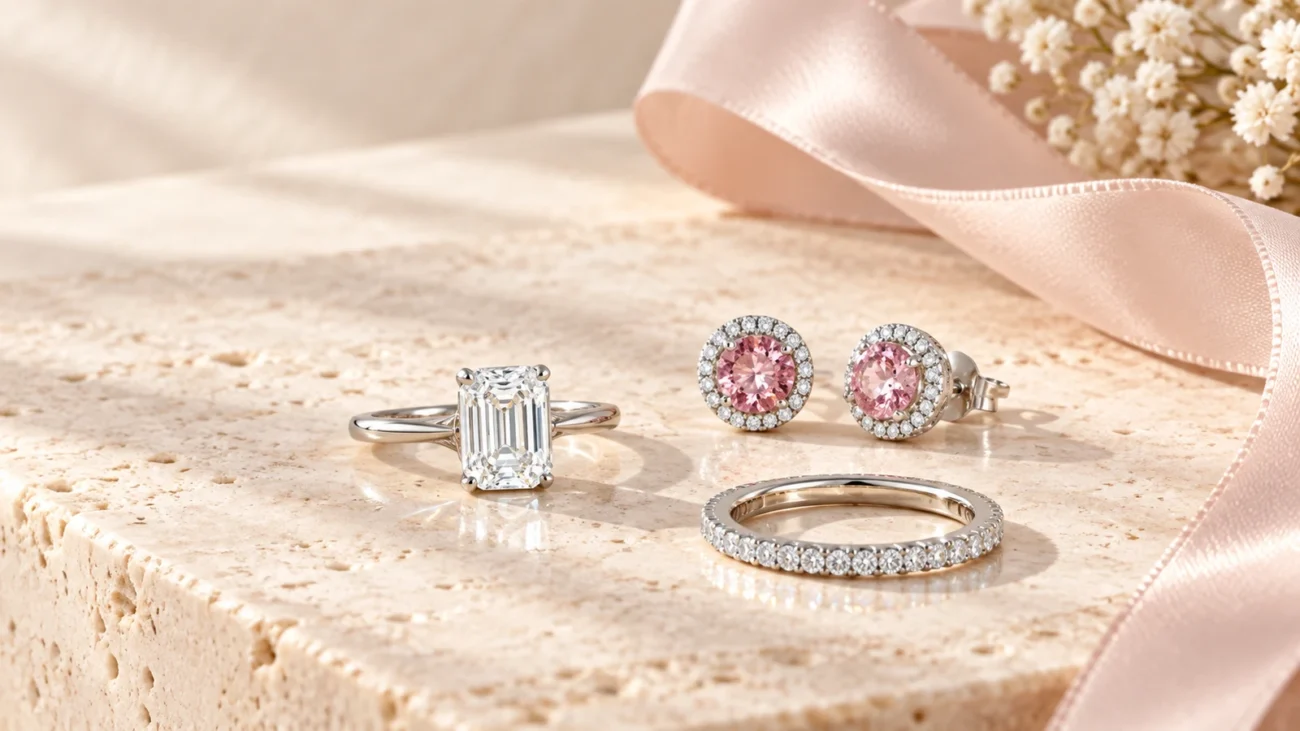
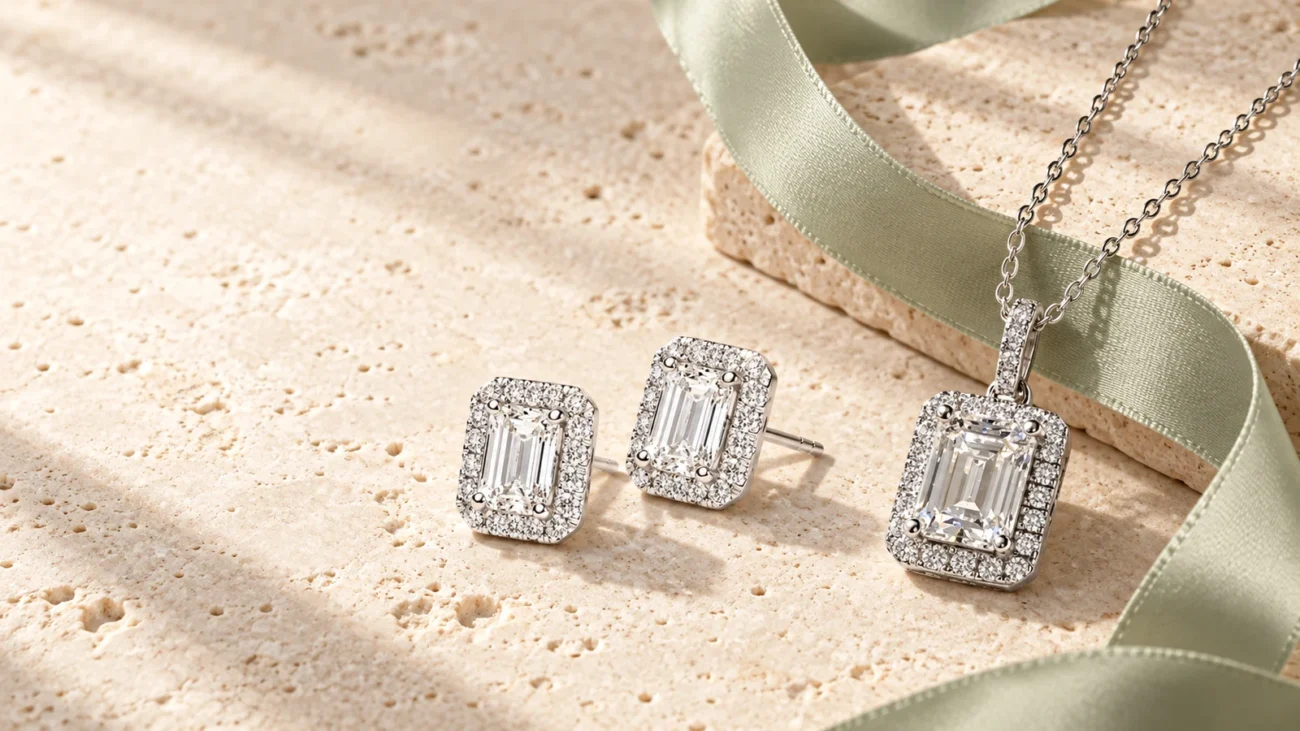
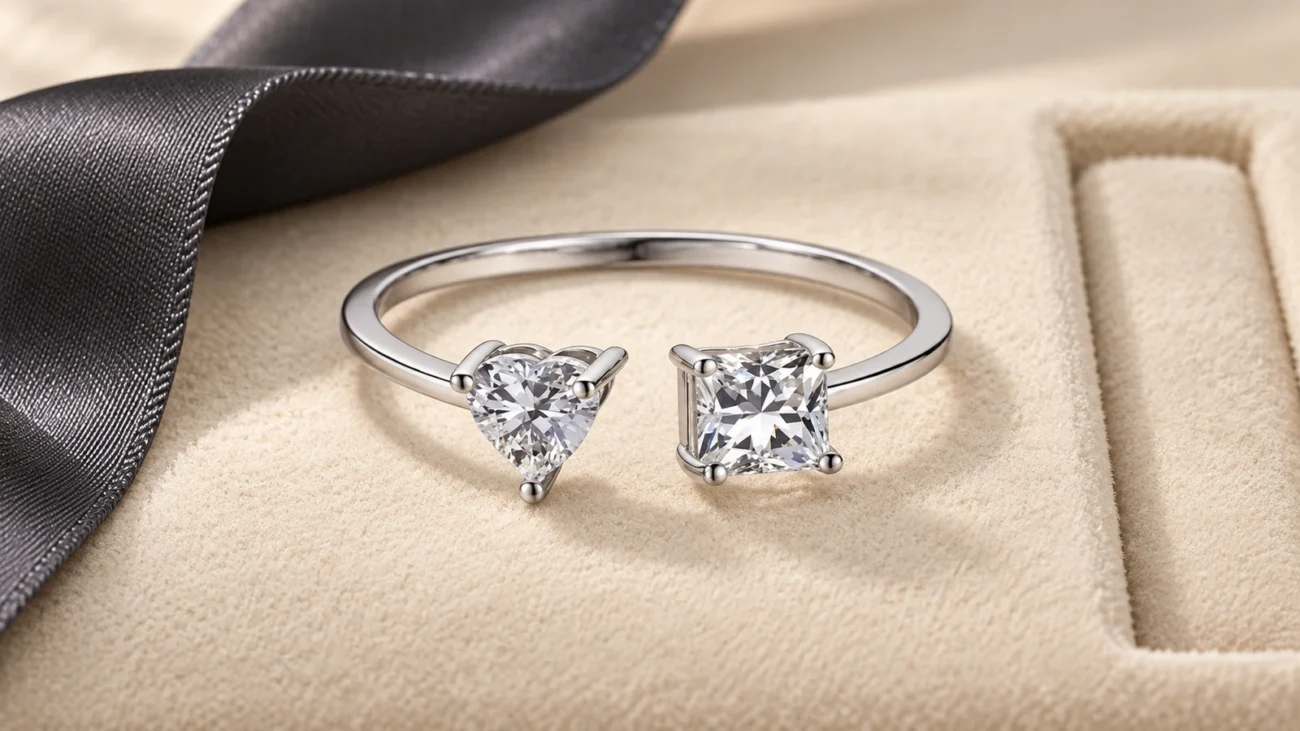
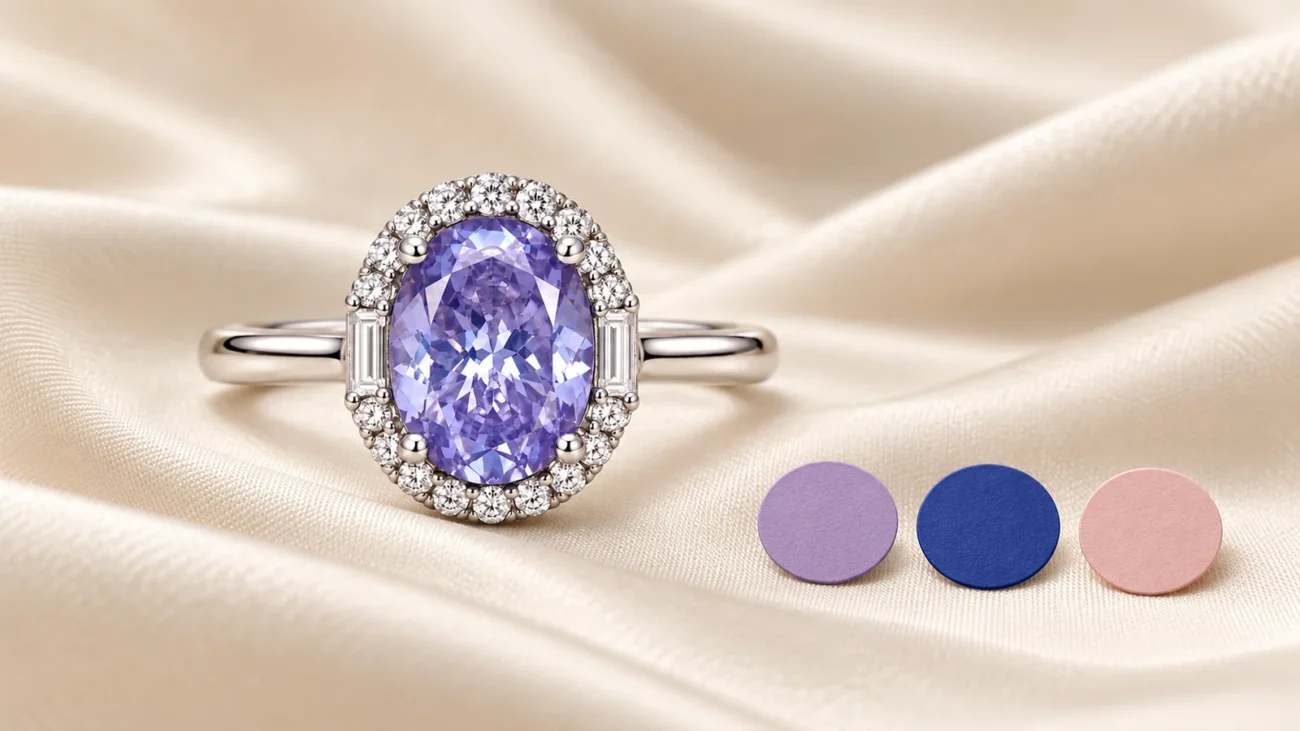
A Sunshine engagement ring should be chosen as a complete piece of jewelry—not as a center stone in isolation. Shape creates the first impression, but setting height, band construction, finger fit, metal details, product photography and after-purchase terms determine whether the ring works in real life.
Quick answer
Start with the wearer’s style and daily routine, then shortlist two or three rings with the right silhouette. Compare stone dimensions in millimeters, inspect front and side views, confirm the gemstone and metal description, verify the US ring size, and read shipping and return terms before ordering. If a listing identifies the stone as moissanite, evaluate it as moissanite rather than assuming it is a diamond.
Best for: US shoppers comparing Sunshine Jewelry engagement-ring options online. Decision order: wearer → shape → face-up size → setting profile → fit → specifications → policies. Important distinction: moissanite and diamond are different gemstones. The product page—not a search phrase—should determine what stone you are buying.
What Does “Sunshine Engagement Ring” Mean?
In this guide, a Sunshine engagement ring means an engagement-style ring a shopper is considering from Sunshine Jewelry. It is a shopping phrase, not a gemstone grade, setting type or guarantee that every result uses the same material. The store’s ring navigation includes engagement styles, while individual listings should state the stone, metal, finish, dimensions and available sizes for that particular design.
This distinction matters because people sometimes search broad phrases such as “sunshine diamond ring” while arriving on moissanite-focused pages. Moissanite is silicon carbide and has its own optical character. GIA describes jewelry moissanite as a hard, durable stone known for strong brilliance and fire. It can suit an engagement ring, but it should be named accurately and selected because the wearer likes moissanite—not because it is mistaken for diamond.
If you are still comparing gemstone categories, read the broader moissanite engagement ring buying guide first. This page focuses on the next step: turning an online catalog into a short, defensible list.
Build a Shortlist Before Comparing Tiny Details
Online catalogs become overwhelming when every ring is compared at once. A better approach is to set three non-negotiables and remove anything that misses them. Your non-negotiables might be an oval outline, a low profile and a cool white-metal look. Another shopper may prioritize a round center, a classic solitaire and a wedding band that can sit close beside it.
Choose the visual family: classic, modern, romantic, vintage-inspired or statement-making.
Choose a practical profile: low, medium or high, based on work, hobbies, gloves and clothing.
Set a comfortable total budget: include resizing, delivery, taxes and possible future maintenance.
Save two or three candidates: compare their specifications side by side instead of relying on memory.
You can begin with the engagement-ring collection, then use the framework below to remove designs that look attractive in a hero image but do not match the intended wearer.
Choose Shape and Face-Up Size Together
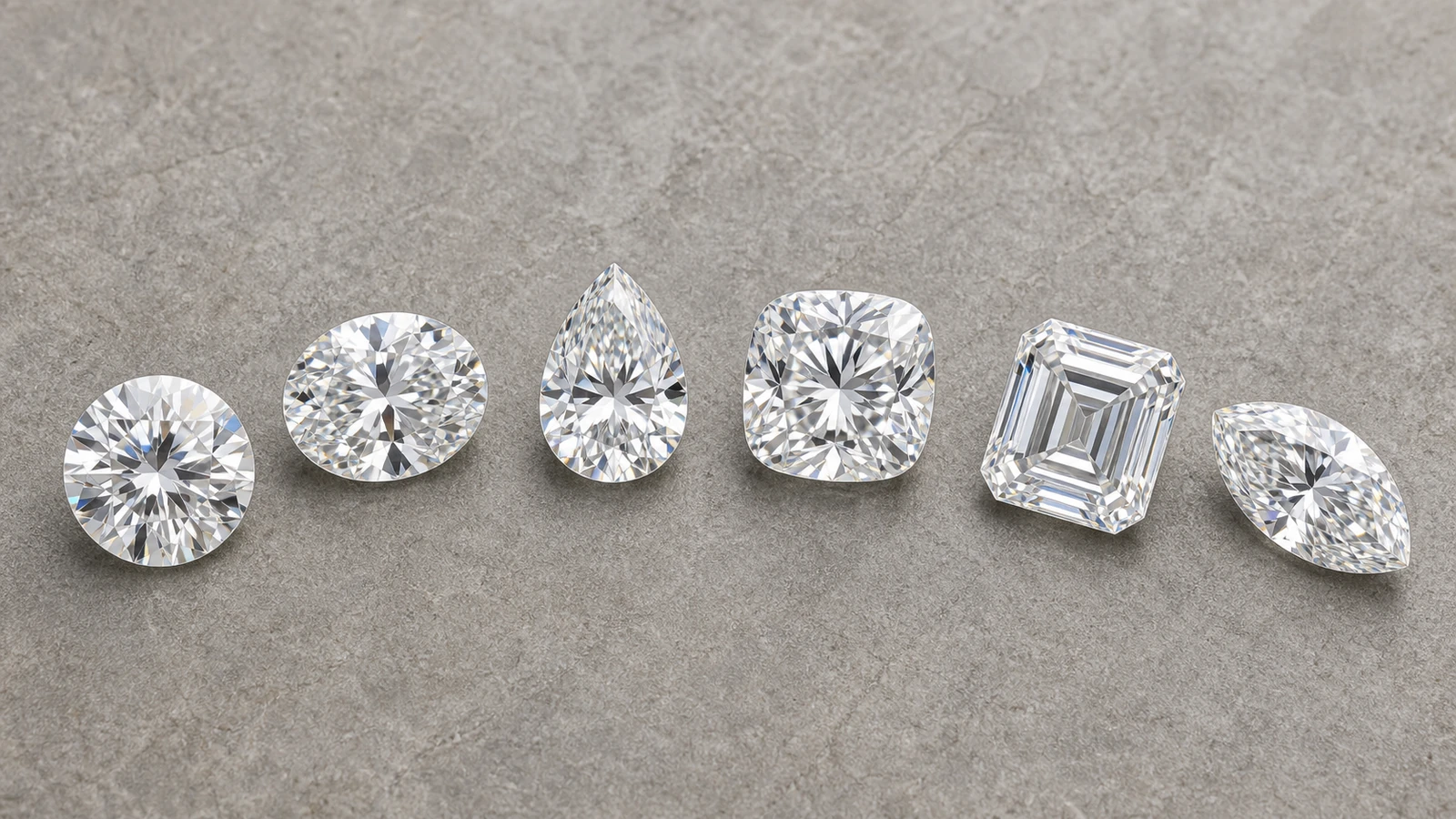
Shape controls the ring’s outline. Round stones feel balanced and familiar; oval, pear and marquise shapes visually lengthen the finger; cushion shapes soften a square outline; emerald cuts emphasize clean geometry and broad flashes. None is universally “best.” The best shape repeats something the wearer already chooses in clothes, accessories or jewelry.
Shape changes outline, finger coverage and the way light moves through a stone.
Shape
Visual effect
Check before choosing
Round
Balanced, classic and bright
Compare diameter in millimeters and the overall head width.
Oval
Elongated with broad finger coverage
Check length-to-width proportion and how the stone looks in a hand photo.
Pear or marquise
Directional, graceful and visually long
Confirm that pointed ends have protective prongs or metal support.
Cushion
Soft corners with romantic character
Decide whether you prefer a square or elongated cushion outline.
Emerald cut
Architectural lines and calmer flashes
Inspect symmetry and any visible internal features in close views.
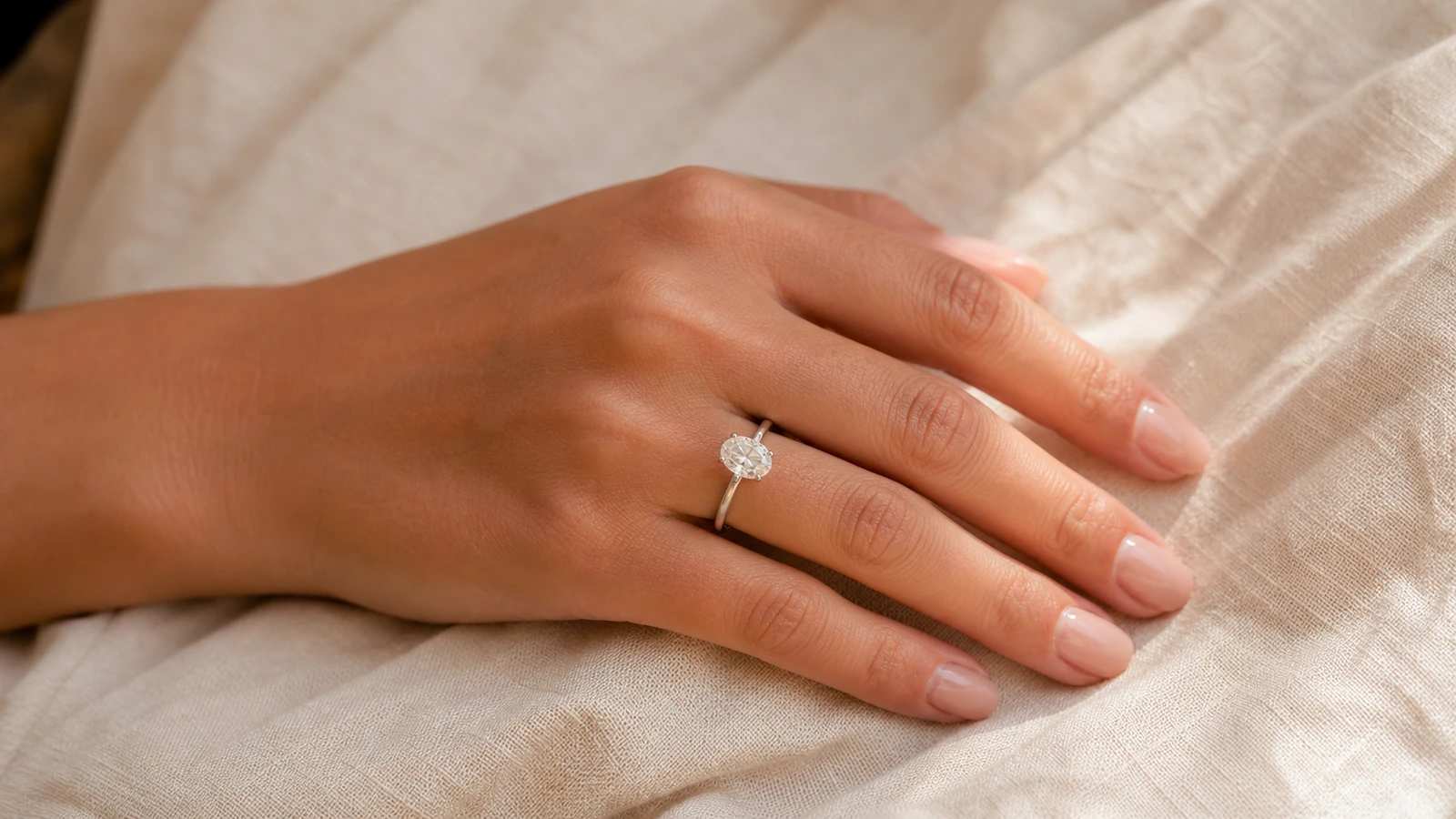
Do not use “carat equivalent” as the only size cue. The FTC notes that gemstones may be described by weight, dimensions or both; millimeter length and width are more direct indicators of face-up presence. An elongated stone can cover more finger area than a round stone with a similar stated equivalent weight.
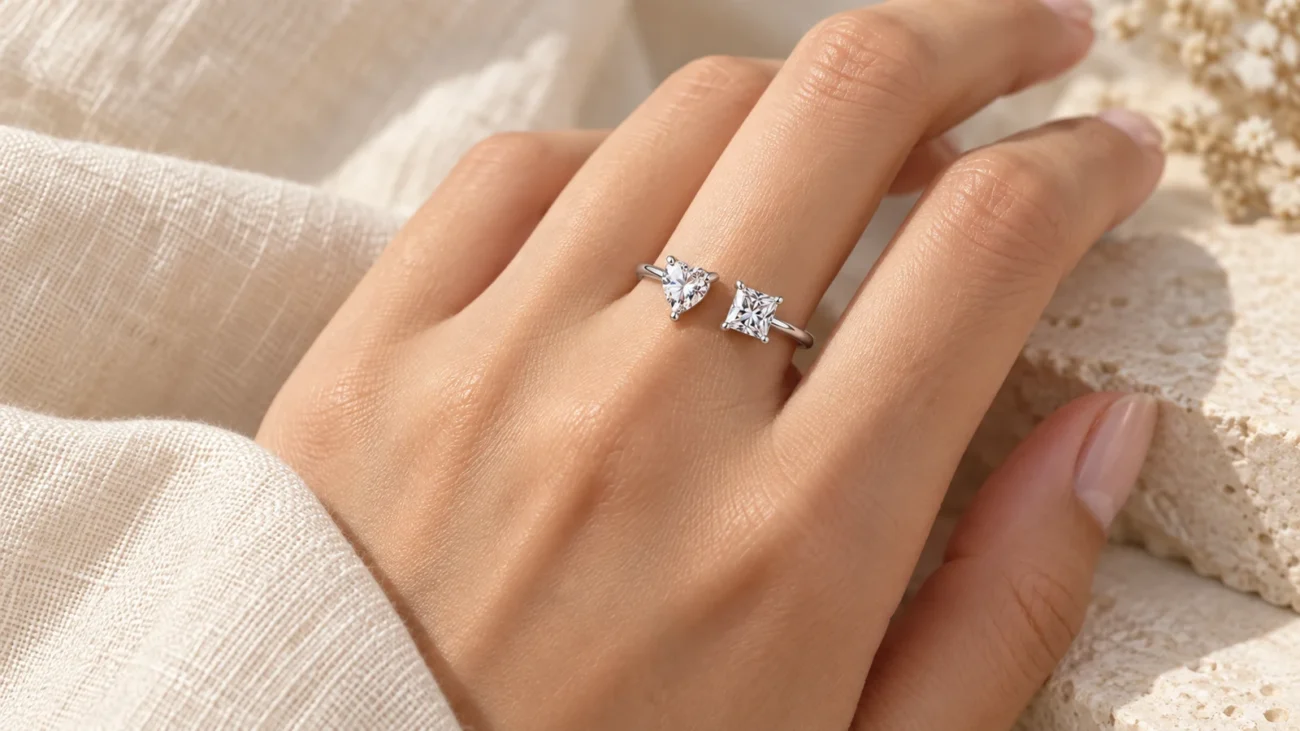
Hand-scale photography is more useful than an isolated macro image for judging visual proportion.
Compare the Setting From the Side, Not Only From Above
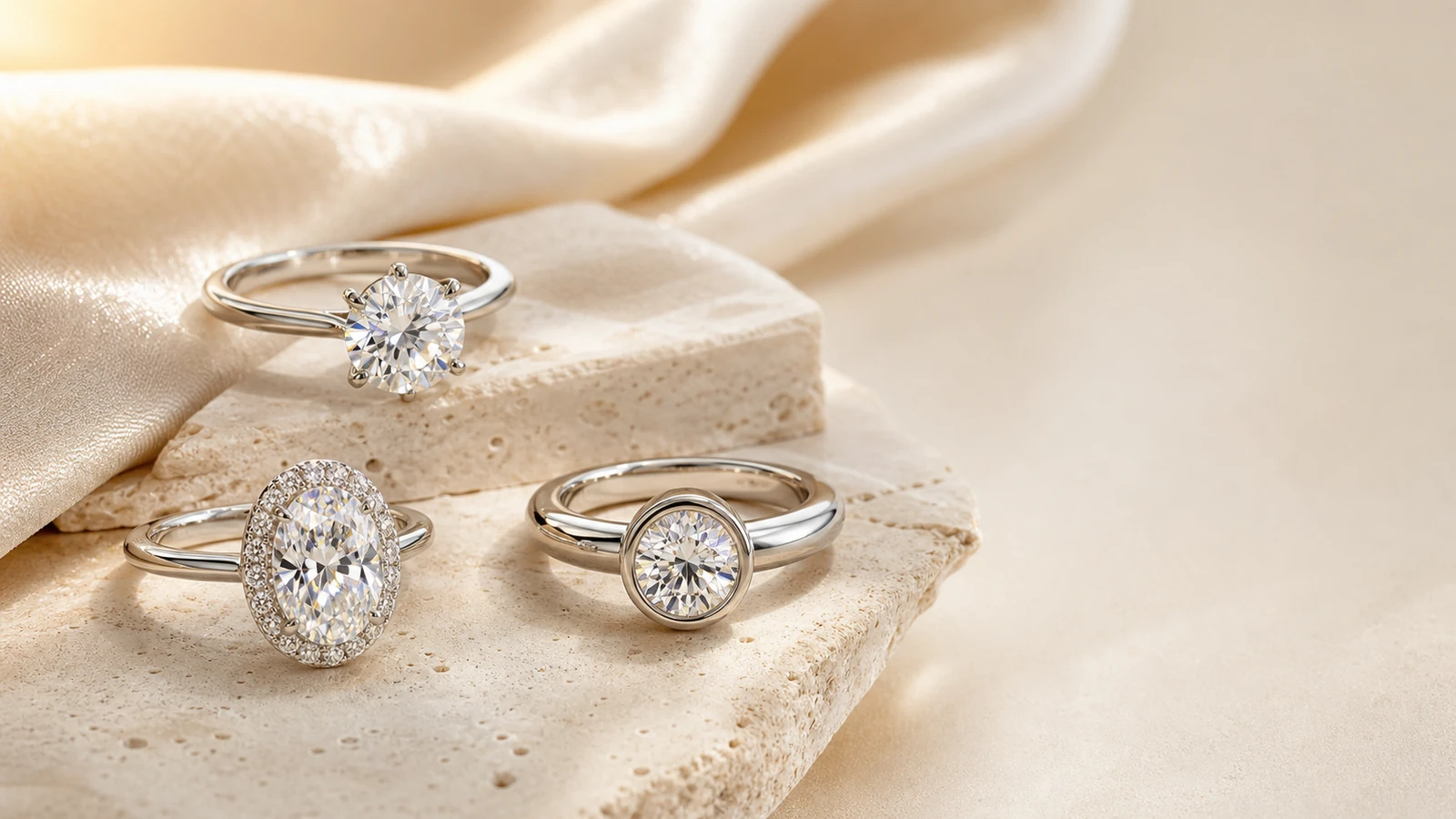
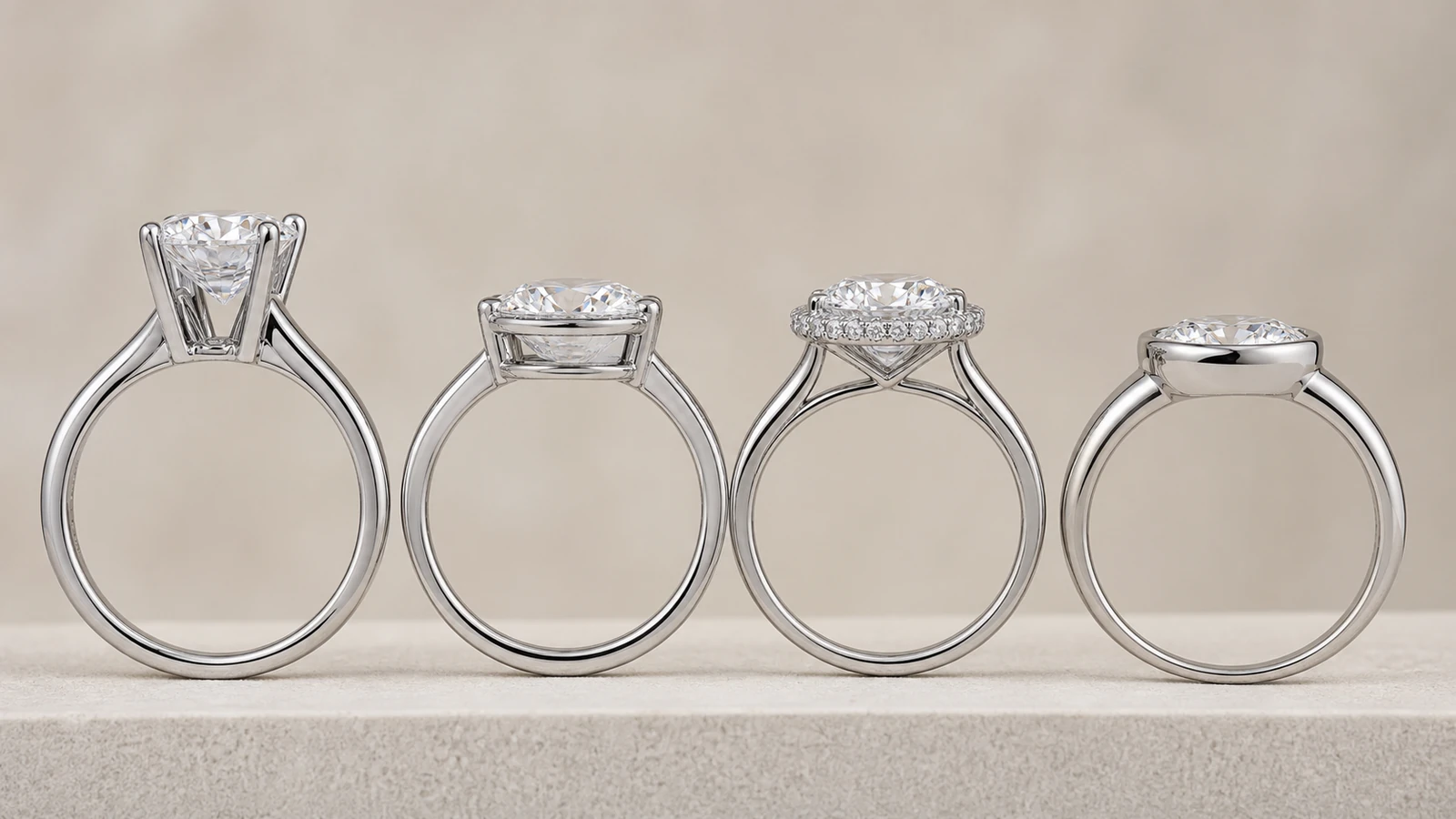
A top view explains sparkle and outline. A side view explains how the ring may behave. It reveals setting height, prong support, the gallery under the center stone and whether a straight wedding band is likely to sit close beside the engagement ring.
A side view reveals setting height, support and wedding-band clearance.
For active hands and frequent glove use
Favor a lower center, smooth transitions and protected corners. A gallery rail or bezel-inspired rim can add support, though construction quality still matters. Any ring can be damaged by hard impact, and a hard gemstone does not make thin prongs indestructible.
For maximum sparkle and a lifted silhouette
Halo, pavé and taller solitaire designs create more visible light and presence. In exchange, they expose more small stones, edges or prongs to daily contact. Inspect whether the center sits straight, the halo is even and the prongs appear smooth and symmetrical.
For a future wedding-band stack
Look at the base of the head. A raised basket may allow a straight band to sit closer; a low or wide head may create a gap. A gap is not a defect if the wearer likes it, but it should be a deliberate design choice. The ring settings guide provides a deeper comparison of solitaire, halo, hidden-halo, bezel and three-stone structures.
Confirm Ring Size and Wearing Comfort
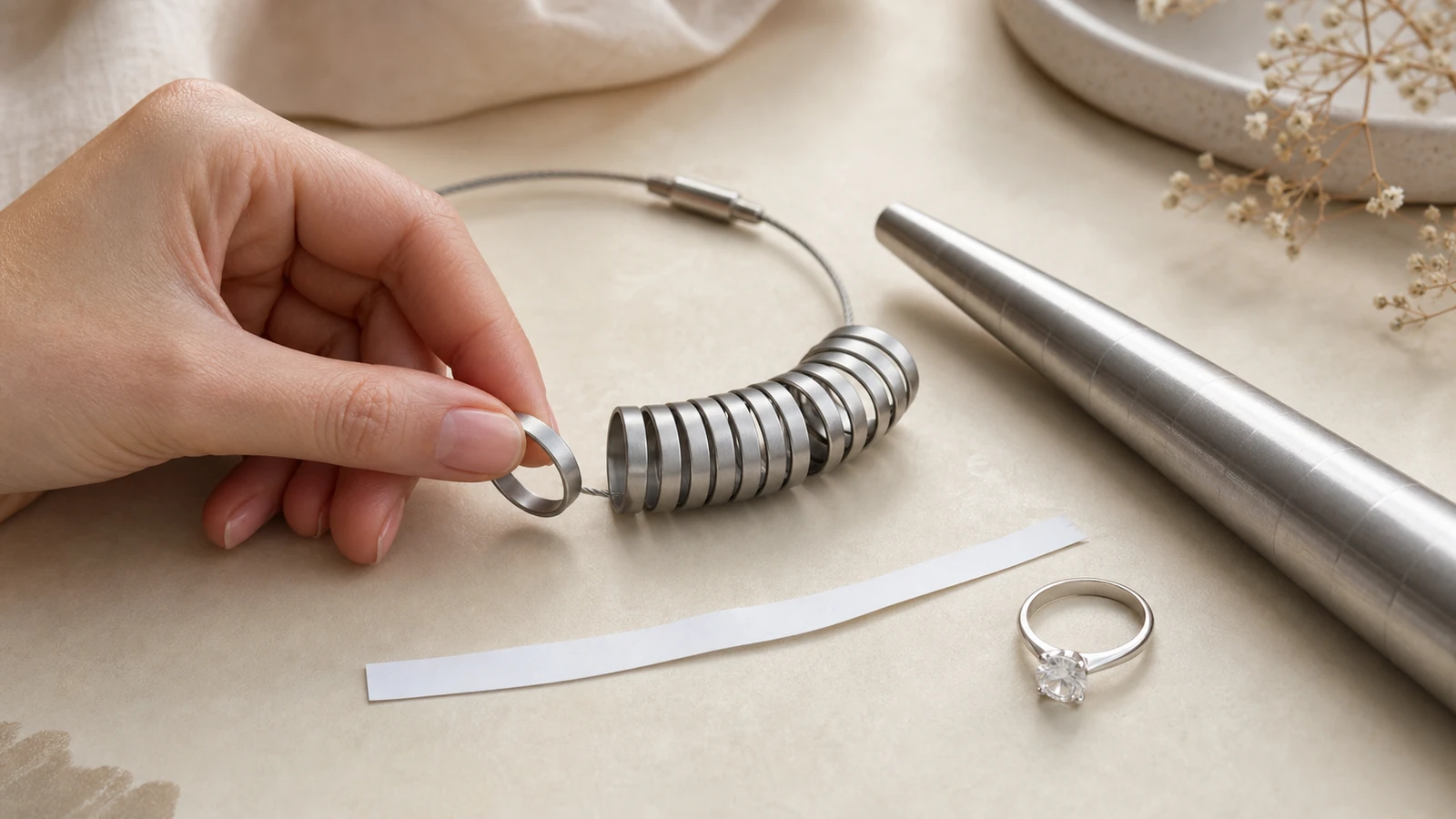
US ring sizing is not something to infer from a photograph. Measure the intended finger, because the same finger on the other hand can differ. Repeat the measurement at a comfortable room temperature and at more than one time of day. A wider band can feel tighter than a slim one at the same nominal size.
Measure the intended finger more than once and confirm the seller’s sizing system.
For a known size
Use a ring sizer or measure a ring that already fits the correct finger. Confirm inside diameter carefully and match it to the seller’s US size chart.
For a surprise proposal
Borrow a correctly fitting ring briefly, ask a trusted person, or choose a plan that allows responsible resizing. Do not assume height, shoe size or body type predicts ring size.
For step-by-step methods and common measurement errors, use the at-home ring-size guide. If your result falls between sizes or the design has a wide band, ask customer support how that specific model fits before ordering.
Use a Seven-View Product Photo Check
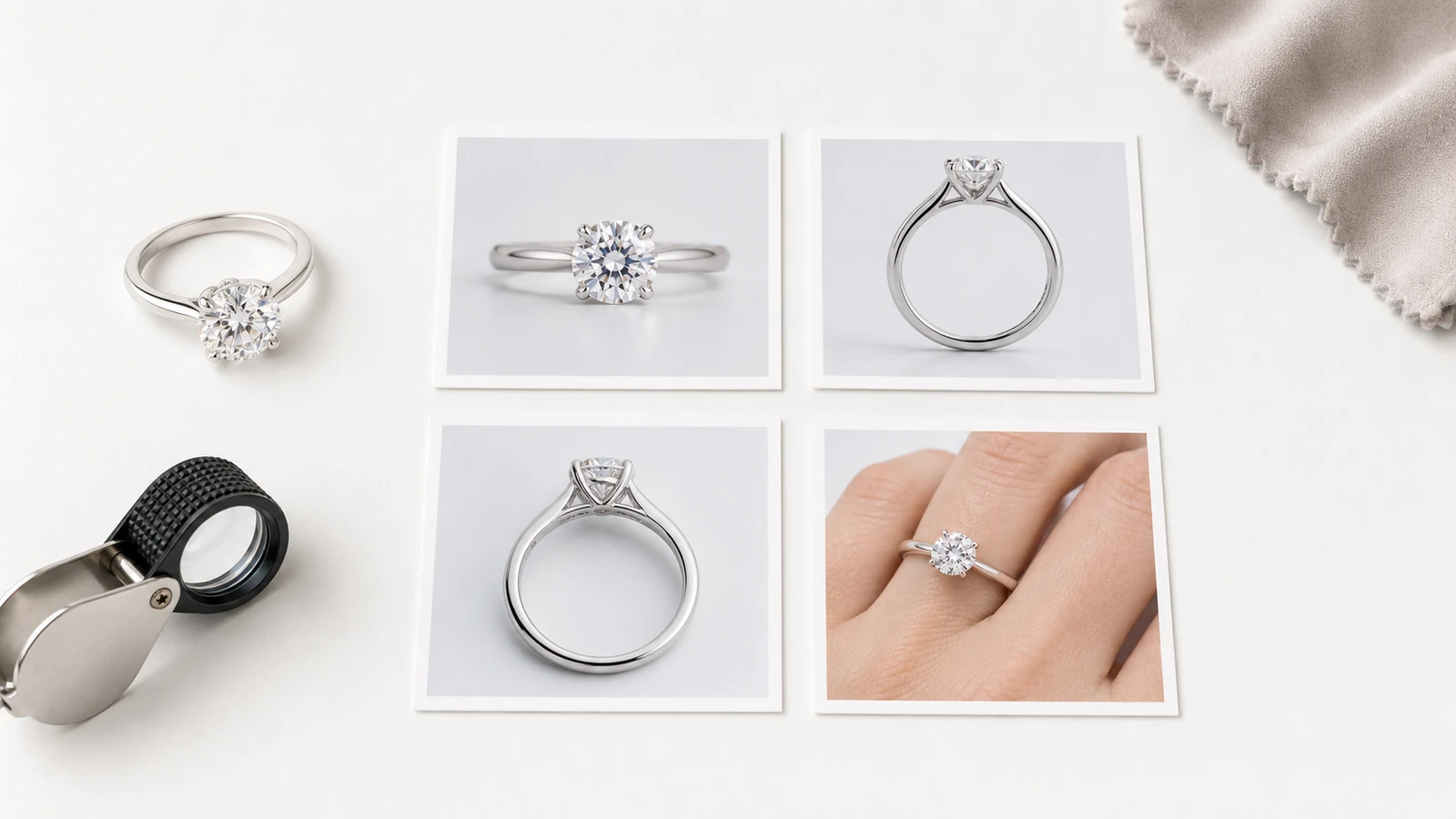
Studio lighting is designed to make jewelry attractive, so one hero image cannot answer every buying question. A useful listing lets you evaluate the same design from several angles. If an important view is missing, request it instead of filling the gap with an assumption.
A complete listing should let you inspect the ring from more than one flattering angle.
Seven useful views
Face-up: outline, symmetry and center alignment.
Both sides: setting height and prong consistency.
Under-gallery: support, open areas and finishing.
Band interior: smoothness, marks and comfort surface.
Hand scale: realistic finger coverage.
Neutral light: color without only dramatic spot lighting.
Short video: movement, fire and how the ring reads at normal distance.
Read the Specifications as Carefully as the Photos
Photos answer visual questions; specifications answer identity and construction questions. Confirm the center-stone name, shape and millimeter measurements. Then check accent-stone description, base metal, any plating or color finish, available ring sizes and what documentation is included.
The FTC advises gemstone buyers to learn the seller’s terminology and obtain important details such as origin, size, treatments and special care requirements in writing. That principle is especially useful online. A report or certificate can support the description, but its scope should be read rather than assumed. Different documents may contain different measurements, quality terms or verification steps.
Gemstone identity: moissanite should be stated as moissanite, not implied to be diamond.
Dimensions: record length, width and, when available, depth.
Metal: distinguish solid metal from plating or a color finish.
Clarity and color language: treat seller grades as descriptive information and ask what standard supports them.
Report details: note the issuer, report number and exact features the document covers.
A very thin band may rotate or feel less substantial.
Active hands
Lower profile, secure support and protected points
Low heads may leave a gap beside a straight wedding band.
Maximum visible sparkle
Halo, pavé or three-stone composition
More small stones and prongs can require closer inspection and care.
Vintage-inspired detail
Cushion shape, engraving, floral gallery or milgrain
Fine texture can trap residue and needs gentle cleaning.
Clean modern geometry
Emerald cut, bezel-inspired frame or restrained band
Step cuts make symmetry and internal features easier to notice.
Future stacking
Raised basket or set planned with a matching band
Confirm clearance rather than assuming every straight band will sit flush.
This matrix is a starting point, not a rule. If two priorities conflict, protect comfort and setting security first. A ring that fits the wearer’s life will usually be worn and enjoyed more than a dramatic design that stays in a box.
Check Delivery, Returns and Custom Terms Before Payment
An engagement ring often has a date attached to it. Work backward from the proposal and leave time for order processing, delivery, inspection and any adjustment. Review the current shipping policy and refund policy for the exact terms that apply when you order.
Custom work may involve different timing, approvals and return conditions from a standard in-stock design. Prepare your preferred shape, dimensions, size, setting profile, metal tone, budget and required date before starting a custom jewelry inquiry. Ask for important decisions in writing and review the final design details before production begins.
Plan for Care Before the Ring Arrives
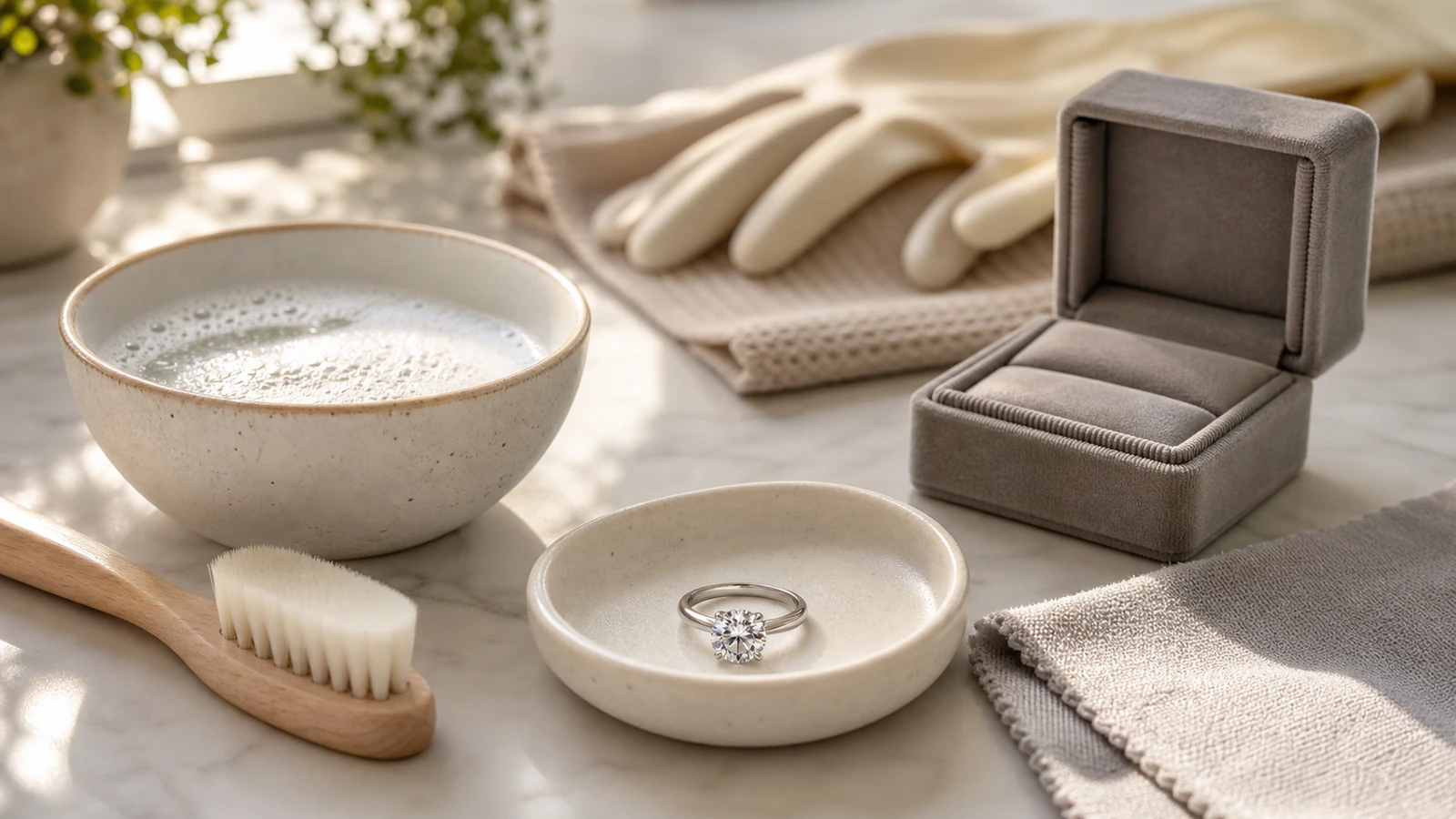
Moissanite’s hardness helps it resist scratches, but the entire ring still includes metal, prongs and possibly small accent stones. Remove the ring before forceful work, gym equipment, household chemicals and situations where it may catch or be crushed. For routine cleaning, use mild soap, warm water, a very soft brush and a lint-free cloth unless the specific product instructions say otherwise.
Gentle cleaning, separate storage and routine setting checks support long-term wear.
Store the ring separately to reduce friction with other jewelry. If a stone moves, a prong catches fabric or the band changes shape, stop wearing it and arrange an inspection. The full jewelry care guide covers cleaning, storage and warning signs in more detail.
Final Sunshine Engagement Ring Checklist
I know the wearer’s preferred style and daily activity level.
I compared the stone’s millimeter dimensions and hand-scale appearance.
I inspected face-up, side and under-gallery views.
The setting height, prongs and pointed corners suit daily wear.
I confirmed the intended finger, US size and band-width effect.
The gemstone, metal and any finish or plating are identified in writing.
I understand what any included report does—and does not—document.
I checked wedding-band clearance if a future stack matters.
I reviewed current shipping, custom and return terms.
The total cost and timeline are comfortable without relying on a social rule.
Ready to compare real options?
Open the engagement-ring collection, save two or three candidates, and apply the same shape, profile, fit and specification checks to each one. For a detail that is not shown, contact Sunshine Jewelry before ordering.
FAQ: Frequently Asked Questions
Is a Sunshine engagement ring a diamond ring?
Not necessarily. “Sunshine engagement ring” is a shopping phrase, not a gemstone identity. Read the individual listing. If it says moissanite, the stone is moissanite—a silicon carbide gemstone distinct from natural or laboratory-grown diamond.
Is moissanite durable enough for an engagement ring?
GIA reports a Mohs hardness of about 9.25 for synthetic moissanite and describes it as durable for engagement-ring use. Hardness is scratch resistance, not protection from every impact, so a secure setting and sensible wearing habits still matter.
What is the safest setting for an active wearer?
Start with a lower profile, supported gallery, smooth band and protection around pointed corners. There is no indestructible setting; compare construction and remove the ring for forceful manual work.
How do I judge engagement-ring size online?
Use millimeter length and width plus a hand-scale photograph. Carat-equivalent labels alone do not show exact face-up coverage, especially when comparing round and elongated shapes.
Should the engagement ring and wedding band sit flush?
Only if that look matters to the wearer. Inspect the engagement ring’s side profile and base. Some low or wide settings create an intentional gap, while a raised basket may leave more room for a straight band.
What should I ask before ordering a custom ring?
Confirm shape, stone dimensions, ring size, metal and finish, setting height, engraving, timeline, design approvals, payment schedule and the custom-order return or adjustment terms.