Pair Sunshine Jewelry earrings and necklaces by choosing one focal point, repeating one visual cue, and keeping the remaining details quieter. A bold halo pendant usually looks more intentional with compact hoops or restrained studs, while high-impact earrings are easier to balance with a clean solitaire pendant. Matching the stone shape creates formal coordination; mixing shapes can still work when metal color, sparkle level, and overall scale remain consistent.
This guide uses six Sunshine Jewelry products that were live and verified when the article was prepared. The product pages control every item-specific fact. “Pairing” describes a styling relationship, not proof that two pieces are sold as a set, share identical dimensions, or use stones from the same batch. The generated images are lifestyle visualizations based on first-party product photographs; they are not original catalog photos and do not add specifications.
Sunshine Jewelry Earring and Necklace Pairing: Quick Guide
Your main goal
Choose for the ears
Choose for the neckline
Why the pairing works
One clear focal point
Compact huggies or small studs
A larger halo or distinctive pendant
The eye has one obvious destination
Polished symmetry
Studs with a defined cut and frame
A pendant repeating that cut or frame
Shape repetition creates deliberate coordination
Quiet everyday sparkle
A narrow row of small stones
A simple solitaire
Both pieces shine without adding competing borders
A stronger evening look
Framed studs or a directional shape
A larger pendant with controlled spacing
Shared metal and geometry connect two noticeable pieces
The easiest default is a one-plus-one rule: repeat one feature and vary one feature. Repeat silver color but vary the shape, or repeat an emerald-cut outline but vary the scale. Avoid repeating every detail unless you intentionally want the appearance of a matched set.
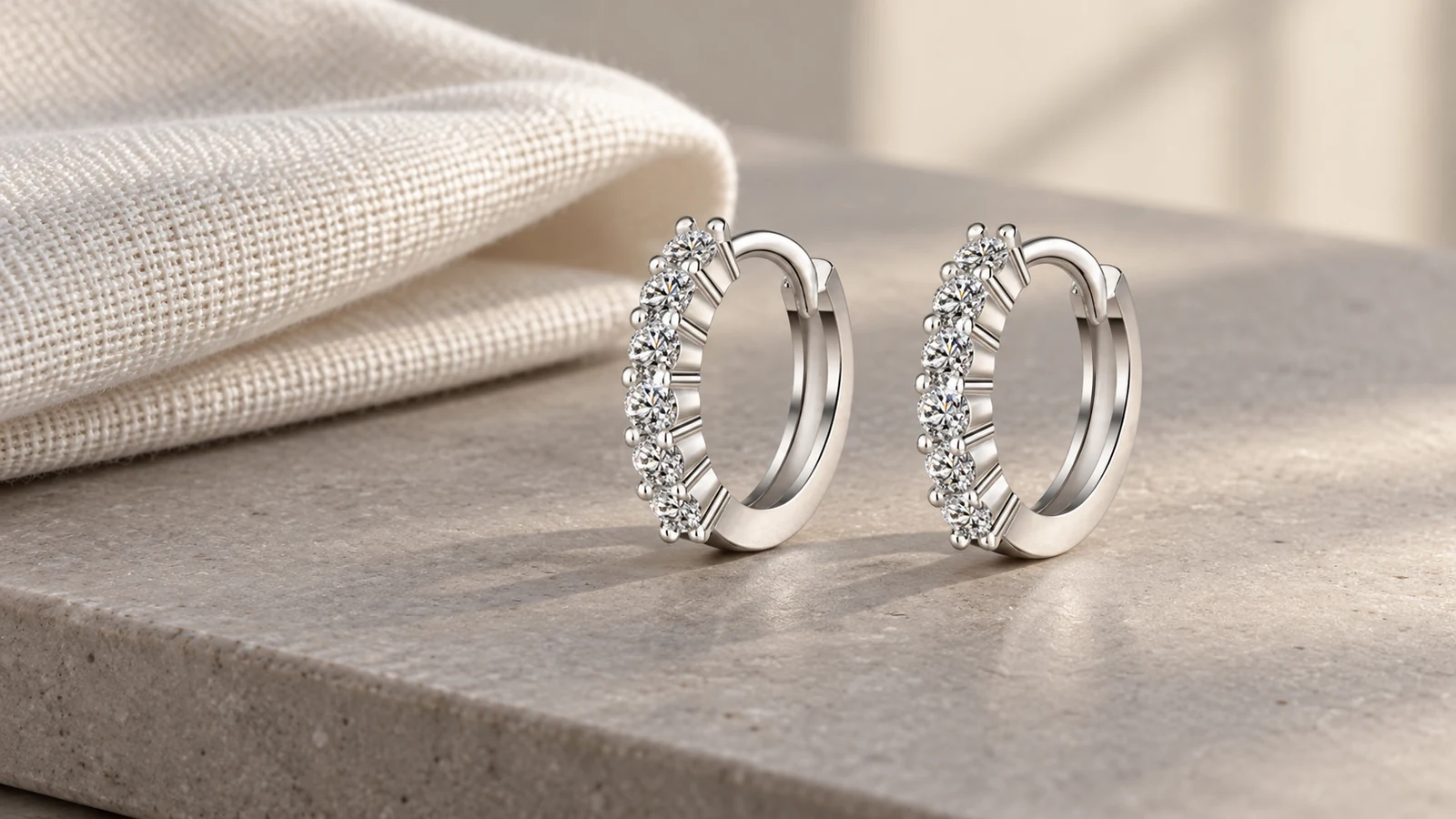
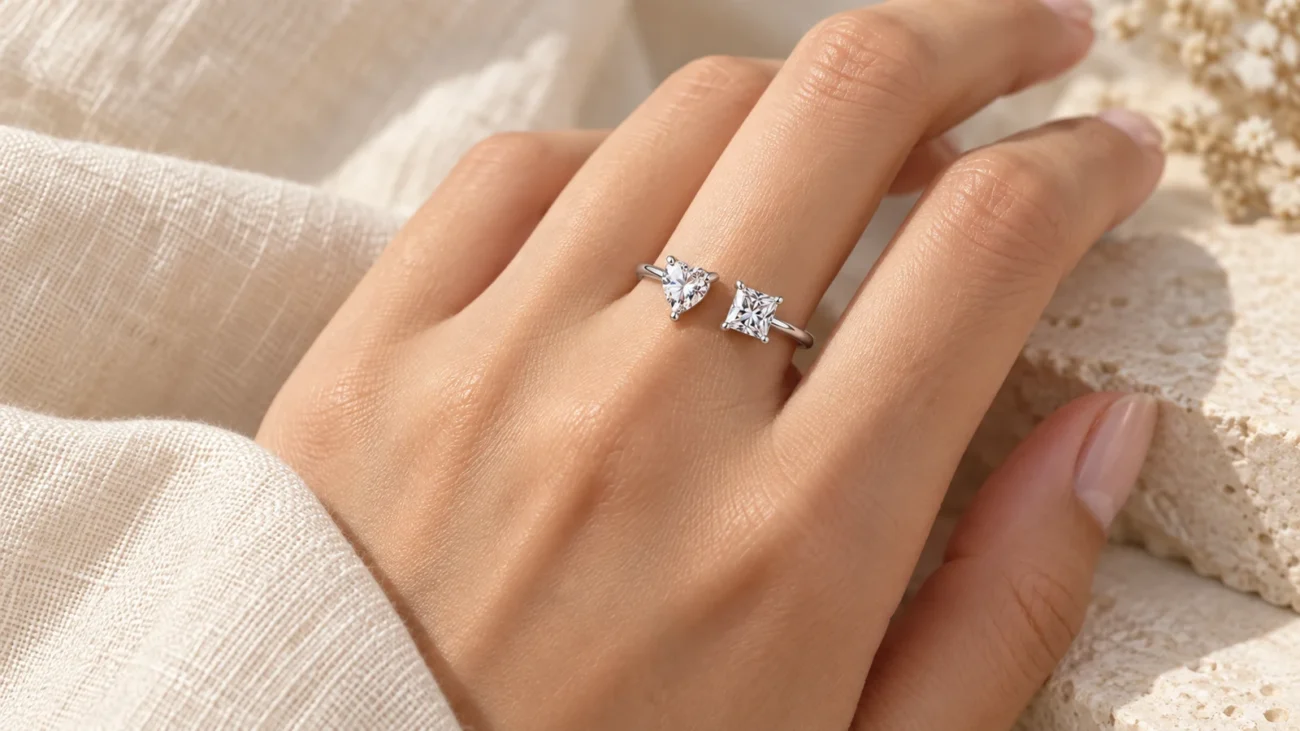
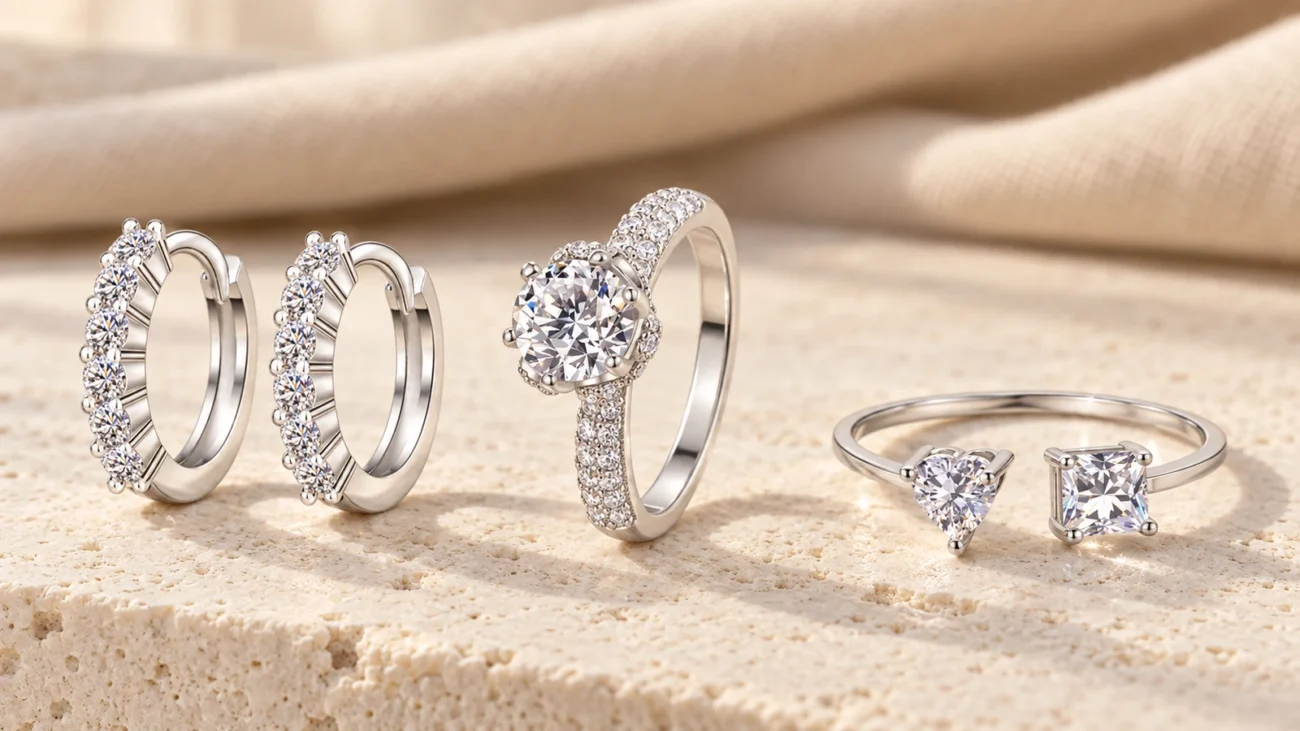
This generated lifestyle scene preserves the verified MS0878 compact hoop shape and graduated row of round stones.
What Does It Mean to Pair Earrings and a Necklace?
Jewelry pairing is the deliberate relationship between pieces worn in the same visual area. Earrings frame the face; a necklace establishes a point or line below it. They do not need identical motifs. They need a clear hierarchy, enough shared language to feel connected, and enough difference to remain readable.
Three variables create most of that relationship: shape, sparkle density, and scale. Metal color is a fourth practical check. When two pieces compete, the problem is usually not that they are “wrong” together. It is that both claim equal attention through several variables at once—for example, both are large, both have dense halos, and both use sharply directional outlines.
Pairing is not the same as buying a set
A set is marketed as a coordinated group. A pairing can combine two separately listed products. The Sunshine Jewelry sets versus single pieces guide explains the purchasing distinction. For styling, the key question is simpler: do the earrings support the necklace, does the necklace support the earrings, or are both intentionally equal?
Matching product names do not replace specification checks
Two items may use similar words such as “emerald-cut,” “halo,” or “trillion-cut” and still differ in center size, frame proportions, hardware, or current finish options. Confirm the SKU and the live listing for each piece. Do not use a lifestyle image to estimate millimeters, chain length, weight, or stone grade when the page does not provide those facts.
Rule 1: Give One Piece the Lead
Start by deciding where you want attention first. A pendant becomes the lead when it has a larger face-up outline, a halo, a strong color, or a distinctive silhouette. Earrings take the lead when they are long, highly framed, or visually wide beside the face. Once the focal point is chosen, the supporting piece should repeat only enough detail to look connected.
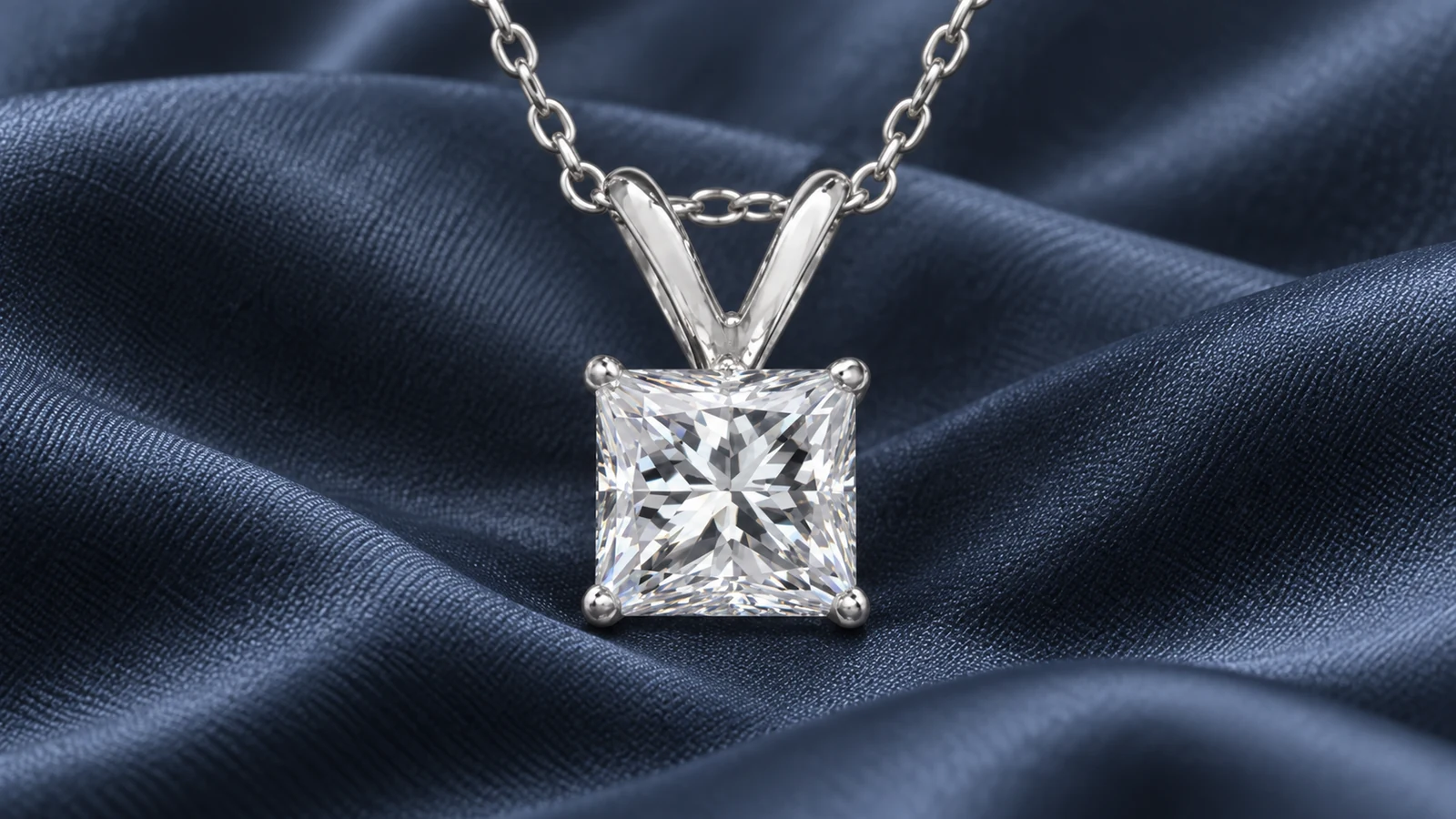
The 1 CT Princess-Cut Solitaire Moissanite Pendant – MS0863 is a useful example of a clean neckline focal point. Its page describes polished 925 sterling silver, a 1 CT princess-cut stone, and a crisp four-prong pendant. Because there is no halo around the center, the square outline is clear without adding another ring of sparkle.
With that pendant, the Round Pavé Huggie Hoop Moissanite Earrings – MS0878 can provide supporting light. The page describes polished 925 sterling silver, compact huggie hoops, and a graduated row of round stones. The hoops repeat the silver tone and sparkle while changing the geometry from square to round.
The verified MS0863 princess-cut center, four prongs, V-shaped bail, and silver color are retained in this generated scene.
How to identify the focal piece
Compare outline size: the piece occupying more visible area will usually lead.
Count frames: halos, borders, and repeated rows increase visual weight.
Notice direction: triangles, drops, and elongated rectangles draw the eye more strongly than small circles.
Check movement: a swinging pendant or drop earring may attract attention even if it is not physically larger.
If you cannot identify the lead piece when both are laid out together, simplify one of them. A hierarchy is usually easier to wear than two unrelated focal points.
Rule 2: Repeat Shape for Formal Coordination
Repeating a cut or frame is the clearest way to make separately listed pieces look intentional. The repetition does not need to be exact in scale. In fact, a smaller version near the face and a larger version at the neckline often creates a more natural hierarchy than two equally dominant pieces.
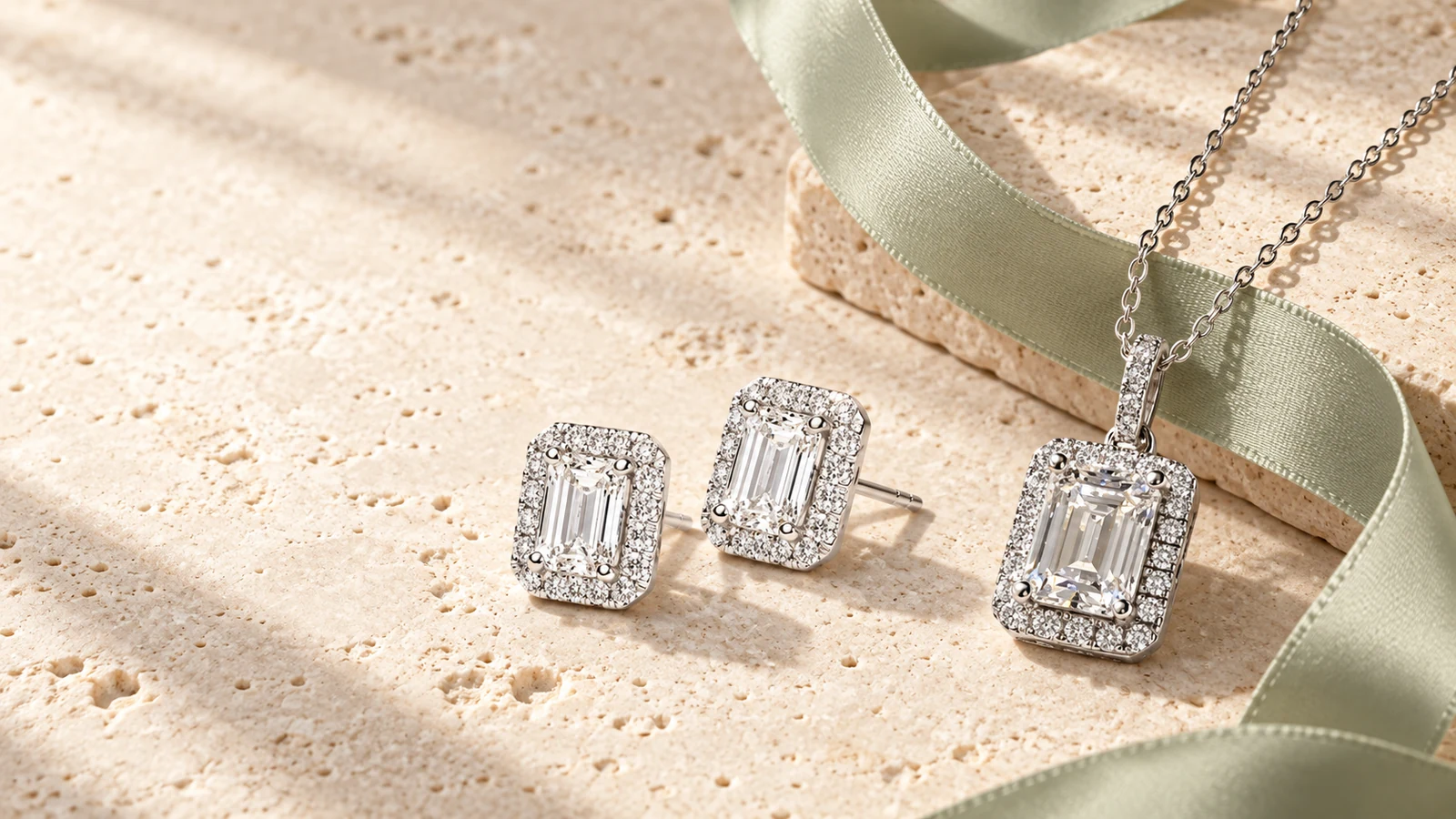
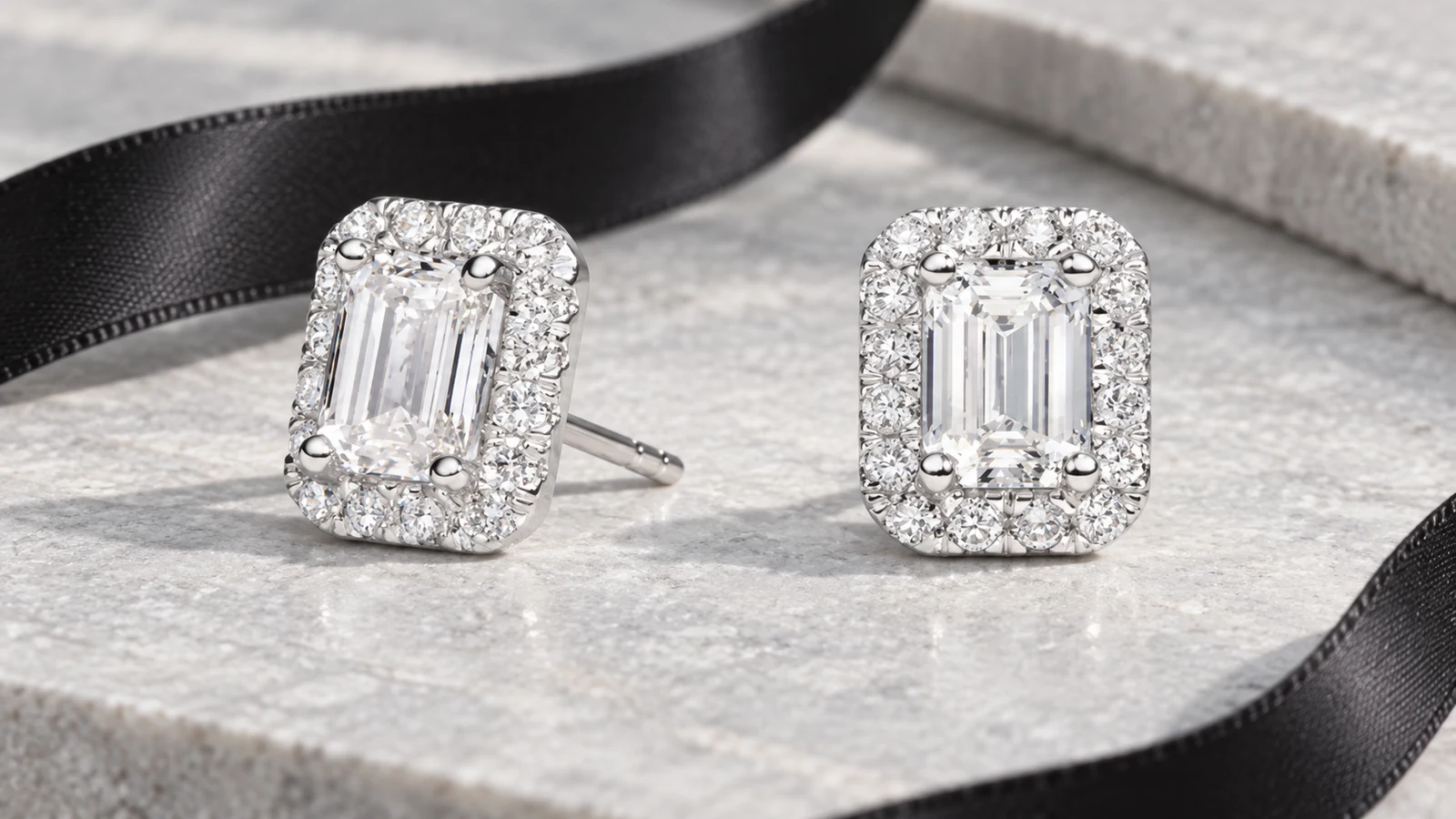
This is a high-coordination pairing because the center cut, rectangular frame, silver color, and halo language repeat. It is most suitable when a polished, dressy, or deliberately matched effect is the goal. It may feel too formal if the rest of the outfit is already detailed, so let fabric, neckline, and other jewelry remain quiet.
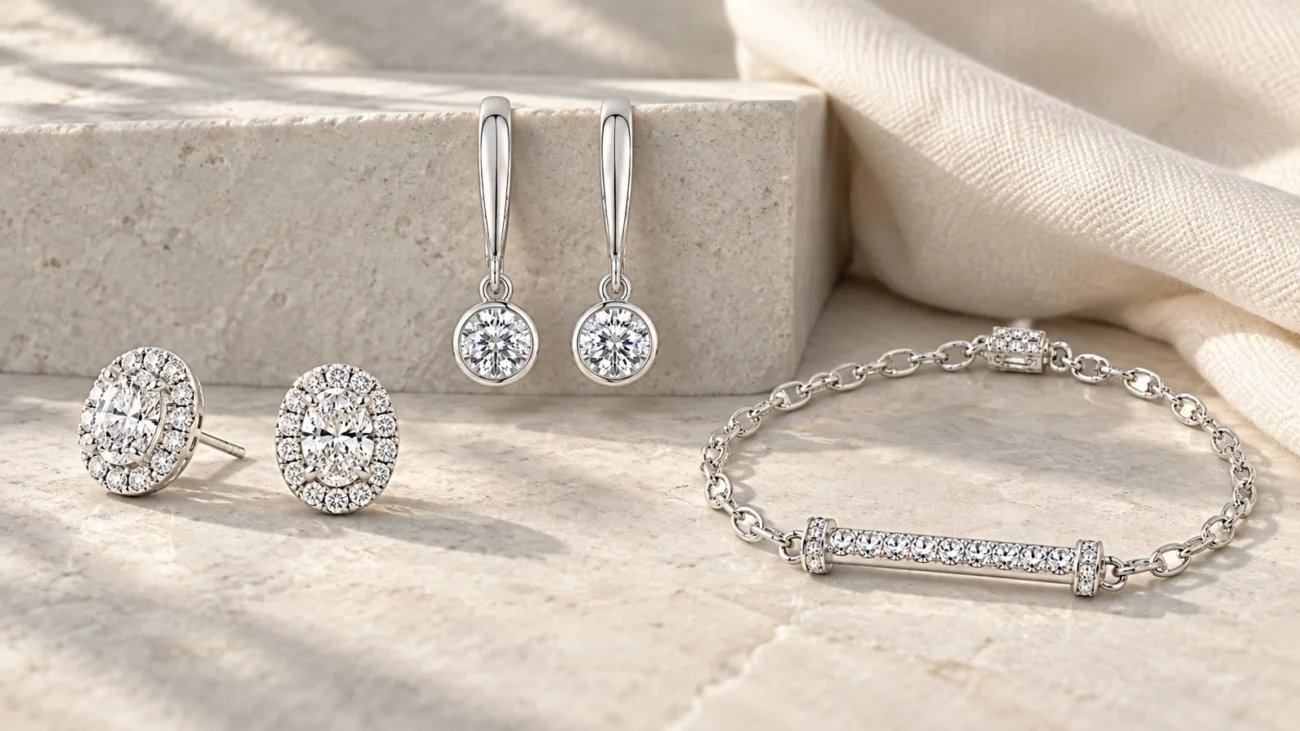
This generated image keeps the verified MS0870 rectangular centers, surrounding halos, four visible center prongs, and stud construction.
When matching shape works best
Use exact or near-exact shape repetition for ceremonies, evening dressing, professional events, or gifts where clear coordination is helpful. For everyday wear, soften the match by changing one variable: use the halo earrings with a plain rectangular pendant, or use the halo pendant with smooth hoops. That preserves the architectural line without creating a full matched-set effect.
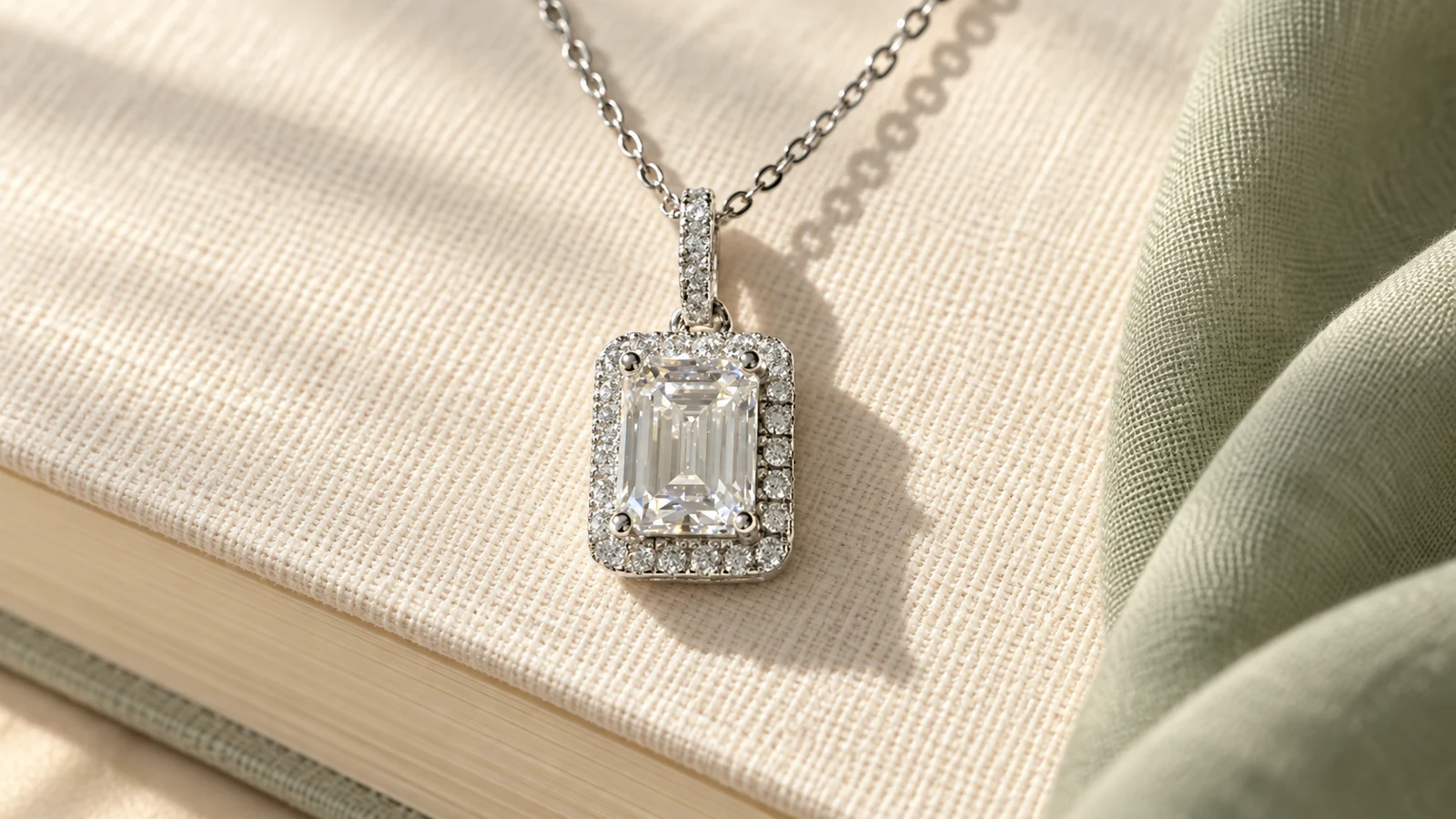
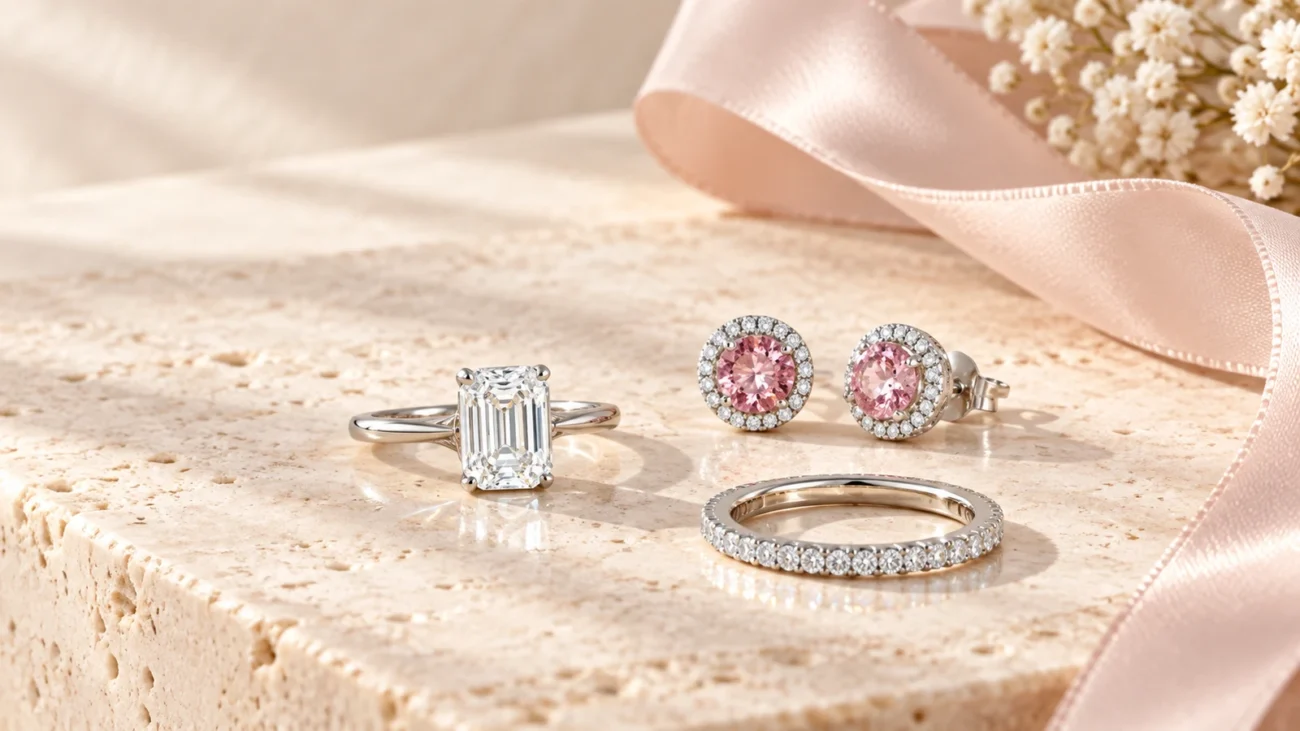
The generated MS0871 visualization preserves its verified emerald-cut center, rectangular halo, pavé bail, chain, and silver color.
Rule 3: Balance Sparkle Density, Not Just Stone Size
Sparkle density is the amount of bright detail concentrated in a small area. A halo, pavé bail, or row of closely set stones can read as visually dense even when the piece is compact. A larger solitaire may look calmer because it has one center and more open metal around it.
That distinction prevents a common pairing mistake: assuming a smaller piece is always quieter. MS0870 studs have rectangular halos surrounding their centers, so they may carry more visual texture than a plain solitaire of similar face-up size. MS0878 huggies distribute their round stones along a curved row, creating rhythm rather than one framed block. MS0863 concentrates attention in one square center without a surrounding halo.
For balanced Sunshine Jewelry earrings and necklaces, compare how many separate points of light you see before comparing carat labels. Carat wording on different product types does not by itself predict visible area or intensity. Setting, cut, frame, orientation, and viewing distance all affect appearance.
Rule 4: Use Directional Shapes Carefully
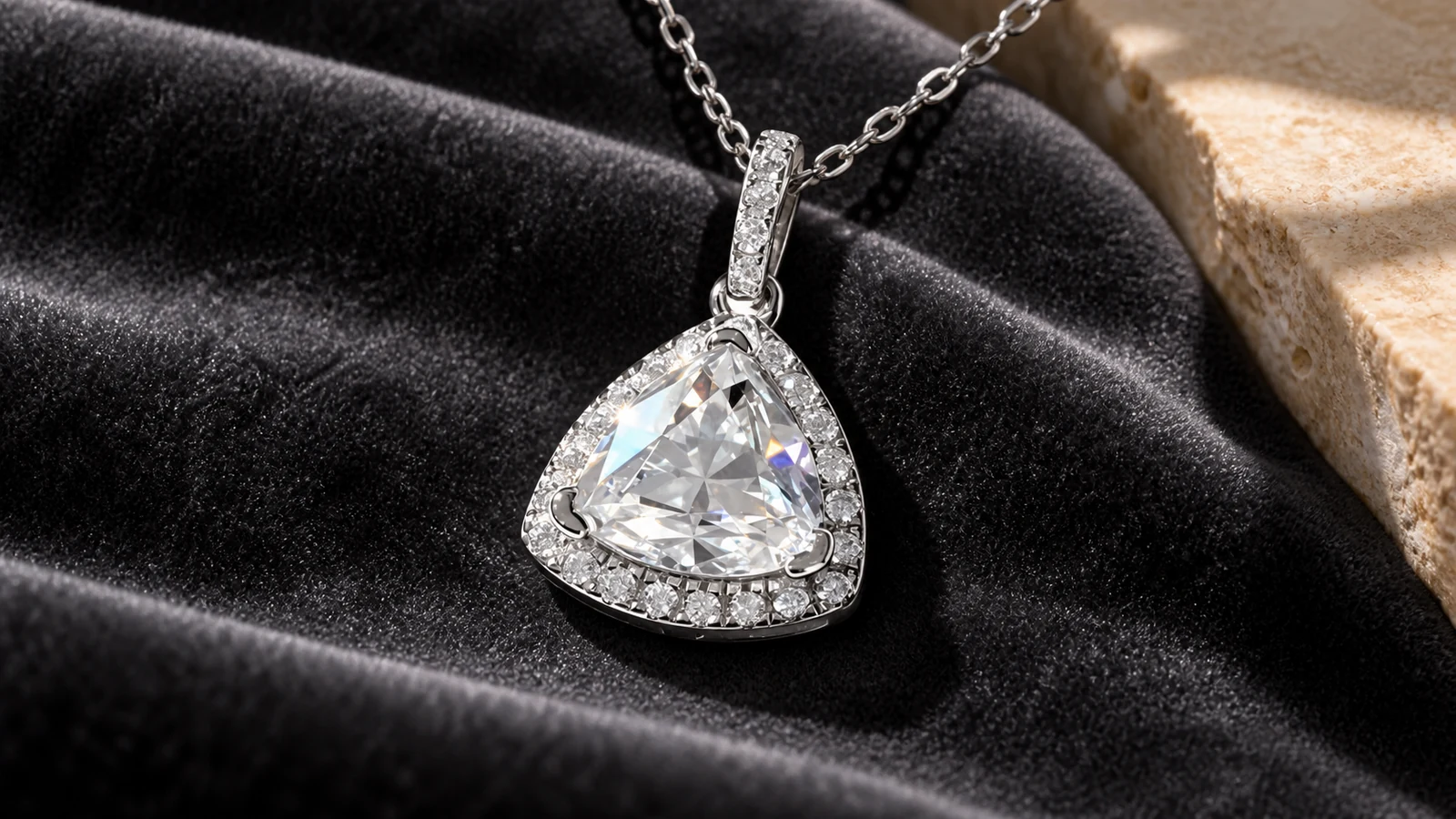
Triangular and elongated forms point the eye in a direction. They can create a striking pairing when repeated, but they also become dominant quickly. The 1 CT Trillion-Cut Halo Stud Moissanite Earrings – MS0874 page describes polished 925 sterling silver, trillion-cut centers, and triangular halos in stud settings. The 2 CT Trillion-Cut Halo Moissanite Pendant – MS0873 page describes a bold trillion-cut center, triangular halo, pavé bail, and polished 925 sterling silver.
Together, those items create strong repetition. The pendant should normally remain the larger visual anchor because its product title identifies a 2 CT center while the earrings title identifies 1 CT. However, product titles alone do not establish exact face-up millimeters, so confirm measurements with the store if physical scale is critical.
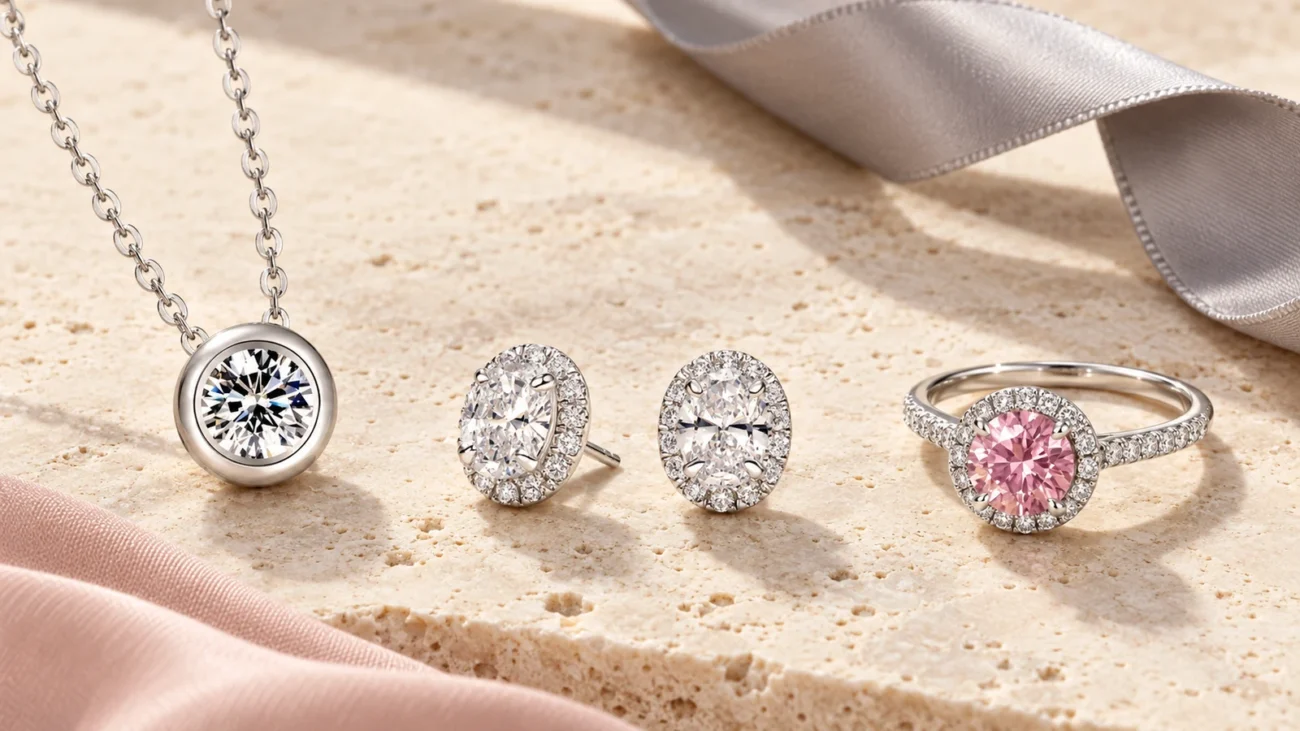
This generated lifestyle image retains the verified MS0873 triangular center, three-prong appearance, single triangular halo, pavé bail, and silver color.
How to soften a directional pairing
If matching trillion shapes feel too sharp or too formal, keep one triangle and replace the other with a curve. MS0873 can pair with the round-stone rhythm of MS0878, for example. The shared polished silver color and sparkle connect the pieces, while the compact hoops stop a second triangular outline from competing near the face.
A Five-Step Decision Process
Choose the focal zone. Decide whether you want attention at the face or neckline. Start with that item, not both at once.
Name the feature you will repeat. Pick one: metal color, center shape, halo shape, or sparkle level. One repeated cue is enough for coherence.
Change one major feature. Vary scale, frame, or geometry so the second piece reads as support rather than duplication.
Check the outfit boundary. A busy print, high embellished neckline, or detailed collar adds a third source of visual activity. Simplify the necklace first when clothing already occupies the neckline.
Verify both listings. Confirm SKU, material wording, stone description, finish, hardware, dimensions if stated, and current product images. Treat omitted details as unknown.
Choose one compact framed piece and one cleaner piece. MS0878 huggies with MS0863 create an easy division of labor: a narrow row of stones at the ears and one square center at the neckline. If the neckline is high or detailed, wear the hoops alone rather than forcing a necklace into limited visual space.
Dinner and evening
Repeated halos can be appropriate when the outfit is simple. MS0870 with MS0871 creates a clear rectangular story; MS0874 with MS0873 creates a more directional triangular story. Avoid adding another strongly framed ring or bracelet unless a deliberately maximal look is the goal.
Gifting
A matching shape is easy to understand as a gift, but separate listings should not be represented as a factory-matched set without confirmation. If the recipient already owns one piece, use its visible metal color and geometry as the starting point. When size or styling preferences are uncertain, compact earrings plus a clean pendant usually provide more flexibility than two high-impact halo pieces.
Facts and Boundaries to Keep Straight
All six examples here were verified from live Sunshine Jewelry pages. Those pages identify the products as moissanite jewelry in their titles or descriptions and describe polished 925 sterling silver. This article does not independently test the stones, grade clarity, confirm chain length, or measure the pieces. It also does not claim that similar product names guarantee identical production details.
Color in a photo can shift with lighting, screens, and reflections. Generated lifestyle scenes are particularly unsuitable for exact color or size comparison. Use them to understand styling roles only. The first-party listing remains the source for construction, material wording, and current availability. For a broader pre-purchase check, use the site’s online jewelry shopping checklist.
FAQ: Pairing Sunshine Jewelry Earrings and Necklaces
Do earrings and a necklace need to match exactly?
No. Exact matching creates a formal, set-like effect, but one repeated feature is usually enough. Shared silver color, a similar center shape, or a comparable sparkle level can connect pieces even when their outlines differ.
Should earrings or a necklace be the focal point?
Choose based on the outfit and where you want attention. A plain neckline can support a stronger pendant. An open neckline with pulled-back hair can support statement earrings. When both pieces are noticeable, make one smaller, simpler, or less densely framed.
Can I pair halo earrings with a halo necklace?
Yes. Repeated halos produce polished coordination, especially when the center shape and metal color also align. Keep the clothing simple and avoid adding several other dense pavé or halo pieces unless you want a maximal result.
Can I mix square, rectangular, round, and triangular shapes?
Yes, if one other variable connects them. MS0863’s square solitaire can work with MS0878’s round-stone hoops because both are presented in polished silver and only one piece uses a large central outline. Mixing becomes harder when both pieces are large and heavily framed.
How do I compare scale when dimensions are not listed?
Do not calculate scale from styled photos. Compare first-party front and side views, read any stated dimensions, and ask the store for measurements if fit or visual size will determine the purchase. Carat wording alone is not a universal face-up-size measurement across cuts and settings.
Are the emerald-cut or trillion-cut examples sold as sets?
This guide treats them as separately listed products that share design language. Check each product page and cart at the time of purchase. Similar names and styling do not prove set packaging, bundled pricing, or identical specifications.
The Bottom Line
The most reliable formula is simple: pick the focal point, repeat one visual cue, and reduce competition everywhere else. Use MS0878 with MS0863 for quiet contrast, MS0870 with MS0871 for polished rectangular coordination, or the trillion-cut MS0874 and MS0873 designs for a stronger directional look. Then verify each live listing independently. That produces an earring-and-necklace pairing that feels intentional without pretending separate products are automatically a matched set.