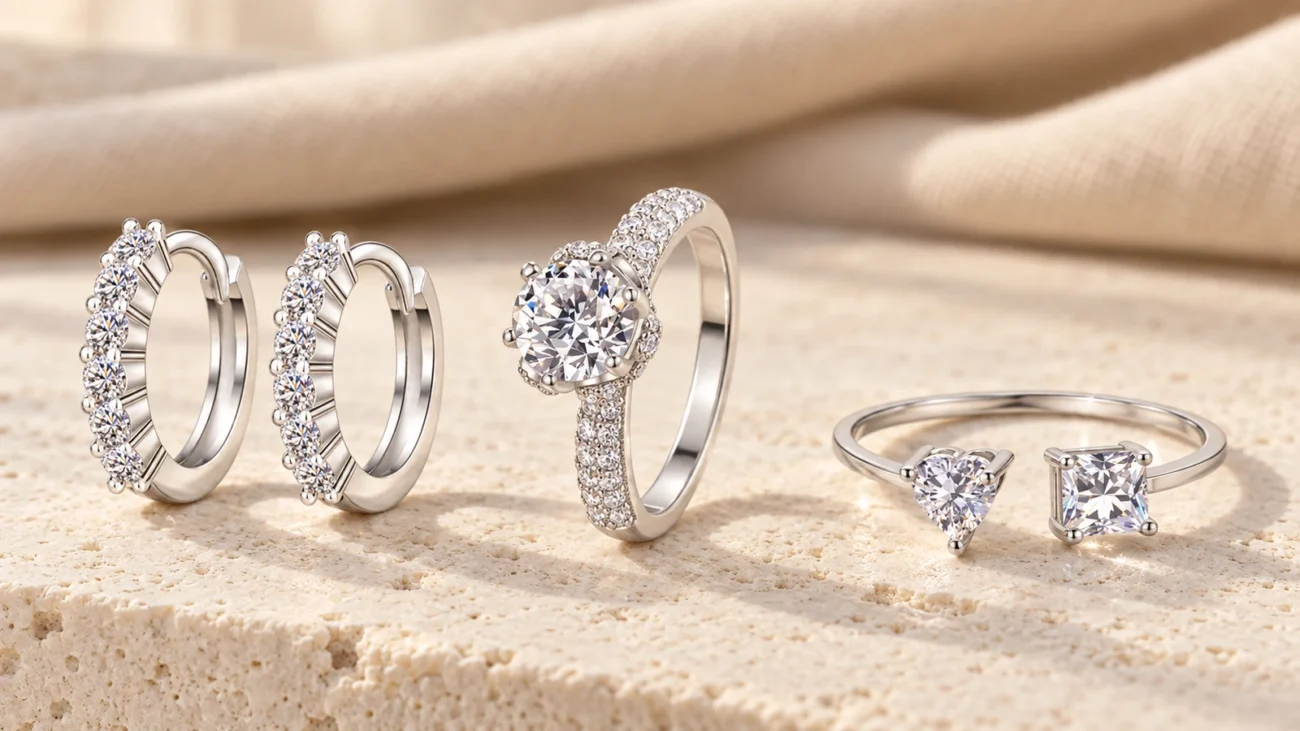
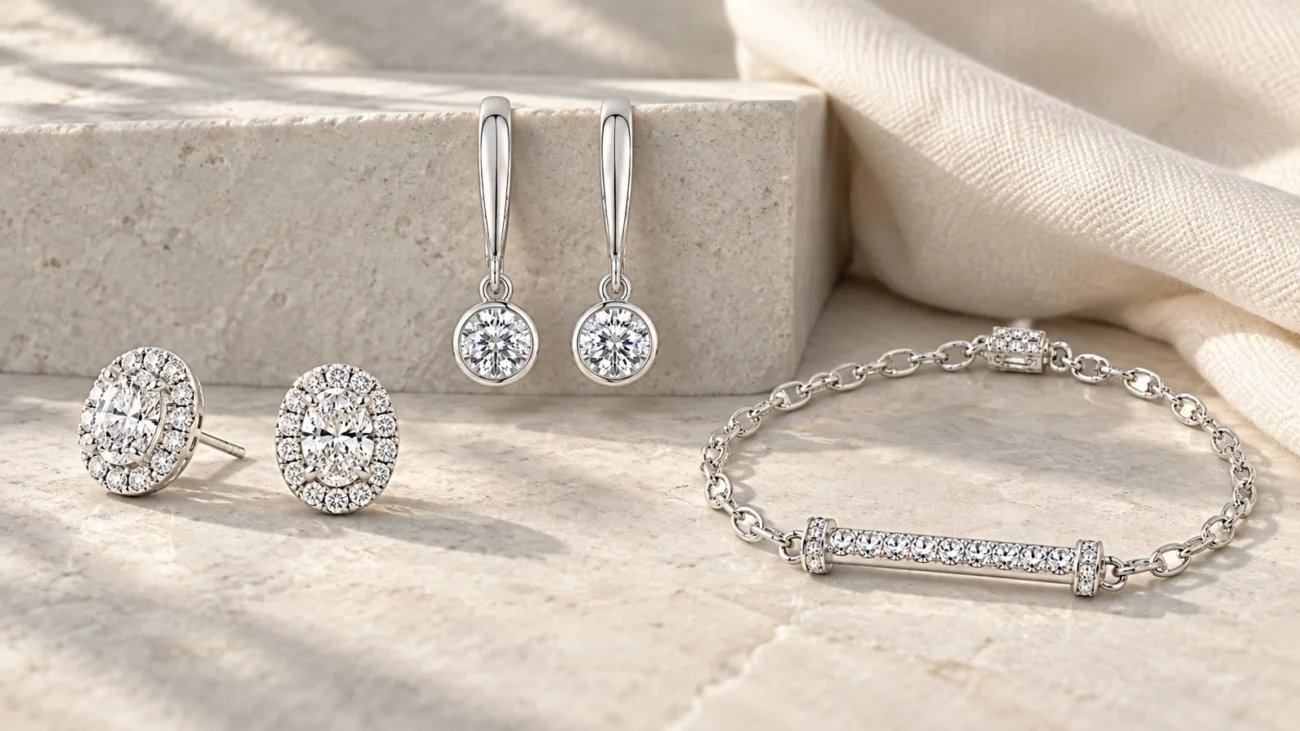
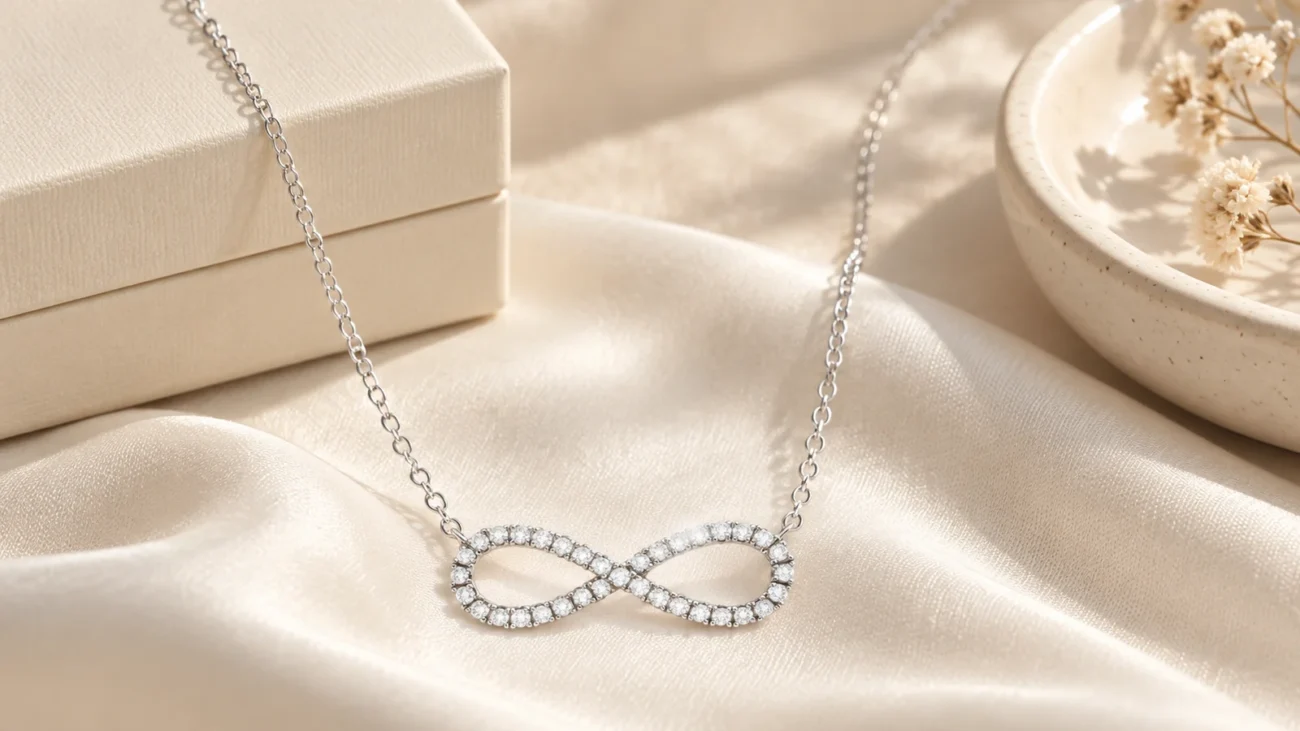
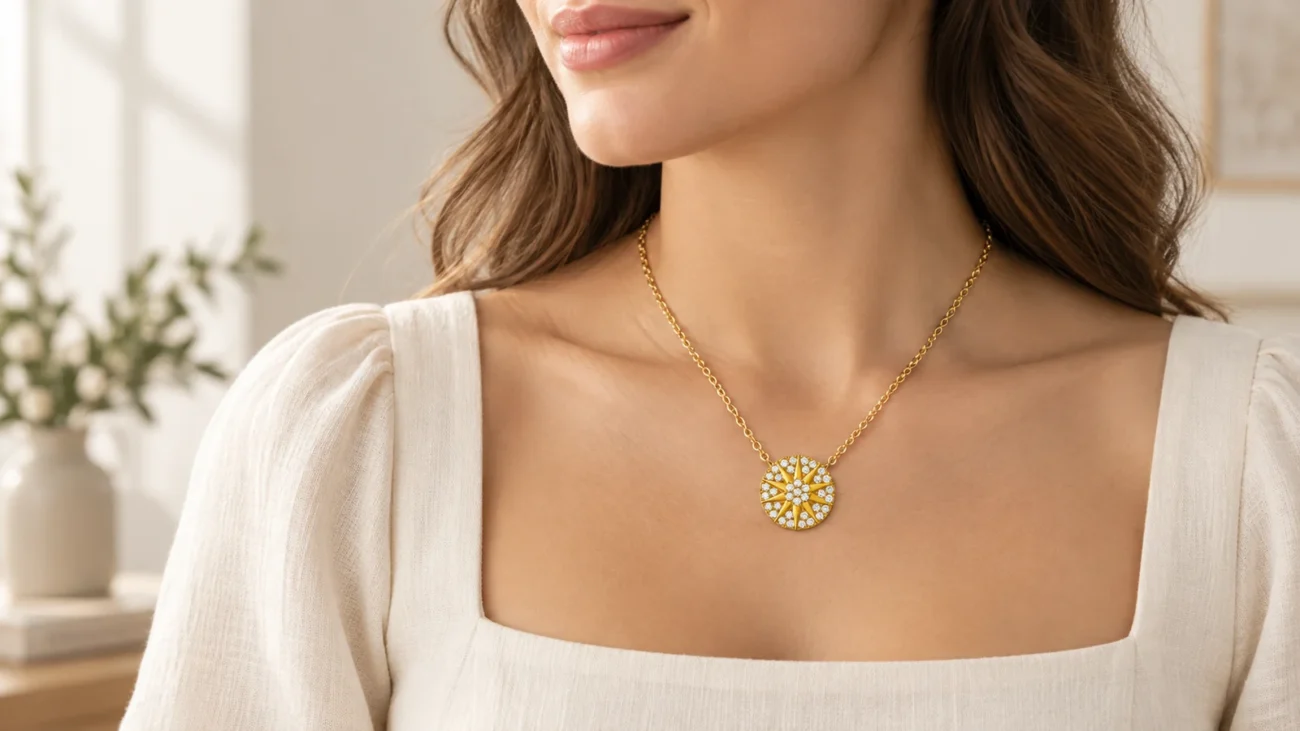
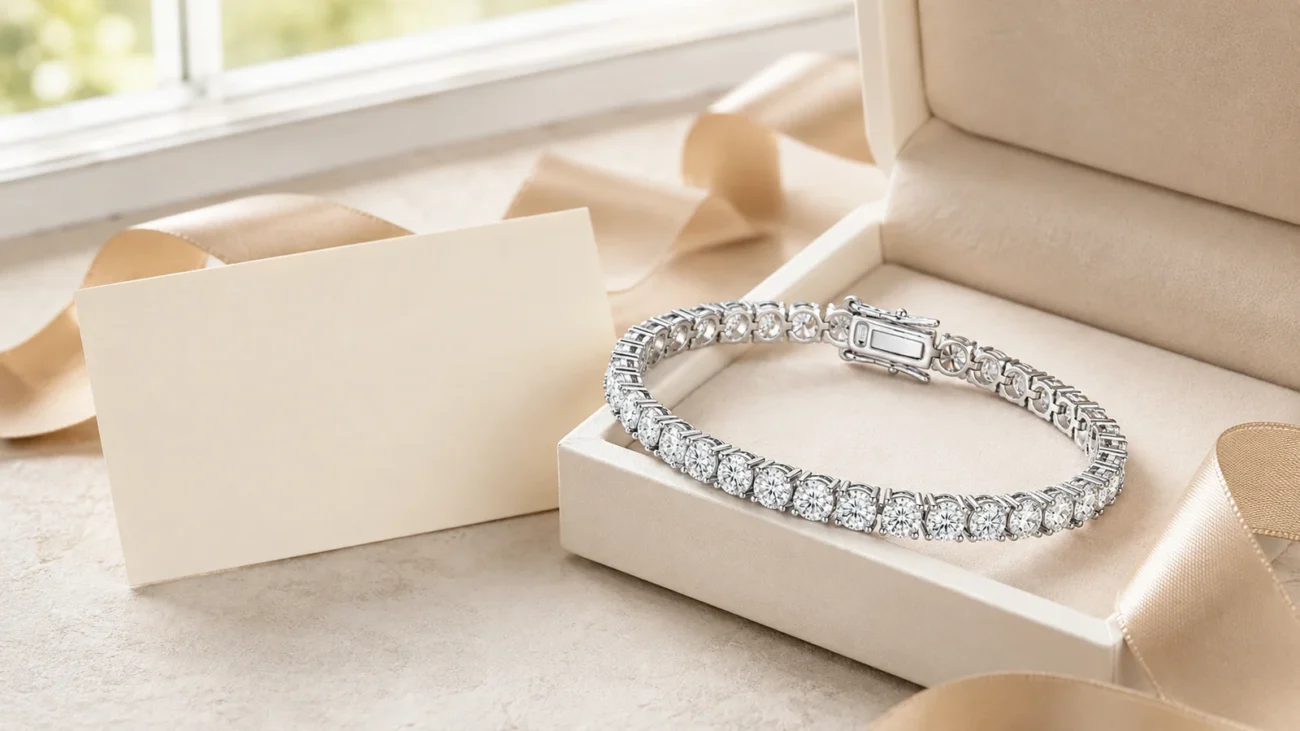
The right amount of sparkle depends on where you want the eye to land, how much bright detail your outfit already has, and whether the jewelry should whisper, frame, repeat, or lead. For a calm focal point, choose one clear center stone. For more definition, use a halo. For light that continues around a piece, choose pave or an eternity layout. Two-stone open designs create contrast and movement, while a raised center with a halo and pave shank produces the strongest overall impact.
This Sunshine Jewelry sparkle guide compares five visual layouts using products that were live and verified when the article was prepared. “Sparkle density” is a styling description, not a laboratory grade or a promise about brightness. Stone cut, setting, lighting, movement, scale, and viewing distance all affect what a person actually sees. Product pages remain the source for current materials, construction, availability, and stated specifications.
Sunshine Jewelry Sparkle Guide: Quick Answer
Sparkle layout
What the eye notices
Best for
Verified example
Focused
One defined center with open metal around it
Clean, calm, architectural styling
MS1021 emerald-cut solitaire ring
Framed
A center stone surrounded by a bright border
Color emphasis and polished definition
MS1018 halo studs or MS1019 halo pendant
Continuous
A repeated line of small stones
Rhythm, stacking, and all-around detail
MS1027 pave eternity band
Two-point
Two separate centers divided by open space
Contrast, symbolism, and directional movement
MS0884 heart-and-princess bypass ring
Full-impact
A raised center, halo, and stone-set shoulders
A single statement focal point
MS0883 Snow Queen halo ring
A reliable default is to select one primary sparkle layout and let nearby pieces support it. If your ring has a center, halo, and pave shoulders, quieter earrings or a simple chain will preserve hierarchy. If your main piece is a clean solitaire, you have more room to add a framed earring or a slim eternity band.
What Is Sparkle Density in Jewelry?
Sparkle density describes how many bright details are concentrated within the visible outline of a piece. It is not the same as carat wording. A small halo earring can look visually busy because a center and many border stones occupy a compact area. A larger solitaire can look calmer because one stone is separated from a plain band or chain.
Five elements shape perceived density:
Number of visible stones: one center reads differently from a row or border.
Spacing: open metal creates pauses; closely set stones create continuity.
Framing: a halo expands and defines a center without changing its basic shape.
Direction: long rows, split shoulders, and open bypass lines move the eye.
Scale and distance: a compact design may merge into one bright impression from farther away.
This framework is deliberately different from a technical moissanite ring settings guide. A setting guide explains construction types. Sparkle density asks a styling and selection question: how much visible activity does the entire piece create, and how will that activity relate to clothing and other jewelry?
Focused Sparkle: One Center, One Clear Destination
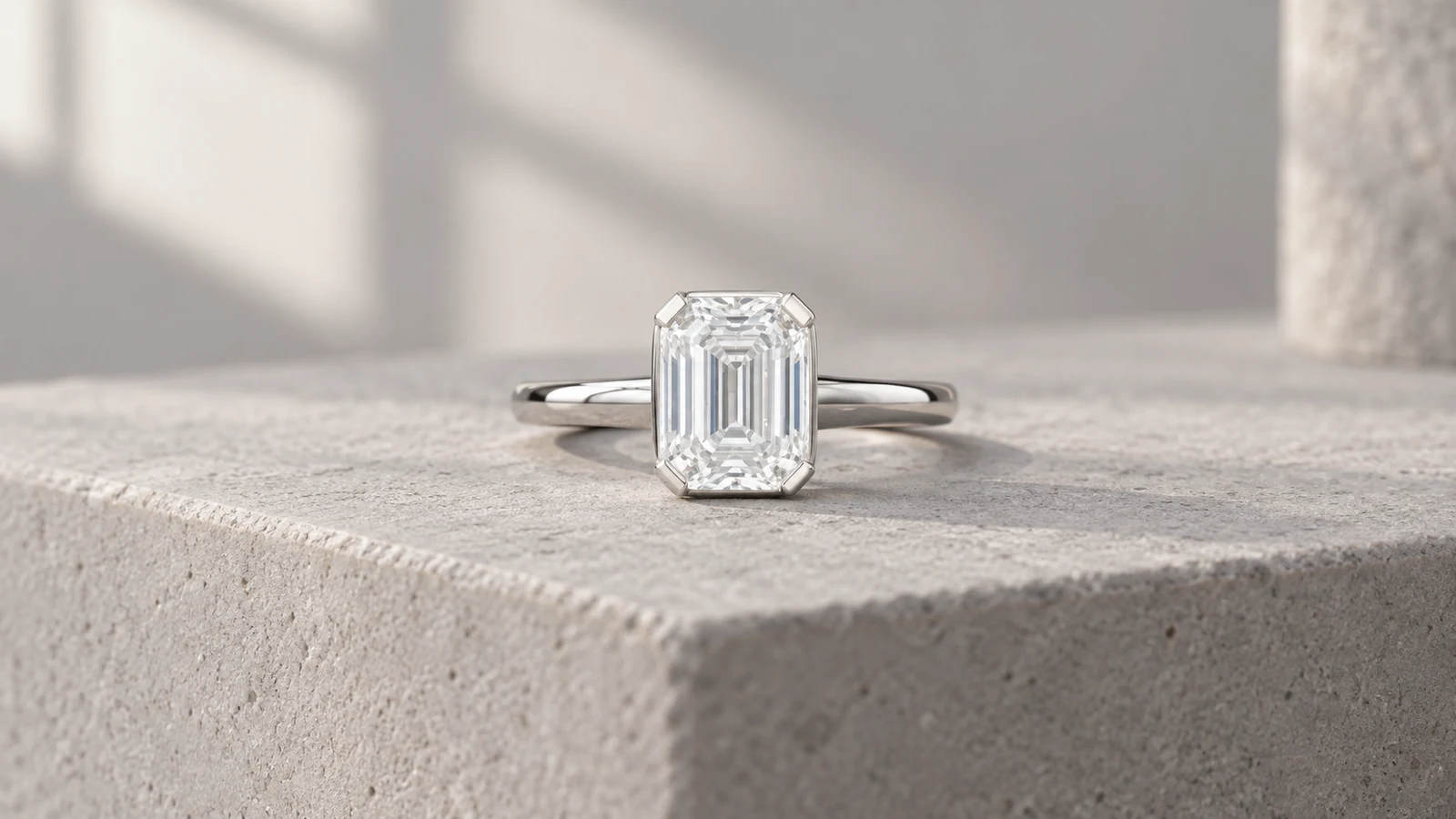
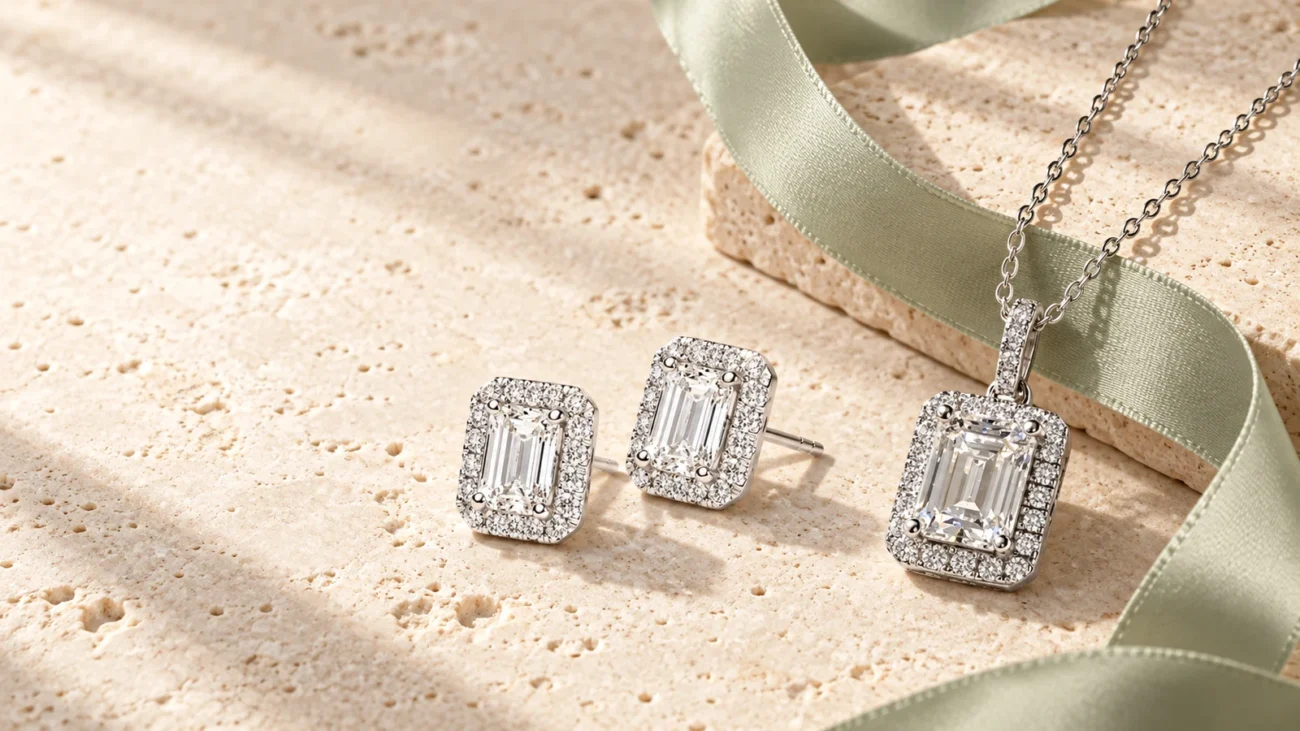
Focused sparkle gives the eye one obvious destination. The Emerald-Cut Moissanite Solitaire Ring – MS1021 is a useful example. Its live page describes polished 925 sterling silver, an emerald-cut white moissanite solitaire, and a clean four-prong silver setting. The plain band and single rectangular center keep the visual message direct.
This generated lifestyle visualization preserves the verified MS1021 emerald-cut center, four-prong silver setting, slim band, and proportions.
Choose focused sparkle when you want the stone shape to be easy to read, when your clothing has pattern or texture, or when you expect to add other jewelry. The rectangular emerald cut has strong geometry, but the absence of a halo or pave shoulders leaves visual breathing room. That combination can feel polished without appearing crowded.
When a solitaire may be the better choice
A solitaire is often easier to coordinate because it repeats fewer details. It can sit beside a slim stone-set band, a halo pendant, or colored earrings without creating several competing borders. It is also a practical choice when you want to judge the center outline directly. However, a lifestyle photo cannot establish exact dimensions, weight, or finger coverage; use the live listing and ask for measurements when those facts matter.
Framed Sparkle: Use a Halo to Define Color and Shape
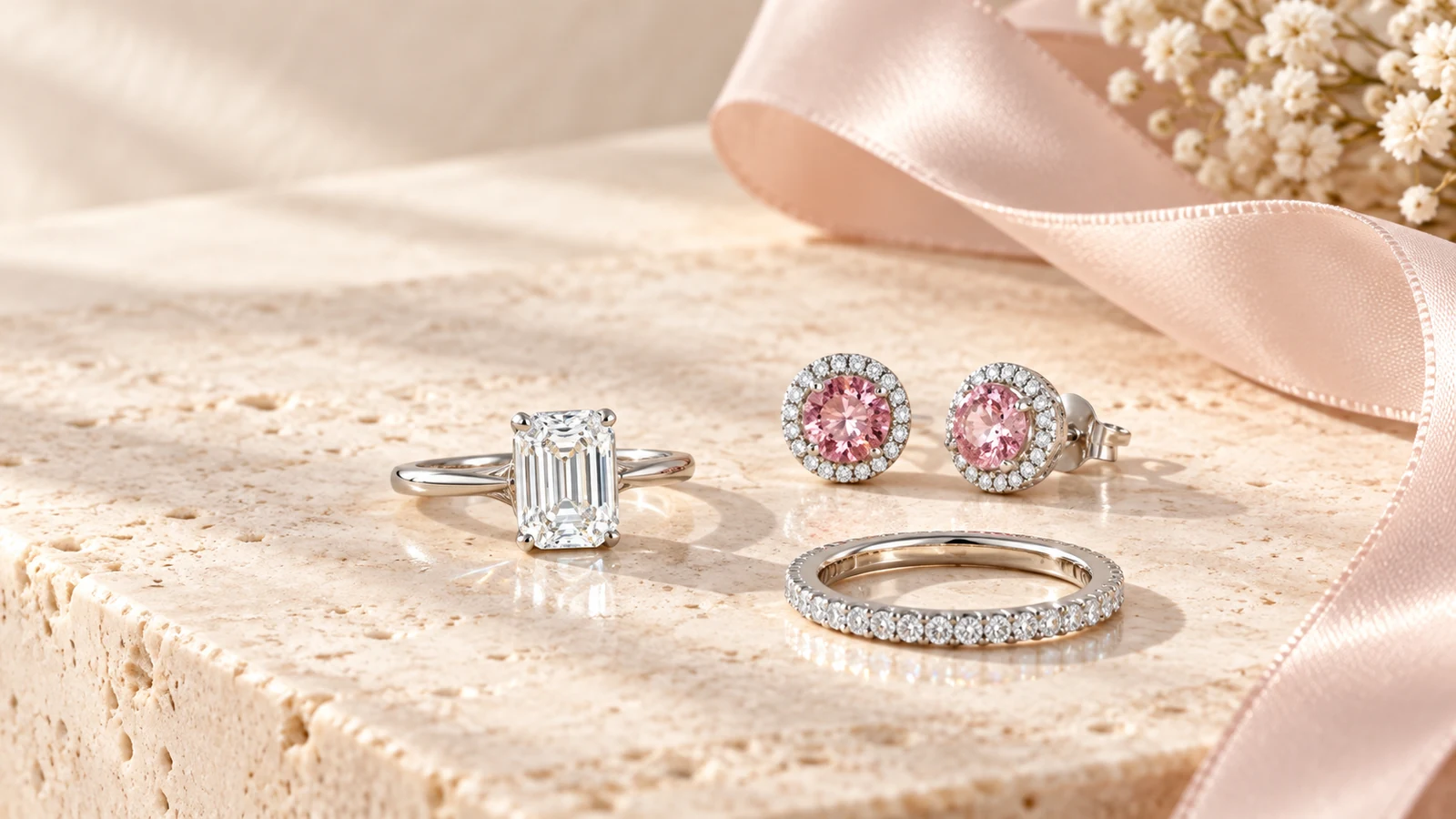
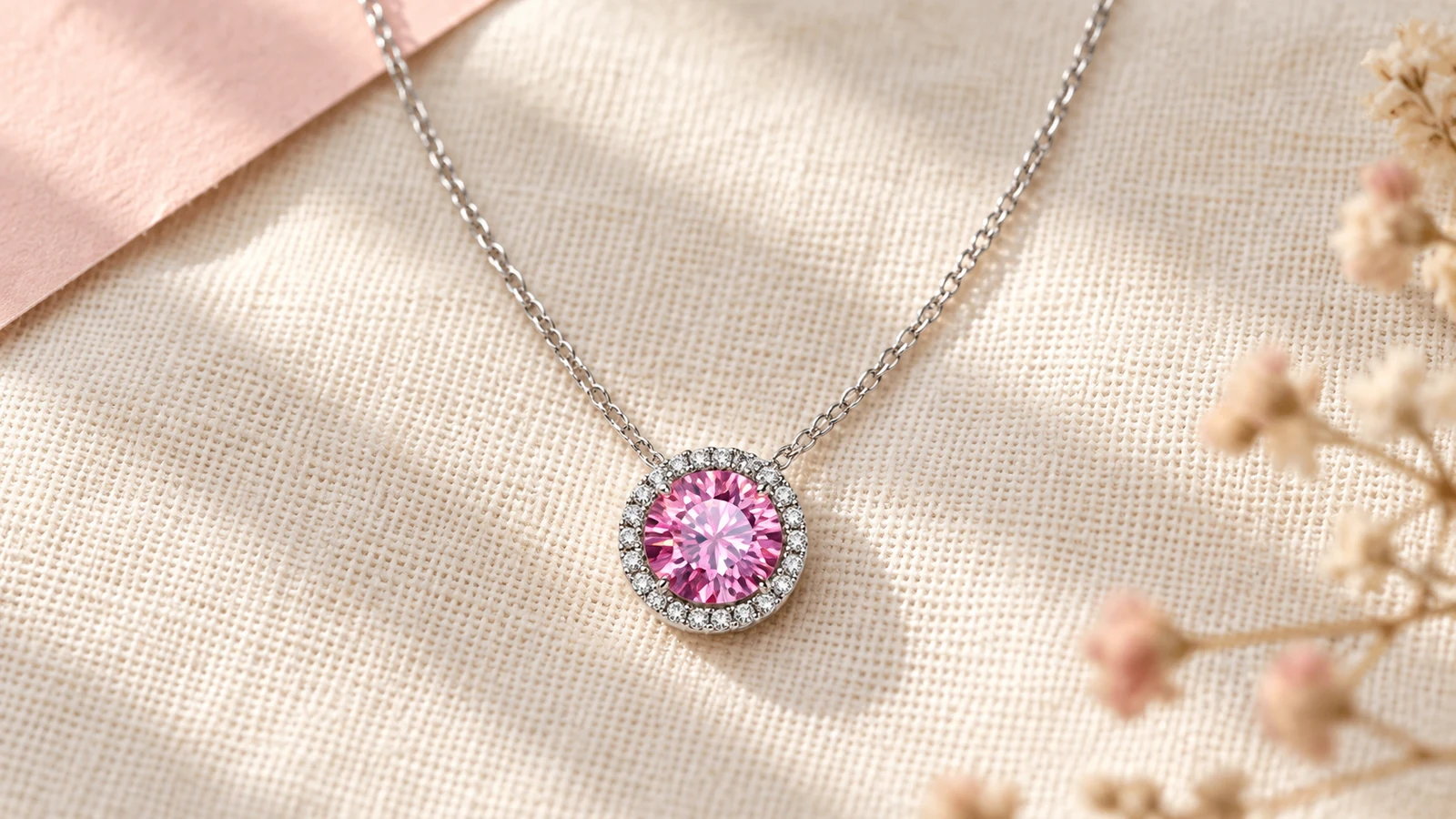
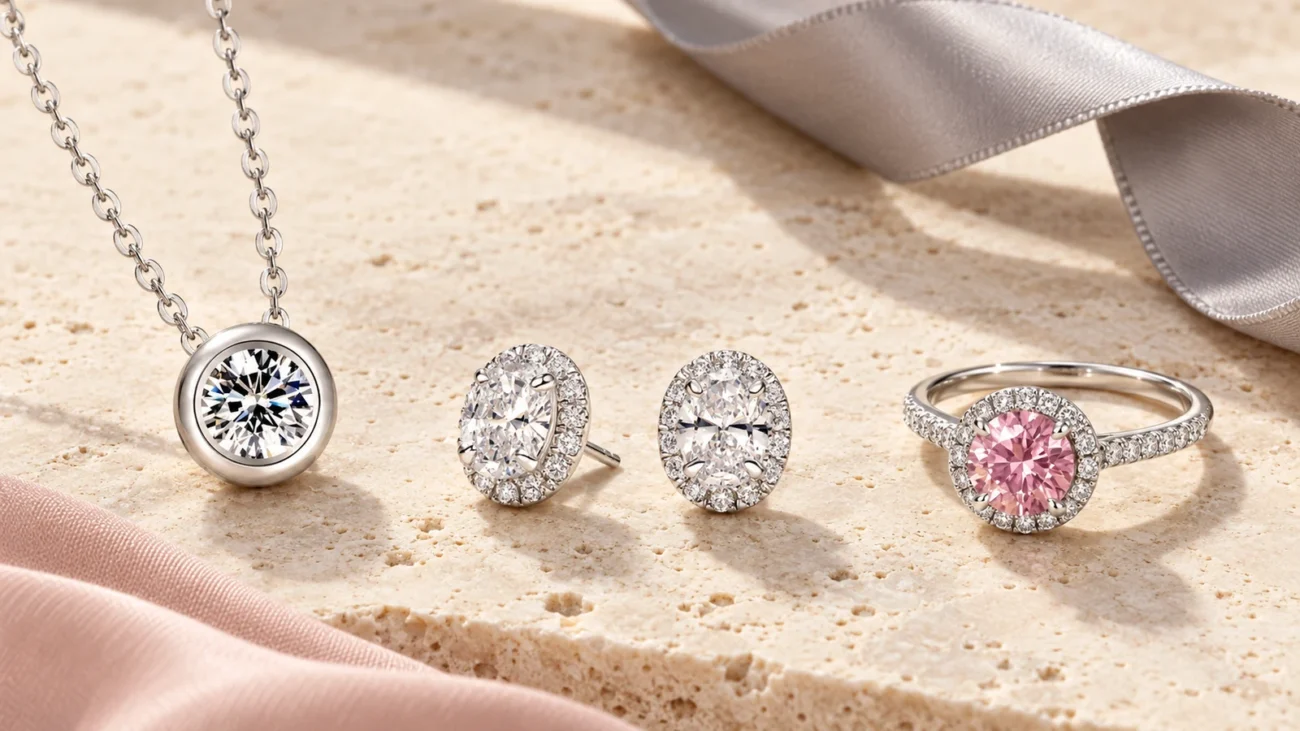
The MS1018 page describes polished 925 sterling silver earrings with round pink moissanite centers surrounded by bright pave halos. The MS1019 page describes a polished 925 sterling silver necklace with a round pink moissanite center encircled by a bright halo pendant. Both use a pink center, circular frame, and silver setting, but they occupy different focal zones.
The generated MS1019 scene keeps the verified round pink center, single circular halo, silver setting, connector, chain, and visible proportions.
Use framed sparkle when you want a center color or outline to read clearly. If you wear the matching visual language at both the ears and neckline, keep the clothing simple and decide which area should lead. The pendant can lead with the studs as support, or the earrings can lead when the neckline is high. For detailed two-piece coordination, see the earring and necklace pairing guide.
Continuous Sparkle: A Repeated Line Instead of One Center
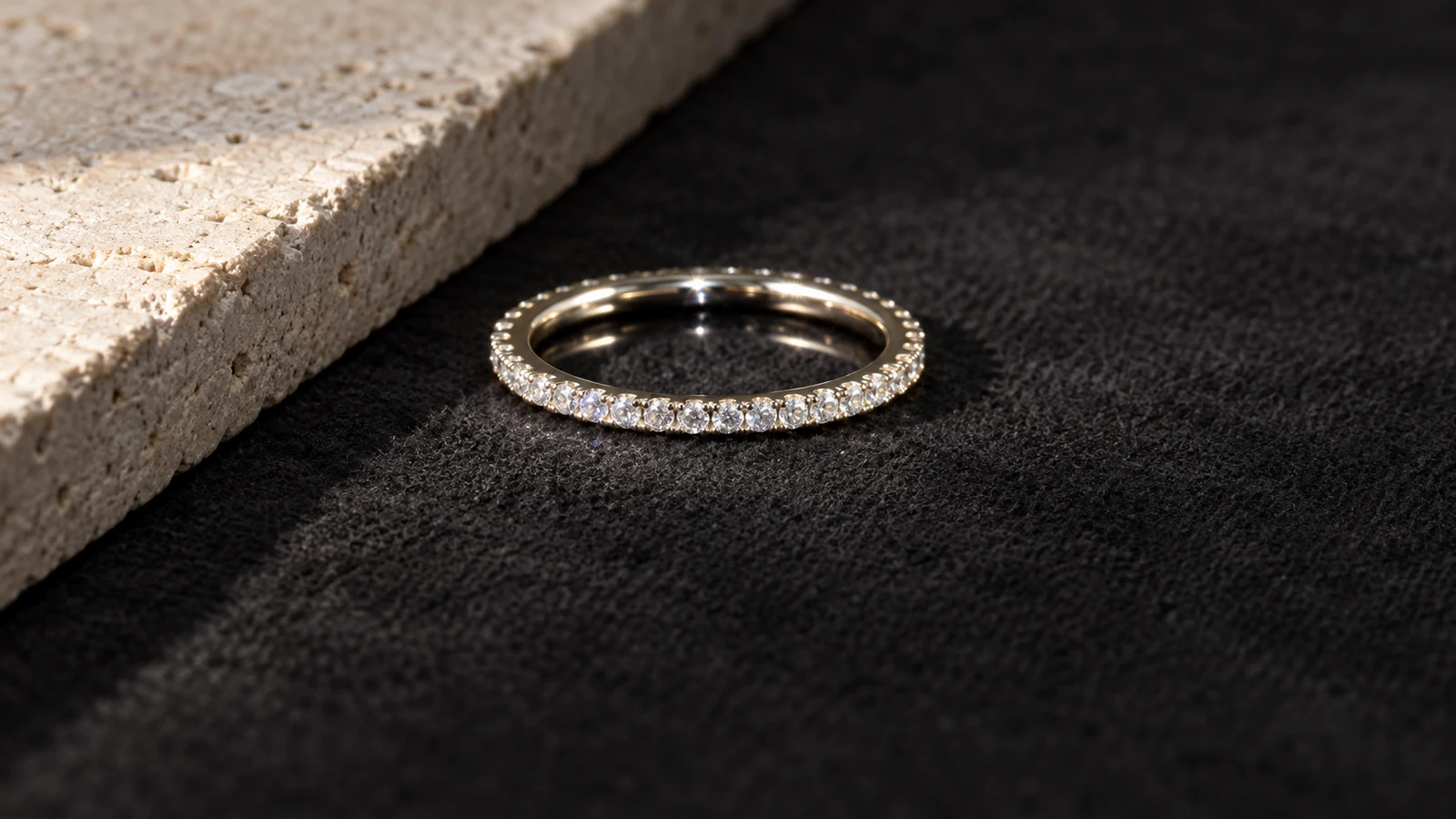
Continuous sparkle shifts attention from a central stone to rhythm. The White Moissanite Pave Eternity Band – MS1027 is described as a polished 925 sterling silver ring with a full circle of petite white moissanite stones in a slim pave profile. The page lists sizes 5 through 9 and advises including the preferred size with the order.
This generated visualization preserves the verified MS1027 slim circular profile and one continuous row of petite stones.
A continuous row can appear quiet from a distance because no single large center dominates, yet it can look detailed up close. That makes an eternity band useful as a supporting piece or as a low-profile focal point. When stacking, check the side profile, ring width, and contact between settings. Do not assume two rings will sit flush solely because both look slim in front-facing images.
Continuous sparkle is not automatically subtle
Repetition can become visually strong when several rows sit together. One slim eternity band may read as a line of light; three stone-set bands can create a broad field of sparkle. Build the stack one layer at a time. The existing statement versus stackable ring guide explains how flexibility, fit, and visual weight change that decision.
Two-Point Sparkle: Contrast with Open Space
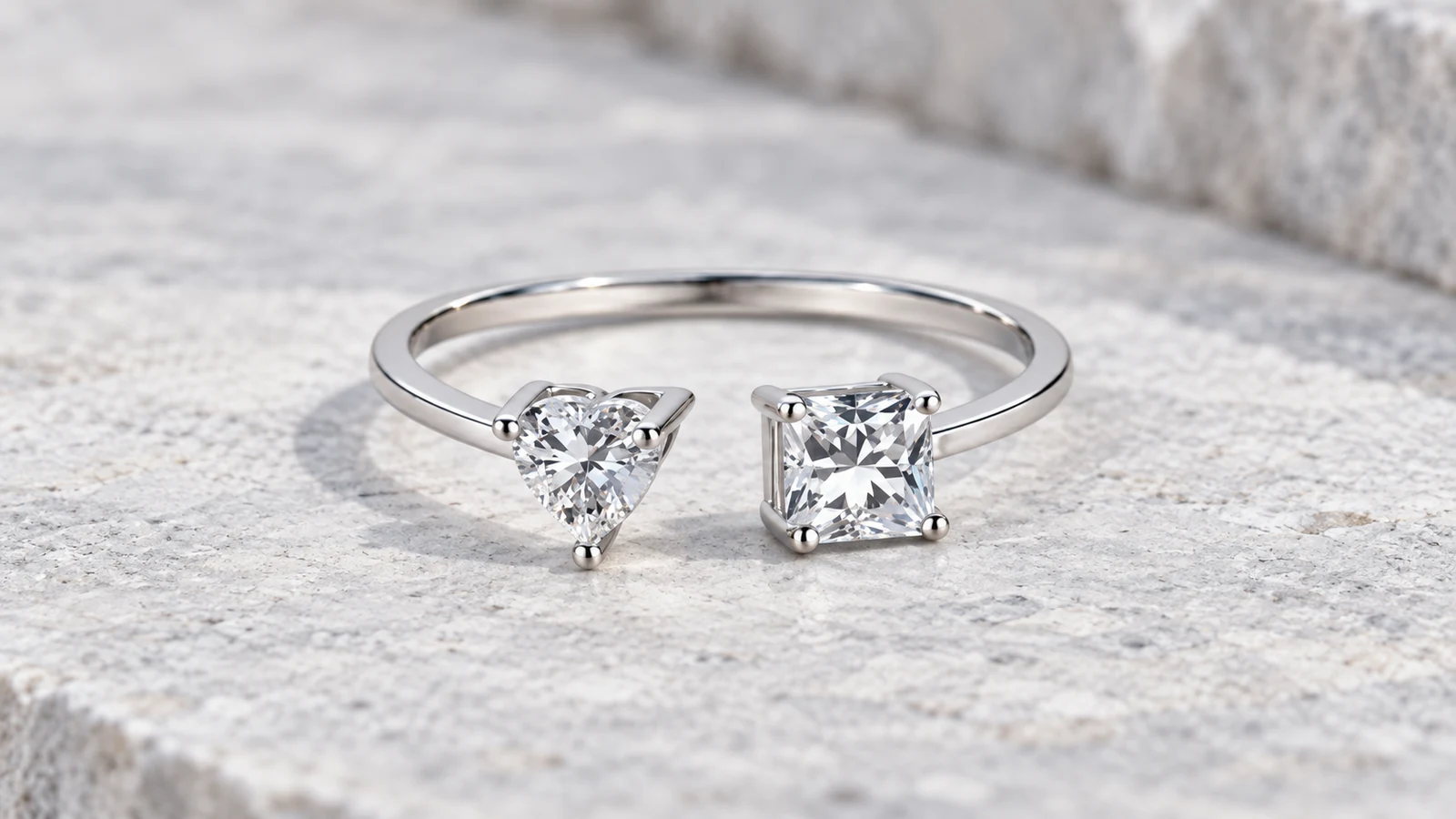
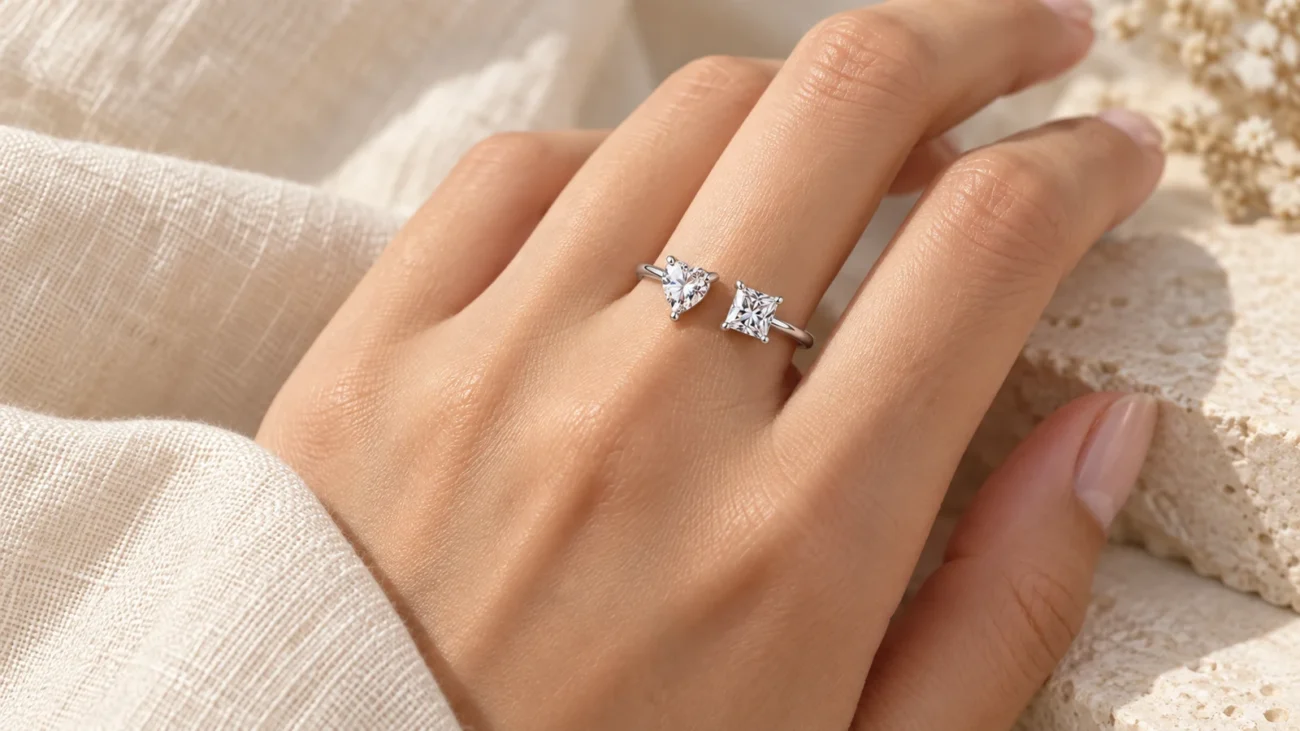
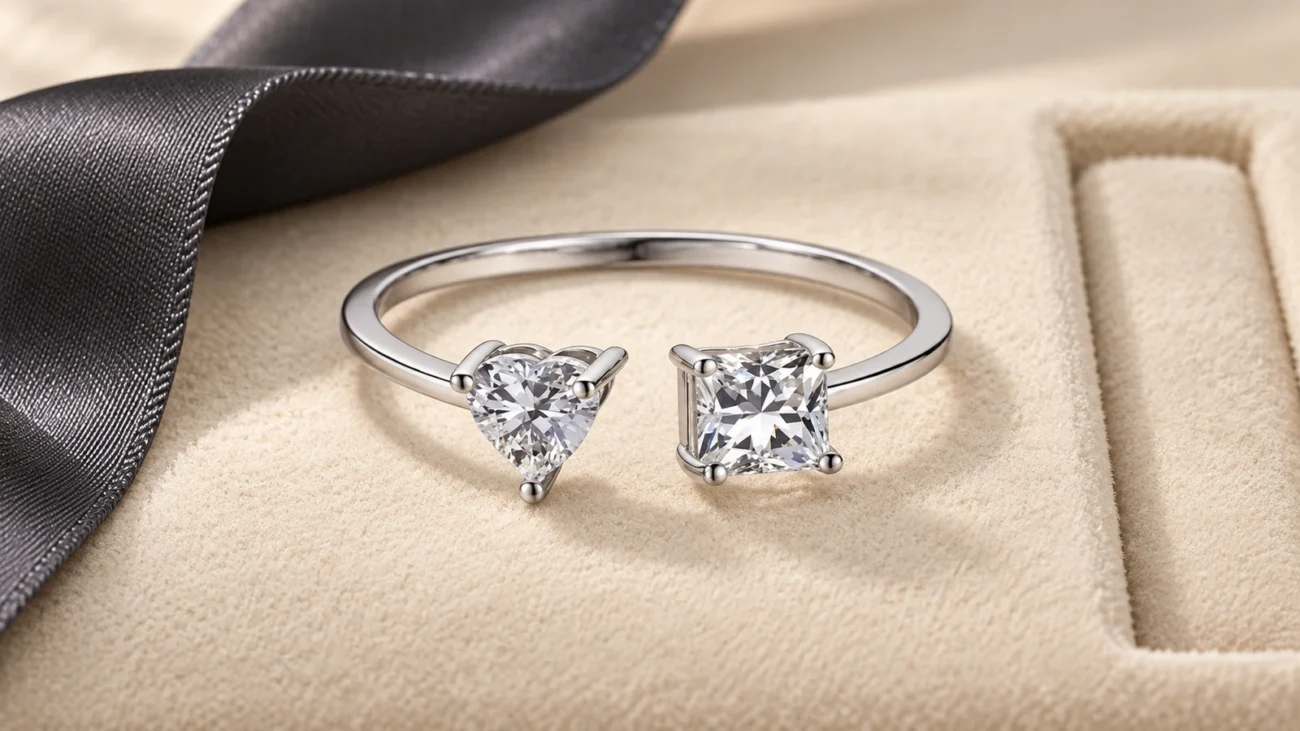
Two-point sparkle creates a conversation between separate centers. The 0.7 CT Heart and Princess Bypass Moissanite Ring – MS0884 uses an open bypass design pairing a heart-cut stone with a princess-cut stone. Its page describes polished 925 sterling silver and lists ring sizes 5 through 9.
The generated MS0884 image retains the verified heart-cut left stone, princess-cut right stone, open gap, prongs, polished silver band, and relative scale.
The open gap is part of the design, not unused space. It separates a curved heart from an angular square, letting each shape remain legible. Choose this layout when you like contrast, symbolism, or movement more than symmetry. Because two centers already compete constructively, nearby pieces usually work best when they repeat the silver color without adding another complex two-stone arrangement.
Full-Impact Sparkle: Center, Halo, and Pave Shoulders
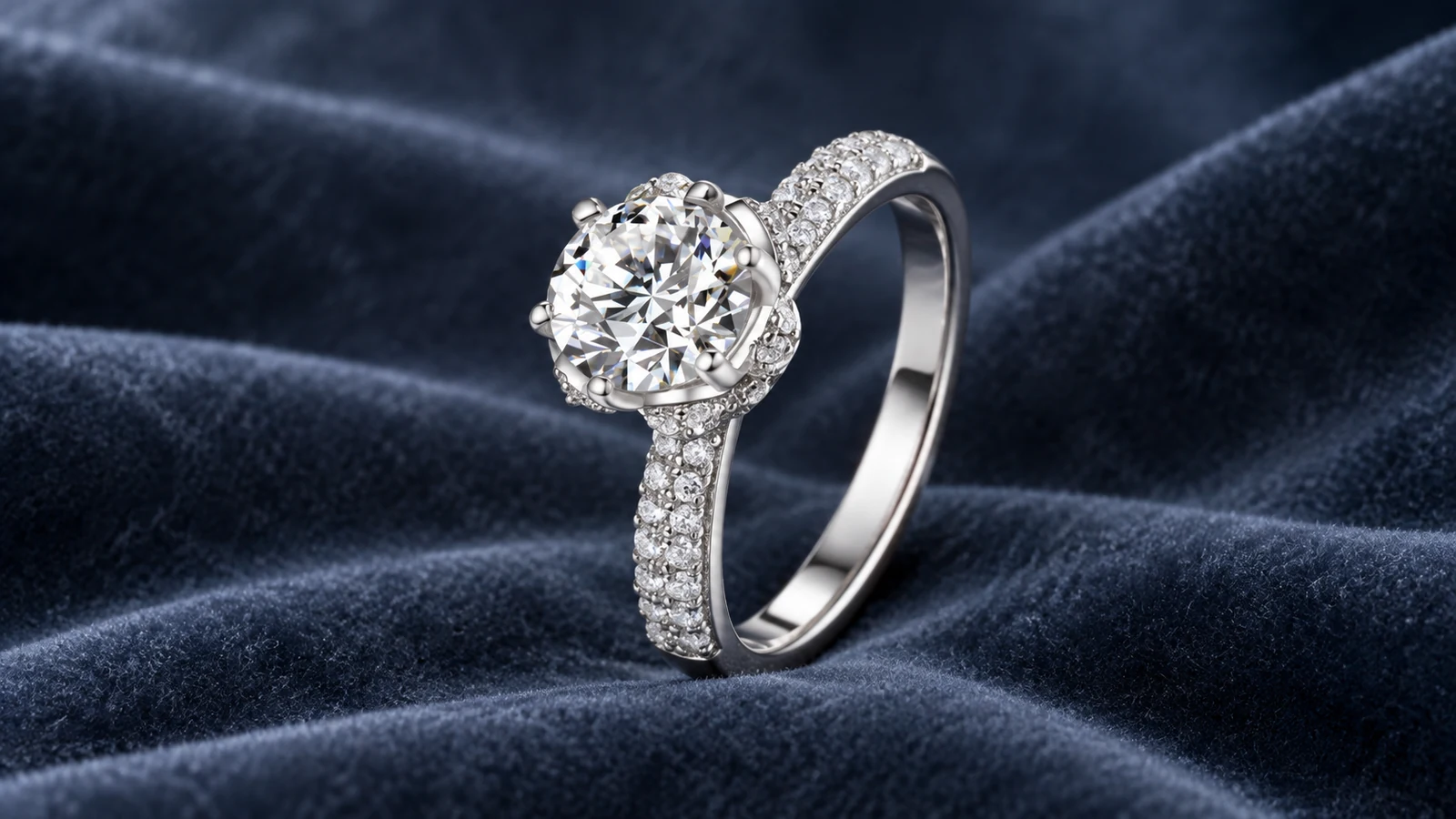
Full-impact sparkle combines several sources of visual activity. The 1 CT Snow Queen Halo Engagement Moissanite Ring – MS0883 is described on its page as a polished 925 sterling silver ring with a round 1 CT center stone lifted above a sweeping split pave halo shank.
This generated scene preserves the verified MS0883 round center, visible prongs, halo, split pave shank, silver color, and overall proportions.
This architecture asks to lead. The center provides scale, the halo adds a bright frame, and the split stone-set shoulders extend light across the finger. Pair it with small plain-metal earrings, a fine chain, or no necklace when you want the ring to remain the obvious statement. Adding several equally dense pieces can work for a maximal look, but it removes the clear hierarchy that makes one feature easy to appreciate.
How to Choose Your Sparkle Level in Five Steps
Pick the focal zone. Decide whether attention should sit at the hand, face, neckline, or wrist.
Count the visual layers. A center is one layer; a halo adds another; pave shoulders or a full row add more.
Notice open space. Plain metal, chain, or a bypass gap gives the eye a rest and keeps shapes readable.
Include the outfit. Sequins, metallic thread, embroidery, buttons, and busy prints function like additional sparkle.
Verify the exact listing. Check SKU, material wording, stone description, finish, size options, current images, and any measurements actually stated.
If you are comparing products online, use the Sunshine Jewelry catalog to open each live page rather than relying on a screenshot or an older social image. The online buying checklist adds practical checks for policies, specifications, and order details.
Match Sparkle Density to the Occasion
Everyday and work
Focused or framed sparkle is easy to control. A solitaire ring creates one clear point; compact halo studs add definition near the face. If the outfit includes a patterned blouse or metal hardware, avoid repeating a dense halo at the neck unless you intentionally want more activity.
Stacking and anniversary styling
A continuous eternity band can act as a line between plain bands or beside a solitaire. Start with one row and check how the rings touch during normal movement. The page description is useful for style, but comfort and flush fit depend on real dimensions and profile.
Romantic gifts
A halo emphasizes a colored center, while a two-stone bypass design can communicate two distinct shapes meeting across open space. Those are styling interpretations, not official symbolic guarantees. Use the recipient’s existing wardrobe, preferred color, and tolerance for visual detail as stronger evidence than a universal meaning.
Evening or statement dressing
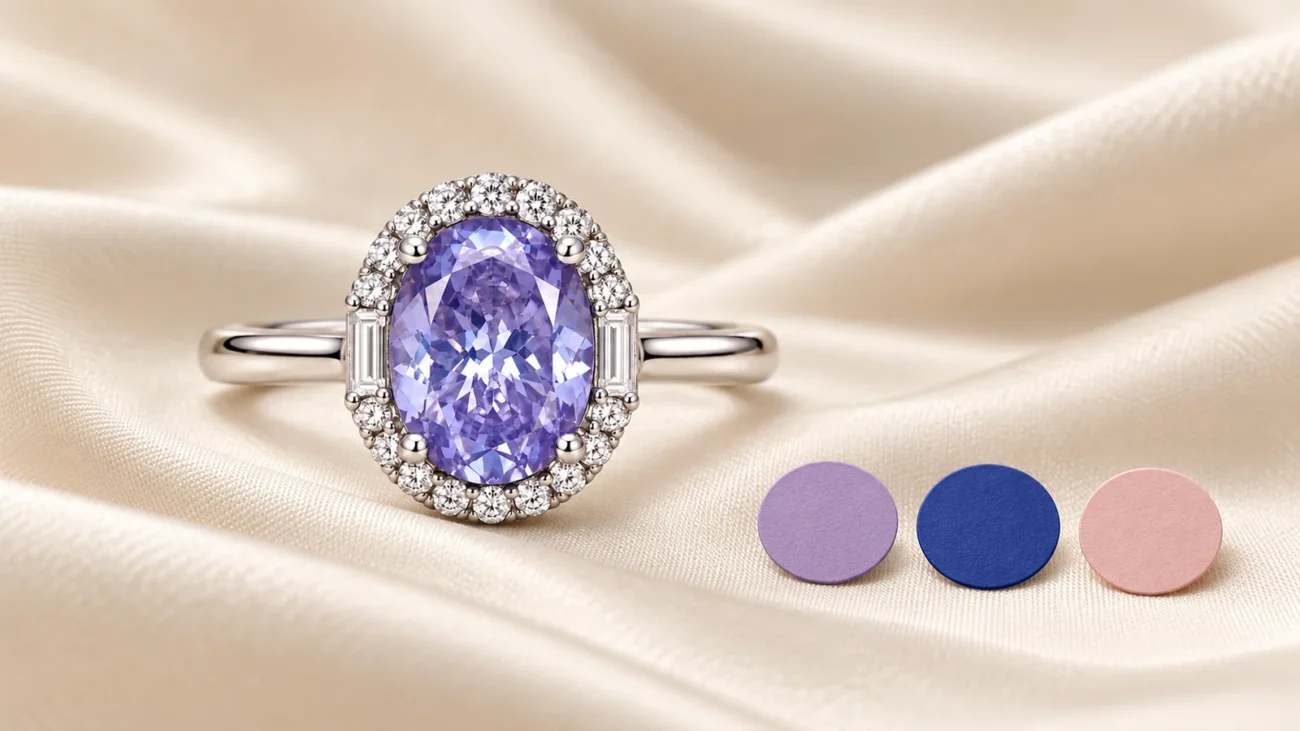
A center-plus-halo-plus-pave design can carry the whole look. Keep the surrounding jewelry lower in density, or repeat just one cue such as silver color. For color-specific coordination, the Sunshine Jewelry color guide covers lavender, blue, and pink examples without replacing current product checks.
These facts come from the live product pages checked for this article. This guide does not independently test metal purity or stones, assign a clarity grade, measure dimensions that are not published, or guarantee future stock. Generated images are lifestyle visualizations based on first-party product photographs; they are not original catalog photos and should not be used for exact scale or color matching.
FAQ: Sunshine Jewelry Sparkle Guide
Is a halo always more sparkly than a solitaire?
A halo creates more individual bright points around a center, so it usually looks denser. A solitaire can still produce strong flashes because stone cut, size, movement, and lighting matter. “More dense” and “brighter in every situation” are not identical claims.
Can I wear a pave eternity band with a solitaire ring?
Yes, visually the focused center and continuous row can complement each other. Check both rings’ widths, heights, prongs, and contact points before assuming they will sit flush or wear comfortably together.
How many sparkly pieces should I wear at once?
There is no fixed number. For an easy hierarchy, choose one high-density focal piece and keep the others focused or plain. A maximal look can use several dense pieces, but that is a deliberate style choice rather than a universal rule.
Does carat weight tell me how sparkly a piece will look?
No. Carat wording alone does not describe the number of visible stones, their spacing, the setting, the outline, or exact face-up dimensions. Compare the full construction and any published measurements.
Are pink and white moissanite colors exact in the generated images?
No. Lighting, camera processing, displays, and generation can shift apparent color. Use the generated scenes only to understand visual roles, then consult the first-party product images and live description before buying.
Which sparkle layout is easiest to gift?
A focused solitaire is often the safest when you know the recipient likes clean designs. A halo suits someone who enjoys a defined, dressier look; a continuous band suits someone who stacks rings; a two-stone bypass or full-impact halo ring is better when you know she prefers distinctive statement pieces.
The Bottom Line
Choose sparkle by visual role, not by stone count alone. MS1021 gives one focused destination; MS1018 and MS1019 frame pink centers; MS1027 creates a continuous line; MS0884 separates two contrasting focal points; and MS0883 combines center, halo, and pave shoulders for maximum impact. Pick one layout to lead, leave enough open space for it to remain readable, and verify every specification on the current product page.