Choose a statement ring when you want one piece to control the look; choose a stackable band when you want low-key sparkle, flexible combinations, and an easier match with changing outfits. A clean solitaire sits between those two extremes: it has one clear focal stone without the broader visual footprint of a halo, crossover, or two-stone design. The best choice is therefore not “bigger versus smaller.” It is about how much visual attention, styling flexibility, and face-up width you want from the ring you will actually wear.
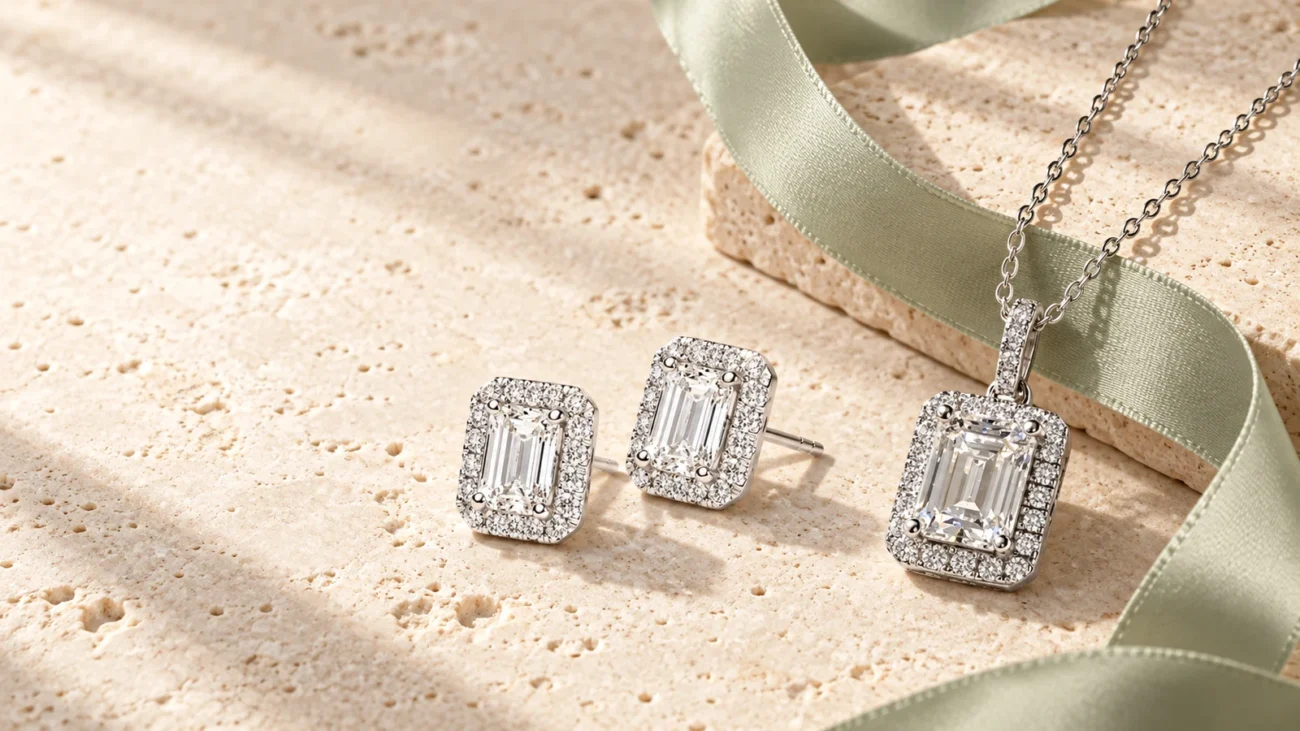
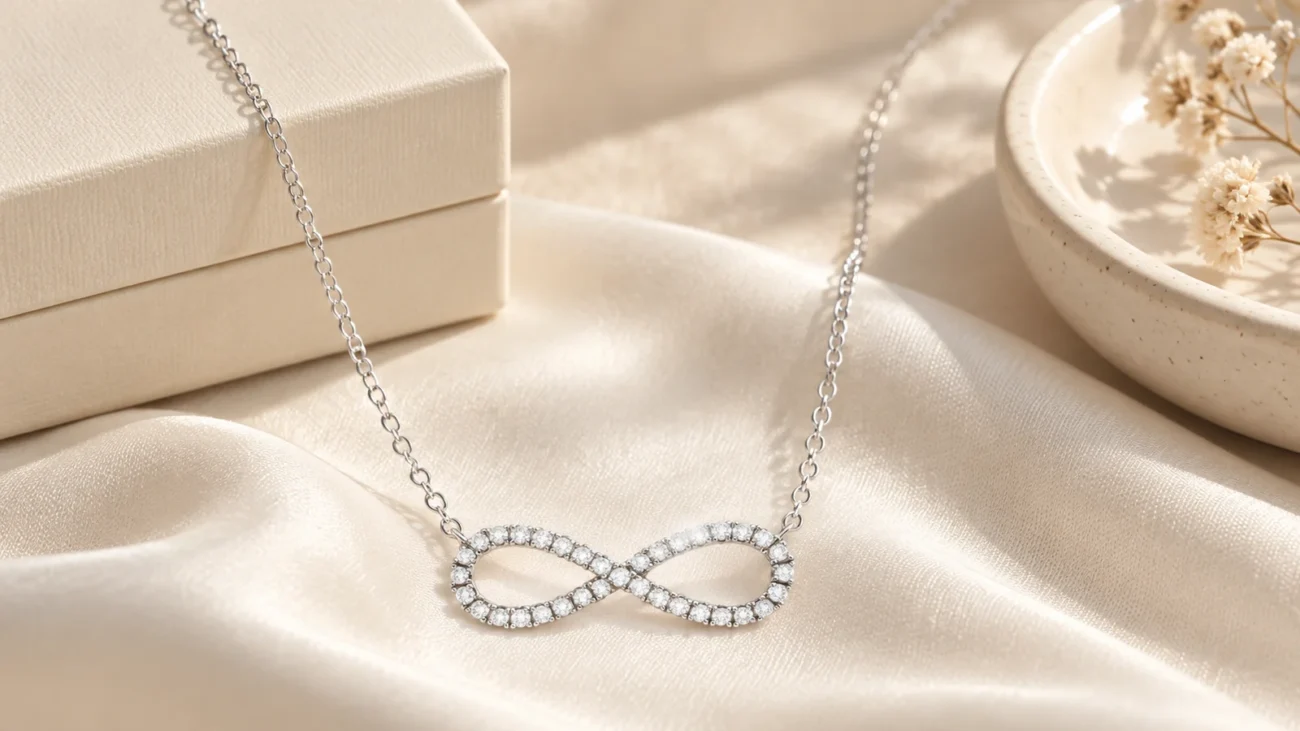
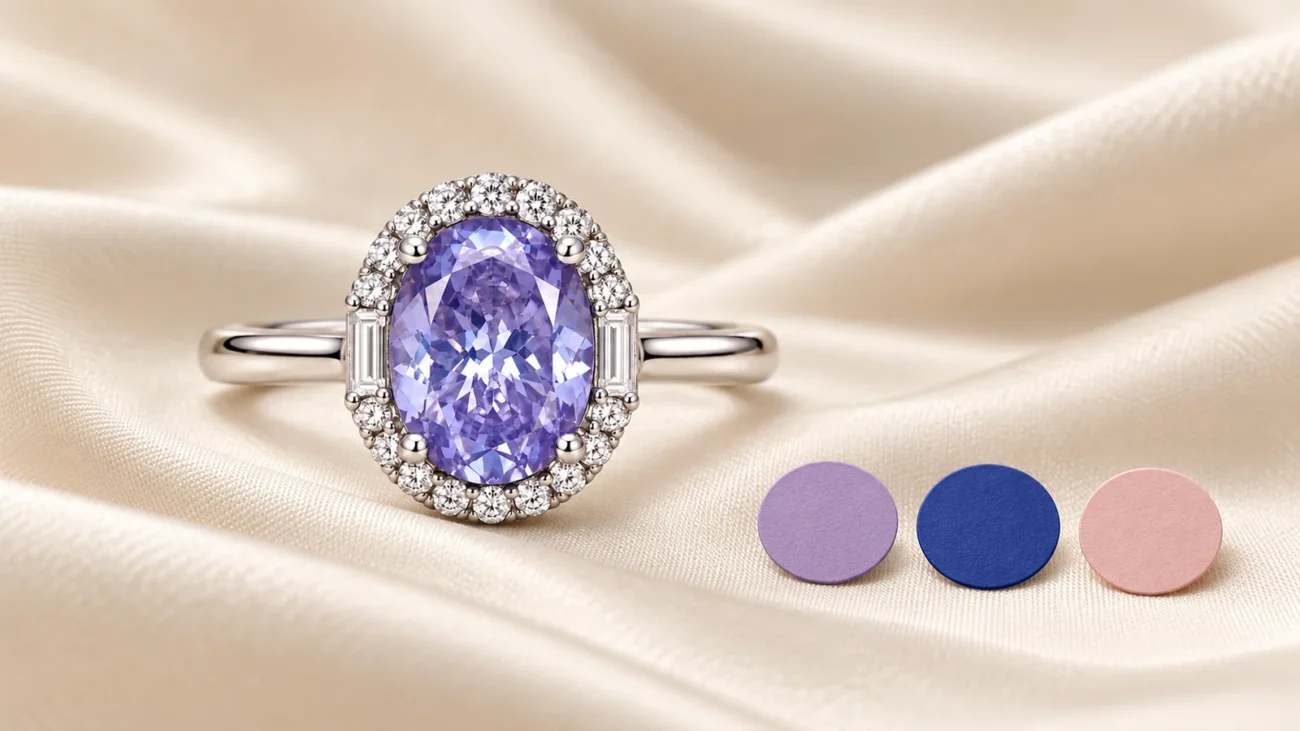
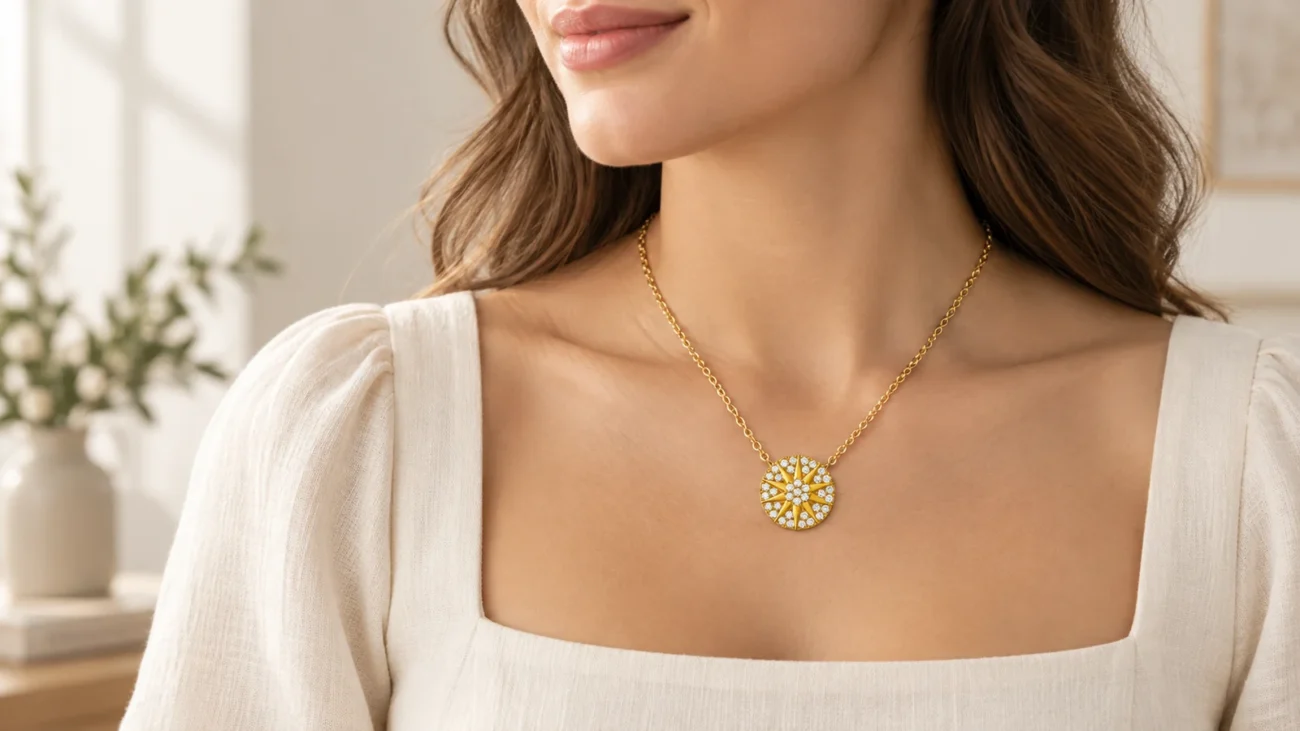
This guide compares five currently listed Sunshine Jewelry rings as concrete examples. Their product pages establish the names, SKUs, materials, stone descriptions, settings, and visible size options cited below. The generated images are lifestyle visualizations based on those first-party product photos; they are not original catalog images and do not add specifications.
Statement Rings vs Stackable Bands: The Quick Answer
A statement ring uses a prominent center, color, unusual geometry, or broader setting to become the hand’s focal point. A stackable band uses a slimmer, repeatable outline that can work alone or beside another compatible ring. Neither category determines quality, price, or durability. It describes visual role. A person who wants one decisive piece may prefer a statement design even for daily outfits, while someone who changes combinations often may get more use from a slim band.
Decision factor
Statement ring
Stackable band
Clean solitaire
Primary visual role
Creates the focal point
Adds a line of sparkle or supports a stack
Centers attention on one stone
Outfit strategy
Keep nearby accessories quieter
Repeat or layer a restrained detail
Works with either minimal or dressed-up styling
Fit questions
Check face-up width and raised elements
Check band width, edge feel, and stack spacing
Check center height, prongs, and band clearance
Best first check
View the top and side angles
Confirm whether stones continue around the band
Confirm the exact stone cut and setting
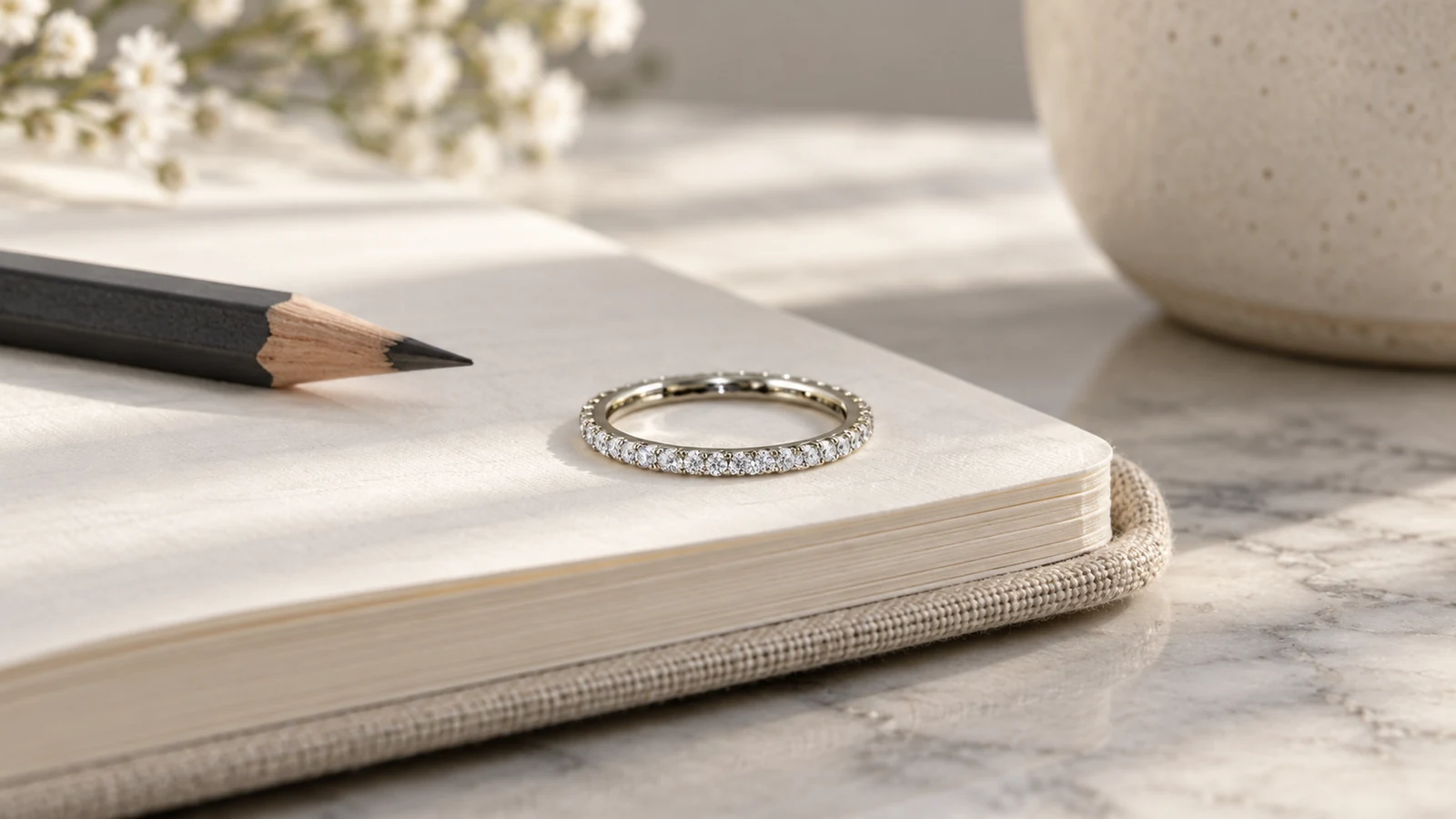
The verified MS1027 slim pavé band is shown in a generated everyday context; the setting itself is based on the first-party product reference.
What Counts as a Statement, Stackable, or Solitaire Ring?
A statement ring is defined by visual emphasis
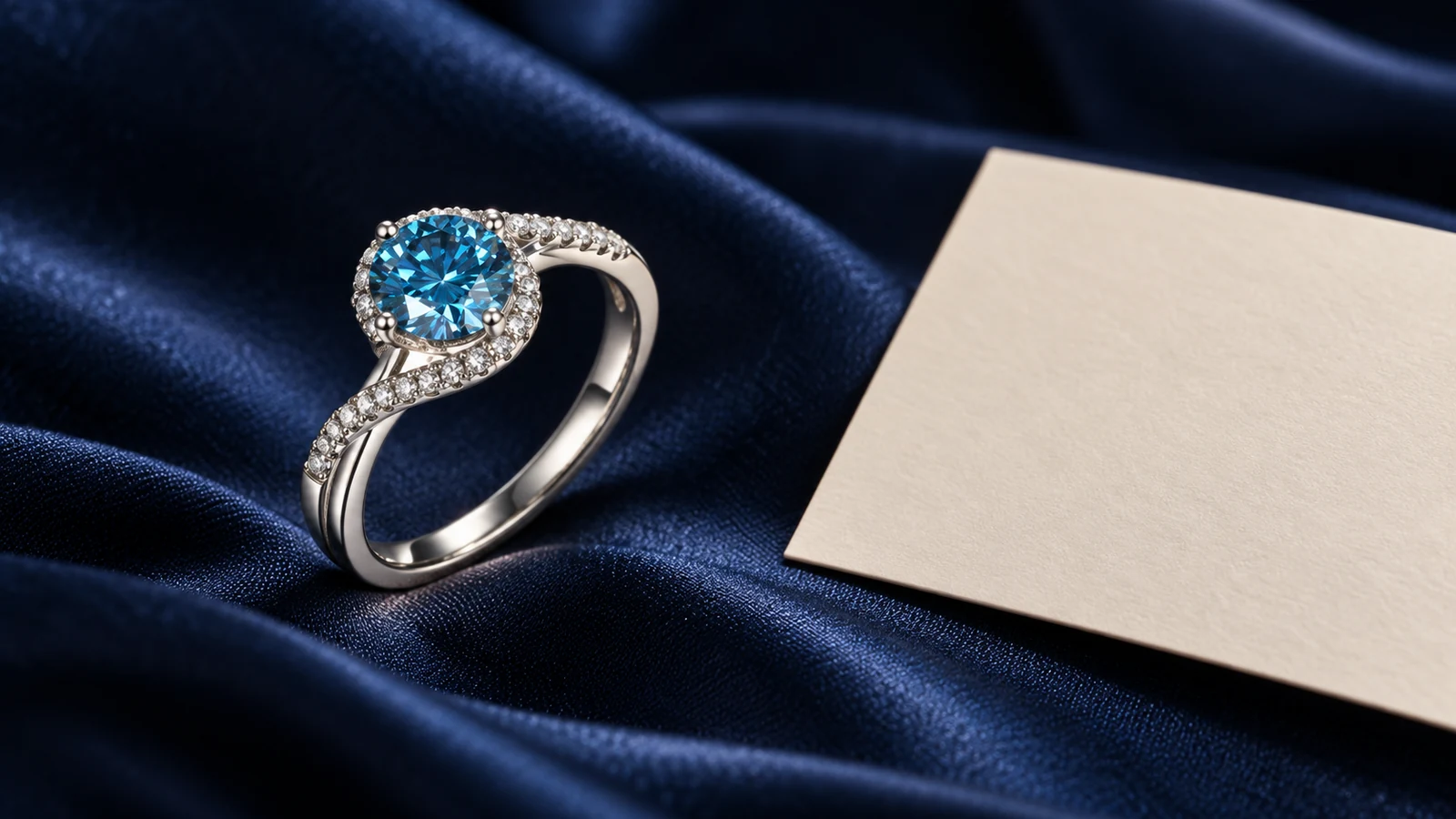
“Statement” does not require a particular carat weight or gemstone. A ring can read as bold because of a saturated color, a halo, split shoulders, an asymmetric face, or two contrasting cuts. The Klein Blue Moissanite Halo Ring – MS1017, for example, is listed with a vivid round Klein-blue moissanite center framed by pavé detail. Its color and surrounding structure naturally command more attention than a narrow white band.
A stackable band is defined by repeatable structure
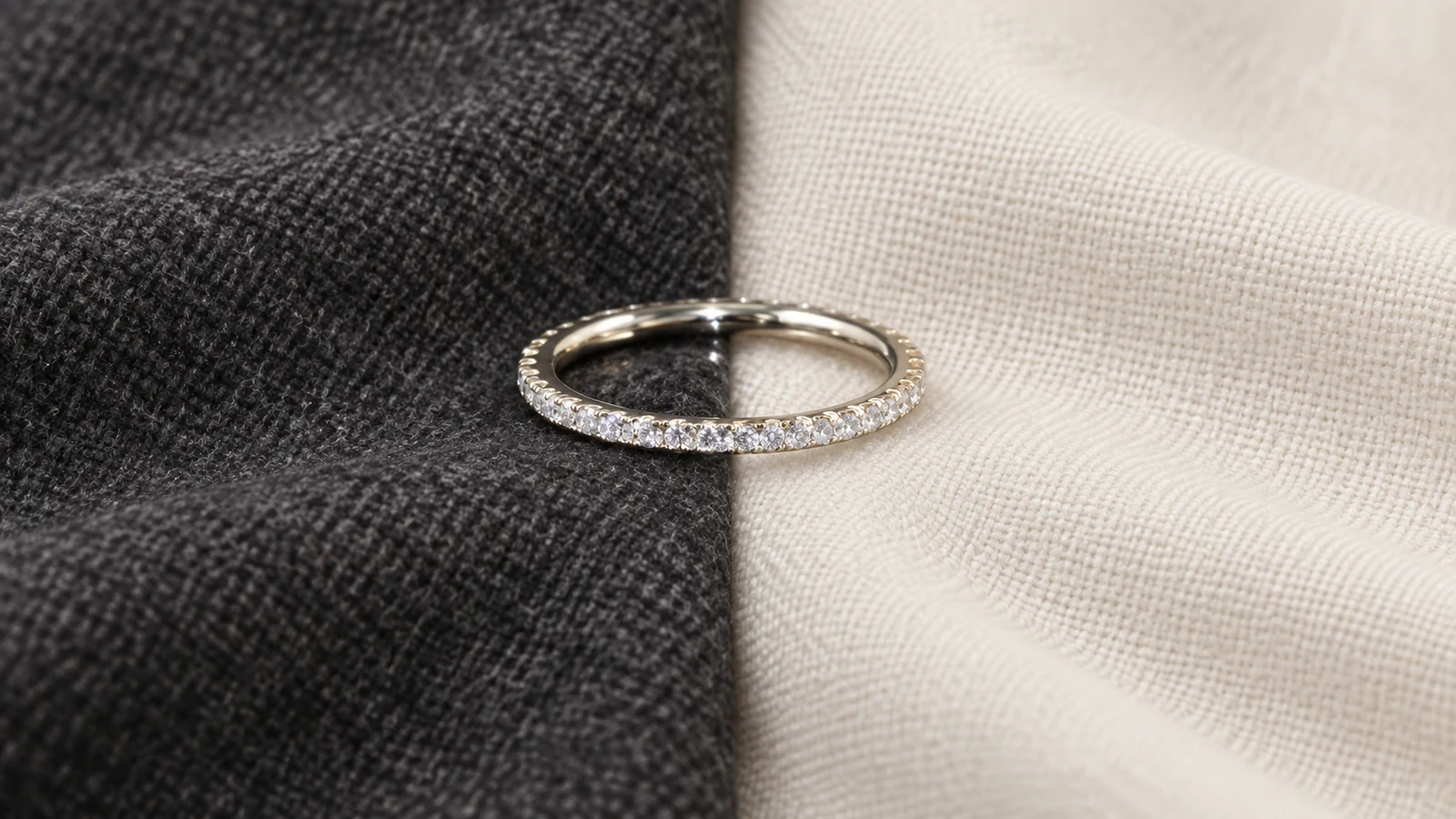
A stackable ring usually has a relatively consistent outline that can visually repeat beside another band. The White Moissanite Pavé Eternity Band – MS1027 is described as a slim full circle of petite white moissanite stones in a 925 sterling silver setting. That continuous, narrow profile supports the stackable role, but it can also be worn alone. “Stackable” is an option, not an instruction to combine rings.
A solitaire is the useful middle category
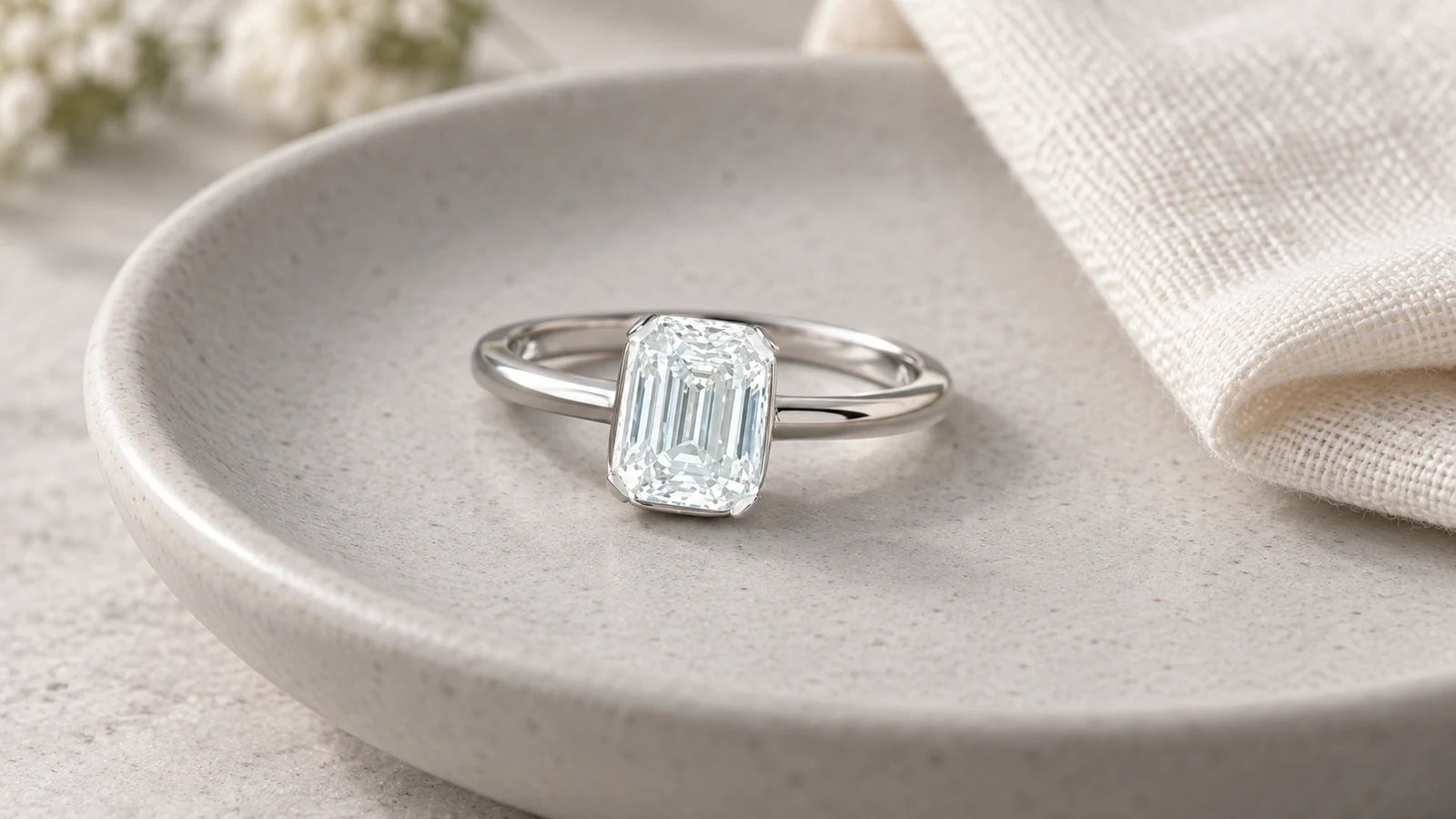
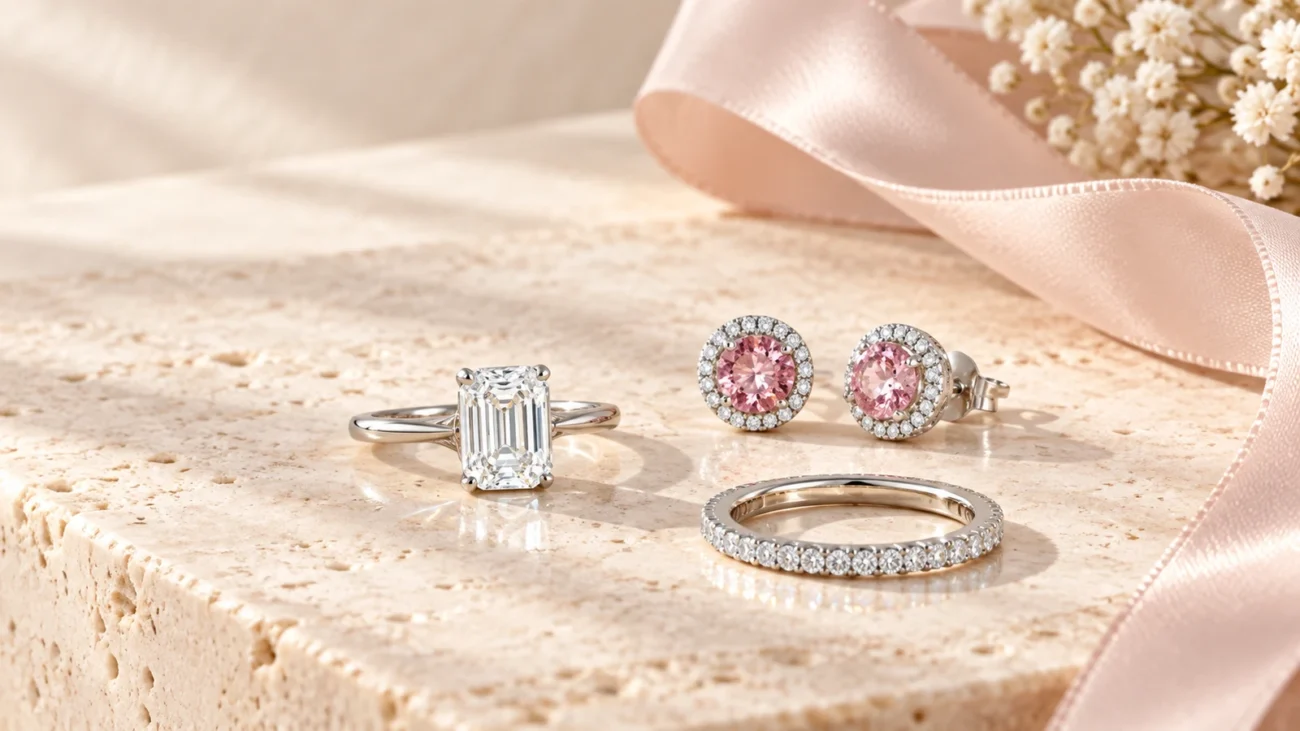
The Emerald-Cut Moissanite Solitaire Ring – MS1021 uses one emerald-cut white moissanite in a clean four-prong silver setting. It creates a clear center without adding a halo or multiple face-up stones. For a shopper who finds a plain band too quiet but a broad statement design too active, this type of solitaire can be the practical midpoint.
This generated scene is based on the verified MS1021 product image and illustrates the solitaire’s single focal point.
Five Live Sunshine Jewelry Rings and Their Different Roles
The following products were live when this guide was prepared. They are examples, not claims that every ring in the store has the same material, stone, finish, or size range. Use each linked product page as the controlling source for the item you may buy.
MS1027, quiet and repeatable: the white moissanite pavé eternity band uses a slim full-circle profile. It is the clearest stackable example in this comparison.
MS1021, centered and restrained: the emerald-cut white moissanite solitaire has a four-prong setting and smooth-looking band in the product image. Its geometry is focused rather than wide.
MS1017, color-led statement: the Klein-blue round center and surrounding pavé structure make color the first visual message.
MS0883, elevated round focal point: the 1 CT Snow Queen Halo Engagement Moissanite Ring – MS0883 is described with a round center lifted over a sweeping split pavé shank. That shoulder movement gives the ring more visual activity than a straight band.
These roles explain why comparing only center-stone size can be misleading. MS0884 can appear visually expressive because of two shapes and open spacing. MS1017 can lead with color. MS1027 can sparkle continuously while retaining a narrow outline. The design’s organization—not one isolated specification—determines how it reads on the hand.
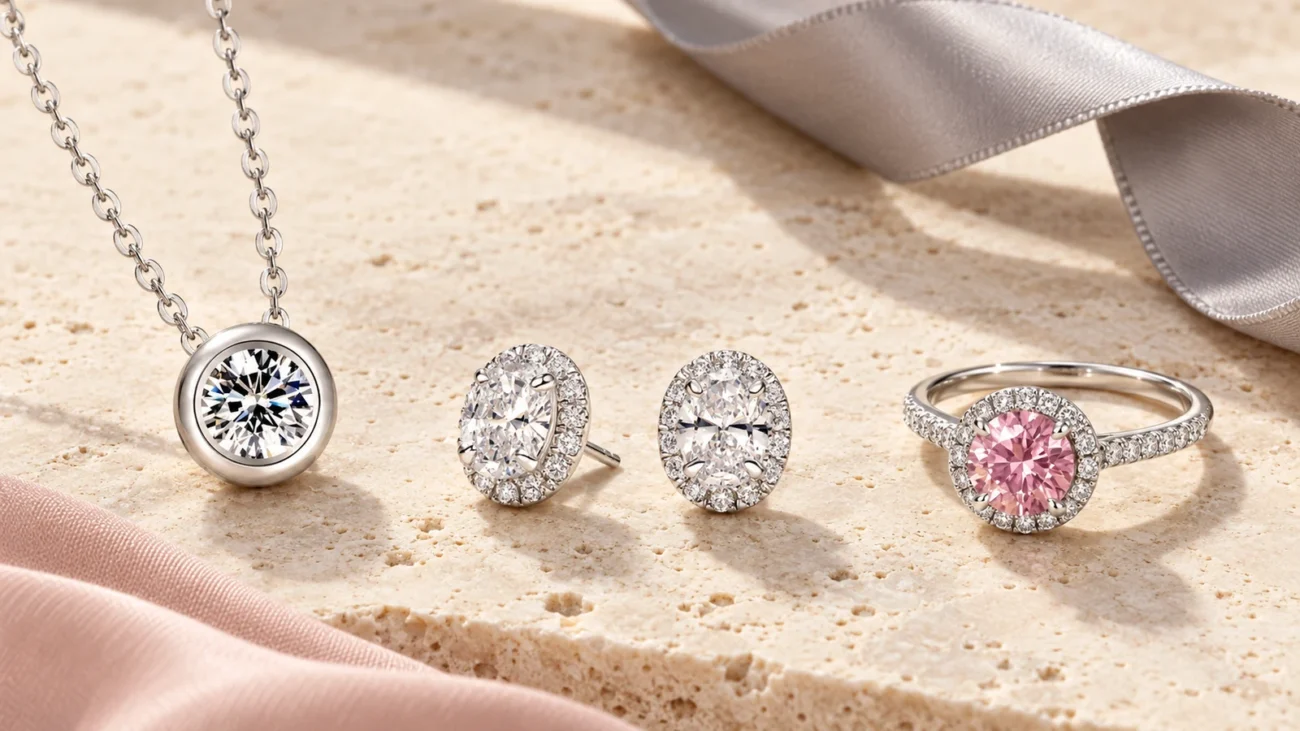
A generated evening context based on the verified MS1017 product reference shows how strong color creates a focal point.
Compare Face-Up Width, Height, and Finger Movement
Face-up width is the amount of the finger a design appears to cover when viewed from above. Setting height is how far the stone and mounting rise from the finger. These dimensions are not stated on the five visible product pages, so this article does not invent measurements. Instead, use the available product views to identify what must be confirmed before ordering.
For a statement ring, look for how far the shoulders, halo, or multiple stones extend across the finger. A broad face can be attractive but may sit differently beside neighboring fingers. For a stackable band, examine whether the outer edge appears smooth, whether the stones run all the way around, and whether the band’s profile leaves room beside another ring. For a solitaire, inspect the prongs and side view to understand where the center is raised.
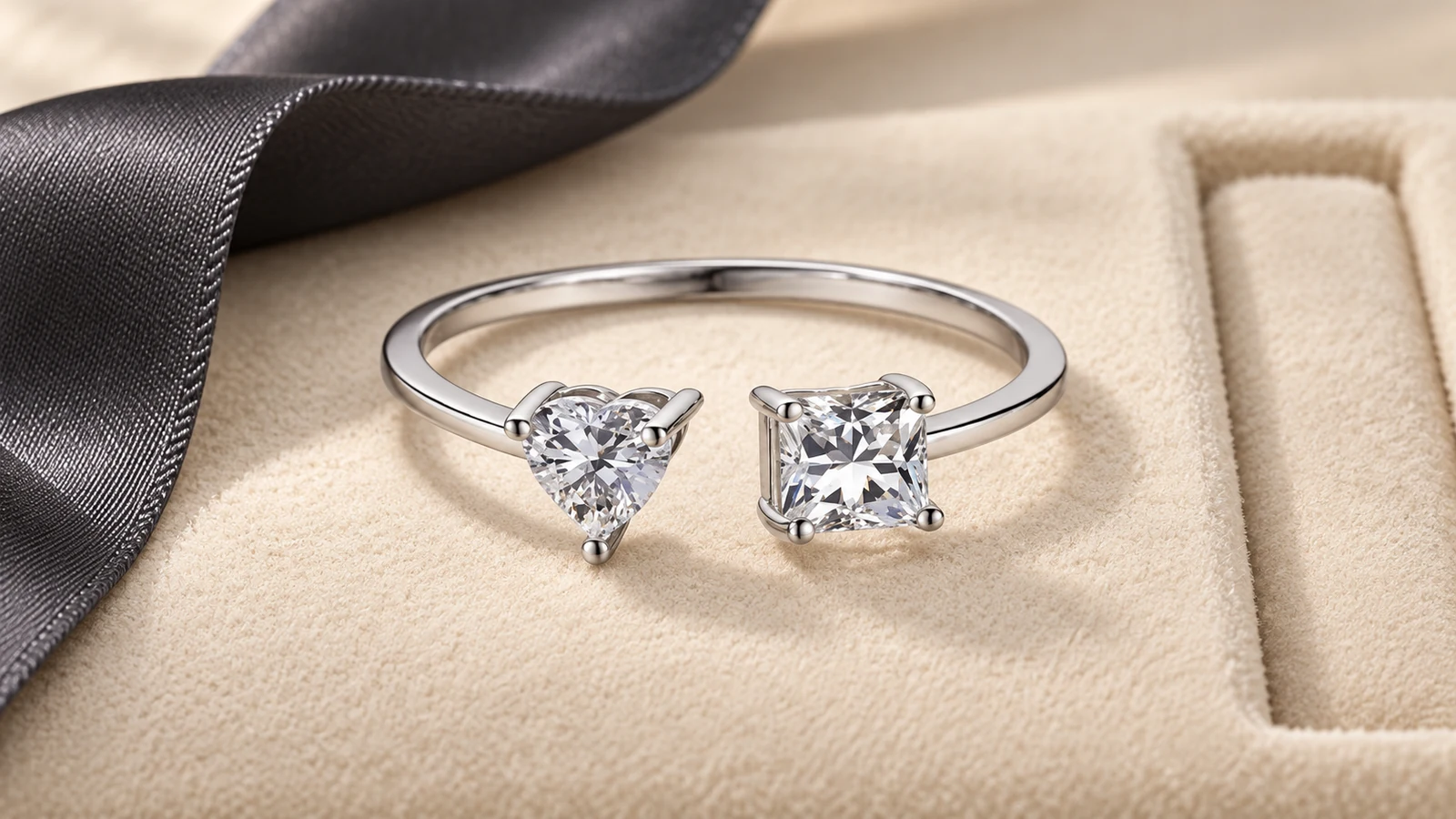
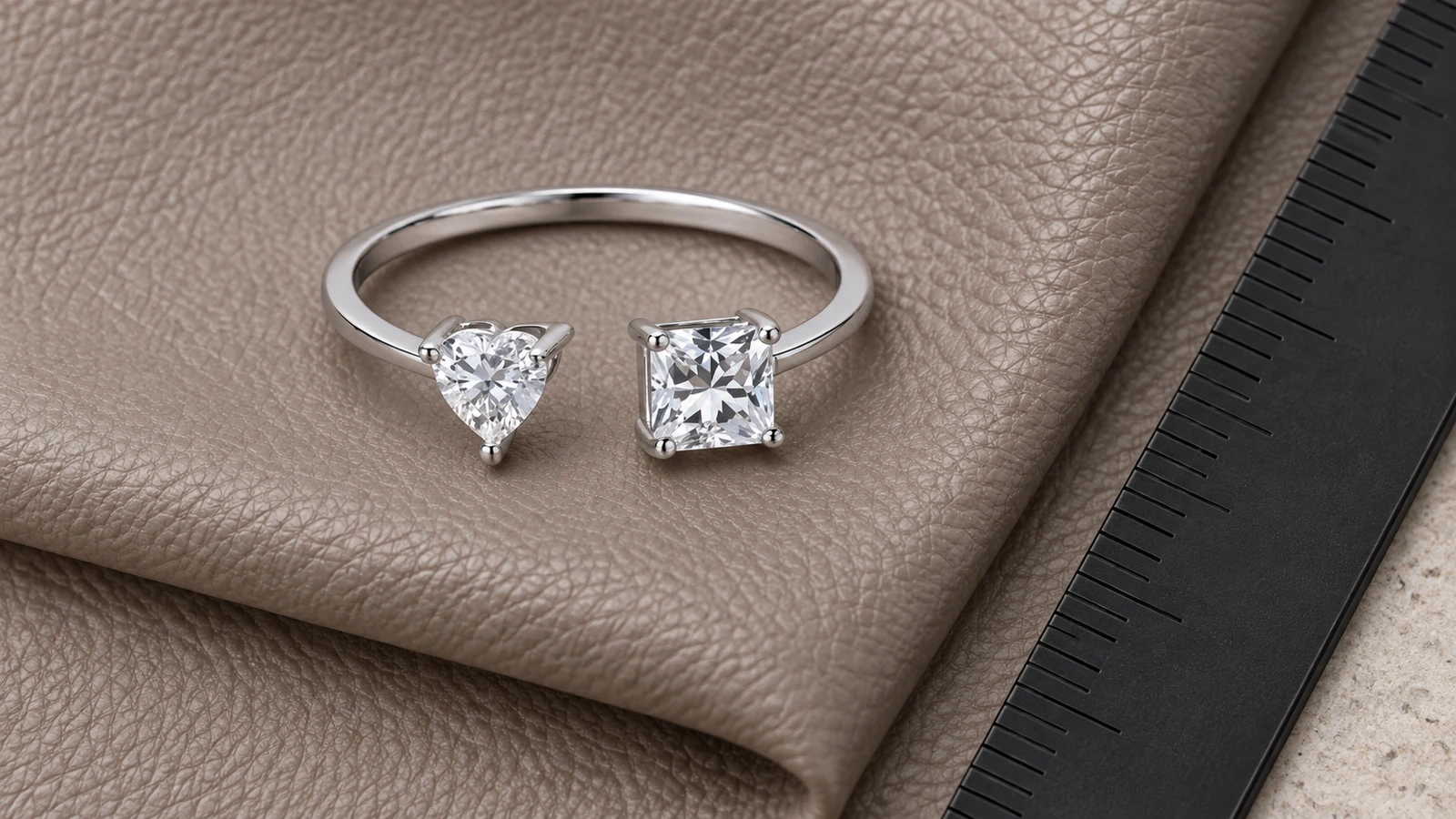
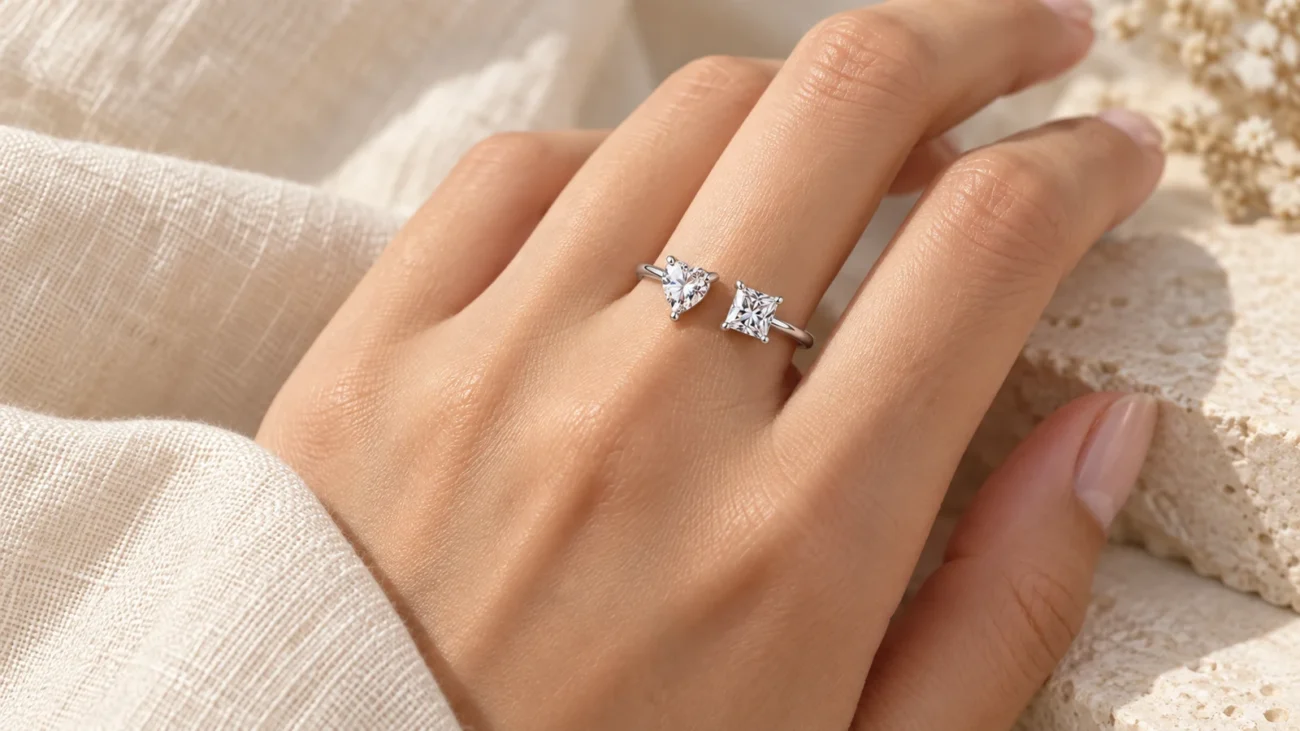
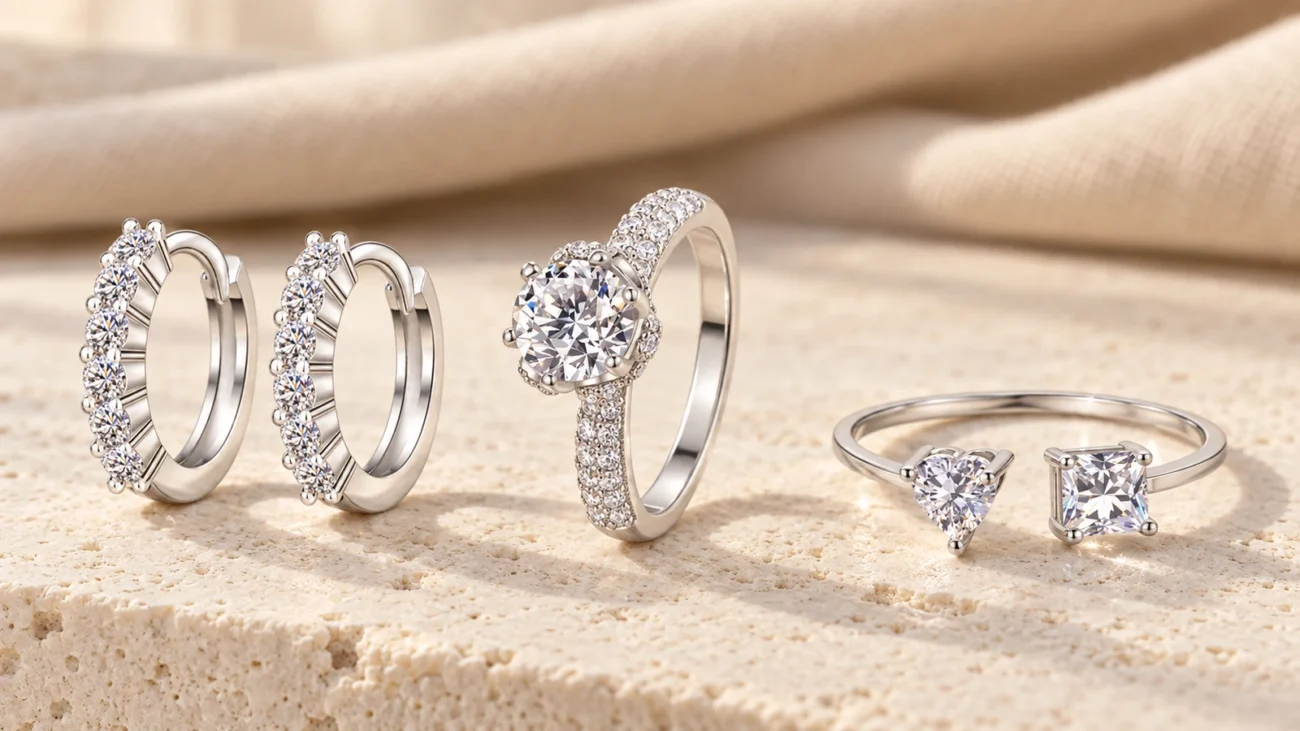
MS0884 is a useful face-up-width example because its heart and princess cuts occupy two separate points across an open bypass. The image below is not a measurement chart; it is a visual reminder to compare the real product’s top view with your preferred finger coverage. If exact millimeters, weight, or clearance matter, ask the store before purchase rather than inferring them from a styled image.
This generated MS0884 context illustrates face-up footprint only; the unnumbered prop is not a scale and supplies no measurement.
Match the Ring to Your Wardrobe and Accessory Habits
Start with the role you want the ring to play. If your clothing often includes print, saturated color, or several accessories, a white pavé band can repeat light without adding another competing shape. If your usual wardrobe is neutral and simple, a blue halo or asymmetric two-stone ring can provide the single deliberate accent. This is a styling framework, not a rule: visual balance depends on your taste, hand proportions, and other jewelry.
A statement ring usually benefits from breathing room. Try it on a hand with fewer nearby rings, then add one accessory at a time. A stackable band is more modular: wear it alone, place it next to an existing compatible ring, or repeat its silver tone elsewhere. Compatibility must be checked physically, because two rings that look harmonious online may rub, leave a gap, or sit at different heights.
Also consider repetition. Someone who owns several bold necklaces or earrings may value a quieter band. Someone whose other jewelry is minimal may prefer one ring that carries the outfit. The store’s View All Products page can help you compare categories, while the rings category narrows the visual scan to ring designs.
A generated wardrobe context based on MS1027 shows how a narrow white-stone band can remain visually quiet across light and dark neutrals.
Use a Seven-Step Decision Process Before You Buy
Name the job. Decide whether the ring should be the focal point, a quiet everyday line, or a centered solitaire.
Choose the visual structure. Compare slim pavé, single center, colored halo, split shoulder, and asymmetric bypass designs.
Check the top and side views. Look for face-up coverage, raised elements, prongs, and potential contact with nearby fingers or rings.
Verify the listing facts. Confirm the exact SKU, material wording, stone description, setting, and available options on the live page.
Confirm ring size. Use the site’s ring-size measuring guide, then ask for help if your reading falls between sizes or changes with temperature.
Test the wardrobe role. Picture the ring with three outfits you actually wear and with your usual watch, bracelet, or other rings.
Review checkout facts. Recheck current price, shipping, returns, warranty language, and product options. The online buying checklist provides a broader verification sequence.
This order prevents a common mistake: falling in love with a close-up photograph before deciding whether the design fits the intended role. It also separates stable design facts from store details that can change.
Facts, Conditions, and Boundaries to Verify
All five linked listings identified their settings as 925 sterling silver and showed sizes 5 through 9 when checked for this guide. The visible MS1027 page described white moissanite in a slim pavé eternity profile; MS1021 described an emerald-cut white moissanite solitaire in a four-prong setting; MS1017 described a Klein-blue round center with surrounding pavé detail; MS0883 described a round 1 CT center with a sweeping split pavé shank; and MS0884 described a heart-and-princess two-stone bypass design.
Those statements apply only to the specific SKUs and the product-page wording checked on September 13, 2026. A separate plating or finish specification was not clearly stated on several of these visible pages, so do not assume rhodium, gold plating, or another treatment from silver color alone. Availability, options, prices, promotions, and policies may change. Generated lifestyle images can help with composition and styling ideas, but they cannot prove exact scale, color under every light, hand fit, or construction details that the listing does not state.
Frequently Asked Questions (FAQ)
Can a statement ring be worn every day?
Yes, if its fit and profile work for your routine. “Statement” describes visual impact, not a guarantee of comfort or durability. Check prongs, height, neighboring-finger contact, and the care directions for the exact product.
Does a stackable band have to be worn in a stack?
No. A slim band can be worn alone. Stackability simply means its consistent outline may make combination easier, subject to actual fit and rubbing between rings.
Is a solitaire always more subtle than a halo ring?
Not always. A solitaire simplifies the setting around the center, but its stone shape, size, height, and contrast still affect visual impact. Compare the full face-up design instead of relying on the label.
Which type is easier to give as a gift?
The easier gift is the one that matches the recipient’s ring size and established style. A slim white band may be visually versatile, while a colored or asymmetric statement ring expresses a more specific taste. Exact size remains essential for both.
Can I stack a band next to a raised statement or solitaire ring?
Possibly, but online photos cannot confirm the clearance. Compare side profiles and ask whether the bands can sit together without a large gap or damaging contact. Do not assume compatibility because both rings share a metal color.
Final Recommendation
Choose a stackable band such as the MS1027 example if your priority is a narrow, adaptable line of sparkle. Choose a clean solitaire such as MS1021 if you want one center stone with less surrounding visual activity. Choose a color-led, split-shoulder, or asymmetric design such as MS1017, MS0883, or MS0884 when the ring should carry the look. Then confirm the exact SKU, listing facts, size, side profile, and current purchase terms before ordering. That sequence turns a broad style preference into a defensible product decision.