The best metal color for a women’s sunshine diamond ring is the one that keeps the radiant motif clear, works with the jewelry and clothing you already wear, and still looks right to you in ordinary daylight. White tones create crisp contrast, yellow tones add visible warmth, and rose tones soften the effect. None is universally more flattering or more valuable. Before buying, separate the ring’s visible color from its actual base metal, fineness, plating, and gemstone description.
Choose by real use: compare the ring with your everyday watch, earrings, wardrobe colors, and preferred manicure.
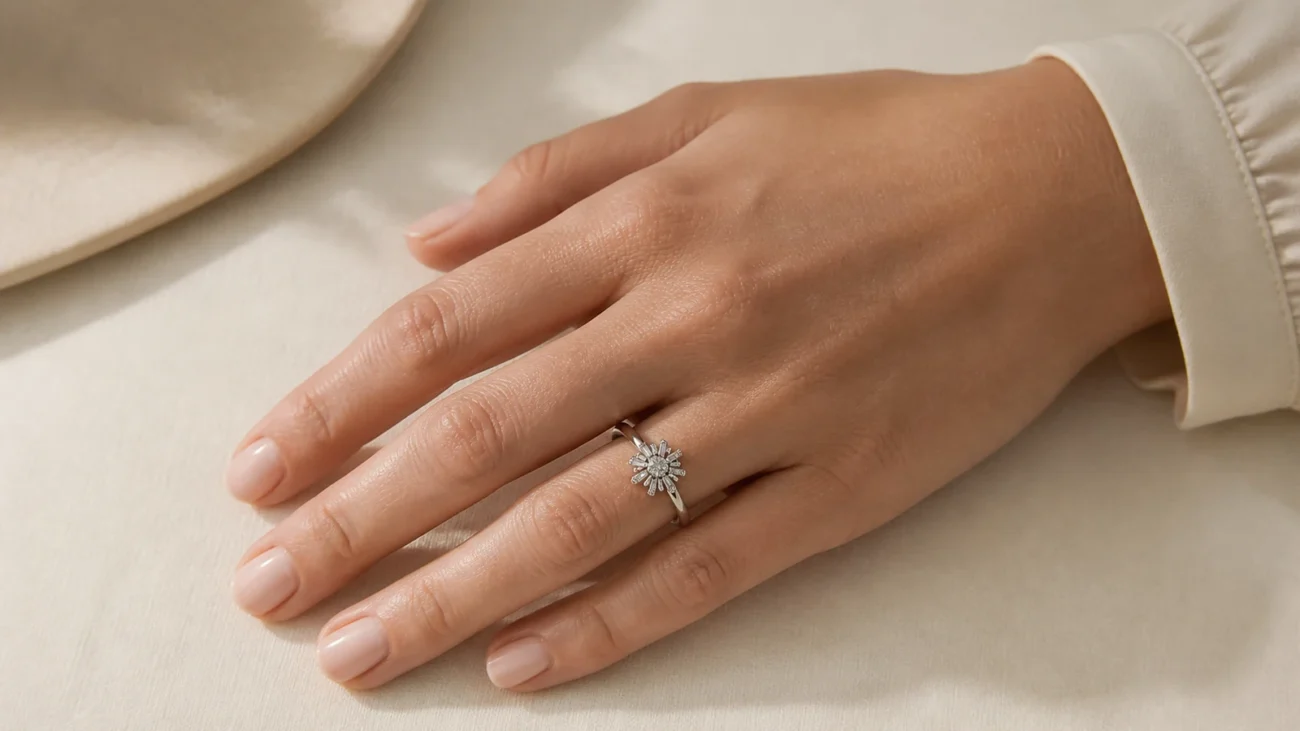
Check more than a hero photo: view the ring in neutral light, warm light, from the side, and at realistic hand scale.
Verify the listing: “white,” “yellow,” “rose,” “gold-tone,” and “silver-tone” can describe appearance; they do not by themselves identify composition.
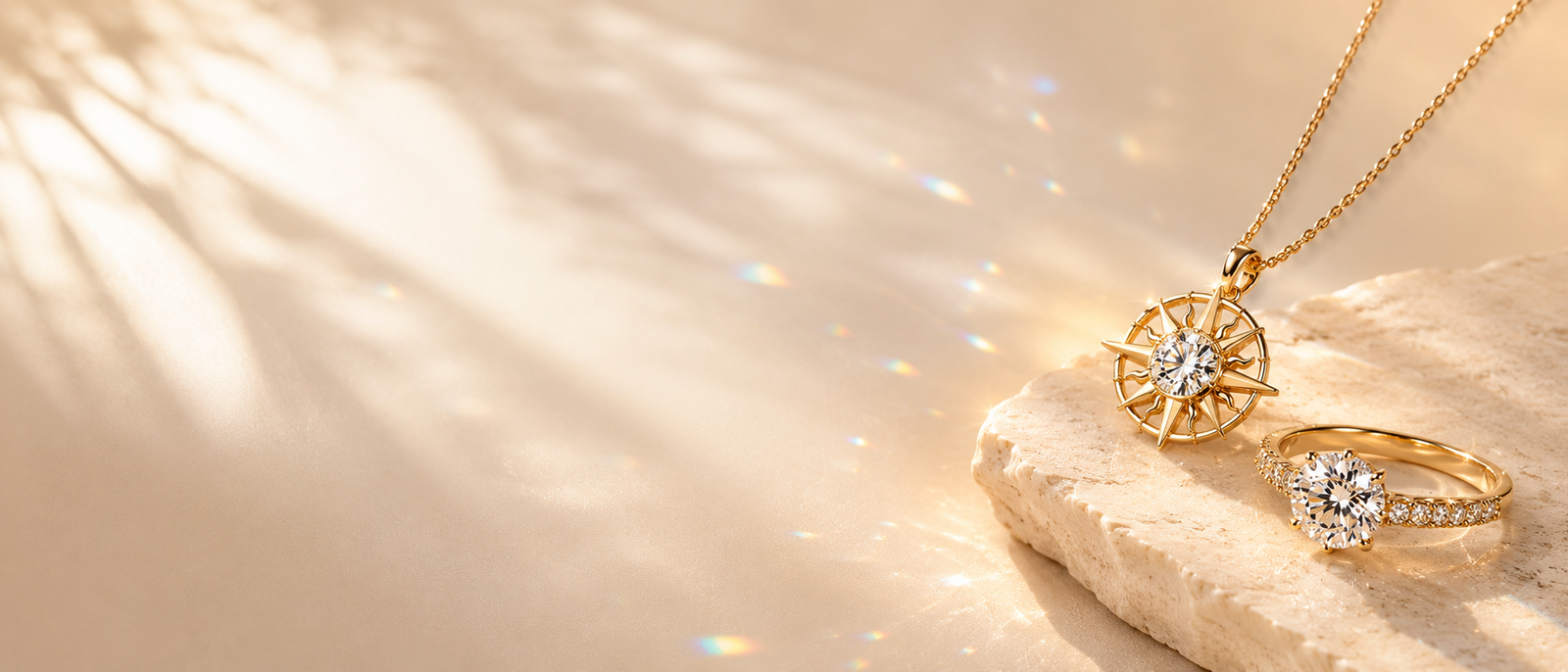
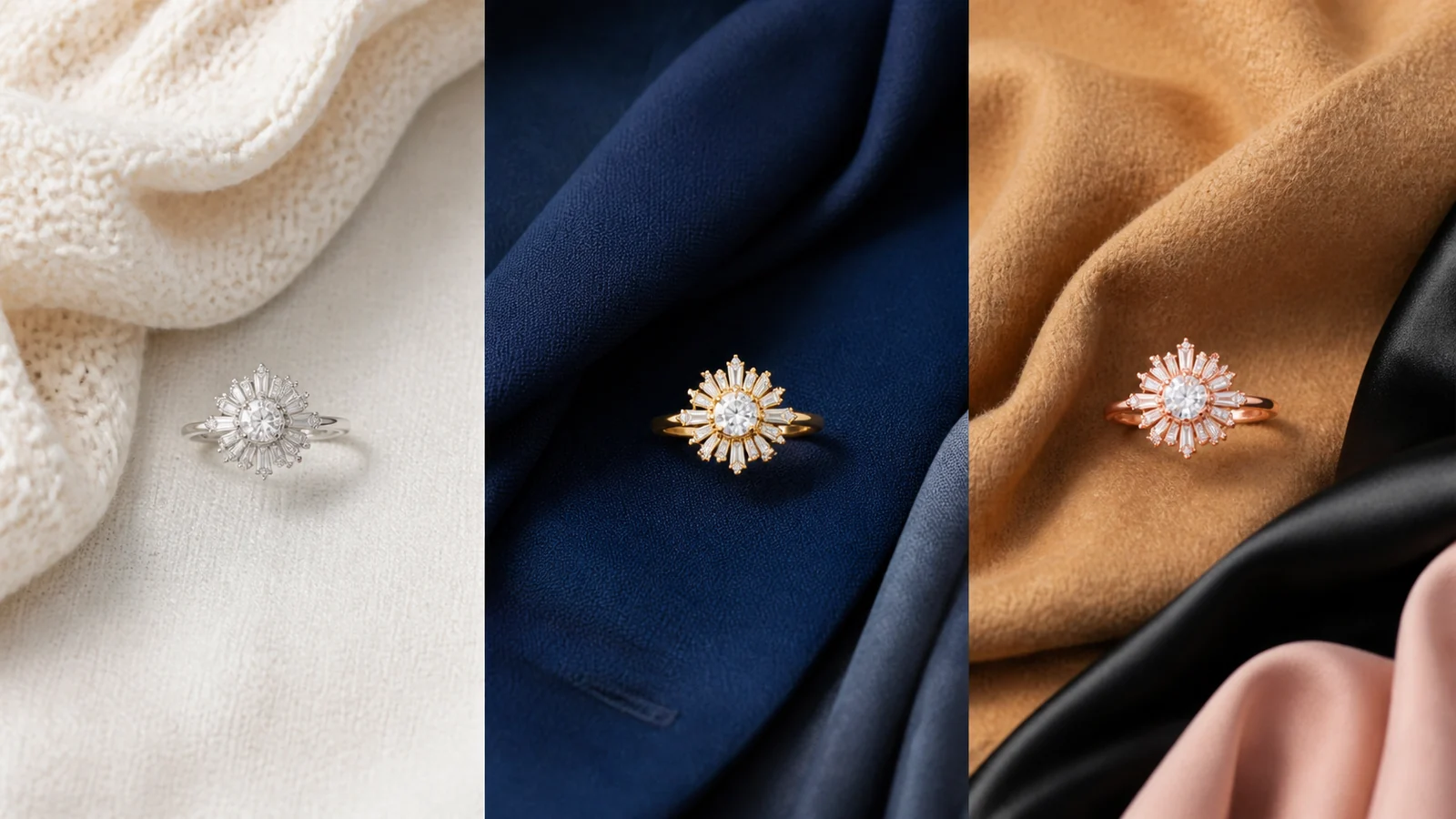
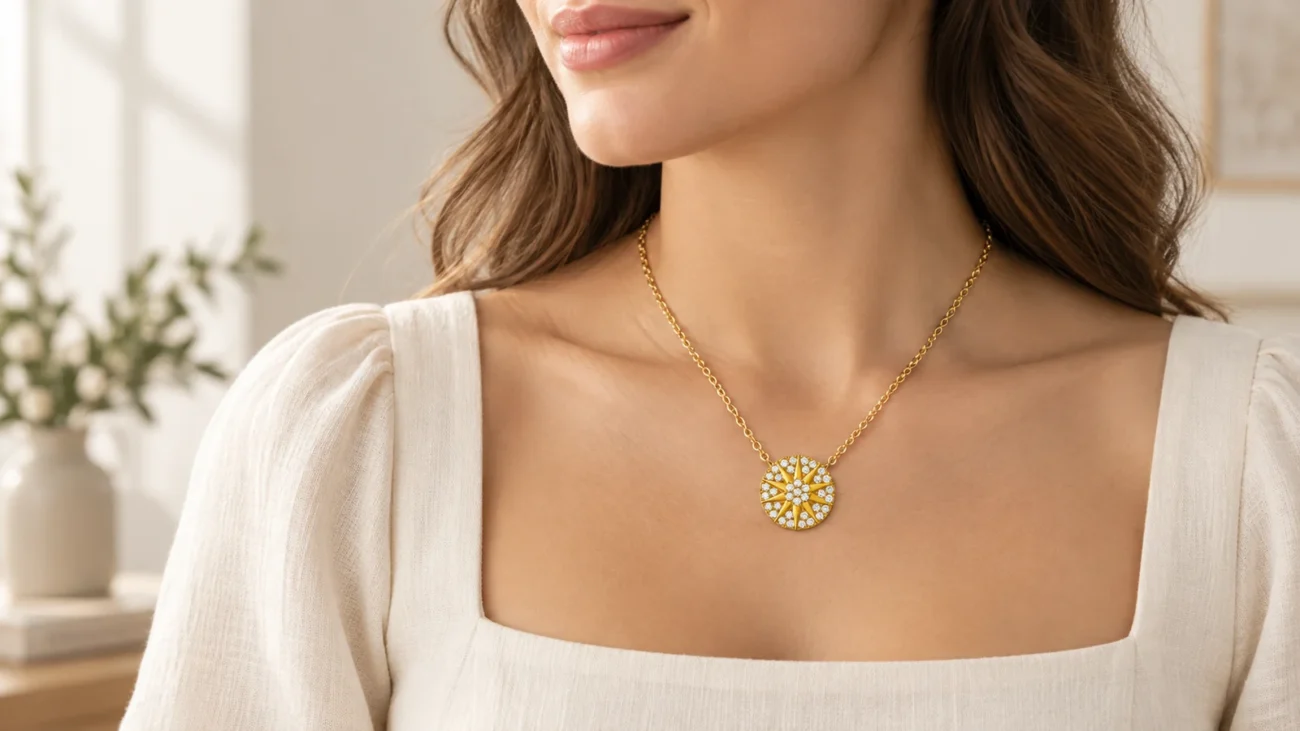
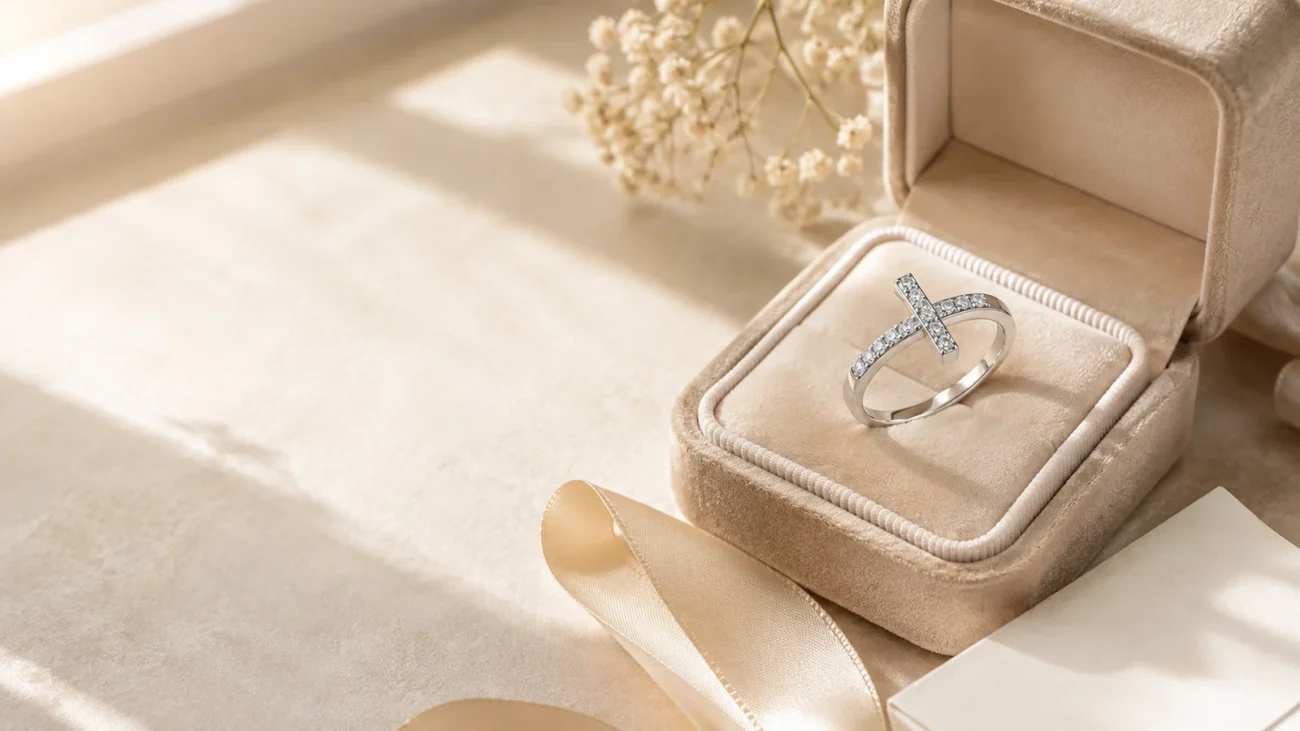
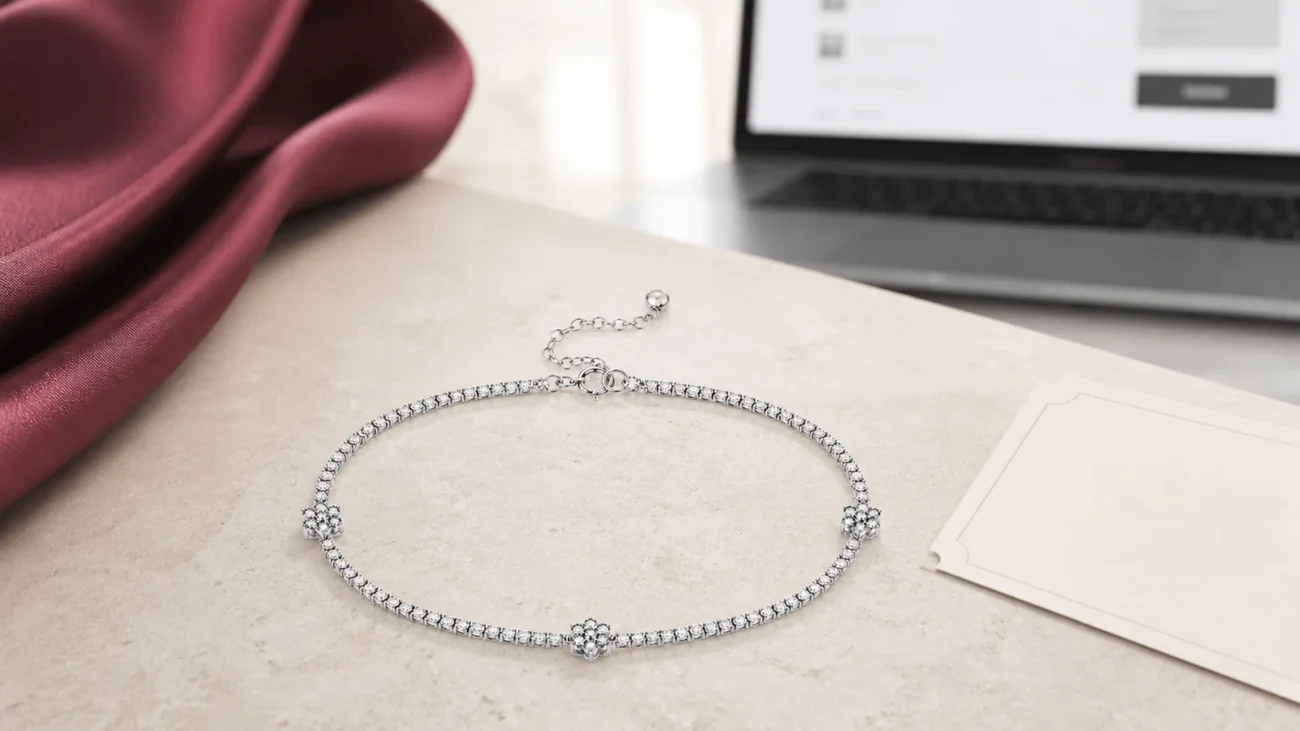
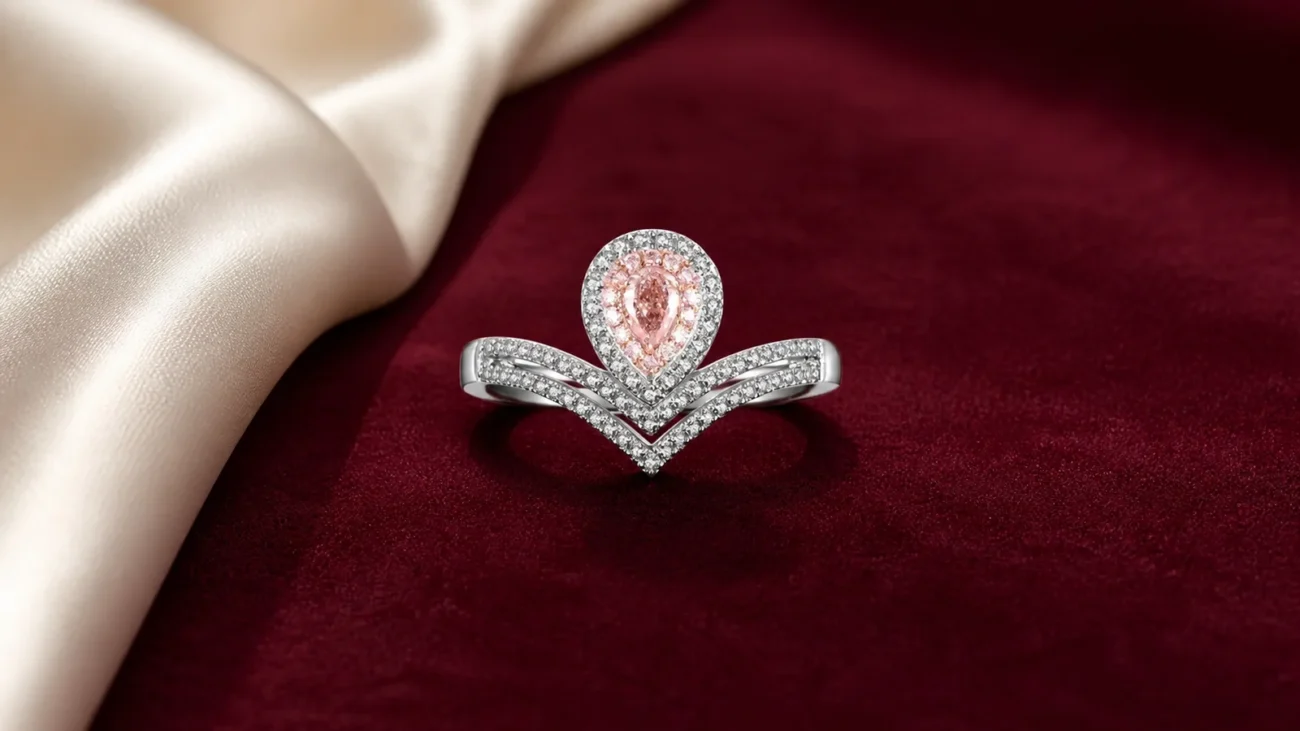
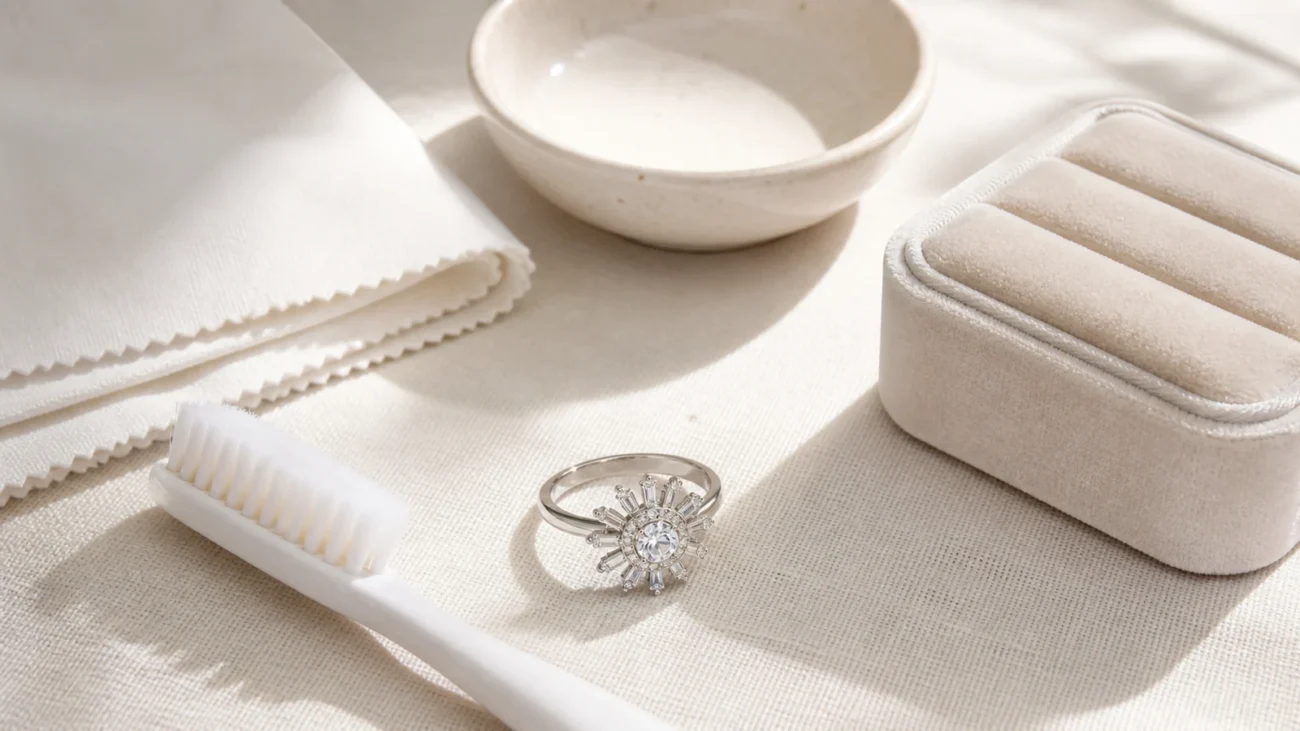
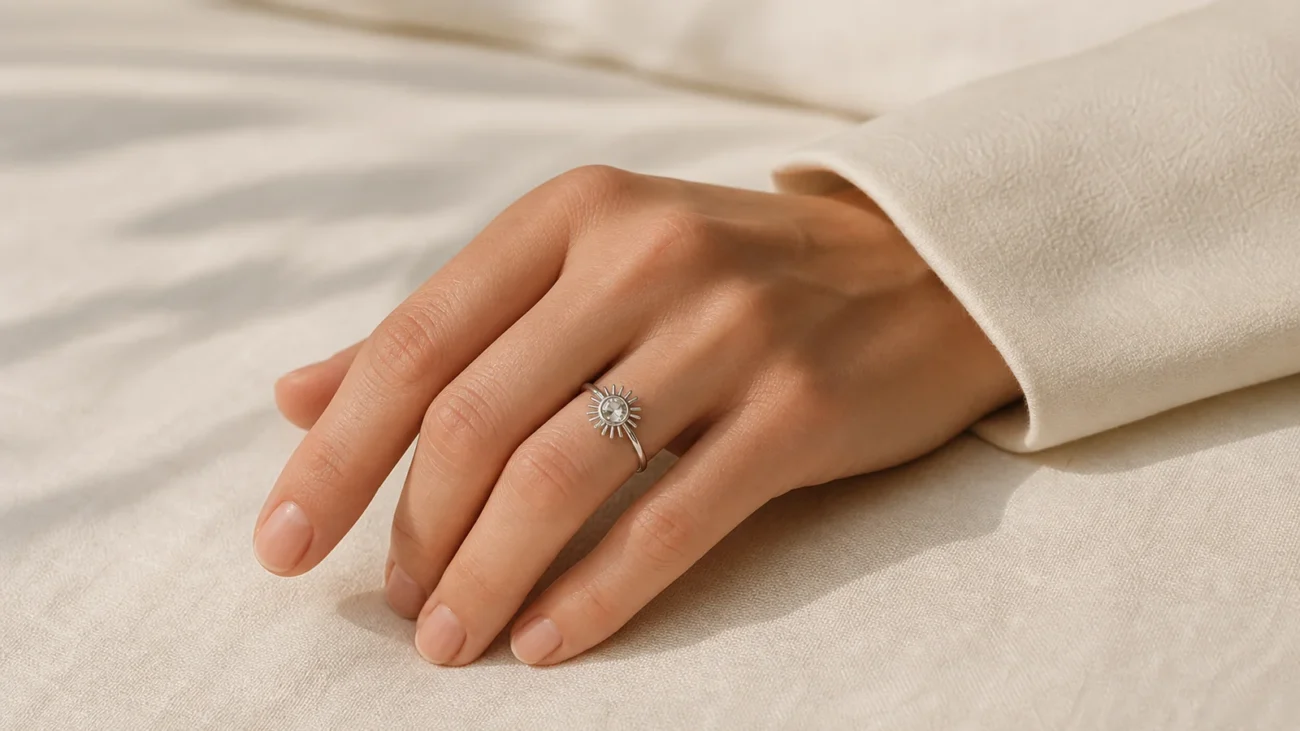
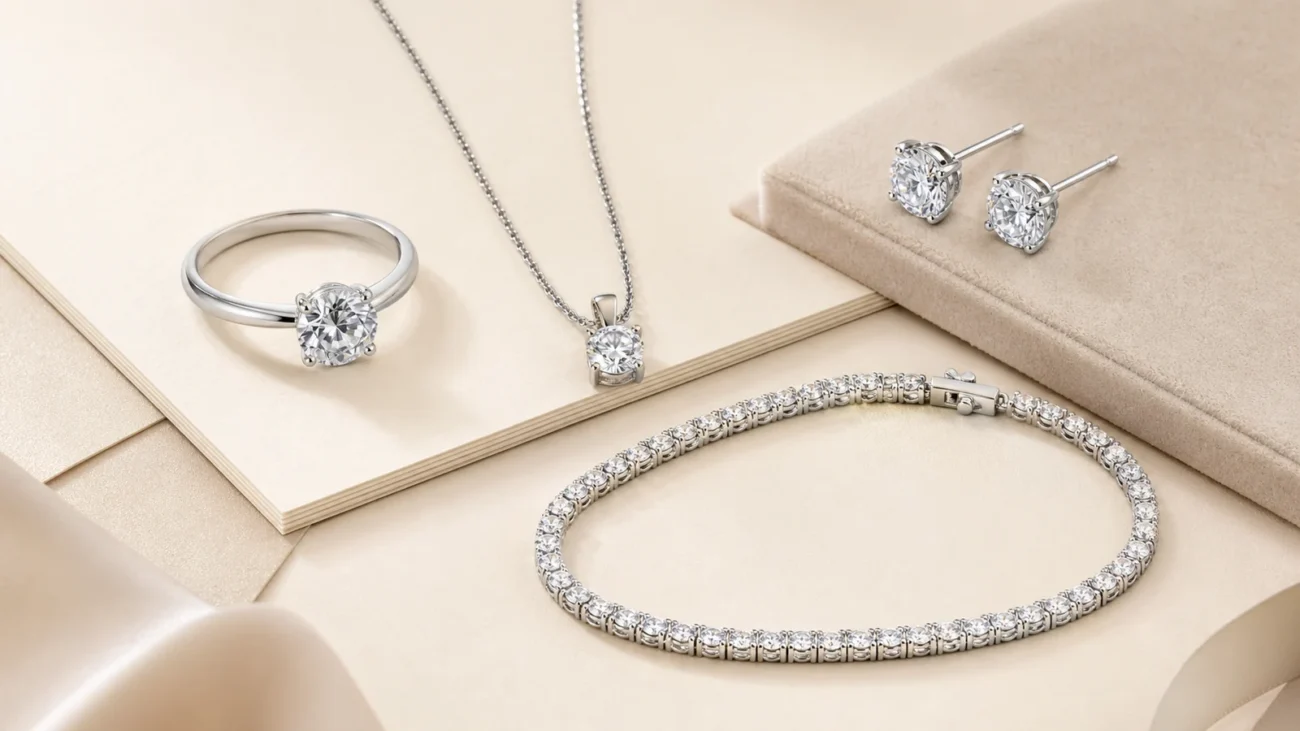
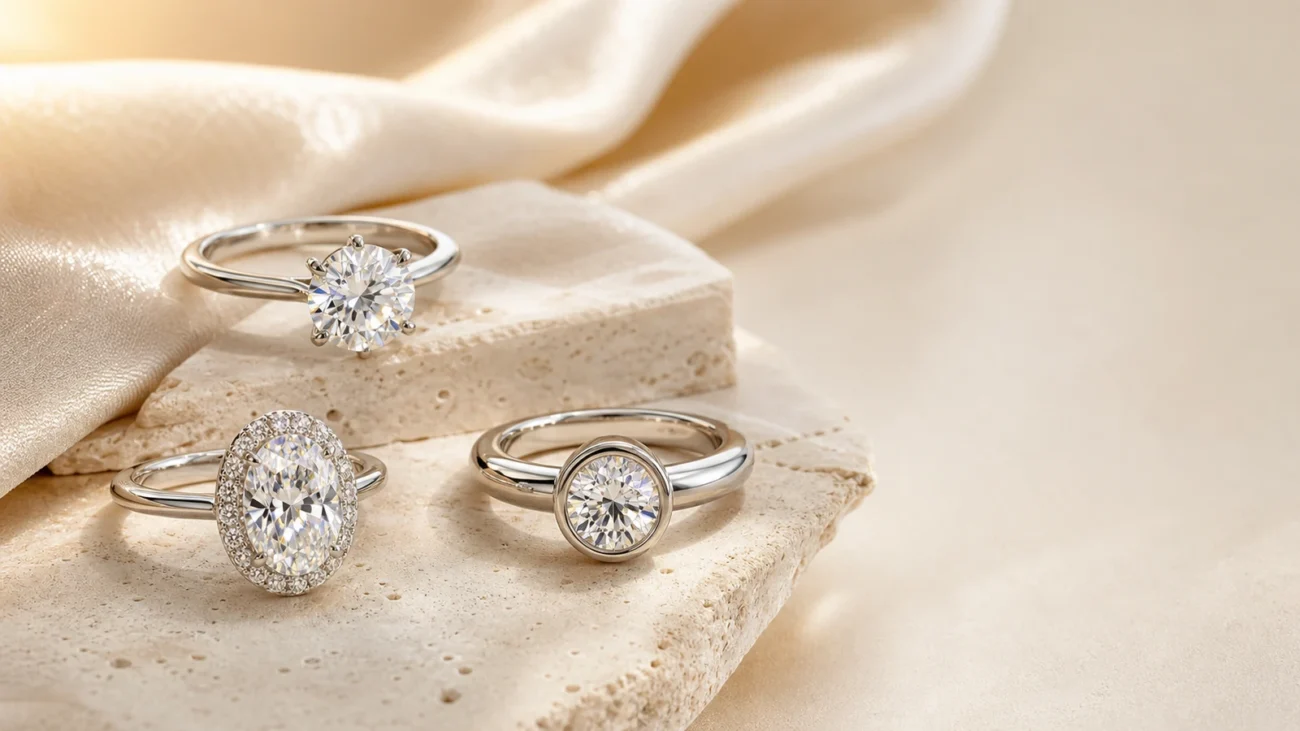
Generic educational ring concepts compare visible color only; they are not Sunshine Jewelry product photographs.
What Does “Metal Color” Mean for a Sunshine Ring?
Metal color is the visible tone of the ring: usually cool white, warm yellow, soft rose, or a deliberate mix. It affects how clearly the rays read, how the center appears against the band, and how easily the ring coordinates with other accessories. It is a design decision, not a complete material description.
Three terms must remain separate. Base metal is the material underneath. Fineness describes the proportion of a precious metal when a recognized standard is stated. Finish or plating describes a surface treatment or coating. A white-looking ring might be sterling silver, white gold, platinum, plated metal, or another material. A yellow-looking ring might be solid gold, gold-plated, gold vermeil, or simply described by a color term. The written product specifications should answer that question; color alone cannot.
“Sunshine diamond ring” is also a search phrase rather than a standardized jewelry category or proof of stone identity. A radiating ring may contain diamond, moissanite, cubic zirconia, crystal, another gemstone, or no center stone at all. If you first need help distinguishing sun motifs, sunbursts, halos, and clusters, start with the broader Sunshine rings for women guide. This article focuses only on choosing and verifying visible metal color.
White, Yellow, or Rose: How Each Tone Changes the Design
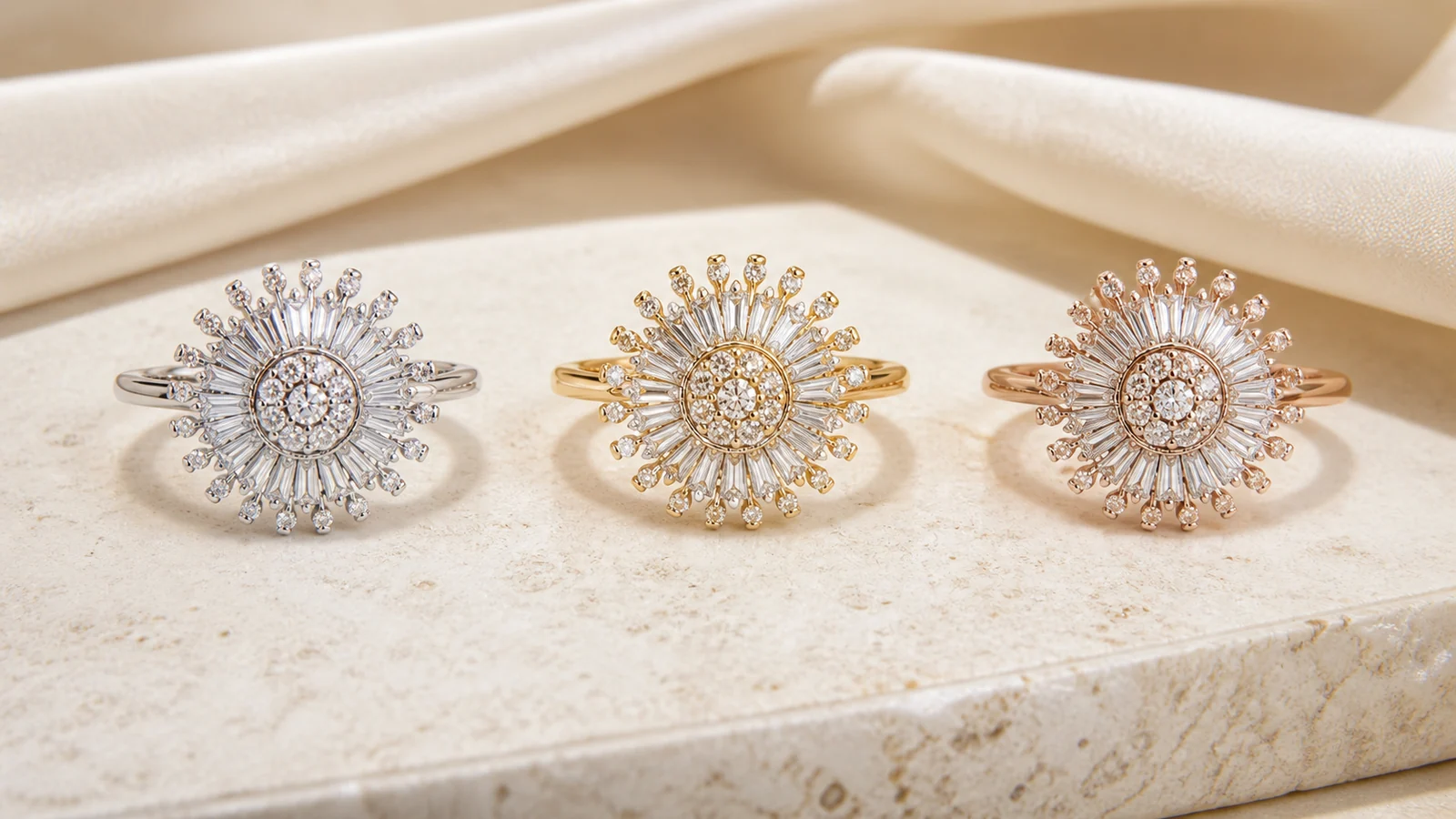
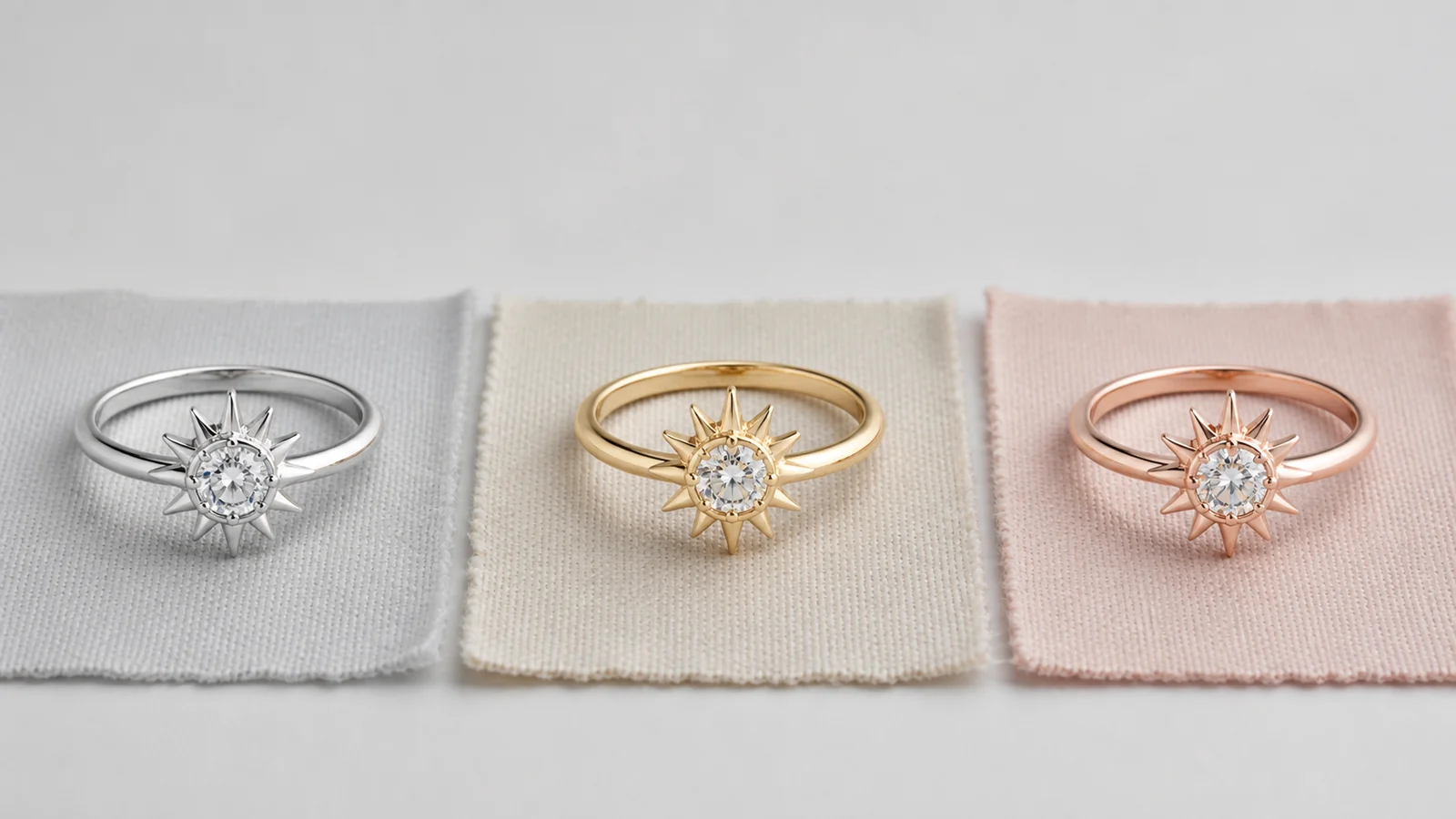
A sunshine motif sends lines outward from a center, so metal color appears repeatedly along the band, rays, bezels, prongs, and gallery. That repeated color can either blend with clear stones or frame them strongly. The most useful comparison keeps the ring silhouette similar and changes only the visible metal tone.
Keeping the silhouette similar makes the visual effect of each metal color easier to compare.
Visible tone
Typical visual effect
Useful starting point
Check before choosing
White
Crisp, bright, and visually continuous with colorless-looking stones
You wear silver-tone watches, white-metal earrings, cool neutrals, or clean monochrome outfits
The rays may merge with very bright stones in close photos; inspect the outline at normal viewing distance
Yellow
Warm, graphic, and clearly framed around a pale center
You repeat gold-tone hardware, camel, cream, brown, olive, or warm jewelry
Warm product lighting can exaggerate the color; find a neutral-light photo
Rose
Soft, tonal, and less traditional than white or yellow
You like blush, taupe, burgundy, warm gray, or subtle mixed-metal combinations
Rose intensity varies widely by alloy or coating; verify the seller’s exact wording
Mixed or two-tone
Layered and flexible, with one color able to outline another
Your existing jewelry already combines two metal colors
Confirm which components use which material or finish; do not assume both tones share the same composition
These are visual tendencies, not rules. White does not automatically mean “modern,” yellow does not automatically mean “traditional,” and rose does not suit only one skin tone. The ring’s ray length, center size, band width, surface polish, and setting height can influence the result as much as color.
Use Daylight and Your Own Jewelry as the First Test
Online “undertone tests” often reduce a personal decision to warm, cool, or neutral skin. That can be a starting observation, but it should not override what you enjoy wearing. Skin also changes in appearance with season, lighting, clothing, and camera processing. A more reliable decision comes from comparing colors under the same conditions.
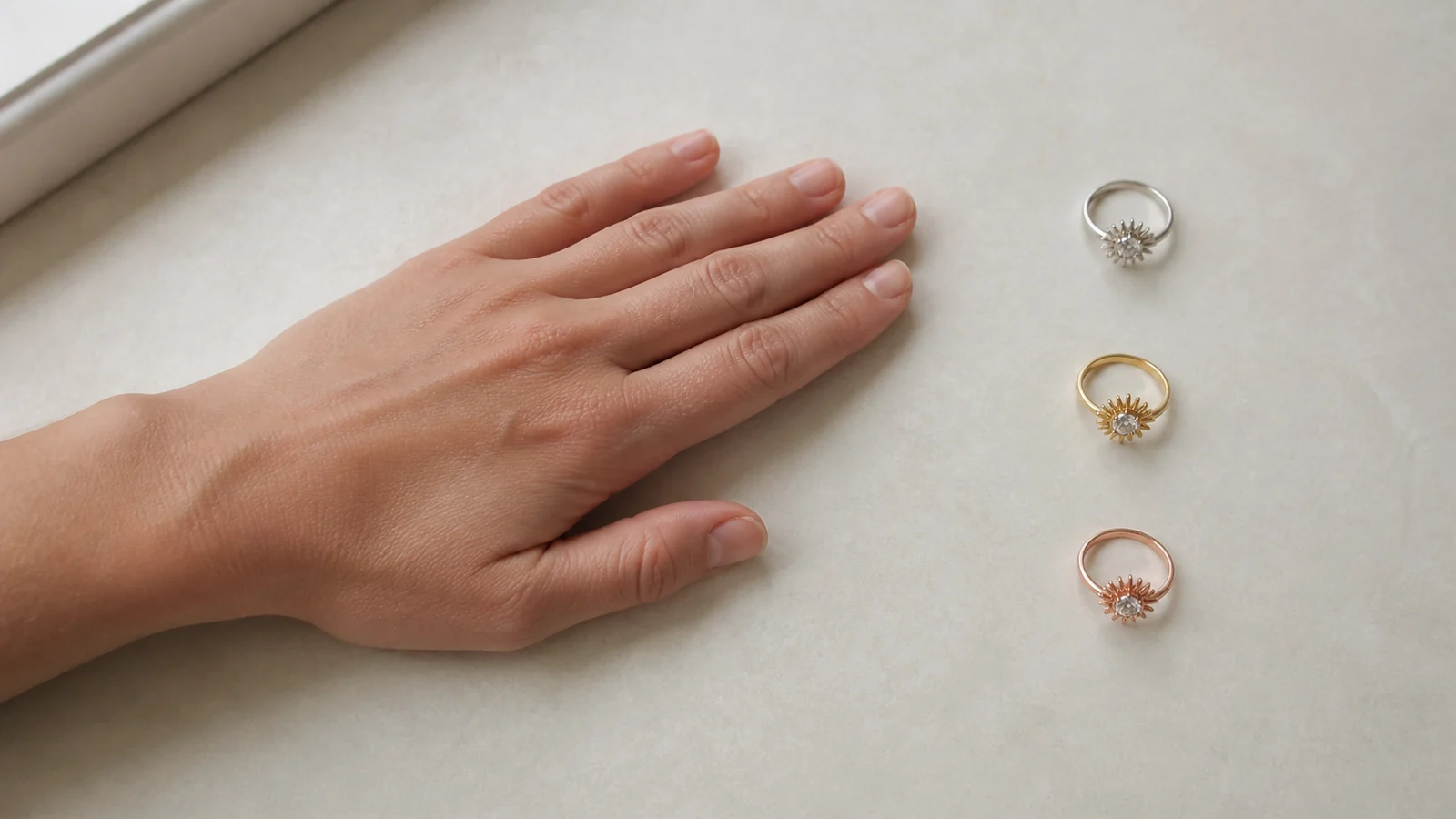
Indirect daylight is a useful comparison environment, but personal preference matters more than a rigid undertone rule.
Move to indirect daylight. Stand near a window without direct sun, colored lamps, or a phone beauty filter.
Place one tone at a time near the intended finger. Look at the complete hand rather than a magnified patch of skin.
Add one familiar accessory. Use the watch, earrings, or necklace you wear most often. The new ring should either coordinate with it or create an intentional contrast.
Step back. A sunshine ring is read at conversation distance, not only in macro photography. Check whether the rays remain distinct.
Repeat under indoor light. If the ring works in both your main daytime and evening environments, the choice is more defensible.
If the motif looks too large or too small regardless of color, the issue may be proportion rather than tone. Use the sunshine ring fit and proportion guide to compare overall motif width, band width, setting height, and finger coverage separately.
Compare the Ring With the Wardrobe You Actually Wear
A ring can look perfect on an isolated white background and feel disconnected from a real outfit. Build a small test palette from clothing you wear repeatedly: one light neutral, one dark neutral, one warm fabric, and one favorite color. Then ask which tone creates the degree of contrast you want.
Compare the ring with fabrics you actually wear instead of choosing from an isolated close-up.
For a quiet everyday result
Repeat a metal color already present in your watch, bag hardware, belt buckle, or small earrings. Keep the rest of the outfit low in shine so the sunburst remains the focal point. White tones often disappear neatly into gray, navy, denim, and black. Yellow tones repeat warmth in cream, camel, olive, and brown. Rose tones can bridge blush, taupe, burgundy, and warm gray. These combinations are options, not restrictions.
For a stronger statement
Use contrast deliberately. A yellow-tone ring can stand out against navy or black; a white-tone ring can look sharp beside camel or chocolate; a rose-tone ring can become more visible against charcoal or deep green. Keep only one or two high-energy surfaces near the hand. Dense sequins, metallic thread, a bright watch, multiple stone bracelets, and a wide sunburst can compete when all appear together.
The existing women’s sunshine diamond ring styling guide goes deeper into outfit texture, stacking space, nails, sleeves, and day-to-evening changes. Here, the narrower goal is to select the visible metal color before making those styling decisions.
How the Sunburst Structure Changes the Best Color Choice
Do not judge color without judging where the metal appears. A design with long polished rays shows much more metal than a halo of small stones. A bezel creates a strong continuous frame around the center. Fine prongs show less color from above but can become more noticeable from the side. A broad band adds a large color block even when the decorative top is delicate.
Metal-dominant sunburst: choose the tone as carefully as you would choose a bracelet, because the rays and band supply much of the visible design.
Stone-dominant halo: compare how the metal outlines the stones at normal distance; a very close photograph can hide that boundary.
Openwork motif: skin and clothing become part of the design through the negative space, so test it on the intended hand.
Raised setting: inspect side views. The gallery may display more metal color than the face-up image suggests.
Wide band: confirm comfort and size as a separate decision; changing color cannot fix pressure, rotation, or poor clearance.
A listing that provides only one front-facing hero image leaves these questions unanswered. Look for side, gallery, hand-scale, and neutral-light views. If they are missing, ask for them rather than guessing.
Mixed Metals Can Make the Choice Easier
You do not need to replace every accessory when a new ring uses a different visible tone. Mixed metals look intentional when each color appears more than once or when one two-tone piece creates a bridge. For example, a white-tone sunshine ring and silver-tone chain can sit with yellow-tone studs and a two-tone bracelet. The repeated colors explain the combination without requiring every item to match.
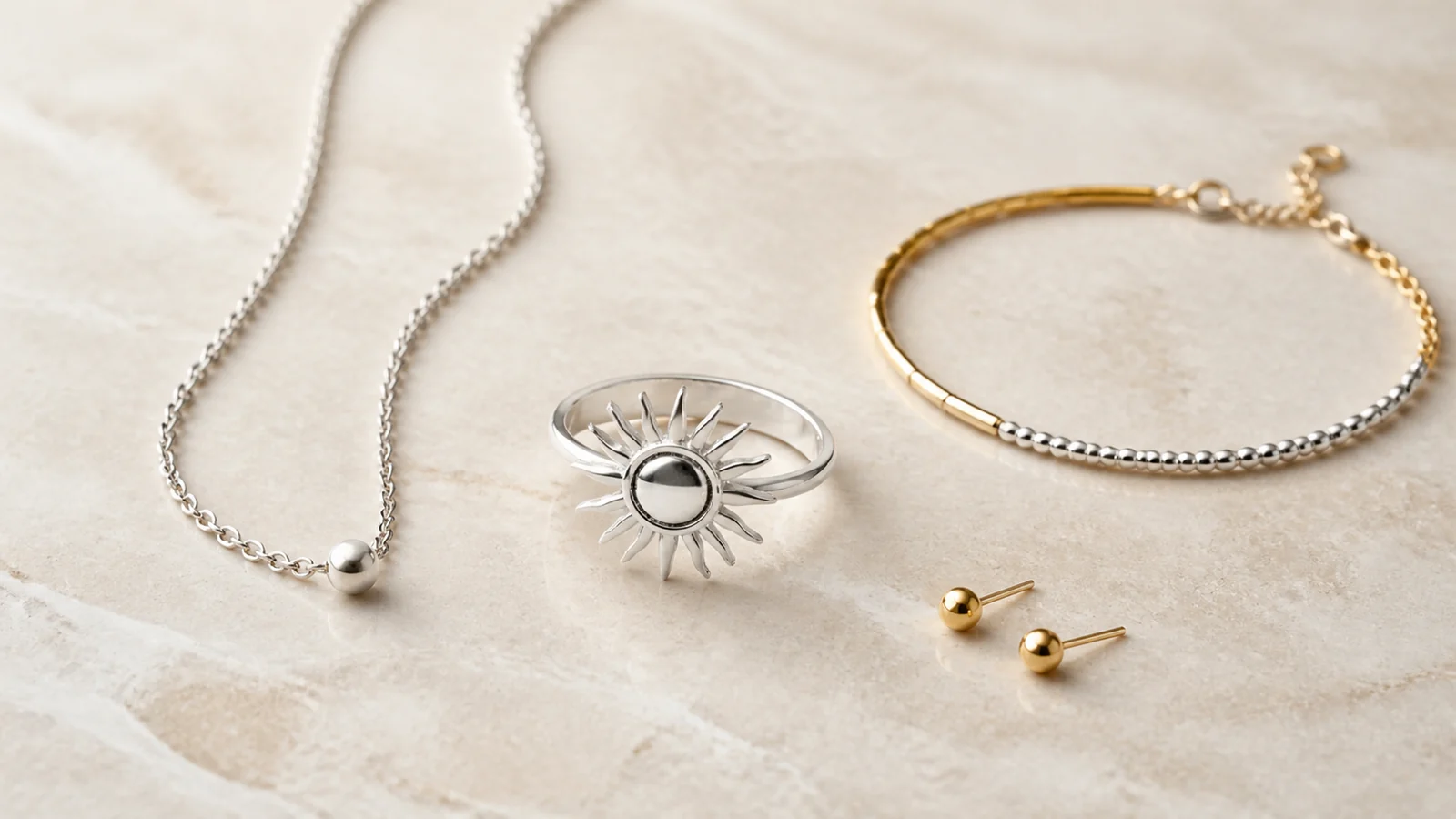
A two-tone bridge and repeated colors can make mixed-metal styling look deliberate.
Control scale as well as color. A radiating ring already contains many lines and reflective points, so supporting pieces can be simpler: small studs, a fine chain, or a slim bracelet. If two statement pieces sit close together on the same hand and wrist, changing their metal colors may increase competition rather than solve it.
Check the Ring Under More Than One Light Source
Metal color is reflected light, so the environment changes what you see. Indirect daylight usually gives the most neutral comparison. Warm household bulbs can make white metal look creamier and intensify yellow or rose. Cool retail or office light can make white metal appear sharper and can mute warmer tones. Highly edited product images may also alter white balance and contrast.
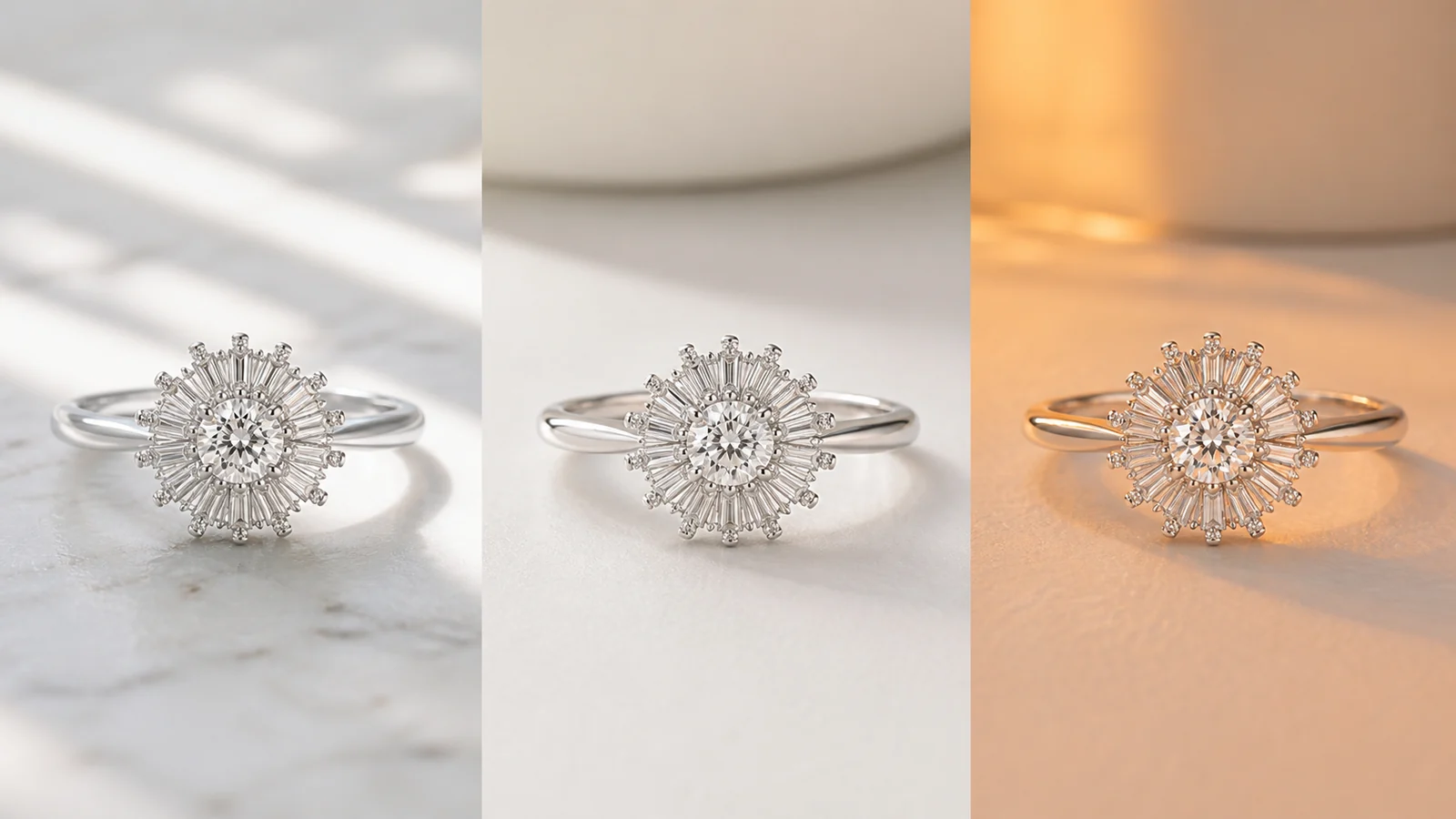
The same visible metal color can look different as the light source changes.
Use a three-light check: indirect daylight, the indoor light where you spend the most time, and the evening light used for dinners or events. Keep the ring and camera angle consistent. If a seller supplies a short neutral-background video, pause it at several angles and watch the metal between flashes from the stones. The steady metal surfaces are more useful for judging color than a single burst of sparkle.
Verify Metal, Finish, Stone, and Dimensions Before Buying
Once you prefer a color, return to facts. Search filters, titles, and photographs help you navigate; the complete live listing should identify the specific piece. Availability, price, finish, and specifications can change, so verify them at the time of purchase.
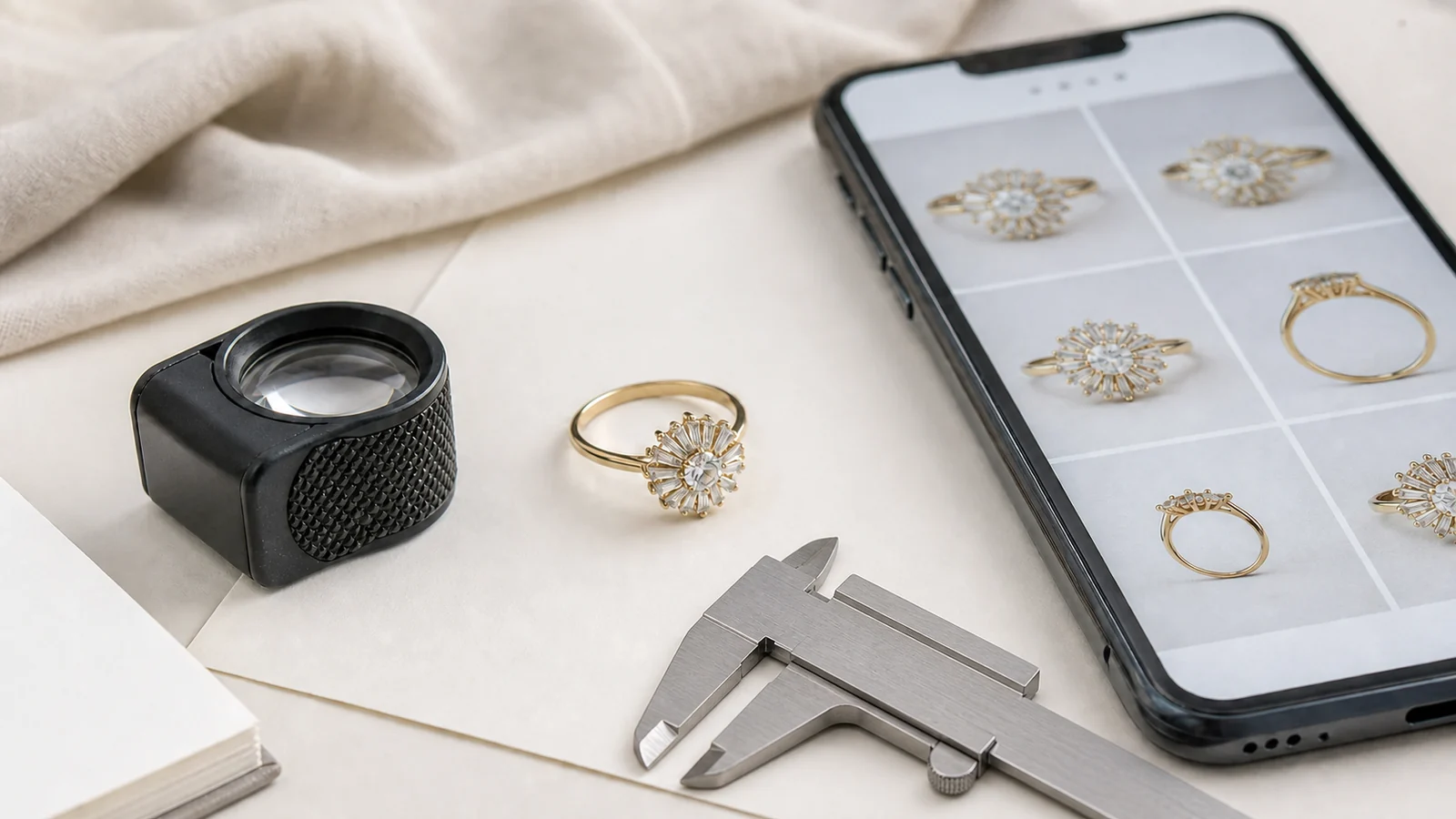
Use written specifications, measurements, and multiple views to verify a ring rather than inferring materials from color.
Read the base-metal line. Do not replace missing information with an assumption based on color.
Read the finish or plating line. Note the seller’s exact wording and any care instructions for that finish.
Confirm the stone identity. Diamond, moissanite, cubic zirconia, and other materials are different; a bright photograph is not identification.
Check complete dimensions. Look for motif width, motif length, band width, and setting height, not only a center-stone size.
Inspect multiple views. Compare front, side, gallery, and realistic hand-scale images under a neutral color balance.
Review current purchase terms. Confirm price, availability, size options, shipping, returns, and care guidance on the live page.
If a listing uses an S925 mark, treat it as a metal fineness mark rather than evidence about the gemstone. The S925 jewelry guide explains that distinction in more detail. After choosing, follow the exact item’s care instructions and use the sunshine ring care guide only as a cautious general framework.
A Practical Seven-Step Decision
Decide whether you want the sunburst to blend with clear stones or create a stronger colored frame.
Shortlist white, yellow, rose, or mixed tone without making assumptions about composition.
Compare each tone in indirect daylight beside your hand and most-worn jewelry.
Test it against four real wardrobe colors and under your main indoor light.
Check how much metal appears in the rays, band, bezel, prongs, and side gallery.
Verify the written metal, finish, stone, dimensions, size options, and current purchase terms.
Choose the option you still prefer after the image, outfit, comfort, and specification checks agree.
This sequence prevents a common online-shopping error: deciding from a beautifully lit color close-up, then discovering that the actual material, side profile, scale, or everyday coordination was never checked.
FAQ: Women’s Sunshine Diamond Ring Metal Colors
Which metal color makes a sunshine ring look brightest?
White metal often creates the most continuous bright look with colorless-looking stones, but brightness also depends on polish, setting structure, stone identity, cut, and lighting. Yellow or rose can make the center appear more defined by adding a visible frame. “Brightest” is therefore a visual preference, not a quality grade.
Should I choose ring color by skin undertone?
Use undertone only as a starting point, not a rule. Compare white, yellow, and rose beside the same hand in indirect daylight, then include your clothing and existing jewelry. The tone you enjoy and will wear consistently is the more useful choice.
Does a gold-colored sunshine ring mean it is solid gold?
No. Gold-colored, gold-tone, gold-plated, vermeil, and solid gold are not interchangeable descriptions. Read the base-metal, fineness, and finish information for the exact ring. Ask the seller when a material description is incomplete.
Can I wear a white-tone ring with yellow-tone jewelry?
Yes. Repeat each visible tone once or use a two-tone piece as a bridge. Keep the supporting jewelry quieter than a large sunburst so the combination looks deliberate rather than crowded.
Can a product photo show the true metal color?
It can provide evidence, but one photograph is not enough. White balance, surrounding surfaces, editing, and lighting can shift appearance. Prefer several views, a neutral-background video, written finish details, and—when available—a real-life view in daylight.
Choose the Color, Then Verify the Facts
A women’s sunshine diamond ring works best when its visible metal tone supports the radiating design and fits the wearer’s real wardrobe, jewelry, lighting, and comfort needs. Compare white, yellow, rose, and mixed tones under consistent conditions; then confirm base metal, finish, stone identity, measurements, and current purchase terms in the live listing. When you are ready to compare current options, browse the Sunshine Jewelry rings collection and treat each individual product page as the authority for that piece.
Choose a women's sunshine diamond ring gift by checking her style, exact ring size, verified listing details, daily routine, and current store policies.