The safest way to care for a women’s sunshine diamond ring is to identify its actual gemstone, metal, plating, and setting first. If the product instructions allow water cleaning, inspect the ring, use warm water with a small amount of mild dish soap and a very soft brush, rinse in a separate bowl, dry with a lint-free cloth, and store it alone in a padded compartment. If any material is unknown, a stone moves, or a prong catches, stop and ask a qualified jeweler before cleaning or wearing it again.
Verify before you wash: “sunshine diamond ring” is a search phrase and design description, not proof that every ring uses diamond or the same metal.
Choose the gentlest compatible method: an unknown, treated, porous, antique, glued, or plated piece may need different care.
Prevent damage between cleanings: remove the ring for impact-heavy or chemical-heavy tasks, wipe away residue, and store it separately.
Treat a generated image as illustration only: the images in this guide do not identify a real product or establish safe care for a specific ring.
This guide addresses cleaning, handling, storage, and inspection. For the design’s general meaning and shopping considerations, read the Sunshine rings for women guide. For scale and hand balance, use the separate fit and proportion guide.
What Is a Women’s Sunshine Diamond Ring?
A women’s sunshine diamond ring usually describes a ring with a radiant visual idea: a round center, rays, a sunburst halo, or stones arranged to create a bright outward effect. The phrase is not a standardized gemological category. One listing may name diamond, another may name moissanite, cubic zirconia, crystal, or a different material. The metal may also vary, and a silver-colored surface does not by itself reveal whether the piece is sterling silver, white gold, platinum, plated base metal, or another alloy.
That distinction matters because care advice depends on what the ring actually contains. A cleaning method that is routine for one durable, untreated stone can be unsuitable for a porous gem, a fracture-filled stone, an antique setting, an intentionally oxidized surface, or a plated finish. Begin with the live product description, order record, packaging, and any care instructions supplied with the exact item. If those sources disagree or omit a material, treat it as unknown rather than guessing from sparkle or color.
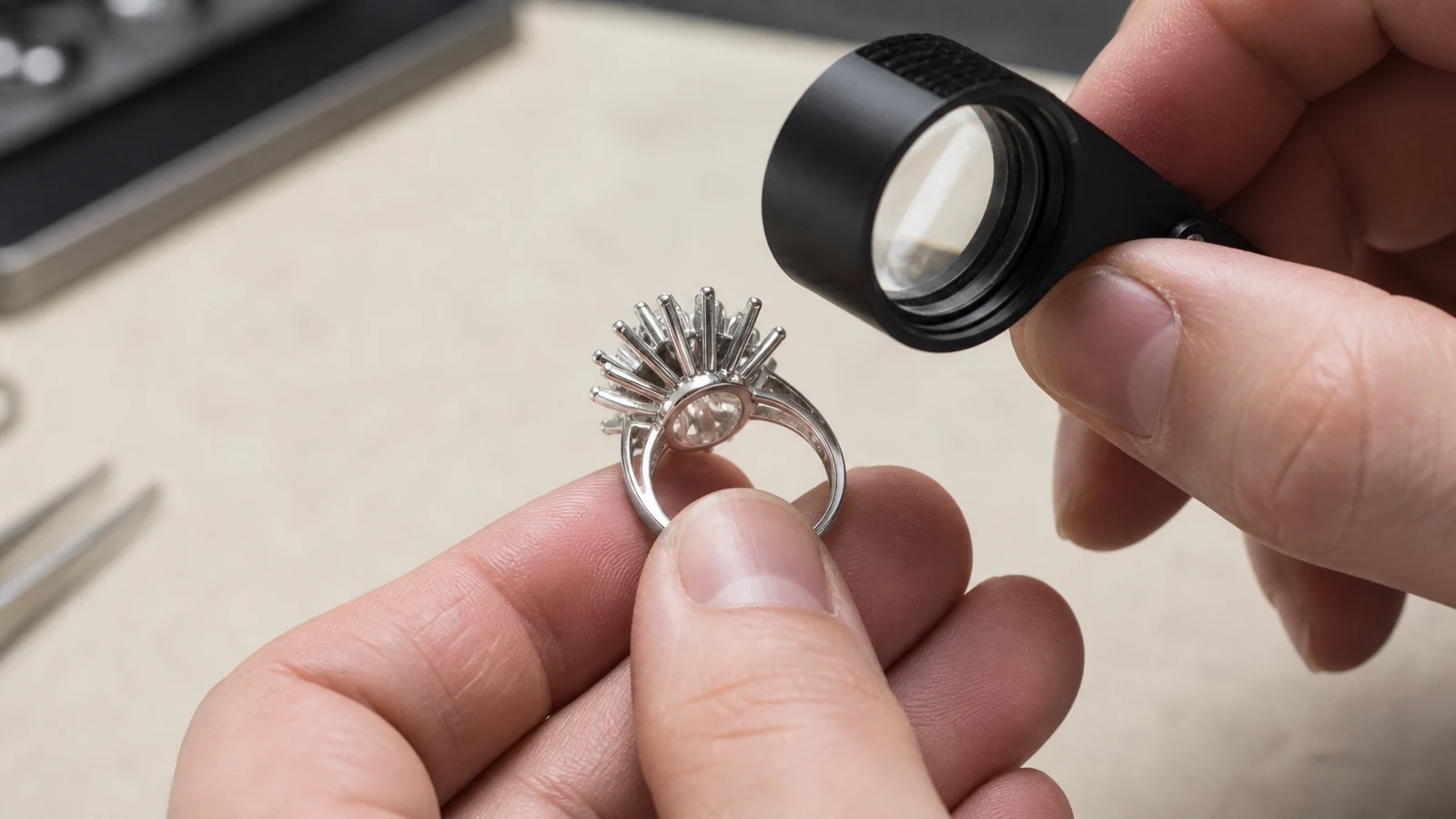
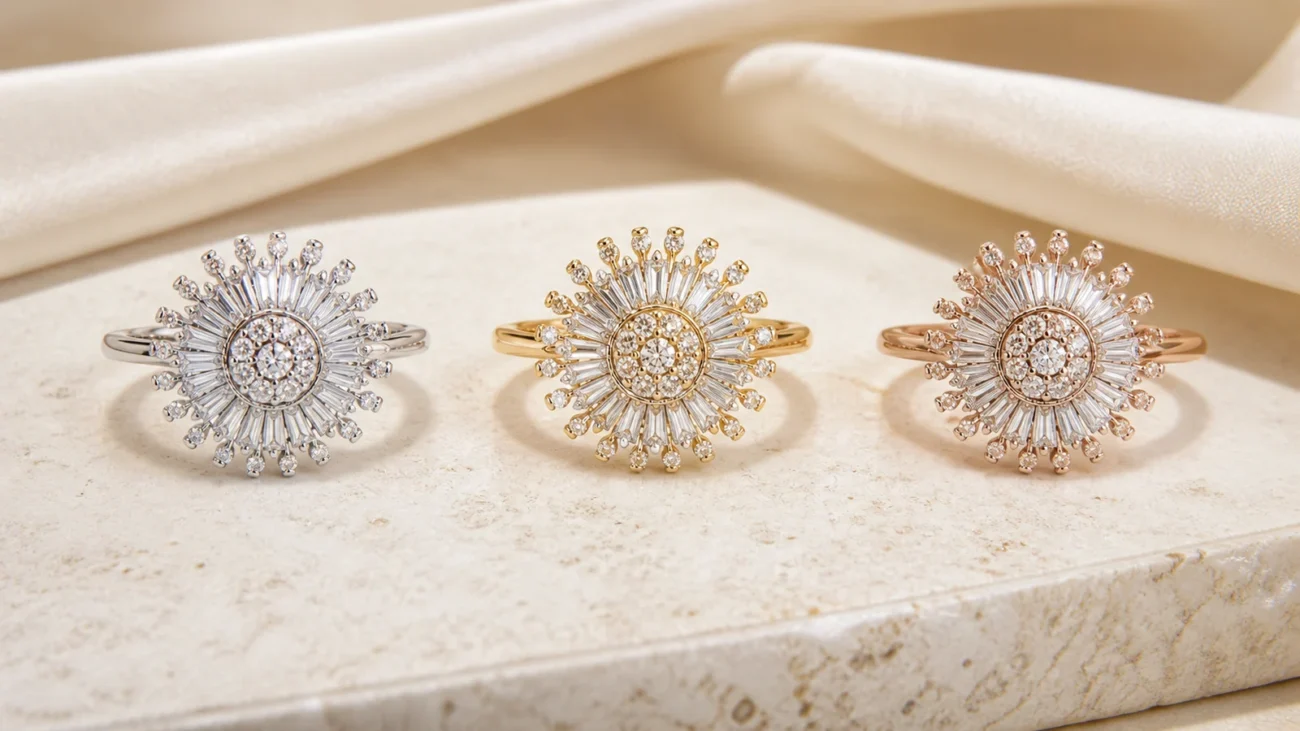
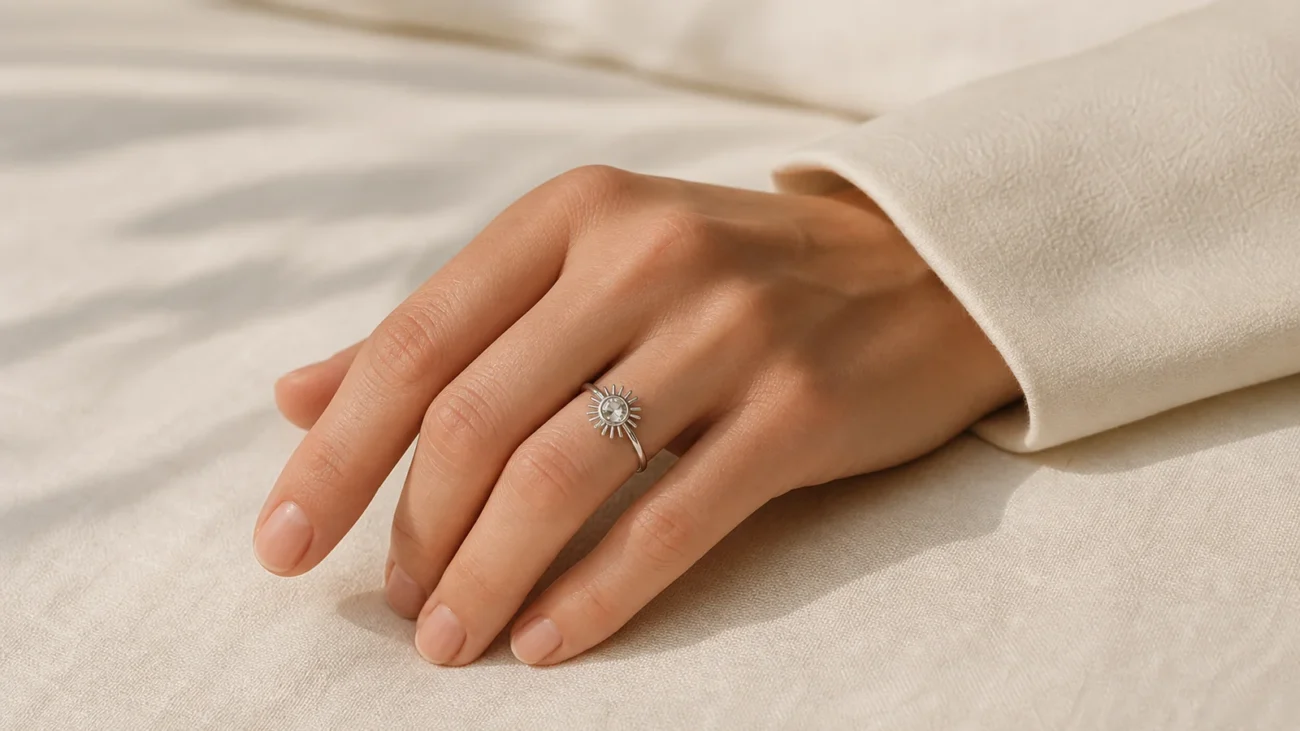
Inspect the setting and confirm the written material details before choosing a cleaning method. This is a generic educational image.
Inspect the Ring Before Any Cleaning
A close look takes less time than a full cleaning and can prevent a loose component from becoming a lost one. Work over a light-colored towel or tray so the ring cannot roll away. Use bright, neutral light and look from the top, side, and underside. You are not trying to diagnose the gemstone; you are deciding whether home cleaning should proceed.
Stop signs that need a professional
A center or accent stone moves, clicks, or changes position under very gentle handling.
A prong looks lifted, bent, unusually thin, or catches on a soft cloth.
The band is bent, split, deeply scratched, or visibly thinning at one point.
Foil, glue, a coating, a filled fracture, an antique component, or a porous material may be present.
The ring has already been exposed to bleach, pool chemicals, a harsh cleaner, or high heat and now looks different.
Do not press a stone to “test” it, tighten prongs with household tools, or keep wearing a ring that snags. Place it in a small padded container and take it to a reputable jeweler. A setting problem is mechanical; adding cleaner cannot fix it.
Build a simple, controlled workspace
For a ring that passes inspection and whose instructions permit gentle water cleaning, prepare two small bowls, warm—not hot—water, a small amount of mild dish soap, a new soft-bristle jewelry brush, and two clean lint-free cloths. Keep the drain closed even when you use bowls. Avoid toothpaste, powdered cleanser, stiff brushes, paper towels, bleach, and unlabeled chemical mixtures. Abrasives can scratch surfaces, while chlorine and other chemicals can affect some metals, alloys, and gemstones.
How to Gently Clean the Ring Step by Step
The Gemological Institute of America notes that warm water, mild dish soap, and a soft brush are suitable for many—but not every—gem material. Its broader jewelry care guidance also emphasizes material-specific exceptions. Use the following sequence only when the exact ring’s instructions allow it.
Prepare the bath. Add a small amount of mild dish soap to a bowl of warm water. You need a gentle solution, not heavy foam.
Clean without force. If soaking is allowed, use only the time recommended for that item. Brush lightly around the underside, gallery, and setting, where lotion and skin oils often collect. Support the ring by the band; do not lever the brush against prongs.
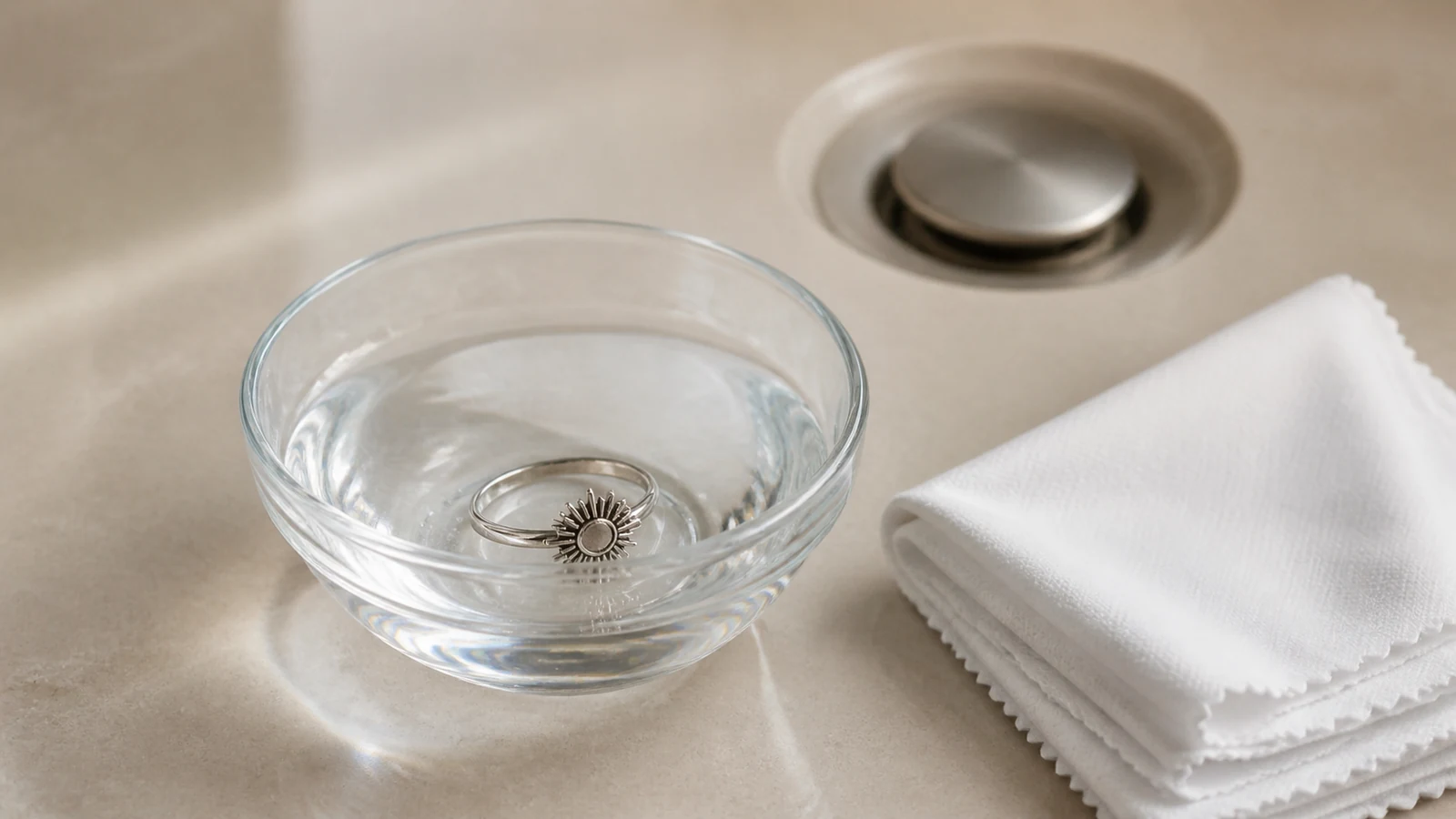
Rinse in a second bowl. Move the ring into clean water in a bowl instead of holding it under an open faucet. This limits the risk of losing a loose component down a drain.
Blot, then air-dry. Pat the ring with a clean lint-free cloth and let hidden areas dry completely on a protected surface. Do not use a hair dryer, radiator, or direct high heat.
Inspect again. Look for movement, snagging, residue, or a change in finish. If anything appears wrong, stop wearing the ring and arrange a professional check.
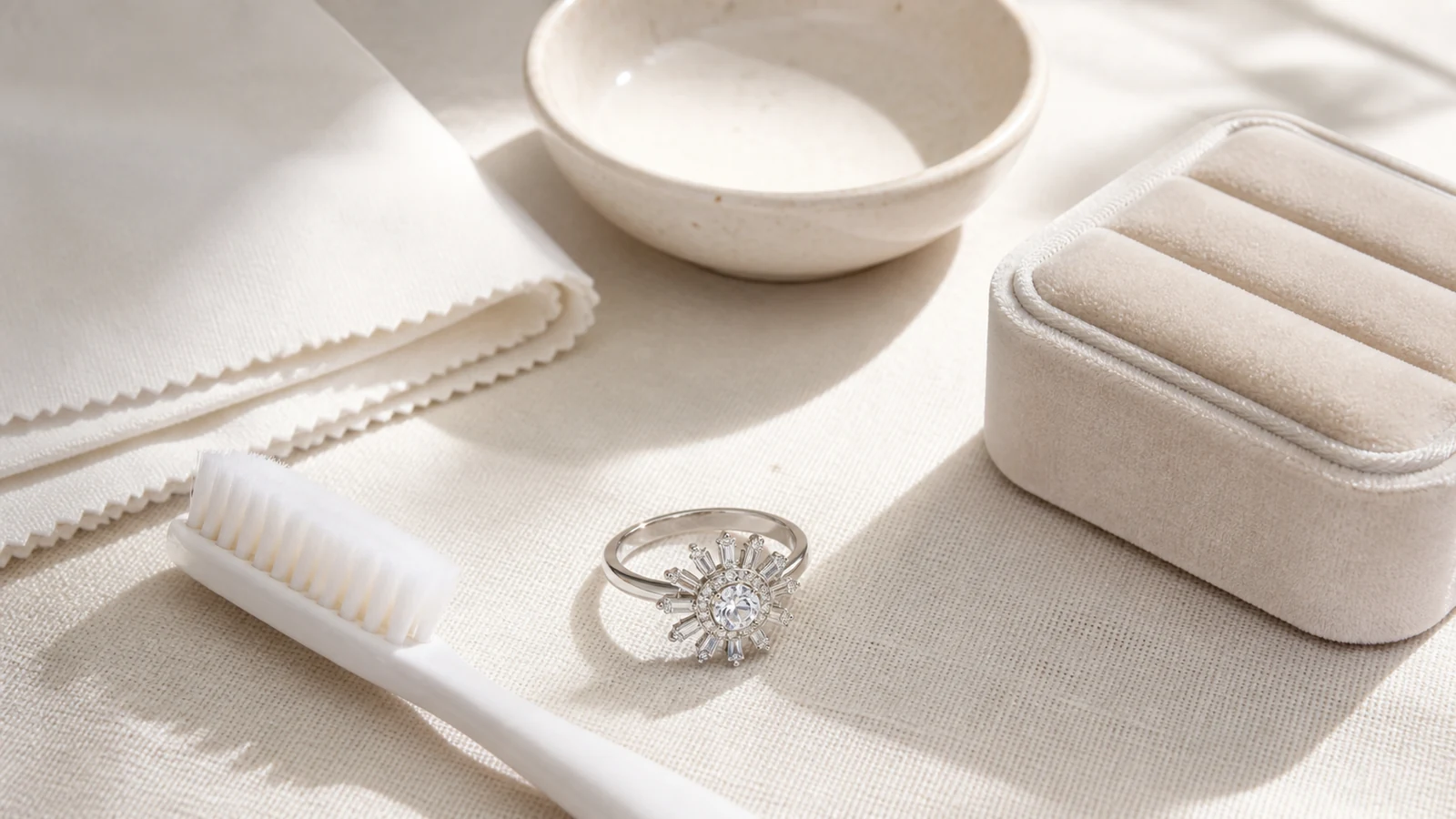
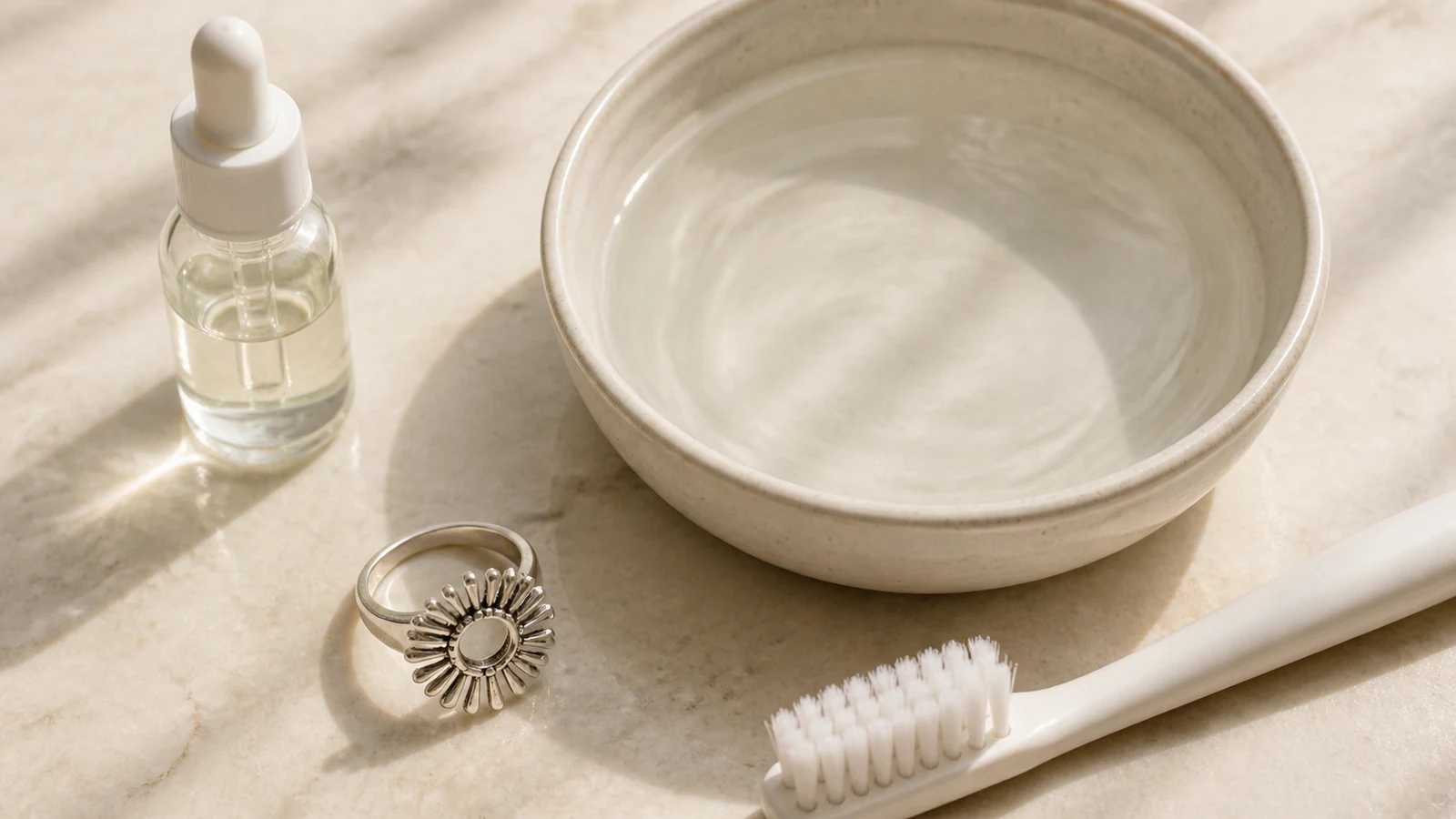
A minimal cleaning setup makes it easier to control what touches the ring. Confirm compatibility first.Rinse in a separate bowl and keep the drain closed; then blot and allow the setting to dry fully.
Choose the Method by Material and Construction
No single cleaner is correct for every radiant ring. Use this decision table as a boundary-setting tool, then follow the seller’s instructions for the exact piece.
What you know
Conservative next step
What to avoid until verified
Gemstone, treatment, or metal is unknown
Use a dry lint-free cloth and request written care guidance or professional identification
Seller confirms gentle water cleaning is compatible
Warm water, a small amount of mild dish soap, and a very soft brush
Hot water, abrasive paste, stiff bristles, force around prongs
Plated or coated finish
Follow the finish-specific instructions and use minimal friction
Aggressive polishing that may thin or change the surface
Verified sterling silver with compatible stones
Use the approved method for both the silver and every set material
Assuming a silver polishing product is safe for stones, plating, or darkened details
Loose setting, antique construction, or delicate material
Keep it dry and protected until a qualified jeweler examines it
Home machines, vigorous brushing, do-it-yourself prong work
If the ring is verified as sterling silver, the site’s 925 sterling silver care guide explains tarnish and storage in more detail. Do not apply that guidance to a piece merely because it looks silver-toned.
Daily Habits That Reduce Residue and Impact
Cleaning is only one part of care. A sunburst design may have many exposed edges, small settings, or raised elements, so preventing repeated impact and residue can matter as much as restoring shine. The right routine depends on the ring’s construction and on your activities.
Put the ring on after lotions, sunscreen, fragrance, cosmetics, and hair products have dried.
Remove it before gardening, weight training, contact sports, moving furniture, and household cleaning with chemicals.
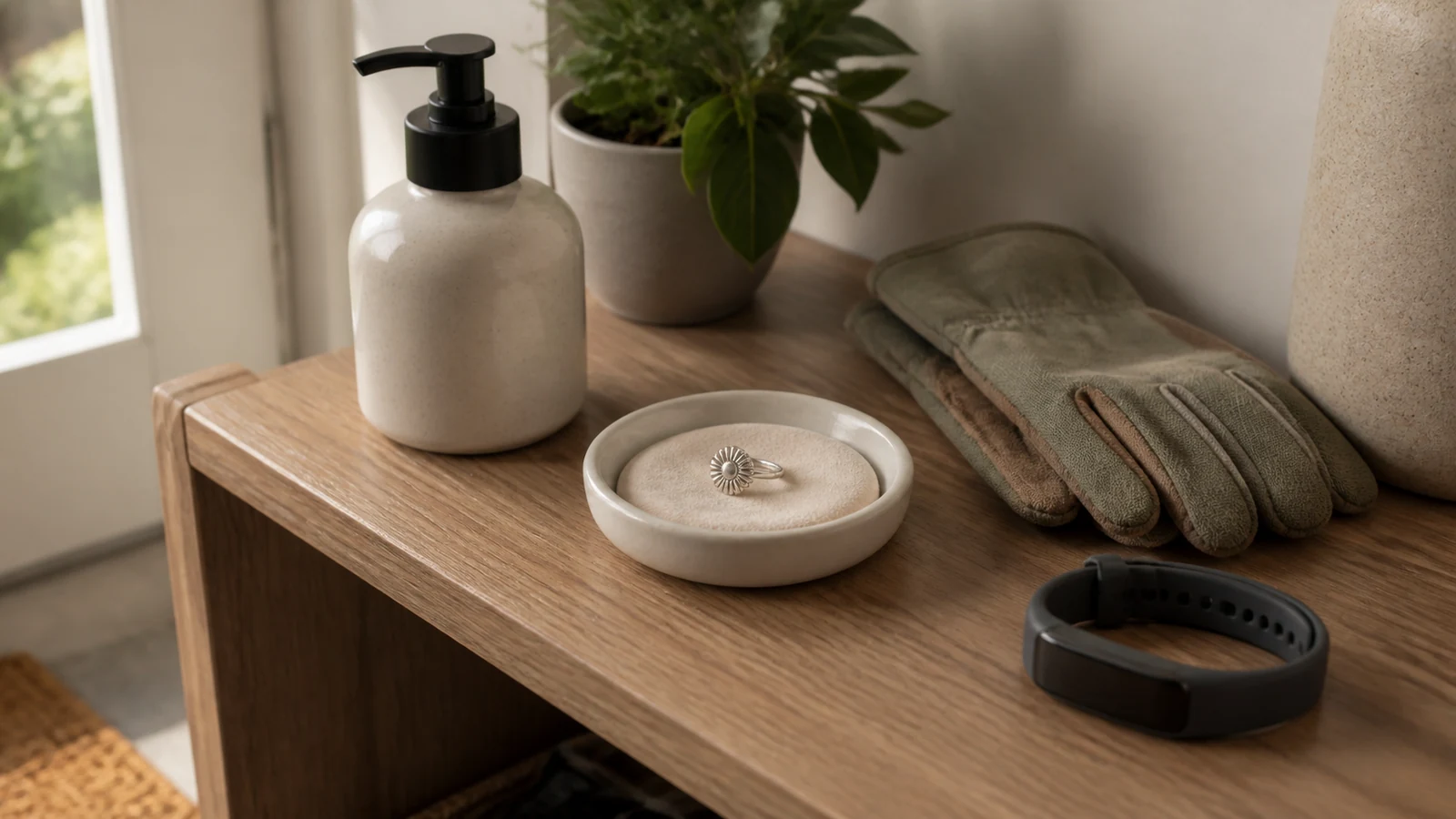
Use the band—not the raised motif—to take the ring off, and place it immediately in a designated dish or pouch.
After ordinary wear, wipe the band and accessible surfaces with a clean lint-free cloth if the care instructions permit.
Do not stack the ring tightly against a neighboring band if the two pieces rub, trap residue, or press against delicate settings.
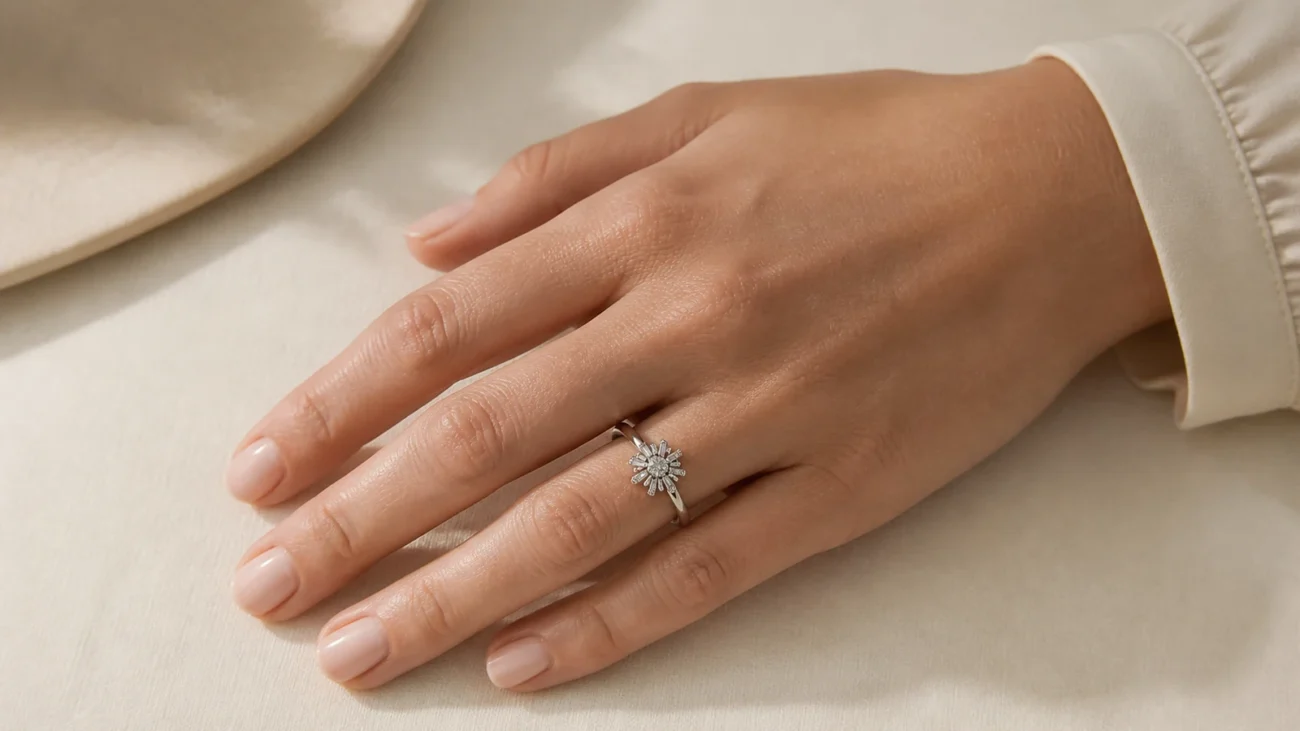
A designated landing place makes removal before lotion, chores, gardening, or exercise easier to remember.
When styling the ring again, the outfit and stacking guide can help you leave useful visual space around a radiant motif. Care still comes first: two attractive rings are not a practical stack if their edges continually strike each other.
Store and Travel With the Ring Separately
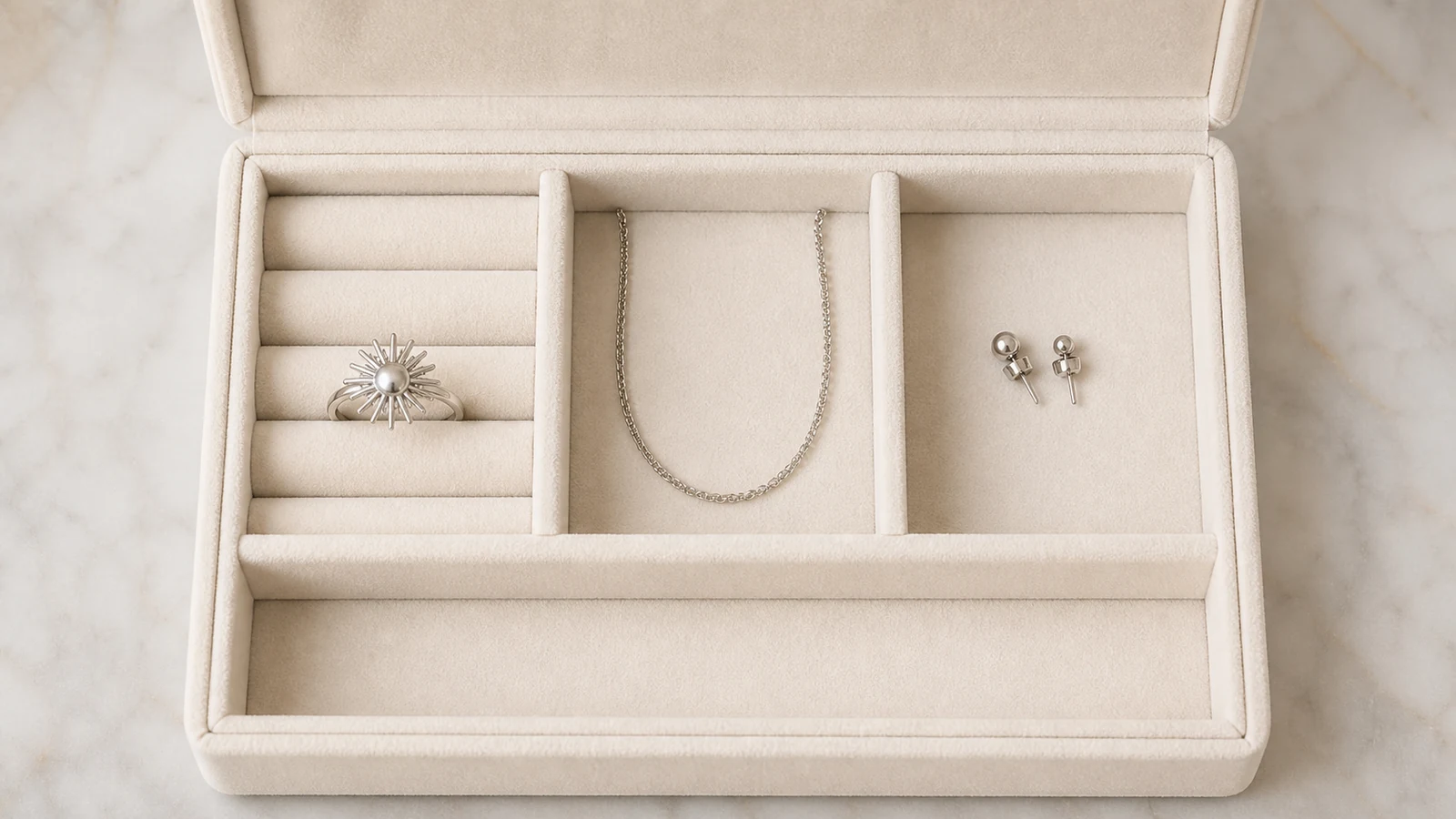
Drop-in storage invites scratches, tangles, and pressure on raised settings. Place the clean, completely dry ring in its own padded slot, soft pouch, or small box. Keep it from touching harder stones, metal chains, watch cases, and other rings. The goal is not elaborate packaging; it is separation, padding, and a stable location.
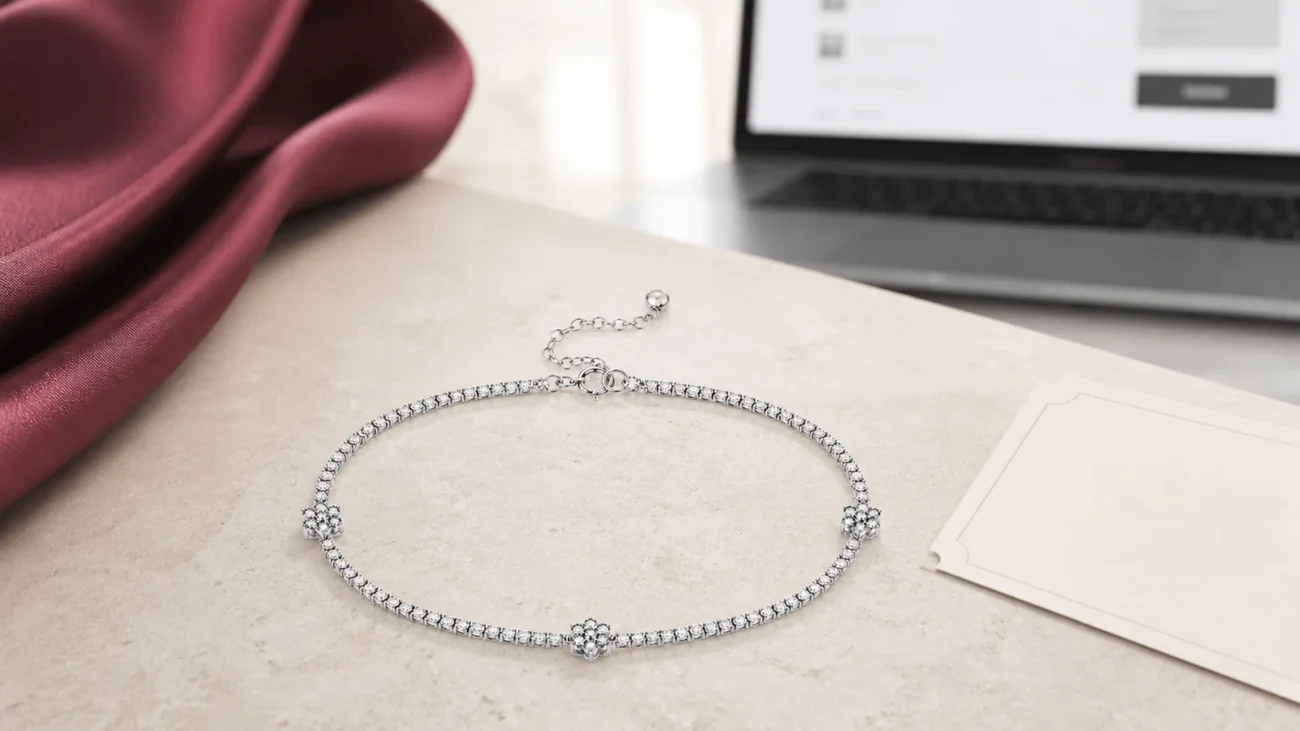
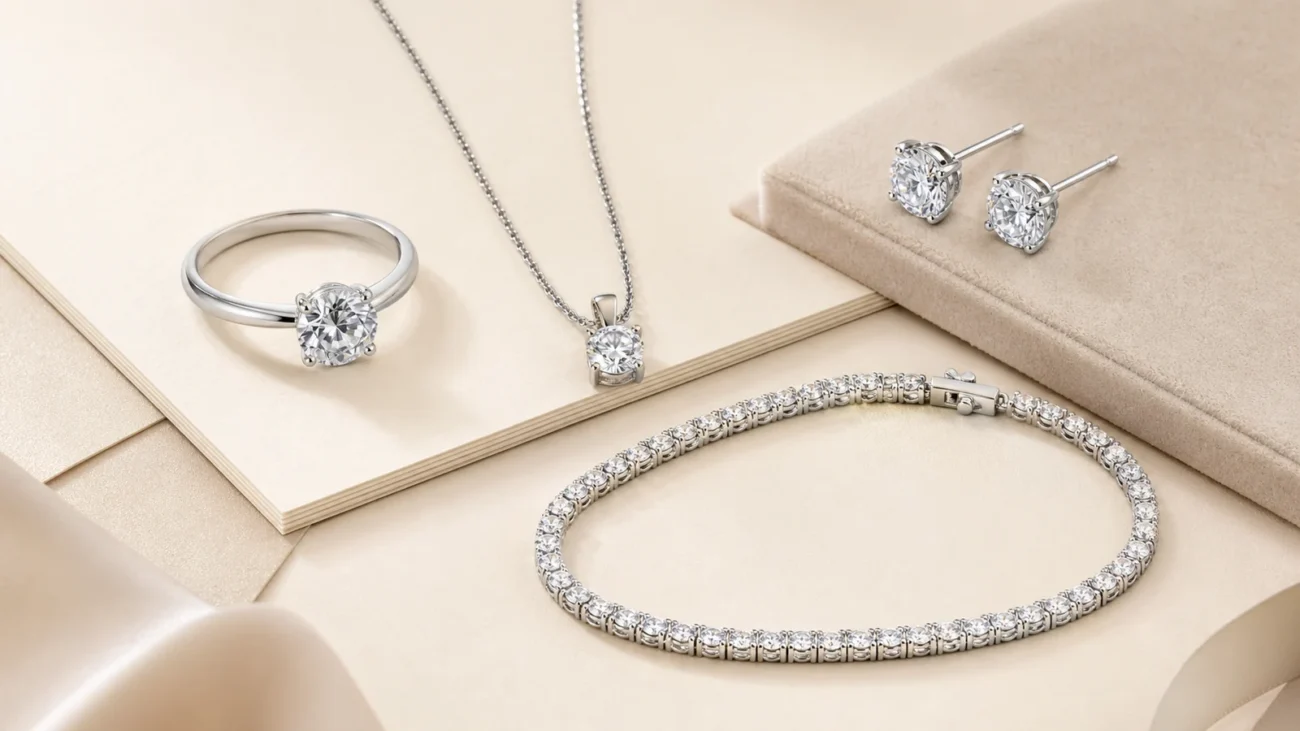
Separate compartments reduce contact between the ring, chains, and other jewelry. The pieces shown are generic.
For travel, use a compact rigid case with a secured ring roll rather than a loose pocket or zip compartment. Keep the ring in your personal control, and check the case before leaving a hotel, vehicle, or security area. If the verified metal is sterling silver, an appropriate anti-tarnish pouch may help during storage; first confirm that the pouch and any enclosed strip are compatible with every stone and surface treatment.
When to Ask a Jeweler for Inspection or Cleaning
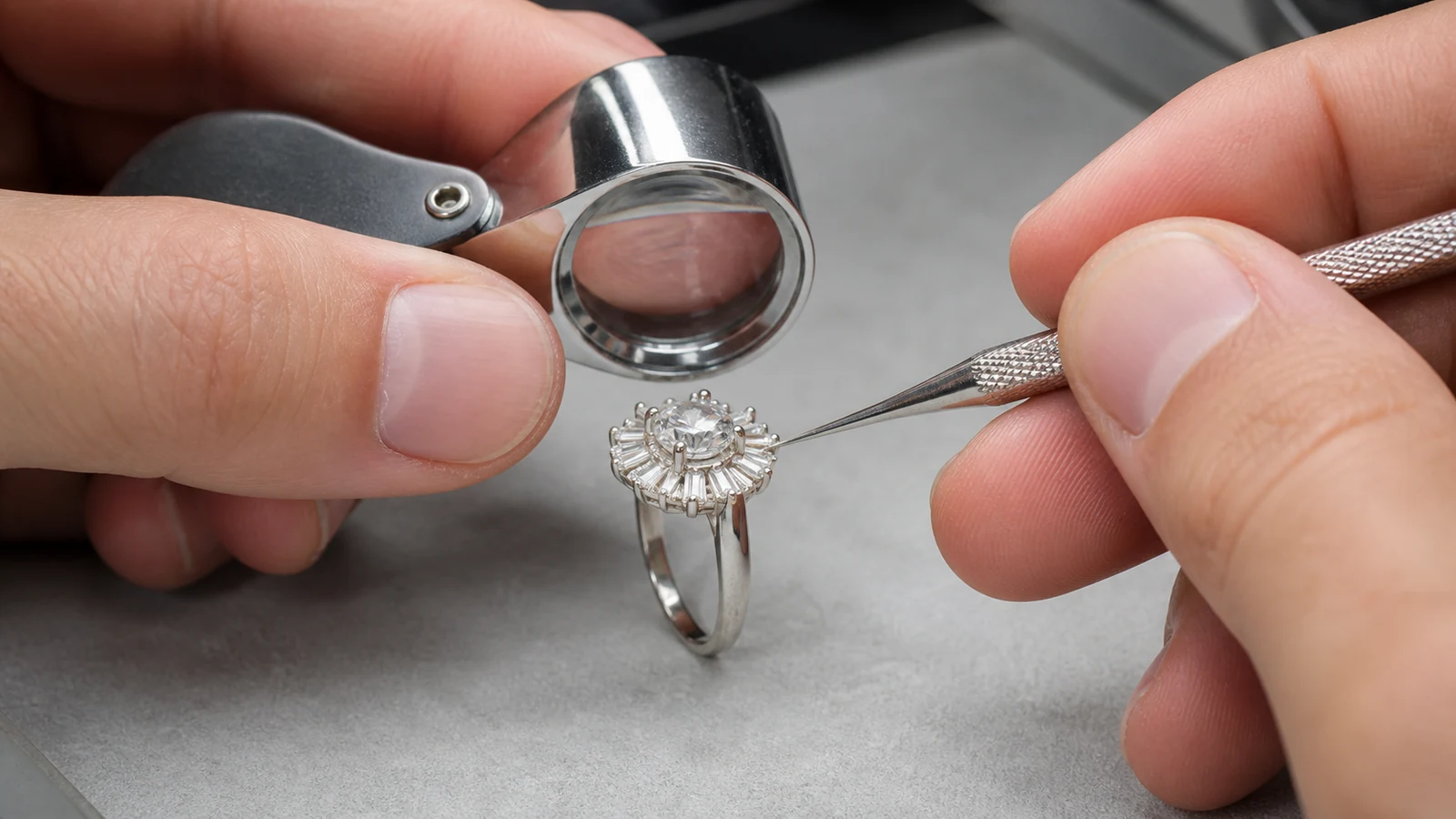
Professional care is appropriate whenever the problem is structural, the materials are uncertain, or the ring needs a machine or compound you cannot verify. Seek help before continued wear if a stone rattles, a prong catches, the motif tilts, the band is bent, or residue remains in a delicate setting after gentle care. Also ask before using steam or an ultrasonic cleaner. GIA’s ultrasonic-cleaner guidance explains why fillings, fractures, coatings, heat sensitivity, and setting condition can change the answer.
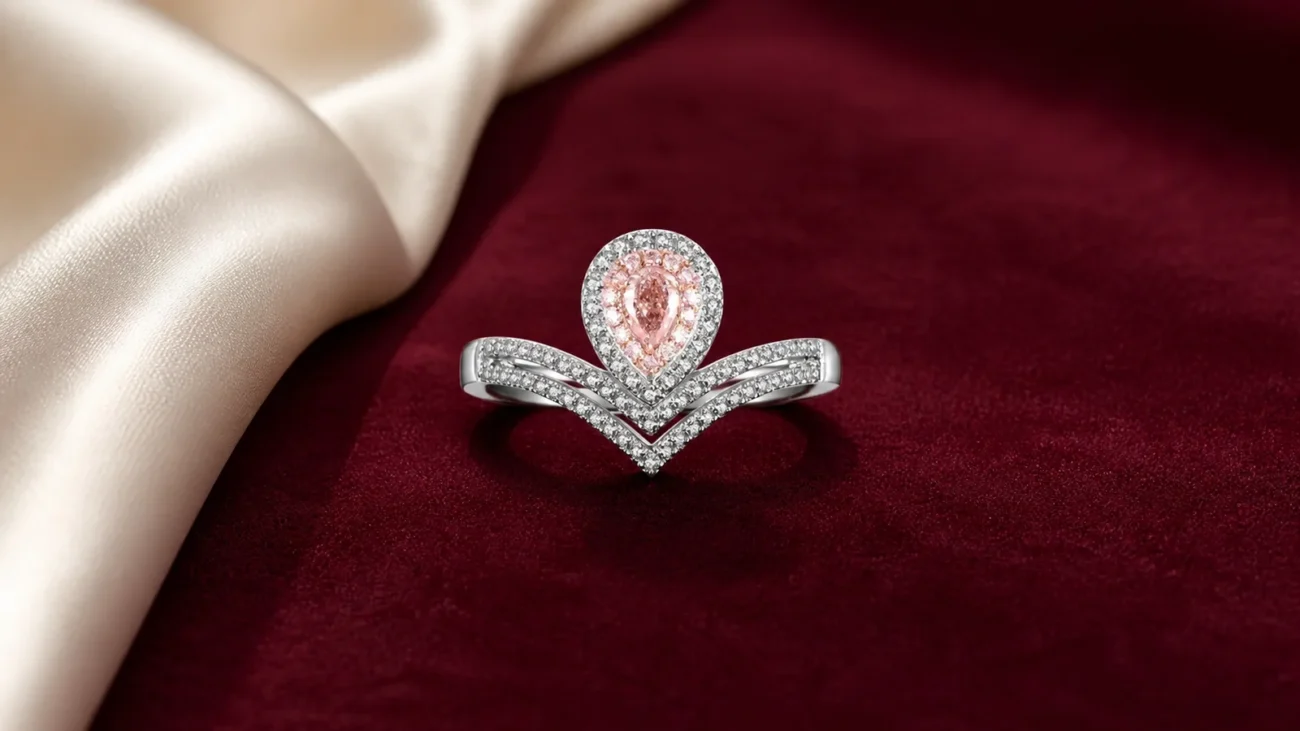
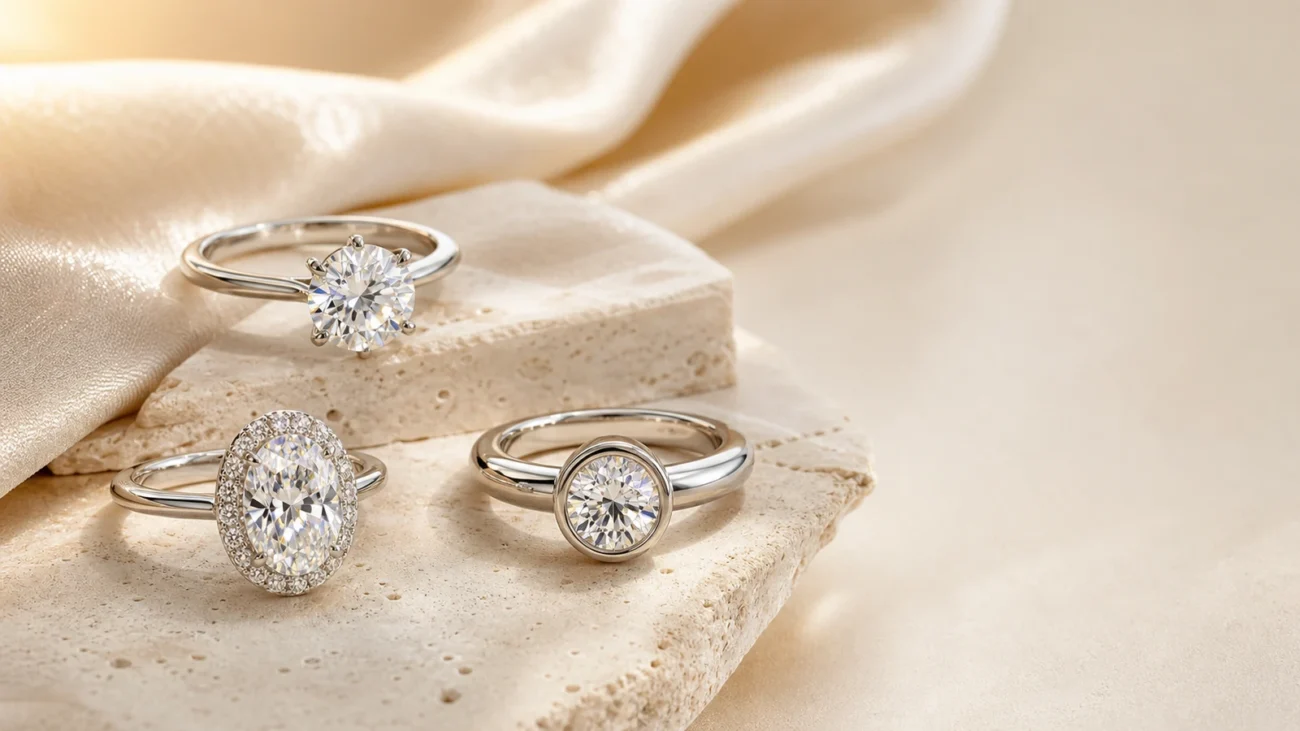
A professional inspection is the safer choice when materials or setting security are uncertain.
Bring the product description, receipt, care card, or report if you have them. Ask the jeweler to identify the cleaning method they recommend for the verified materials and construction. A careful answer should be conditional, not a blanket promise that every clear stone or silver-colored ring can be treated the same way.
Women’s Sunshine Diamond Ring Care FAQ
Can I clean the ring with toothpaste?
No. Toothpaste is abrasive and can scratch or dull some metals, coatings, and gems. Use only a method approved for the exact materials.
Is an ultrasonic cleaner safe?
Not automatically. Ultrasonic vibration can be unsuitable for some treated, fractured, coated, delicate, or loosely set materials. Use one only after a qualified jeweler confirms the ring is compatible and structurally sound.
Does the word “diamond” in the search phrase prove the stone is diamond?
No. A search phrase is not a material specification. Confirm the gemstone in the live listing, order record, or reliable documentation tied to the exact ring.
Why does a ring look dull or cloudy?
Surface oils, lotion, soap film, and debris beneath the setting can reduce visible sparkle, but appearance alone cannot identify the cause. If approved gentle cleaning does not help, request an inspection instead of escalating to harsher chemicals.
Can I rinse the ring directly in the sink?
A separate bowl is safer. Keep the drain closed and inspect the ring before and after cleaning so a loose component is less likely to disappear.
How often should I clean it?
Use condition and the product’s care instructions rather than a universal calendar. Wipe compatible surfaces after wear, clean gently when residue builds, and seek professional care when the setting or materials need expert judgment.
A Practical Care Plan
Start with evidence: identify the gemstone, metal, finish, setting, and seller instructions. Inspect before cleaning, choose the least aggressive compatible method, rinse and dry in a controlled workspace, reduce impact during daily wear, and store the ring alone. If anything is unknown or unstable, protect the ring and ask a professional rather than experimenting.
When you are ready to compare real options, browse the Sunshine Jewelry rings category and read each live product description for its actual materials and care details. Design photographs can inspire you; written specifications should determine how a particular ring is treated.
Choose a women's sunshine diamond ring gift by checking her style, exact ring size, verified listing details, daily routine, and current store policies.
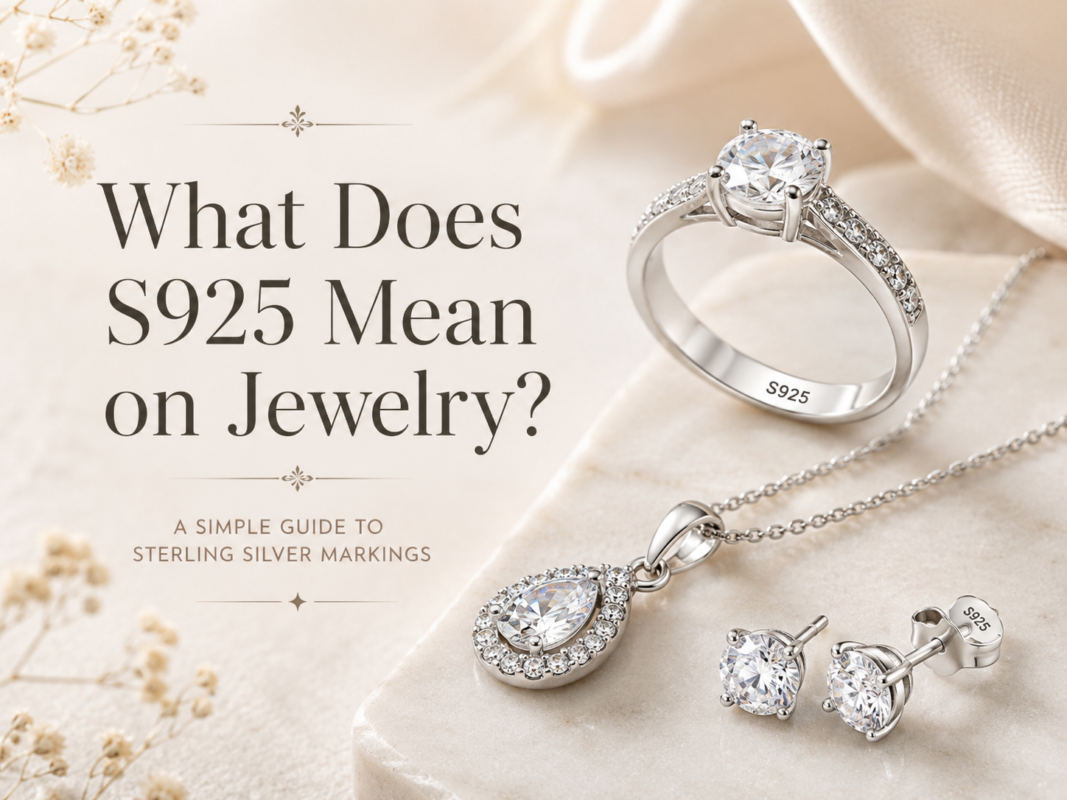
Learn what S925 means on jewelry, why it represents 92.5% sterling silver, where the stamp appears, how it differs from silver-plated jewelry, and how to care for it.