Quick answer: For most first-time buyers, a round moissanite stud with a visible diameter of about 5–6 mm gives a balanced everyday look. Choose 3–4 mm for subtle sparkle, 6.5–7 mm for more presence, and 8 mm or larger when you want a statement. The best size is the one that suits your earlobe, setting, hairstyle, comfort preferences, and personal style—not simply the largest stone within budget.
This moissanite stud earrings size guide explains how the main size ranges look, why millimeters are more useful than carat labels, and how shape and setting change an earring’s face-up appearance.
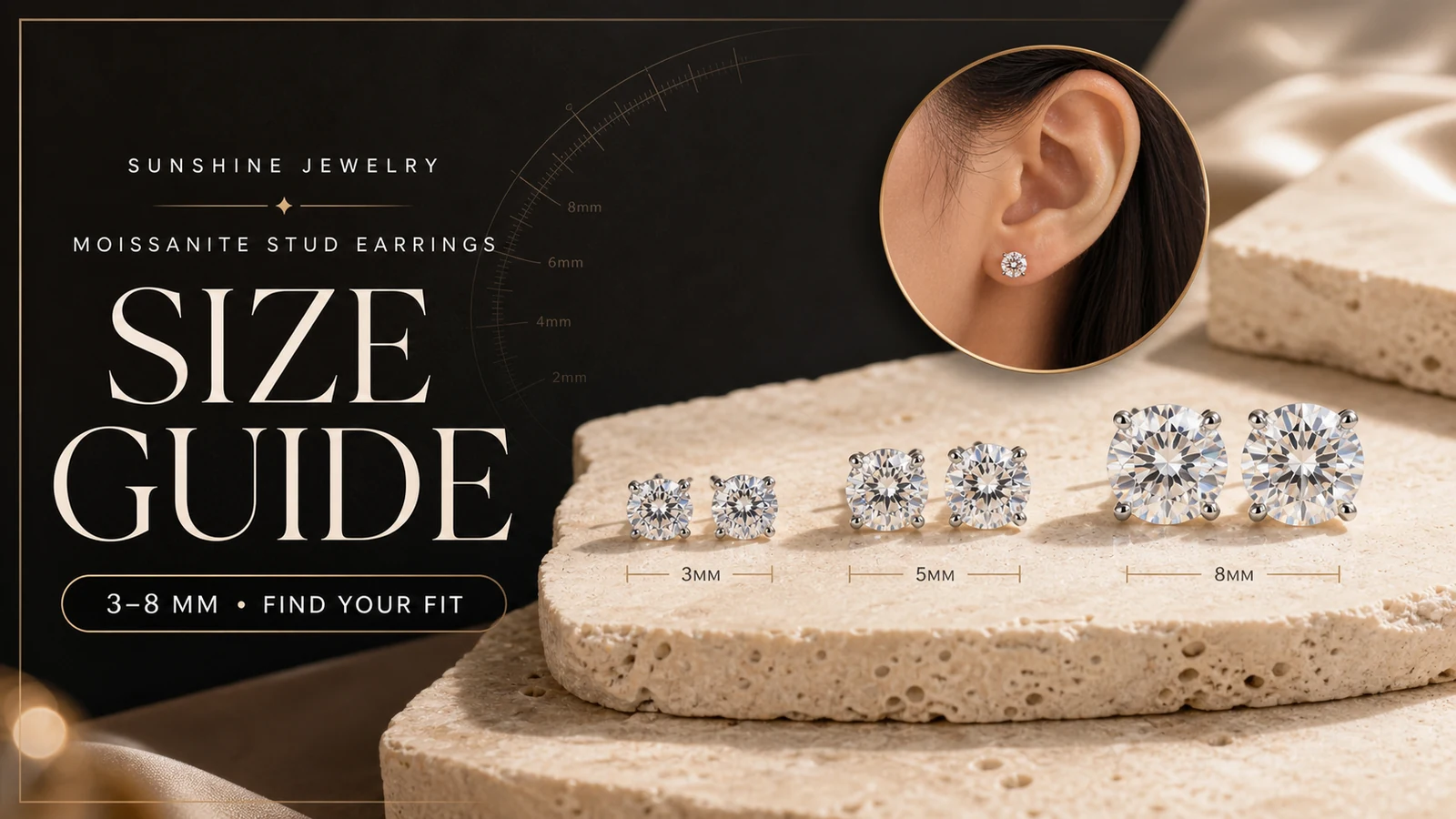
Moissanite stud size at a glance
3–4 mm: delicate and understated
5–6 mm: versatile for everyday wear
6.5–7 mm: noticeable, classic sparkle
8 mm and above: bold, occasion-ready presence
These ranges refer to the approximate visible diameter of a round center stone. A halo, cluster, bezel, or elongated shape can change the total footprint.
Why millimeters matter more than carat labels
Carat is a unit of weight, while millimeters describe physical dimensions. That distinction matters because moissanite and diamond do not have the same density. Two stones described with similar carat-equivalent language may not have exactly the same weight, and different cuts can spread that weight differently.
When comparing stud earrings, look for the center stone’s width and height in millimeters. For a round stone, the diameter gives you the clearest idea of how much space it will cover on the earlobe. Also check whether a listing describes the size of each earring or the total for the pair.
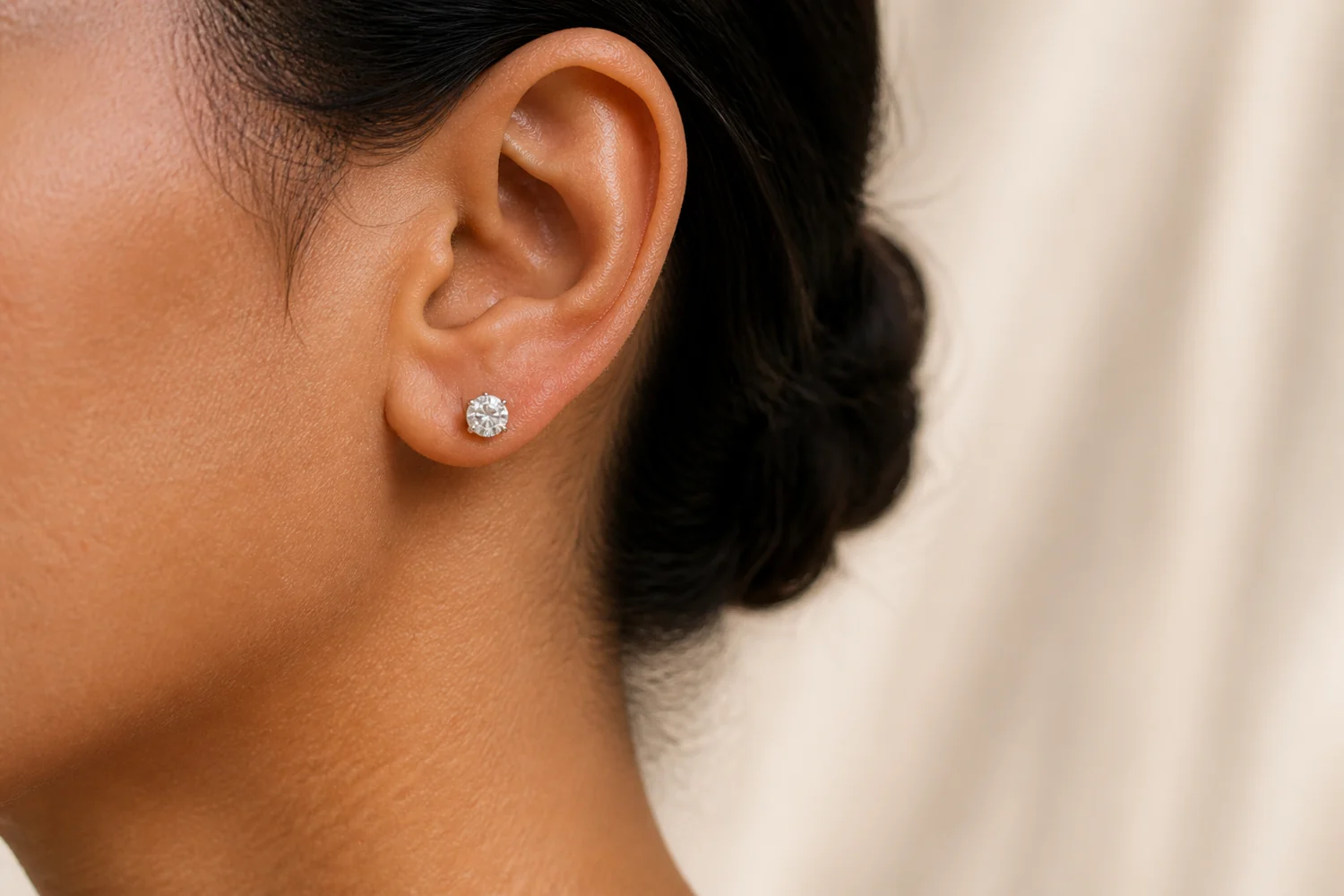
A medium round stud creates a noticeable but balanced everyday look. Individual fit will vary with earlobe size and piercing position.
Moissanite stud earrings size chart
Visible round diameter
General appearance
Often suits
Check before buying
3–4 mm
Minimal, delicate sparkle
Understated outfits, second piercings, small lobes
Very petite stones can be less visible with long or voluminous hair
5–6 mm
Balanced and versatile
Work, weekends, first pair of moissanite studs
Compare the setting’s outer width, not only the center stone
6.5–7 mm
Noticeable classic stud
One-pair wardrobes and stronger everyday sparkle
Confirm the basket sits comfortably and the backing feels secure
8 mm+
Bold statement
Events, dramatic styling, buyers who prefer larger jewelry
Larger or heavier settings may sit differently on soft or small lobes
Use the ranges as a visual starting point, not a rule. Your earlobe and the complete setting determine the final look.
How to choose your best size in five steps
1. Decide how visible you want the earrings to be
Start with the effect you want. A quiet accent calls for a smaller stone, while a signature pair should remain visible from conversational distance. If you are buying your first pair and want maximum versatility, the middle of the chart is usually the easiest place to begin.
2. Compare the measurement on your own ear
Hold a metric ruler near your earlobe or cut paper circles in the sizes you are considering. Use a mirror and view them from both close range and a few steps away. This simple check is more useful than judging an enlarged product photograph.
3. Account for the complete setting
A 5 mm solitaire and a 5 mm center stone surrounded by a halo will not look the same. Prongs add little visual width; bezels create a clean rim; halos and clusters can make the overall design appear much larger. Always check whether the listed measurement refers to the center stone or the full earring.
4. Think about comfort and backing style
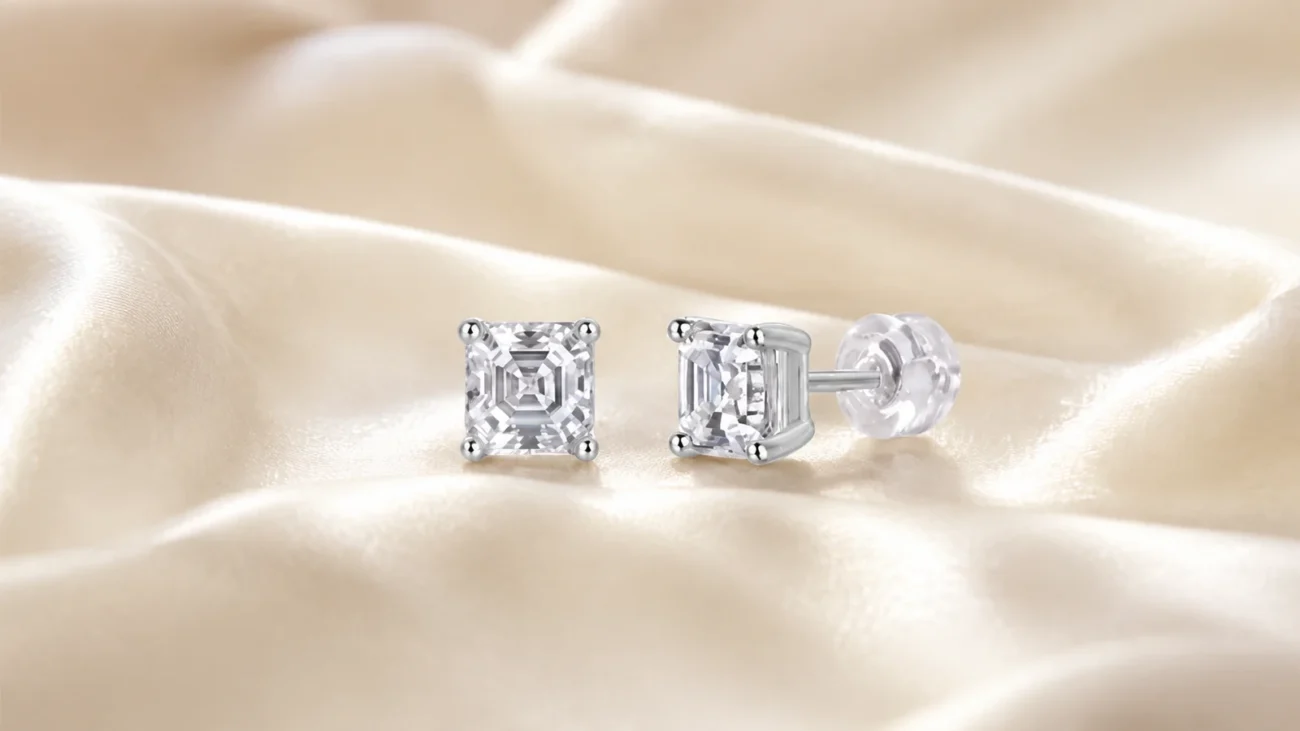
A low-profile basket may sit closer to the ear, while a tall setting projects farther forward. If you prefer larger studs, look for a well-proportioned basket and a backing that supports the earring without pinching. Comfort is personal, so review post length, metal, and backing information before ordering.
5. Match the size to how you dress
Small studs blend easily into layered jewelry. Medium studs can move from office clothing to evening outfits. Larger stones create a focal point and may need fewer competing accessories. Your normal hairstyle matters too: a size that looks prominent with hair pulled back can feel more subtle beneath long hair.
Shape and setting can change perceived size
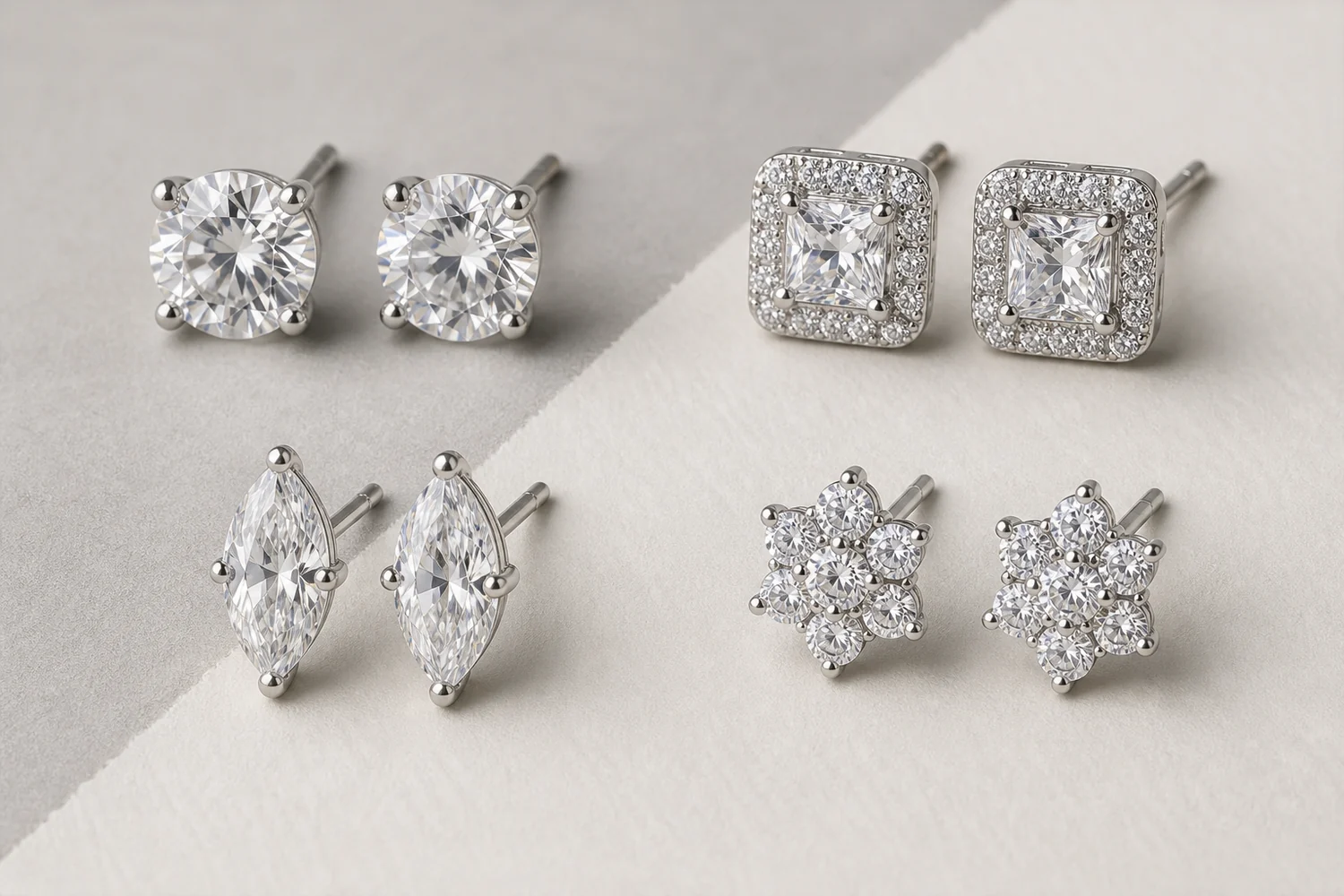
Setting and shape can change face-up presence even when center-stone measurements are similar.
Diameter is straightforward for round stones, but elongated shapes use two measurements. A marquise, oval, pear, or emerald-style stone can look larger in one direction while remaining narrow in the other. Compare both length and width, then consider how the design will sit on your piercing.
Round solitaire: the easiest style to compare by diameter and a versatile starting point.
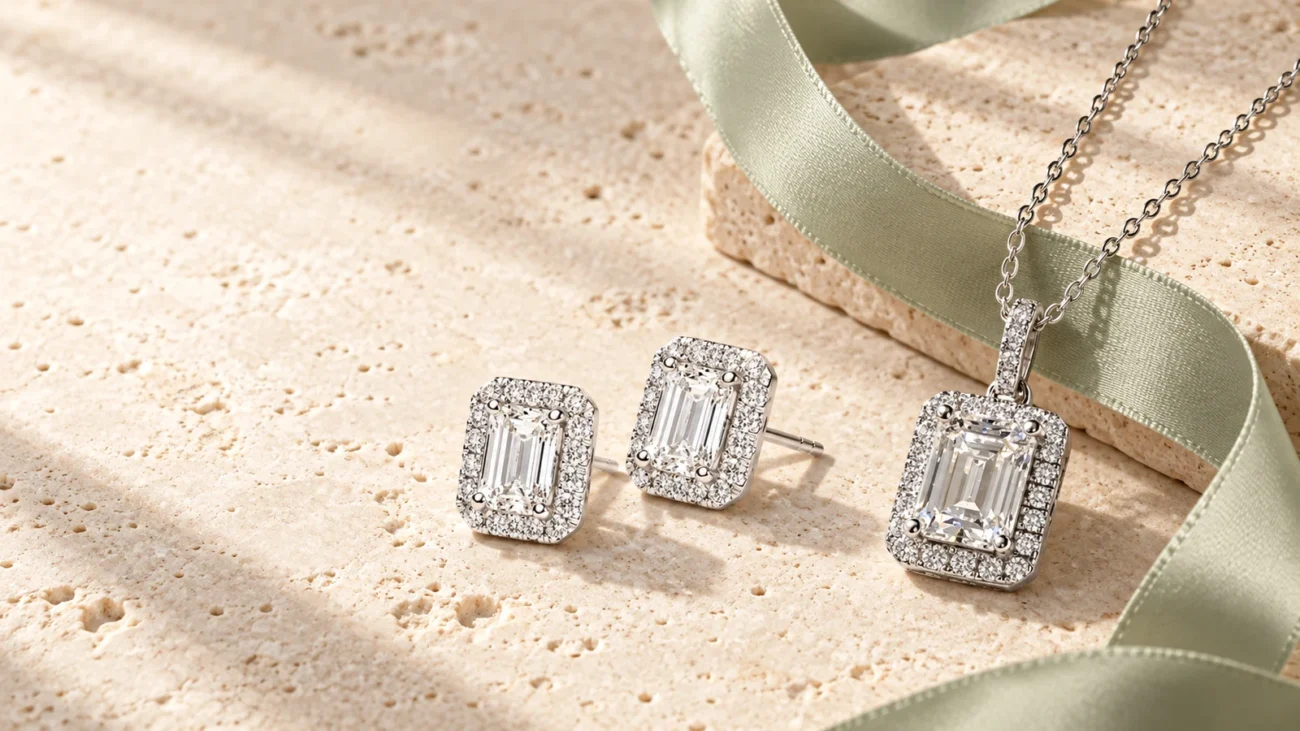
Halo: adds sparkle and increases the overall outline beyond the center stone.
Marquise or other elongated shape: creates more vertical presence without requiring the same width as a large round.
Floral or cluster design: distributes several stones across a broader decorative silhouette.
Colored moissanite: can feel more visually assertive than a colorless stone of similar dimensions.
Moissanite sparkle, durability, and everyday wear
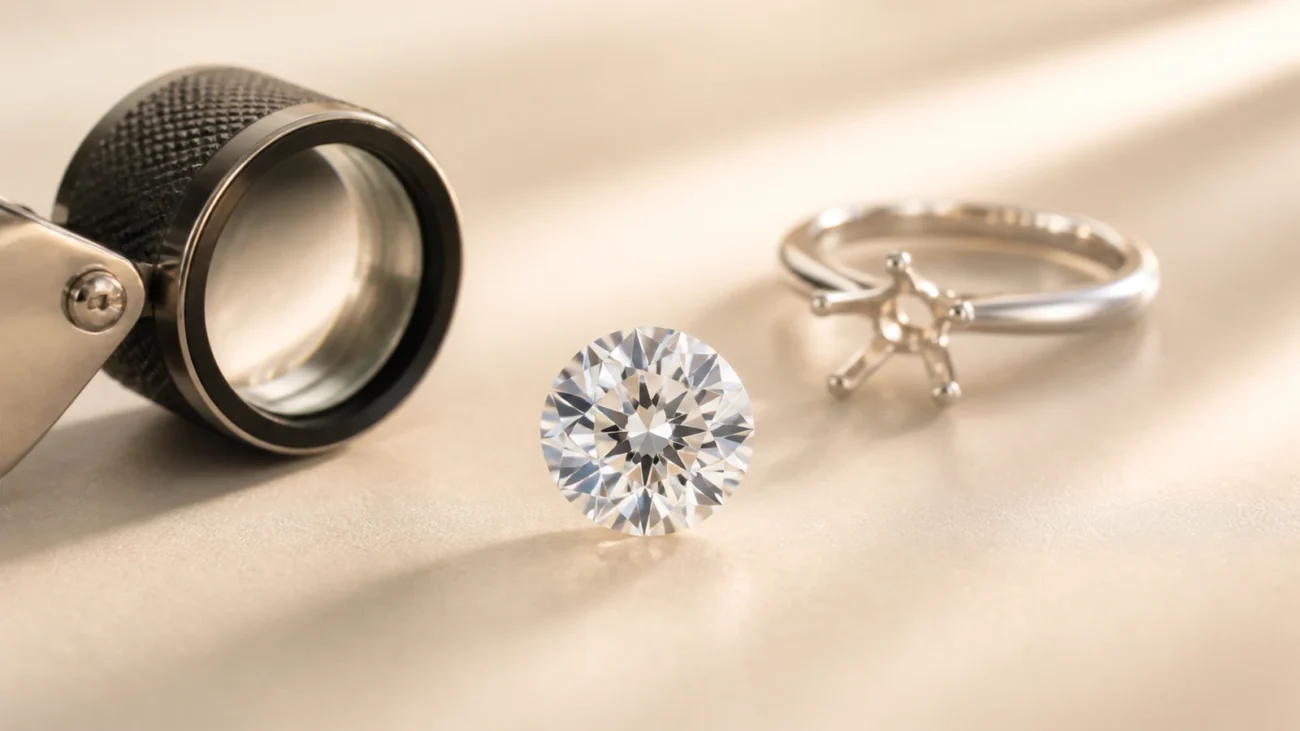
Moissanite is laboratory-created silicon carbide. The Gemological Institute of America reports a Mohs hardness of about 9.25 and excellent toughness, making it a durable jewelry option. GIA also notes that synthetic moissanite has strong dispersion—the property associated with colored flashes of fire. Because larger stones provide a larger visible surface, their fire may feel more prominent in some lighting.
Durability does not make an earring maintenance-free. Oils, cosmetics, and styling products can reduce apparent sparkle. Clean studs periodically with warm water, mild soap, and a soft brush, rinse carefully, and dry with a lint-free cloth. Inspect the prongs and backing as part of your routine, especially if the earrings are worn often.
Styles to compare at Sunshine Jewelry
Once you know your preferred visual scale, compare different outlines rather than choosing by size alone:
If you remain undecided, begin with a 5–6 mm round solitaire or a similarly scaled design. It offers visible sparkle without automatically becoming the focal point of every outfit. Move smaller for subtle styling or larger when you know you enjoy a stronger look.
What is the best moissanite stud size for everyday wear?
Many buyers find a 5–6 mm round stone versatile because it is visible without looking oversized. However, earlobe size, setting height, hairstyle, and personal taste can make a smaller or larger diameter a better choice.
Are 6.5 mm moissanite studs too big?
Not necessarily. A 6.5 mm round stud has clear presence but can still work as an everyday earring for someone who enjoys noticeable sparkle. Check the total setting width and compare a 6.5 mm paper circle against your own ear before deciding.
Should I choose earrings by carat or millimeter size?
Use millimeters to judge the visible size. Carat describes weight, and carat-equivalent labels may vary. For non-round shapes, compare both length and width.
Does a halo make a moissanite stud look bigger?
Yes. A halo adds stones or metal around the center, increasing the complete face-up footprint. Compare the overall earring measurement, not only the center-stone diameter.
Is moissanite suitable for frequently worn earrings?
Moissanite’s hardness and toughness make it well suited to frequent jewelry wear. Clean away cosmetics and oils, store earrings separately to reduce scratching between pieces, and check settings and backings regularly.
Sources and methodology
This guide uses face-up millimeter measurements as the primary comparison, because physical dimensions communicate visible size more directly than weight labels. Gemological facts were checked against GIA’s Jewelry Buyer’s Guide to Diamond Alternatives and guide to simulated diamonds. Size ranges describe general visual effects and should be treated as practical starting points rather than universal fit rules.
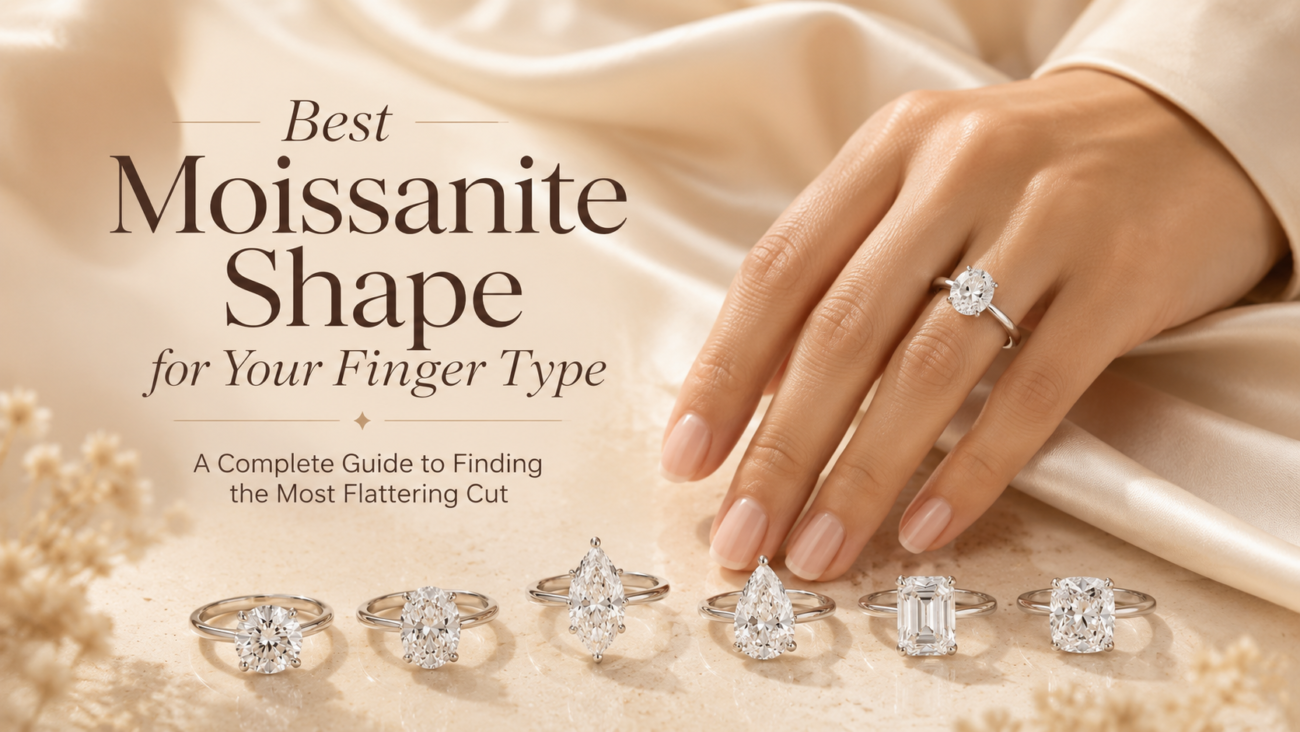
Not every moissanite shape looks the same on every hand. This complete guide compares round, oval, marquise, pear, emerald and cushion cuts to help you choose the most flattering moissanite shape for your finger length, width, hand size and personal style.
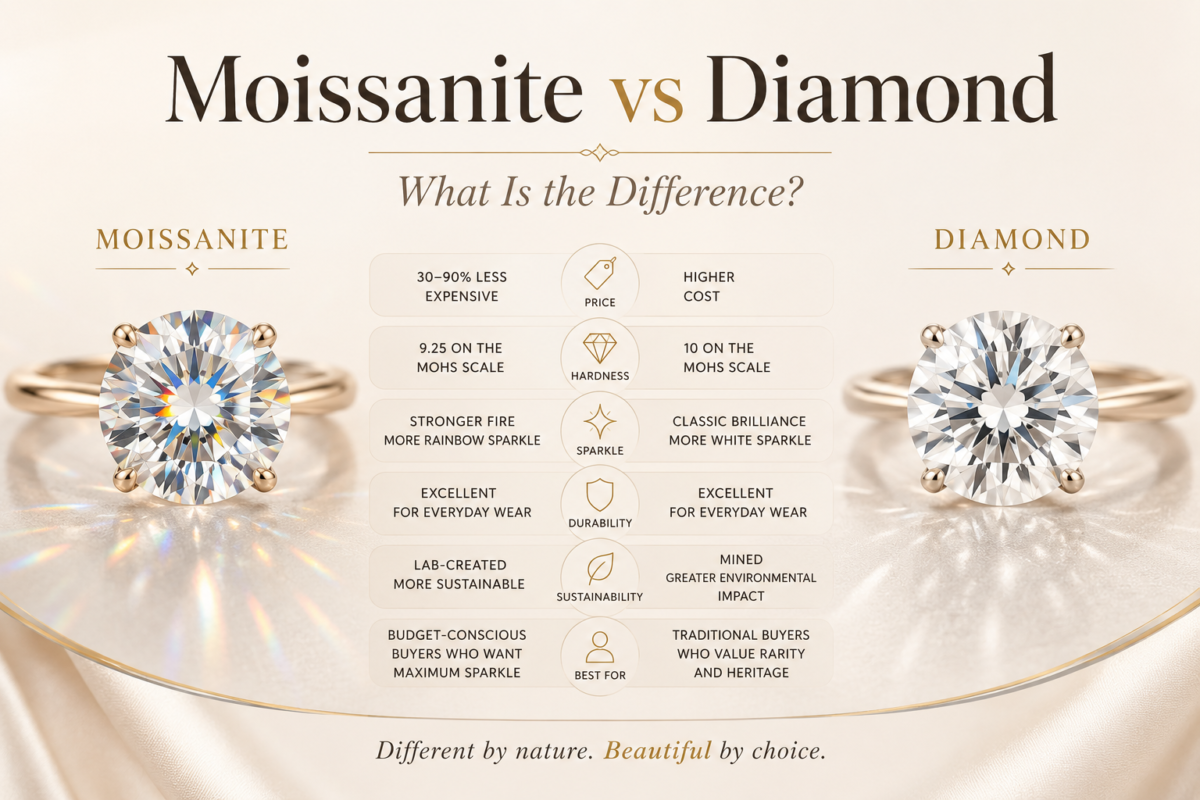
A complete moissanite vs diamond comparison covering price, hardness, sparkle, durability, sustainability, everyday wear and who each gemstone is best for.