The easiest way to choose jewelry by movement is to decide how still or responsive you want it to feel on the body. Stud earrings stay close to the ear. Dangle earrings swing from a joint. A pendant moves at the end of a chain. A shaped bracelet follows a defined curve, while a chain bracelet bends more freely around the wrist. None is universally more comfortable; the best choice depends on hair, clothing, activity, fit, and personal sensitivity to motion.
This Sunshine Jewelry movement guide compares five live, verified products from fixed to fluid. “Movement” describes visible construction and likely degrees of articulation, not a laboratory measure of durability, security, or comfort. Product images can show where parts connect, but they cannot prove how a piece will feel on every person. Use the current product page for stated materials, stones, finish, size options, availability, and care information.
Sunshine Jewelry Movement Guide: Quick Answer
Movement type
What moves
Verified example
Useful when you want
Fixed
The earring face stays close to the lobe
MS0866 oval halo studs
A stable, compact focal point
Articulated
A lower drop swings from a connector
MS0274 bezel dangle earrings
Visible response near the face
Suspended
A pendant shifts at the end of a chain
MS0868 oval halo pendant
Movement centered at the neckline
Shaped-flexible
A defined bracelet curve yields around the wrist
MS0115 square-center bracelet
A continuous line with a centered focal point
Chain-flexible
Linked sides articulate around a structured front
MS0454 half-tennis chain bracelet
A fluid wrist feel with a clear front section
A practical formula is motion tolerance + clothing interaction + focal location. If you dislike noticeable movement, start with studs. If you enjoy flashes near the jaw, consider a jointed drop. If you want the motion lower on the body, compare pendants and bracelets. Then check the current listing and your own fit requirements before ordering.
What Does Jewelry Movement Mean?
Jewelry movement is the way connected parts change position as the wearer walks, turns, raises a hand, or interacts with clothing. A post earring has very little visible articulation because its decorative face sits directly against the lobe. A dangle earring adds at least one connection below the ear. A pendant can slide or swing with its chain. A bracelet may combine a relatively structured decorative section with flexible links.
More movement can create changing reflections and make a small design feel visually active. Less movement can keep a focal shape easy to read. Neither construction is automatically better, safer, or more durable. A fixed piece can still rotate if the fit is loose, and a flexible piece can still feel controlled when it fits closely. Weight, dimensions, closures, anatomy, and activity all matter, and those details cannot be established from a generated lifestyle scene.
This is also different from sparkle. Sparkle depends on stone facets, lighting, angle, and surface condition. Movement changes the angles presented to the light, but it does not guarantee a particular brightness. For a separate comparison of visual light patterns, see the Sunshine Jewelry sparkle density guide.
Fixed Movement: Oval Halo Stud Earrings
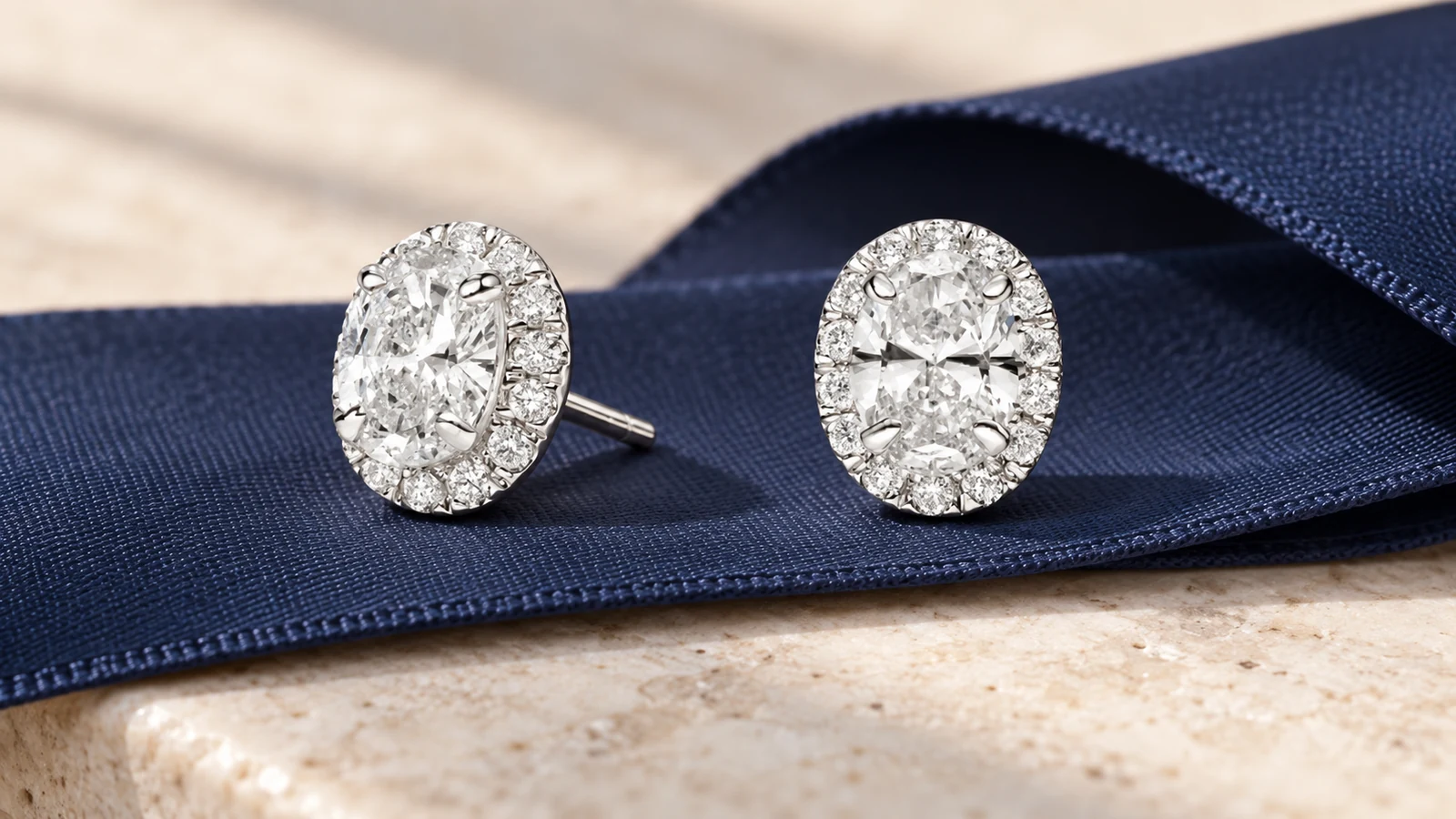
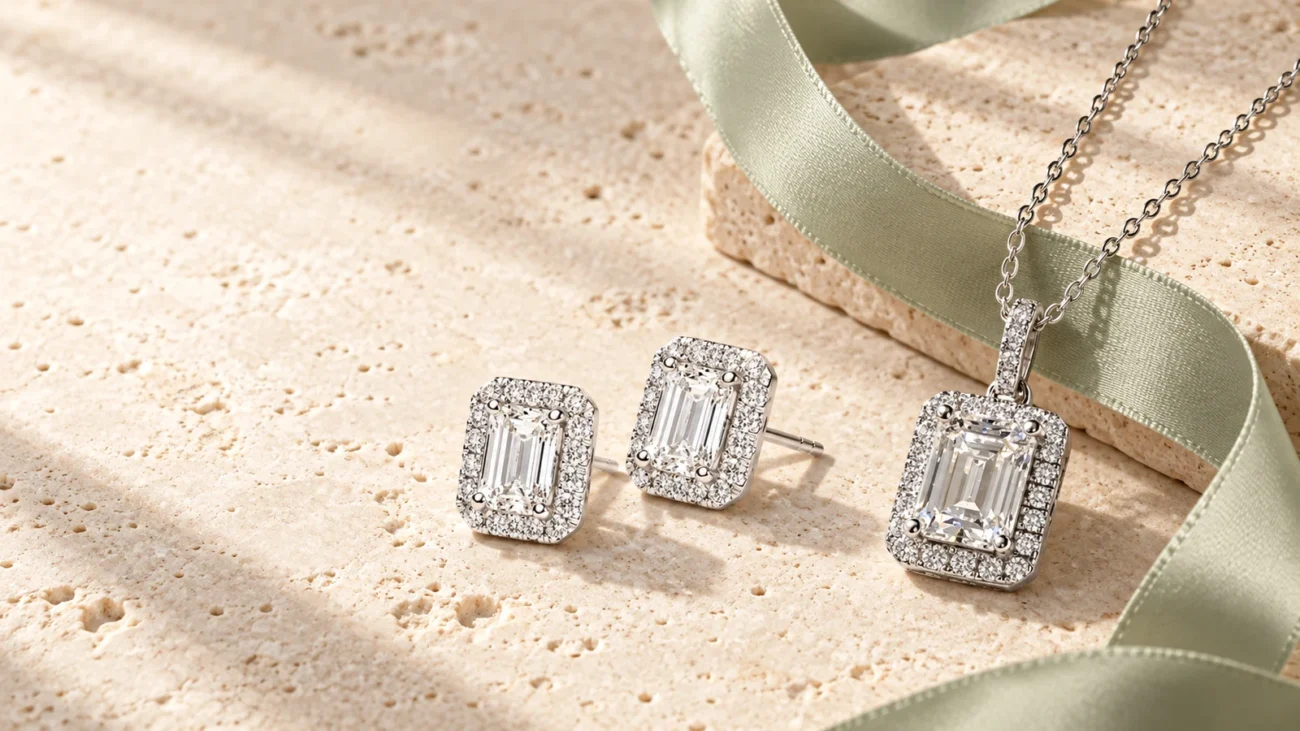
The 1 CT Oval Halo Moissanite Stud Earrings – MS0866 are the fixed end of this guide. The live page describes polished 925 sterling silver earrings with 1 CT oval-cut centers, petite halos, and a classic stud silhouette. The decorative face connects directly to the post rather than hanging from a lower joint.
This generated visualization preserves the verified MS0866 pair, oval centers, petite halos, polished silver color, posts, and visible proportions.
Studs are useful when you want the oval outline to remain readable as a compact face-framing detail. They can work with loose hair because there is no long drop below the lobe, although hair can still catch on posts or settings. With hair pulled back, the halos remain continuously visible. With hair down, they appear as controlled flashes rather than a swinging line.
“Fixed” does not mean motionless or universally comfortable. An earring may tilt if the backing is loose, and lobe shape affects how the face sits. The product page should be the source for any stated dimensions or closure details. If you are pairing studs with a necklace, keep both outlines legible by using the earring and necklace pairing guide.
Articulated Movement: Bezel-Set Dangle Earrings
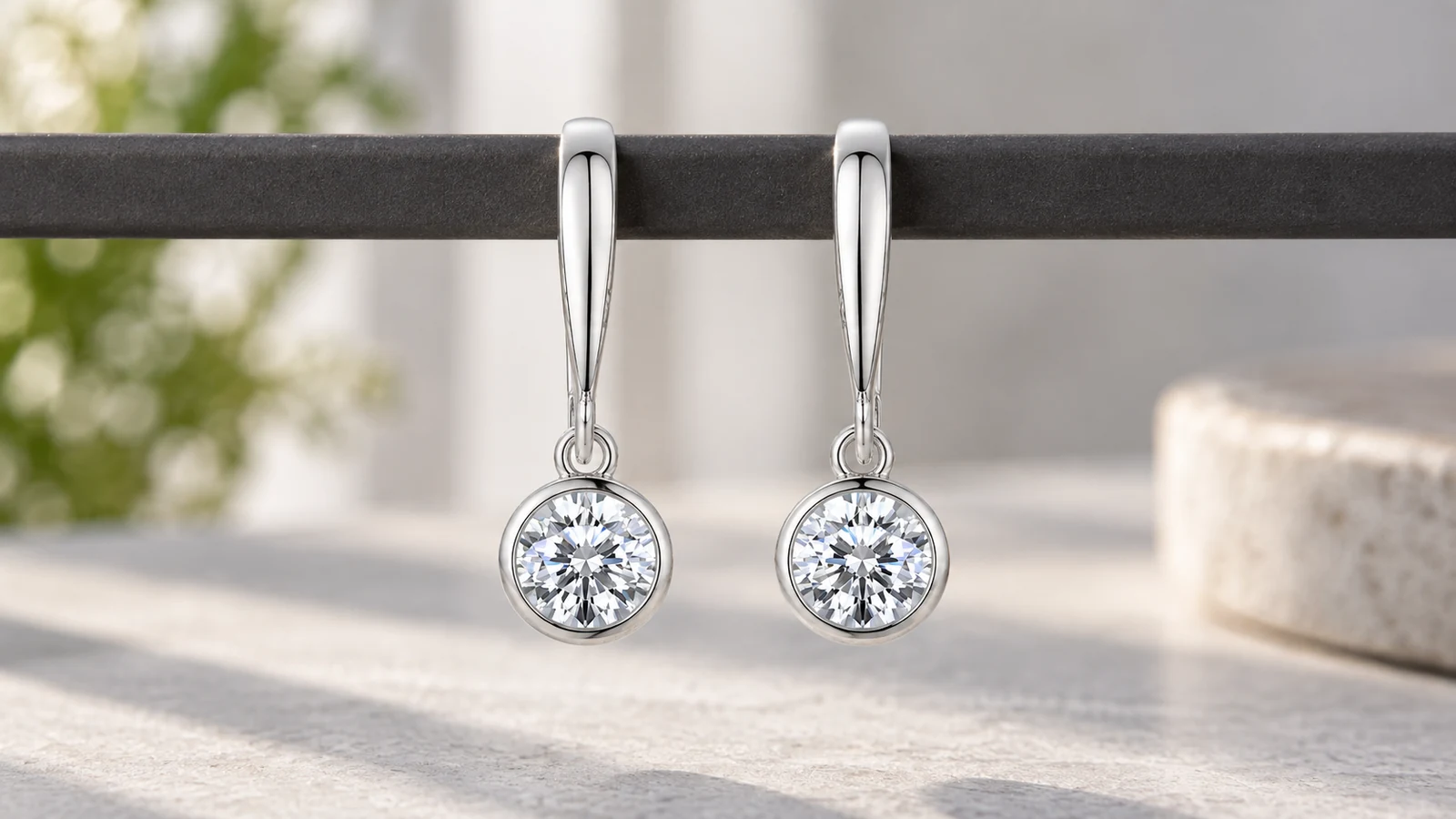
The Classic Bezel Set Dangle Earrings – Elegant Sterling Silver Earrings, SKU MS0274, show articulated movement. The first-party image displays an elongated tapered upper loop, a small connector ring, and a round clear center in a bezel at the bottom. The product page names the style as bezel earrings and states a white gold-plated finish.
The generated scene keeps the verified MS0274 pair, elongated loops, connector rings, round bezel centers, visible silver color, and proportions.
The connector lets the lower round element respond when the head turns. That motion can create intermittent light near the jaw and makes the vertical silhouette more noticeable than a stud. It can also increase interaction with loose hair, scarf fibers, high collars, or headset hardware. If you prefer the visual effect but want less contact, try the earrings with hair tucked back and a clean neckline.
The live page does not identify the clear center material in the details reviewed for this article, so this guide does not call it diamond, moissanite, crystal, or another gemstone. A visible clear center is an appearance; stone identity is a product claim that must be stated on the listing. That distinction matters when comparing designs that look similar in photographs.
Suspended Movement: Oval Halo Pendant
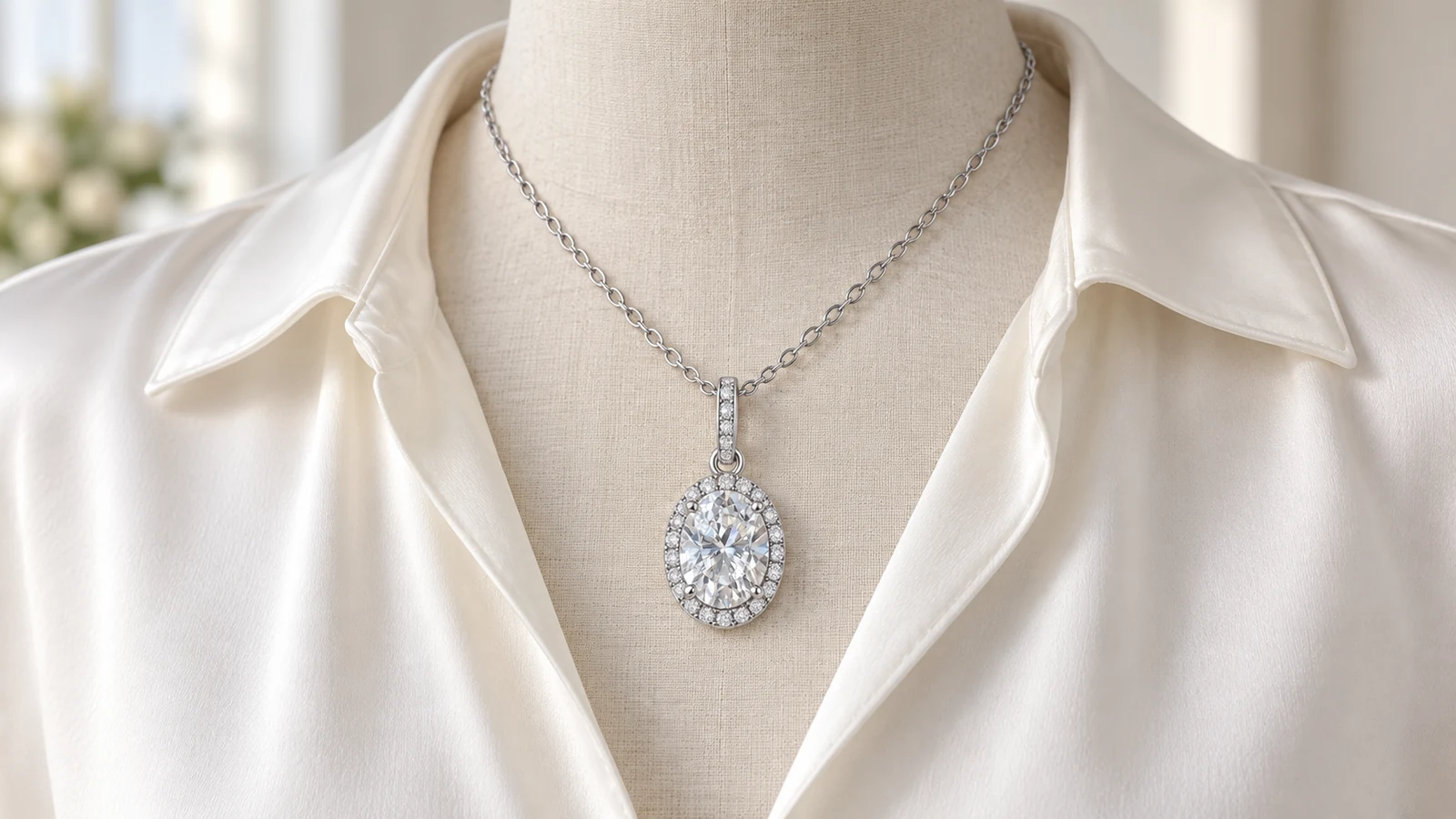
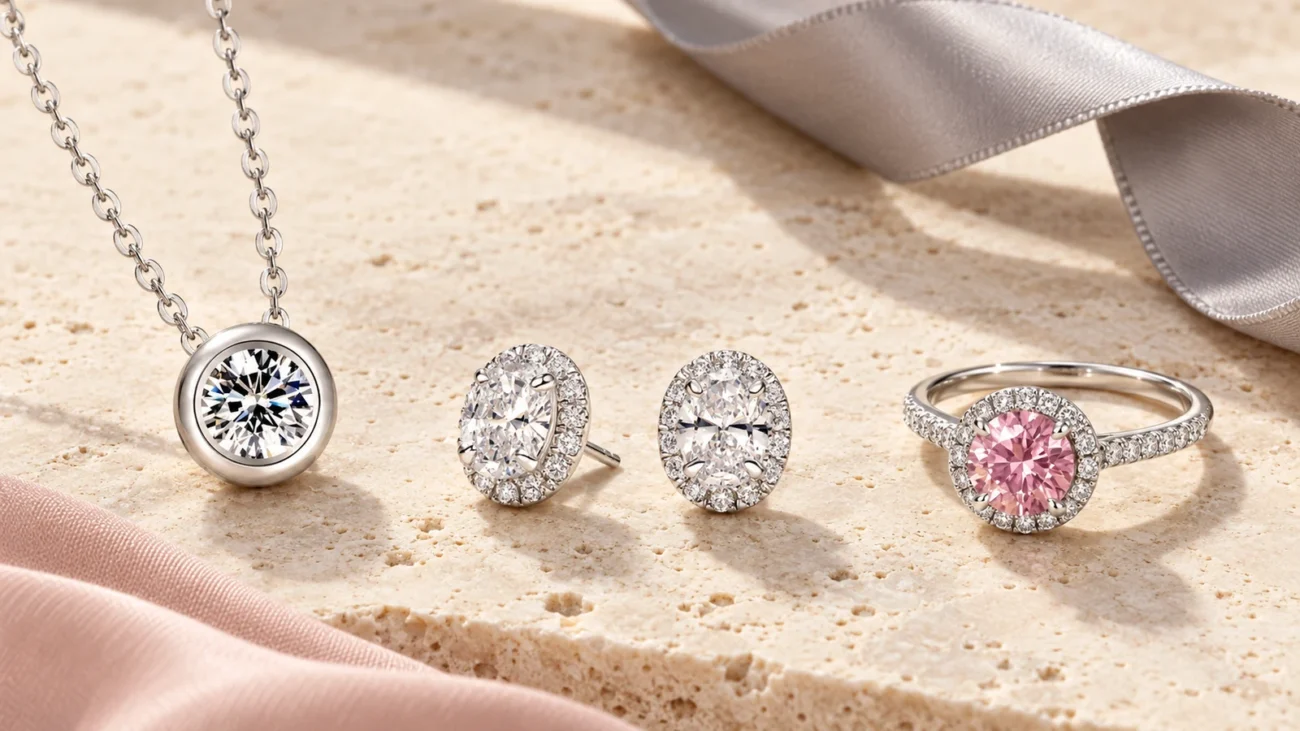
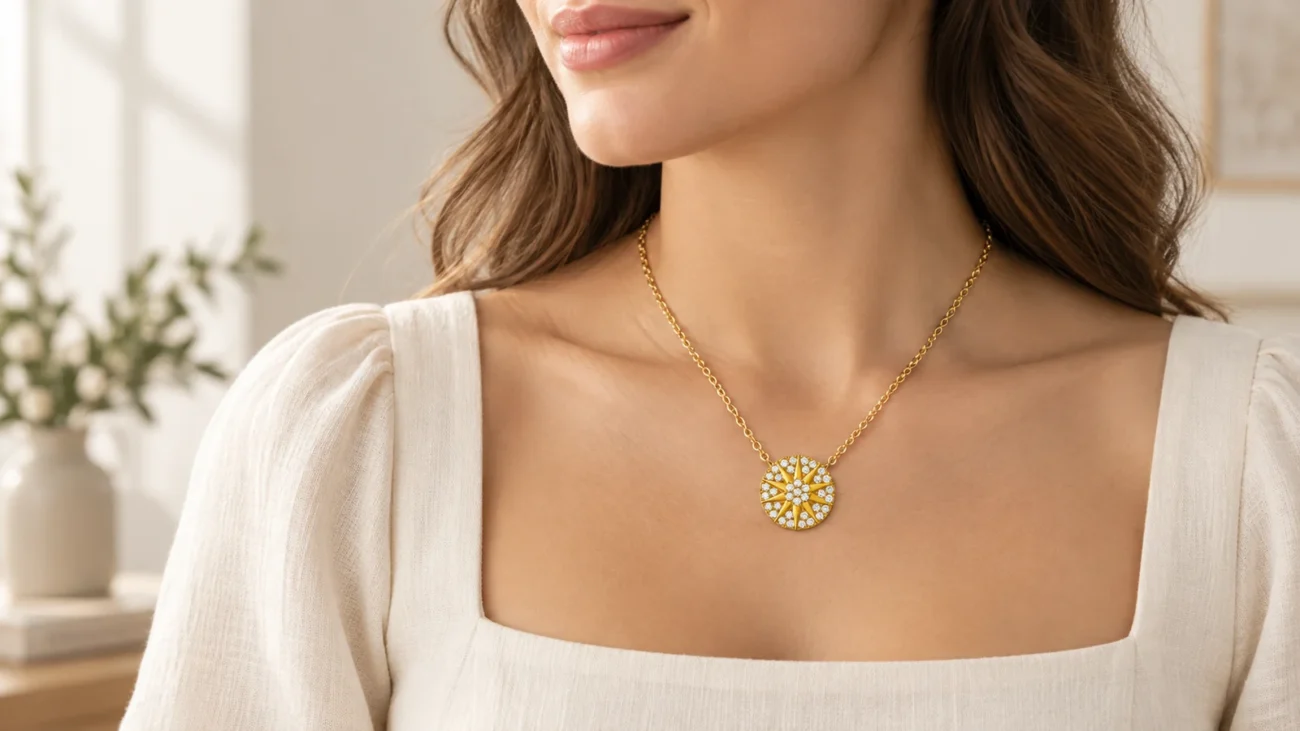
The 2 CT Oval Halo Moissanite Pendant – MS0868 moves in a different zone. Its live page describes a polished 925 sterling silver necklace with a 2 CT oval-cut center, a fine halo, and a pave-set bail. The first-party photograph also shows an oval-link chain and a small connection between the bail and pendant.
This generated neckline visualization preserves the verified MS0868 chain, pave-set bail, lower connector, oval center, fine halo, polished silver color, and visible proportions.
A suspended pendant shifts as the torso moves and as the chain settles against fabric or skin. That puts motion at the center of the neckline rather than next to the face. A plain V-neck, scoop neck, or open collar gives the pendant room to remain visible. A ruffled placket, dense print, or high textured neckline may interrupt the outline or change where the pendant rests.
Chain length and pendant position are personal fit questions. The lifestyle image illustrates styling but cannot establish exact scale or where the pendant will land on every body. Compare any measurements published on the live page with a necklace you already own. For more neckline-centered choices, use the Sunshine Jewelry necklace styles guide.
Shaped Flexibility: Square-Center Vine Bracelet
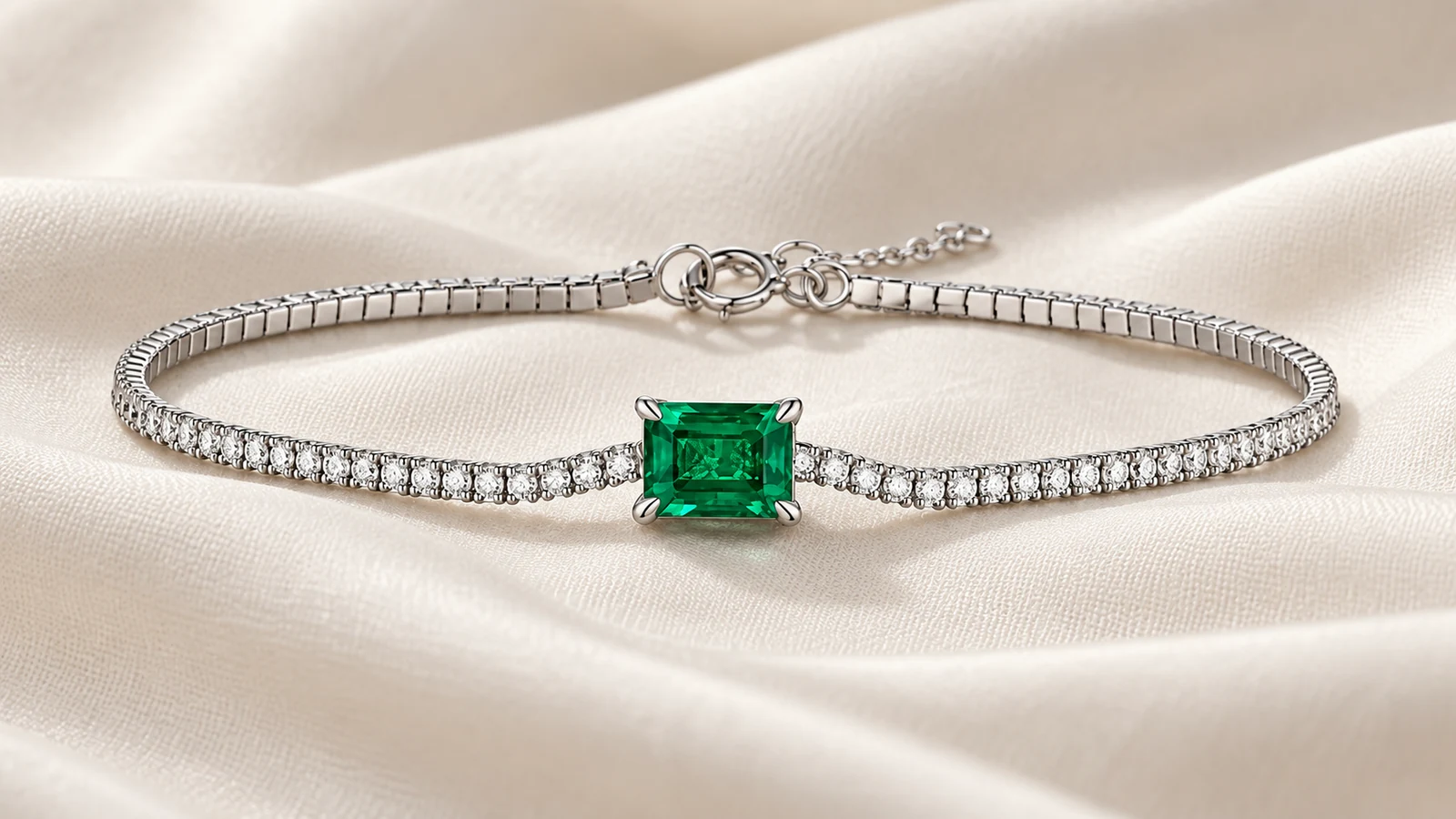
The Vine Grace Square-Cut S925 Sterling Silver Bracelet, SKU MS0115, combines a defined front line with enough flexibility to circle the wrist. The product page states S925 sterling silver, a square-cut centerpiece, a four-prong setting, and nature-inspired vine styling. The first-party image shows a green center, a narrow bright row, and an extension chain.
The generated scene preserves the verified MS0115 green square center, four-prong setting, narrow bright row, clasp area, extension chain, visible color, and proportions.
This construction reads as one continuous, centered line rather than as a loose chain with a separate charm. On the wrist, the square center is likely to remain the visual anchor while the bracelet curves around it. The line may shift as the wrist rotates, but it retains more of a shaped presentation than an all-link chain.
The reviewed page does not state the identity of the green center or a surface finish, so those details are not inferred here. “Green” describes visible color only. Fit also affects behavior: too much extra length can let the focal point migrate around the wrist, while too little can feel restrictive. Use any live sizing guidance and compare it with your wrist measurement. The S925 sterling silver bracelet guide covers fit and routine handling in more detail.
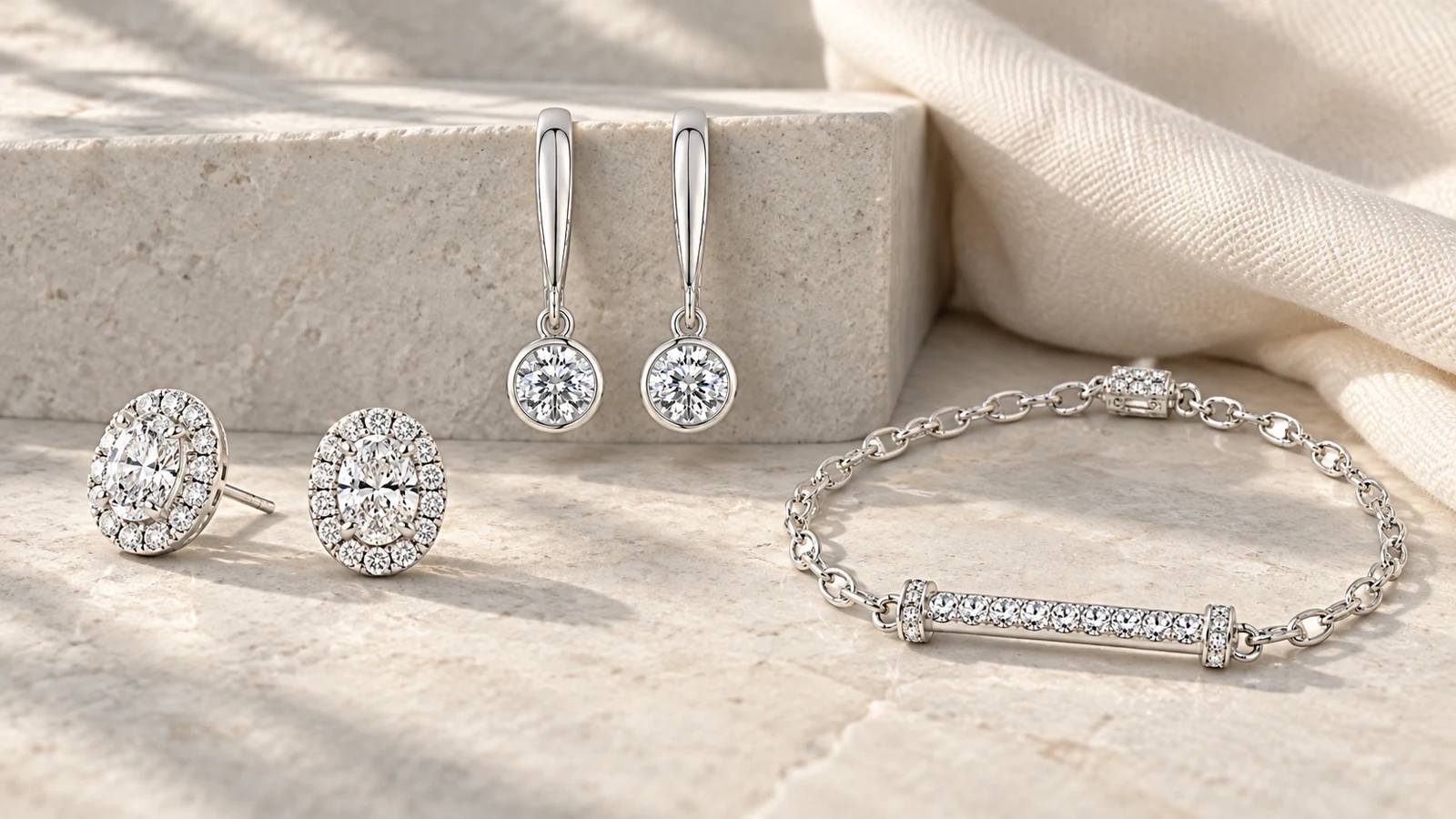
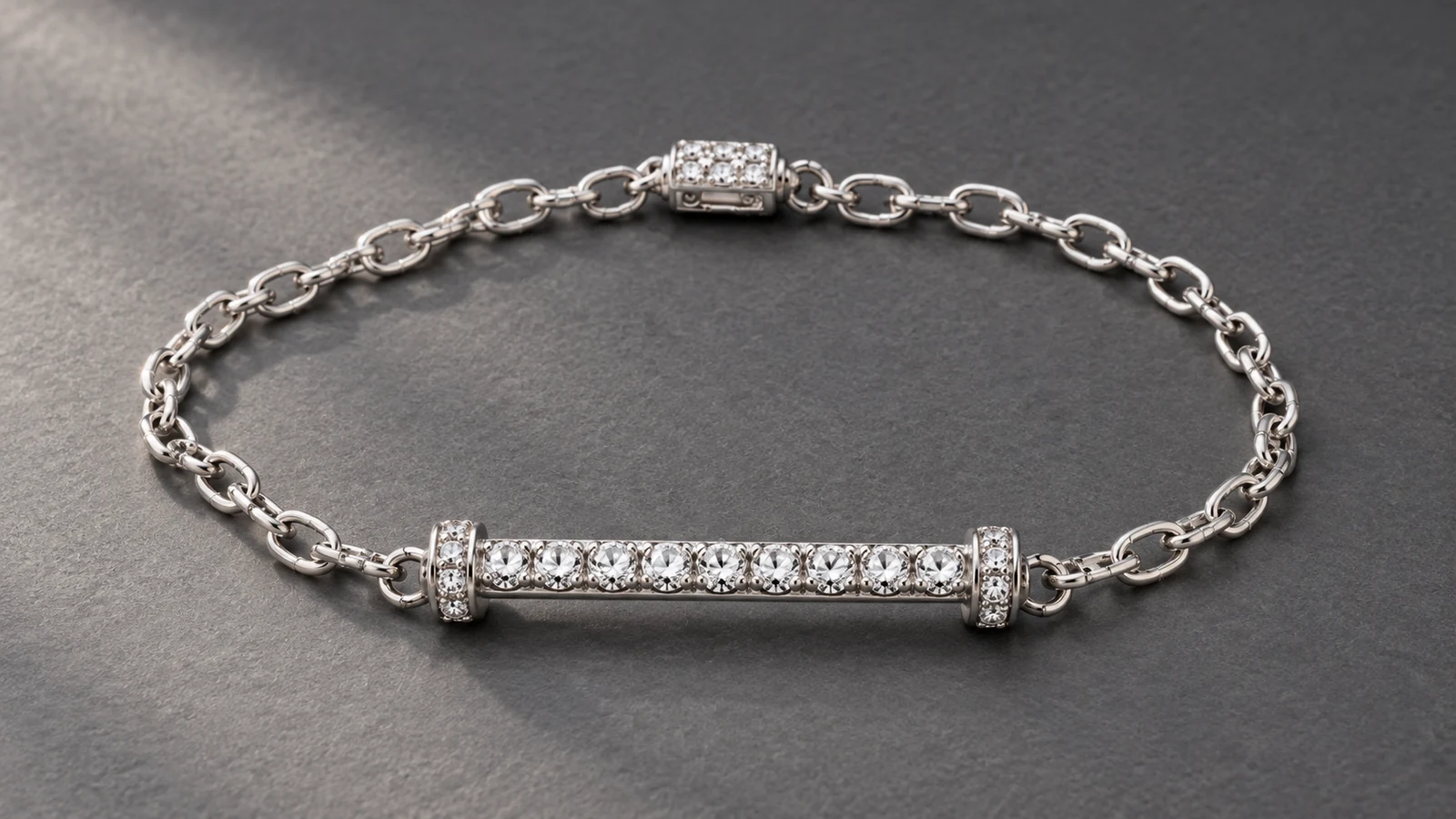
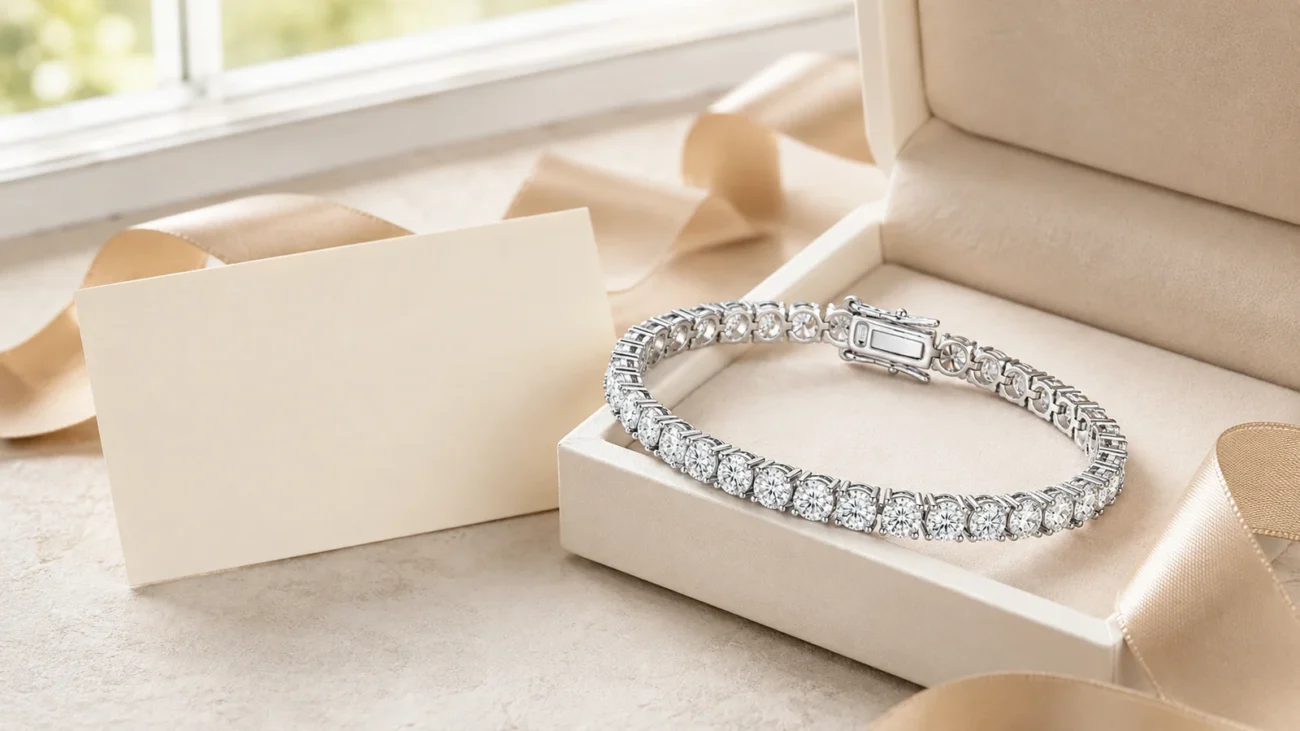
The Half-Tennis Moissanite Chain Bracelet, SKU MS0454, combines a structured front stone row with articulated oval-link chain sections on both sides. Its page identifies the piece as a tennis moissanite bracelet. The first-party image shows closely set round clear stones across the front, small end connectors, linked sides, and a rectangular stone-set box clasp.
The generated scene preserves the verified MS0454 front stone row, collars, end connectors, oval-link sides, rectangular clasp, visible color, and proportions.
The chain sections can articulate link by link, while the front row keeps a clear horizontal identity. This creates a useful middle ground: visually structured from the top of the wrist, more fluid around the sides. The linked portions may settle differently as the wrist turns, so the front can rotate if the fit leaves substantial slack.
The product details reviewed for this article do not state the metal material or finish, so neither is supplied here. The visible silver color is not enough to establish composition or plating. Before buying, confirm any updated material wording, closure instructions, length, and current photographs on the live page.
How to Choose the Right Movement in Five Steps
Locate the motion. Decide whether you want attention at the ear, jawline, neckline, or wrist. Movement draws the eye to that zone.
Rate your motion tolerance. If swinging or sliding distracts you, begin with studs or a more shaped bracelet. If movement feels expressive, compare drops, pendants, and chain links.
Check nearby materials. Hair, scarves, lace, knits, ruffles, cuffs, gloves, and watch straps can touch jewelry. Smooth open space usually lets articulated pieces move more cleanly.
Match movement to activity. A seated dinner differs from childcare, exercise, equipment use, or manual work. Remove jewelry when the activity, workplace rules, or product care guidance makes wear inappropriate.
Verify the exact listing. Confirm SKU, title, materials, stone wording, finish, dimensions, closure, size options, availability, and first-party photos. Do not transfer specifications from a visually similar product.
If you are choosing for a particular day rather than by construction, the Sunshine Jewelry occasion guide starts with work, weekends, date nights, formal events, and anniversaries. The two approaches answer different questions: occasion says where the piece will be worn; movement says how its structure may respond while it is worn.
Tennis moissanite bracelet; visible stone bar, chain sides, and box clasp
Metal material or finish
These facts were checked on the live product pages for this article. The guide does not independently test materials or stones, assign grades that the pages do not state, guarantee comfort, predict durability, or promise future stock. Generated images are lifestyle visualizations based on first-party product photographs, not original catalog photos. Use them to understand construction categories, not exact dimensions or color.
FAQ: Fixed, Articulated, and Flexible Jewelry
Are stud earrings always more comfortable than dangle earrings?
No. Studs usually have less visible movement, but comfort depends on weight, post and backing, lobe anatomy, fit, and wear duration. Dangle earrings may feel comfortable to someone who likes motion and uncomfortable to someone sensitive to swinging.
Why does a pendant move even when the chain looks still?
The pendant is suspended at a bail or connector, so small changes in posture can change its angle. Fabric texture, chain length, pendant weight, and the shape of the neckline also affect how it settles.
Will a bracelet focal point stay on top of the wrist?
Not always. Wrist shape, bracelet length, focal weight, and link flexibility can let the center rotate. A closer fit may reduce migration, but it should not restrict circulation or normal movement. Follow live sizing guidance.
Does more jewelry movement create more sparkle?
Movement can present changing angles to the light, but sparkle also depends on the stone, cut, setting, lighting, cleanliness, and viewing angle. Motion alone does not guarantee brightness.
Can I tell a clear stone’s identity from a photo?
No. A photo cannot reliably establish whether a clear center is diamond, moissanite, crystal, cubic zirconia, or another material. Use the exact product description and do not transfer claims from a similar design.
What should I check before ordering moving jewelry?
Review the SKU, material and stone wording, finish, measurements, closures, size or length options, first-party images, availability, and care notes. The Sunshine Jewelry online buying checklist provides a complete verification process.
The Bottom Line
Choose movement by deciding where you want attention and how much articulation you enjoy. MS0866 offers a fixed oval halo stud; MS0274 adds a jointed drop; MS0868 suspends an oval halo at the neckline; MS0115 keeps a square center within a shaped bracelet line; and MS0454 combines a structured front with fluid chain sides. Treat these categories as decision aids, then verify the exact live specifications and your own fit needs before buying.